Exposed concrete combines structural strength with natural stone texture, making it a practical alternative to plain gray slabs, stamped surfaces, and interlocking pavers. Property owners, HOA boards, and commercial facility managers often specify this finish for walkways, plazas, driveways, and architectural walls because it resists heavy wear while offering reliable surface grip. Yet the performance of an exposed slab depends heavily on aggregate selection, subgrade engineering, and timing during installation. Drawing on practical field standards used by We Love Paving’s field operations team (CSLB Licensed #1049649, C12 Earthwork and Paving) across California, this guide breaks down how exposed concrete is built, how it performs under accessibility rules, and what long-term care it requires.
What Exposed Concrete Is and How Its Two Main Finishes Differ
Exposed concrete refers to any concrete installation left uncovered without paint, stucco, tile, or topical coatings, and it divides into two distinct architectural categories: horizontal exposed aggregate concrete and vertical architectural exposed concrete. Clarifying which finish your project requires before requesting contractor bids prevents mismatched specifications, inaccurate budgets, and unsuitable surface textures.
In horizontal flatwork such as driveways, courtyards, sidewalks, and pool decks, the term almost always describes exposed aggregate concrete. During finishing, installers remove the outer millimeter or two of cement paste to reveal the natural stone, river gravel, quartz, or crushed granite embedded just beneath the surface. The surrounding cement matrix locks each stone in place while the exposed stone faces carry foot and vehicle traffic, shielding the softer paste from direct abrasion.
In vertical or structural construction such as retaining walls, columns, and building facades, exposed concrete refers to fair-faced architectural concrete. Rather than washing away surface paste to reveal stones, builders cast the concrete against high-precision formwork or textured form liners so the cured concrete itself becomes the finished visual surface. While architectural walls rely on formwork release agents and vibration control to avoid air pockets, horizontal exposed aggregate slabs rely on aggregate grading and timed surface washing to achieve uniform traction and visual consistency.
How Durable Exposed Aggregate Concrete Is Built From Base to Wash
A durable exposed concrete slab relies on proper subgrade compaction, verified aggregate quality, and exact timing during the surface wash rather than decorative appearance alone. When any of those stages is rushed, stones can loosen prematurely under vehicle tires or foot traffic, leaving pits that collect water and accelerate surface wear.
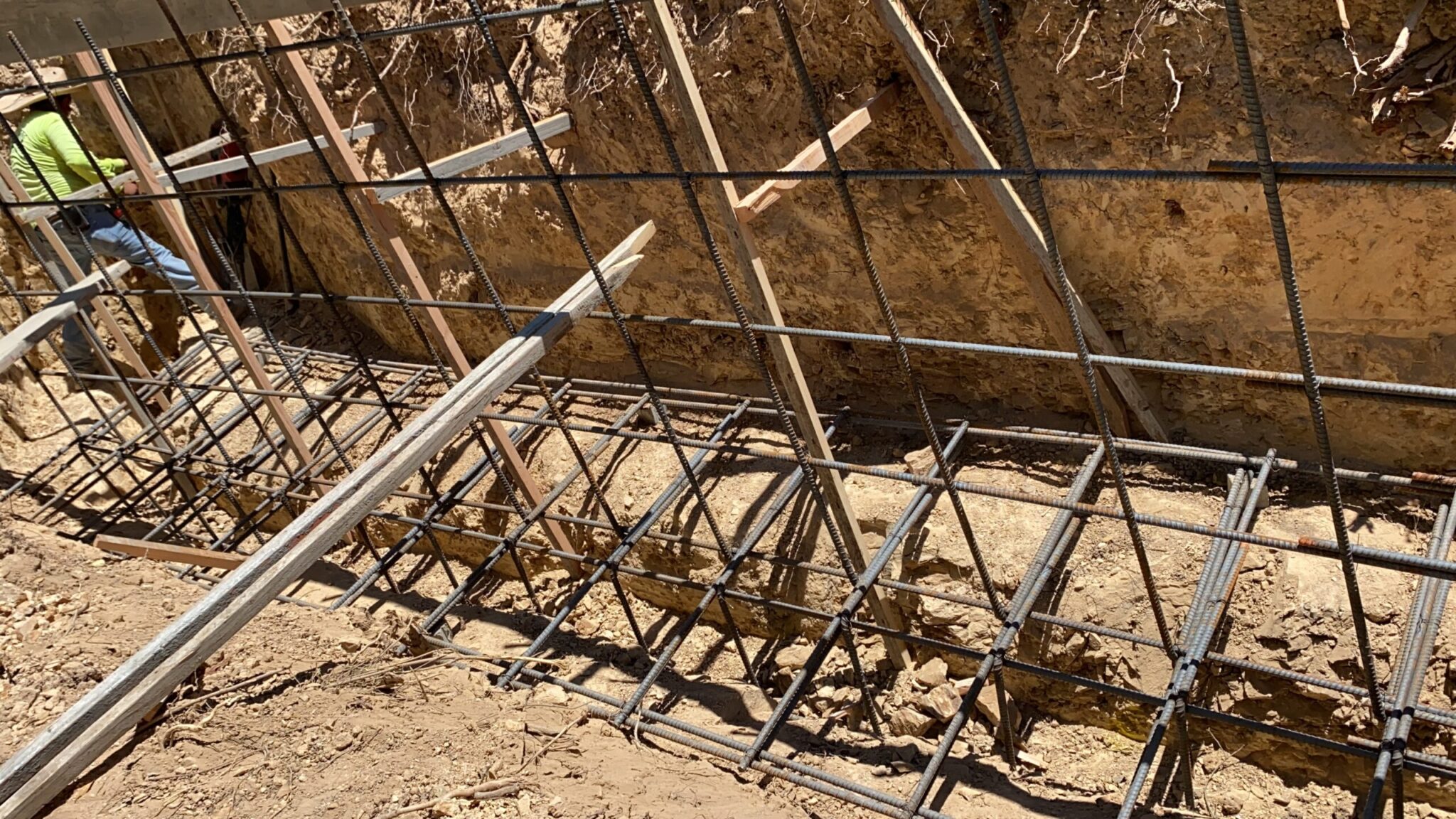
- Subgrade compaction and base preparation: Every concrete slab transfers pedestrian and vehicle loads into the soil beneath it. Crews must excavate unstable organic soil, grade the subgrade for positive drainage, and compact an aggregate base layer so the slab does not settle or crack unevenly over time.
- Aggregate verification under ASTM C33: Aggregates used in the mix or seeded onto the surface must meet ASTM C33 (Standard Specification for Concrete Aggregates). This standard limits clay lumps, soft shale, and iron-bearing particles that expand when exposed to moisture or leave permanent rust stains across the finished surface.
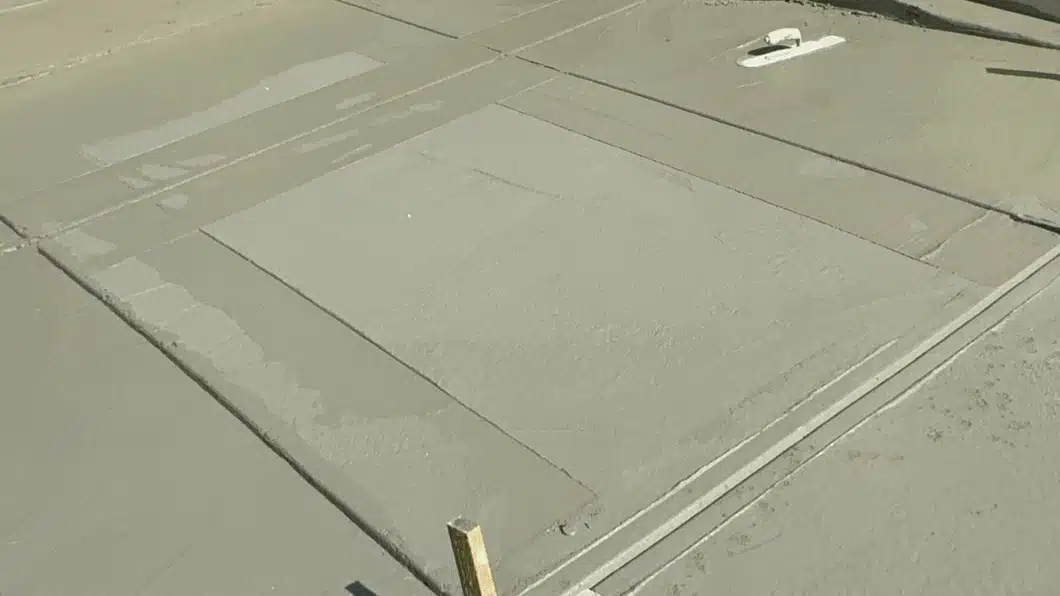
- Mix proportioning and control joint layout: Controlling the water-to-cementitious ratio in line with Caltrans Standard Specifications (Sections 73 and 90) prevents excessive shrinkage and surface weakness. Installers also lay out contraction joints at calculated intervals so normal thermal movement occurs cleanly along straight lines rather than in random mid-panel cracks.
- On-site mockup panels per ACI 303R: Following ACI 303R (Guide to Cast-in-Place Architectural Concrete Practice), experienced crews cast a test panel on site before the main pour. Mockups allow property owners and engineers to approve the exact aggregate density, stone color, and depth of exposure under real lighting conditions.
- Surface retarder application and timed washing: After concrete placement and initial floating, installers spray a biodegradable chemical surface retarder across the slab. This compound temporarily slows hydration in the top skin of cement paste while the concrete underneath hardens normally. Within a strict timing window, crews wash away the unhardened surface paste with water and stiff brooms. In warm, dry California climates where low humidity accelerates surface evaporation, timing this window accurately is critical.
- Controlled moisture curing: Once the aggregate is exposed, the slab must cure properly in accordance with ACI 301 and Caltrans curing standards. Keeping the concrete hydrated during early strength gain ensures the cement paste bonds tightly around each exposed stone.
If washing begins too early, water pressure dislodges stones from the soft mortar and creates bald spots that cannot be patched seamlessly. If washing starts too late after the paste has set, crews are forced to use aggressive acid washes or mechanical grinding, which etches the cement matrix and weakens long-term resistance to weathering.
Traction, Aggregate Selection, and California ADA Compliance
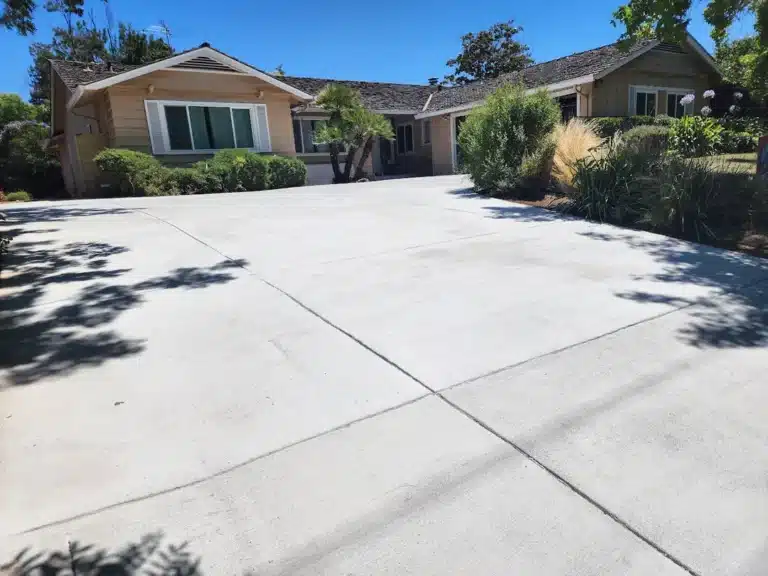
Exposed concrete provides high wet and dry slip resistance because textured stone sits slightly proud of the cement paste, though the shape and size of the aggregate determine whether a walkway meets California accessibility laws. Choosing stones purely by color without checking stone geometry can create uncomfortable walking surfaces or code violations on public-facing properties.
Rounded river stone versus crushed angular aggregate: Smooth, rounded river pebbles feel comfortable underfoot and drain water quickly, making them common around residential patios and pool decks where people walk barefoot. However, rounded stones offer less mechanical grip under rubber tires or wet footwear on steep grades. For sloped driveways, commercial building entrances, and high-traffic plazas, crushed angular granite, basalt, or quartz provides sharper micro-texture and noticeably stronger traction.
ADA and California Building Code (Title 24) rules: Commercial properties, retail centers, municipal sidewalks, and HOA common-area walkways in California must comply with the federal ADA Standards for Accessible Design and the California Building Code (Title 24, Chapter 11B). These regulations require accessible routes to be firm, stable, and slip-resistant while limiting abrupt vertical changes in level to a maximum of 1/4 inch without a beveled transition. Oversized, deeply exposed cobbles create surface vibration that impedes wheelchairs, walkers, and strollers, and can easily exceed vertical lip tolerances at joint edges. Specifying smaller, uniformly graded aggregate with a light-to-medium etch preserves slip resistance while keeping the rolling plane smooth enough for full accessibility compliance.
Exposed Concrete vs. Broom-Finished Concrete, Stamped Concrete, and Pavers
Exposed aggregate concrete occupies a practical middle ground between utility-grade broom-finished concrete and higher-cost decorative hardscapes, offering greater surface durability than stamped concrete and fewer joint-maintenance issues than interlocking pavers. Comparing these four systems across core performance factors clarifies where exposed concrete delivers the strongest return.
High wet and dry grip from natural stone texture.
Very high; hard natural stone shields the cement paste from wear.
Periodic rinsing and resealing to protect the cement matrix.
Challenging to match stone blend and wash depth invisibly.
Moderate to high due to specialty aggregate and washout labor.
Reliable everyday traction from fine brushed ridges.
High structural durability; surface ridges gradually smooth under heavy traffic.
Minimal; routine sweeping and occasional pressure washing.
Moderate; standard gray concrete patches blend reasonably well after weathering.
Lowest initial installation cost among cast-in-place options.
Lower traction when wet unless grit additives are mixed into sealer.
Moderate to high; topical color hardeners and sealers wear down in traffic lanes.
Frequent resealing required to prevent color fading and surface slipperiness.
Difficult to match stamped pattern and antiquing color tones.
High due to coloring agents, release powders, and stamping labor.
Moderate to high traction depending on paver texture.
High individual unit strength; susceptible to edge settling if base shifts.
Periodic joint sand replenishment, weed control, and occasional re-leveling.
Easy; individual damaged pavers can be lifted and replaced cleanly.
Highest initial cost due to base depth, edge restraints, and hand placement.
Side-by-Side Surface Comparison
Exposed Aggregate Concrete
Broom-Finished Concrete
Stamped Concrete
Interlocking Pavers
For property managers and homeowners, the decision usually comes down to traffic patterns and maintenance capacity. Broom-finished concrete remains the most economical choice for service alleys and utility zones, while interlocking pavers excel where frequent underground utility access requires lifting sections of pavement. Exposed aggregate concrete performs best on visible architectural walkways, driveways, and plazas where owners want natural stone character without ongoing joint weed maintenance.
Sealing, Cleaning, and the Reality of Long-Term Repairs
Exposed concrete requires routine rinsing and periodic sealer reapplication to keep the cement matrix from absorbing stains, eroding under foot traffic, or dulling under intense sunlight. While the exposed stones themselves are virtually impervious to wear, the portland cement paste holding them together remains porous unless properly sealed.
Routine cleaning and chemical precautions Keeping an exposed aggregate surface clean requires little more than regular sweeping and rinsing with a garden hose or a fan-tip pressure washer held at a safe distance. Property maintenance teams should avoid harsh muriatic acid cleaners and deicing salts, as acids dissolve the calcium compounds in the cement paste and gradually loosen the grip holding aggregate particles in place. For oil drips or organic leaf stains, pH-neutral concrete degreasers lifted with warm water clean the pores without etching the matrix.
Resealing cycles in California climates Applying a breathable penetrating silane-siloxane sealer or a UV-stable acrylic sealer locks out moisture and enhances the natural contrast of the stones. In inland parts of California where intense ultraviolet exposure and high summer temperatures accelerate polymer breakdown, film-forming sealers require more frequent renewal than in mild coastal zones, though coastal installations face salt-spray exposure that also warrants periodic inspection. A simple water-drop test shows when resealing is due: if water darkens the cement paste immediately instead of beading on the surface, the protective barrier has worn thin.
Planning honestly for future repairs One practical limitation of exposed concrete is that localized repairs rarely disappear completely. Even when a contractor uses the exact same cement brand, slight variations in water content, ambient temperature, or wash pressure make a new patch stand out against weathered concrete. When We Love Paving’s field operations team completes a new exposed aggregate installation, we recommend bagging and storing a dry sample of the exact aggregate blend along with the batch mix ticket. Having that original stone on hand allows repair crews to match texture and color far more closely if a future plumbing trench or tree-root uplift requires cutting and replacing a panel.
What Drives the Cost of an Exposed Concrete Project
Exposed concrete pricing is driven primarily by site preparation, specialty aggregate sourcing, and labor intensity during the washout window rather than concrete volume alone. Because local quarry availability and site access vary widely across California, reviewing the specific cost factors of a property gives a much more reliable budget picture than generic square-foot averages.
- Demolition and subgrade remediation: Removing thick existing asphalt or reinforced concrete, hauling debris, and importing compacted aggregate base over expansive clay soils adds substantial upfront earthwork labor.
- Aggregate selection and hauling distance: Locally sourced river gravel costs considerably less than specialty imported quartz, granite, or recycled glass aggregates that must be trucked long distances to the batch plant.
- Exposure method and wash-water containment: Integral mixes where decorative stone is batched throughout the entire slab thickness cost more than broadcast-seeded finishes where stone is worked into the top surface. In addition, municipal stormwater rules in California require contractors to contain and filter cementitious wash water so slurry never enters storm drains.
- Slab thickness, reinforcement, and ADA grading: Vehicular driveways and commercial loading zones require thicker concrete sections and steel rebar or wire mesh reinforcement compared to pedestrian patios. Meeting strict Title 24 slope tolerances along accessible routes also demands tighter formwork engineering.
- Site access and staging constraints: Tight residential side yards, sloped terrain, or active commercial properties requiring phased pours and concrete pumping equipment increase crew hours compared to wide-open sites with direct ready-mix truck access.
Evaluating these variables before finalizing drawings prevents unexpected change orders once excavation begins. For projects involving new walkways, driveways, plazas, or accessibility improvements in California, understanding the existing subbase, local aggregate conditions, and ADA slope requirements is essential to getting the specifications right from the start. These are also some of the considerations We Love Paving takes into account when evaluating paving projects, helping ensure that the foundation and design requirements align with the intended use of the space.