Vehicle speed management inside commercial parking facilities, office complexes, and homeowner association (HOA) roadways presents a delicate balance between pedestrian safety, structural pavement integrity, and municipal compliance. Installing the incorrect traffic control device can alienate tenants, damage customer vehicles, impede emergency personnel, and create severe hydrological drainage traps that destroy the underlying subgrade.
Understanding the engineering profiles, vehicular dynamics, and jurisdictional requirements of speed hump vs bump ensures your commercial property reduces liability while safeguarding asphalt longevity.
Speed Hump vs Bump: The Core Differences in Design and Speed
A speed bump is an abrupt, narrow traffic management device measuring 1 to 3 feet in base width and 3 to 4 inches in height, designed to decelerate vehicles to a crawl of 2 to 5 miles per hour. A speed hump is a broader, parabolic roadway elevation spanning 12 to 14 feet in travel length with a height of 3 to 4 inches, calibrated to moderate vehicular speeds to 15 to 20 miles per hour without forcing a complete stop.
According to geometric guidelines from the Institute of Transportation Engineers (ITE), the cross-sectional geometry dictates the energy transferred to the driver and chassis. Because a speed bump concentrates its rise over a very short horizontal distance, the vehicle’s suspension absorbs a severe vertical jolt if traversed above 5 miles per hour. This sharp physical feedback makes speed bumps suited exclusively for localized zones where pedestrian foot traffic and vehicle paths intersect directly, such as pedestrian crossings outside retail entrances, parking garage ticket gates, and enclosed loading docks.
Conversely, the elongated travel profile of a speed hump produces an undulating motion rather than an abrupt impact. As the front and rear axles ascend and descend the gentle 12 to 14 foot slope, the vehicle remains stable while encouraging the driver to maintain a steady, moderate pace. Speed humps are deployed along continuous residential collectors, central circulation routes within large industrial centers, and campus driveways where complete stops would cause traffic congestion or dangerous rear-end collisions.
Vehicle Dynamics and Driver Behavior: Why Width Matters More Than Height
Vehicle suspension response is governed by the rate of vertical displacement over distance rather than maximum device height alone. When an automobile approaches an elevation change, the duration over which the tires traverse the incline determines whether the shock absorber dampens the upward motion smoothly or bottoms out violently against the bump stops. A speed bump forces an immediate shock compression within a fraction of a second, which shifts vehicular weight abruptly to the front axle and risks scraping the undercarriage on sedans with factory ground clearance.
This mechanical reality shapes driver psychology in contrasting ways. Drivers approaching an abrupt speed bump frequently execute hard braking just before the obstacle, followed by sharp acceleration immediately after clearing it. This stop-and-go driving pattern generates elevated tailpipe emissions, increased tire friction wear, and persistent engine revving noise that disturbs nearby tenants and residents. In contrast, drivers traveling across properly spaced speed humps recognize that maintaining a continuous speed of 15 to 20 miles per hour produces a comfortable ride without jolting the cabin, resulting in smoother traffic flow and lower noise levels throughout the property.
From an asset protection perspective, the aggressive braking caused by poorly located speed bumps causes localized rutting and asphalt displacement over time. Heavy vehicles applying torque at the base of a narrow bump push the asphalt mix laterally, creating depressions that collect water and deform the driving lane. Because speed humps distribute deceleration over a wide footprint, wheel loads transfer evenly into the base material, preserving pavement grade uniformity.
Commercial Applications: Where to Install Each Device
Selecting the appropriate traffic calming device requires evaluating roadway classification, pedestrian density, vehicular throughput, and emergency apparatus transit across the commercial parcel. Installing an aggressive speed bump on an arterial corridor disrupts circulation, while placing a gentle speed hump in front of a retail exit fails to protect crossing pedestrians.
Where are you installing the device?
Select a commercial zone to see the recommended pavement solution and vehicle dynamics.
Recommended for Retail Entrance: Speed Bump
Pedestrian-heavy zone requiring complete deceleration to 2-5 mph.
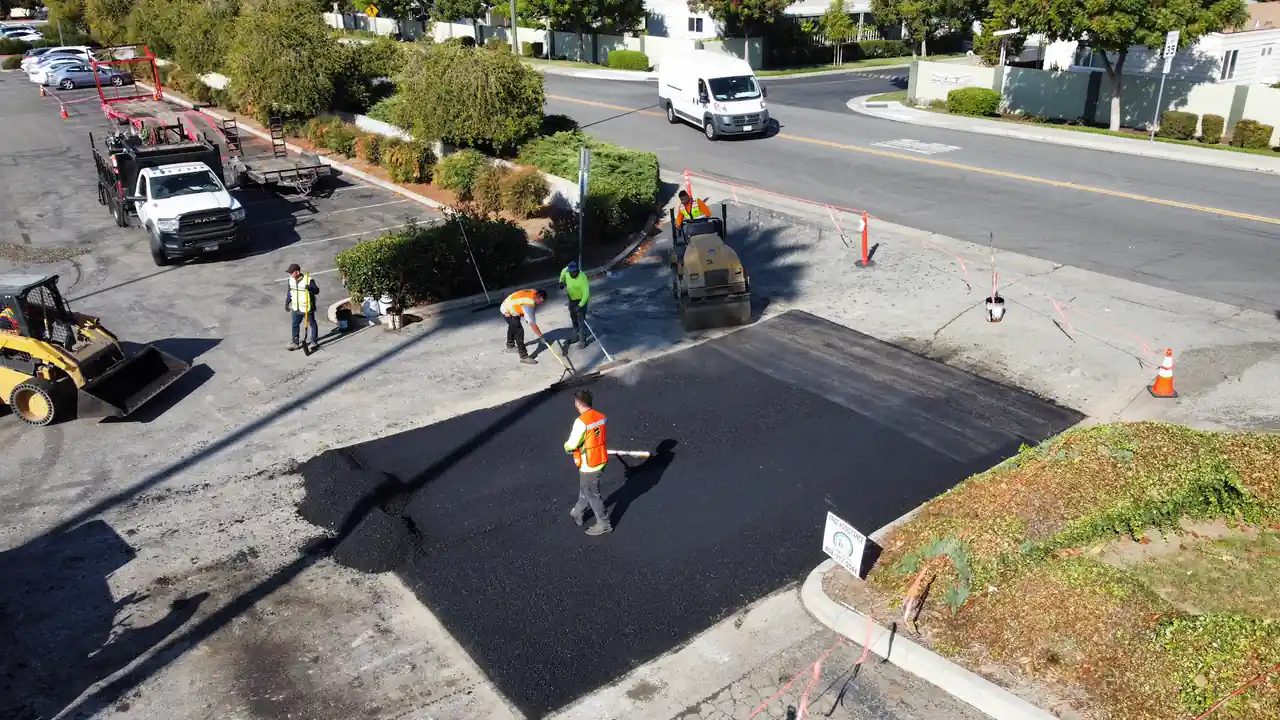
Commercial centers with dedicated pedestrian concourses require narrow speed bumps directly in advance of blind corners and pedestrian crossings to force drivers to check sightlines. In these settings, pairing device installation with high-durability commercial asphalt paving installations ensures that the surrounding pavement can withstand the repeated shear forces created by stopping and turning tires.
For long interior drive lanes within multifamily complexes or business parks, speed humps provide continuous speed regulation without irritating residents. When these devices are installed at intervals of 200 to 400 feet, vehicles cannot accelerate to excessive speeds between devices, creating a uniformly safe corridor without creating traffic backups during peak morning and evening commute hours.
Drainage and Structural Integrity: Preventing Water Traps and Pavement Failure
Installing a solid asphalt barrier across a paved surface alters the natural sheet flow of stormwater, potentially converting a standard driving lane into an unintended reservoir. When a speed hump or bump extends continuously from curb to curb, it creates an artificial dam on the high side of the pavement cross-slope. Trapped water pools behind the structure instead of traveling along the gutter to the nearest catch basin, saturating the asphalt matrix and accelerating moisture-induced damage.
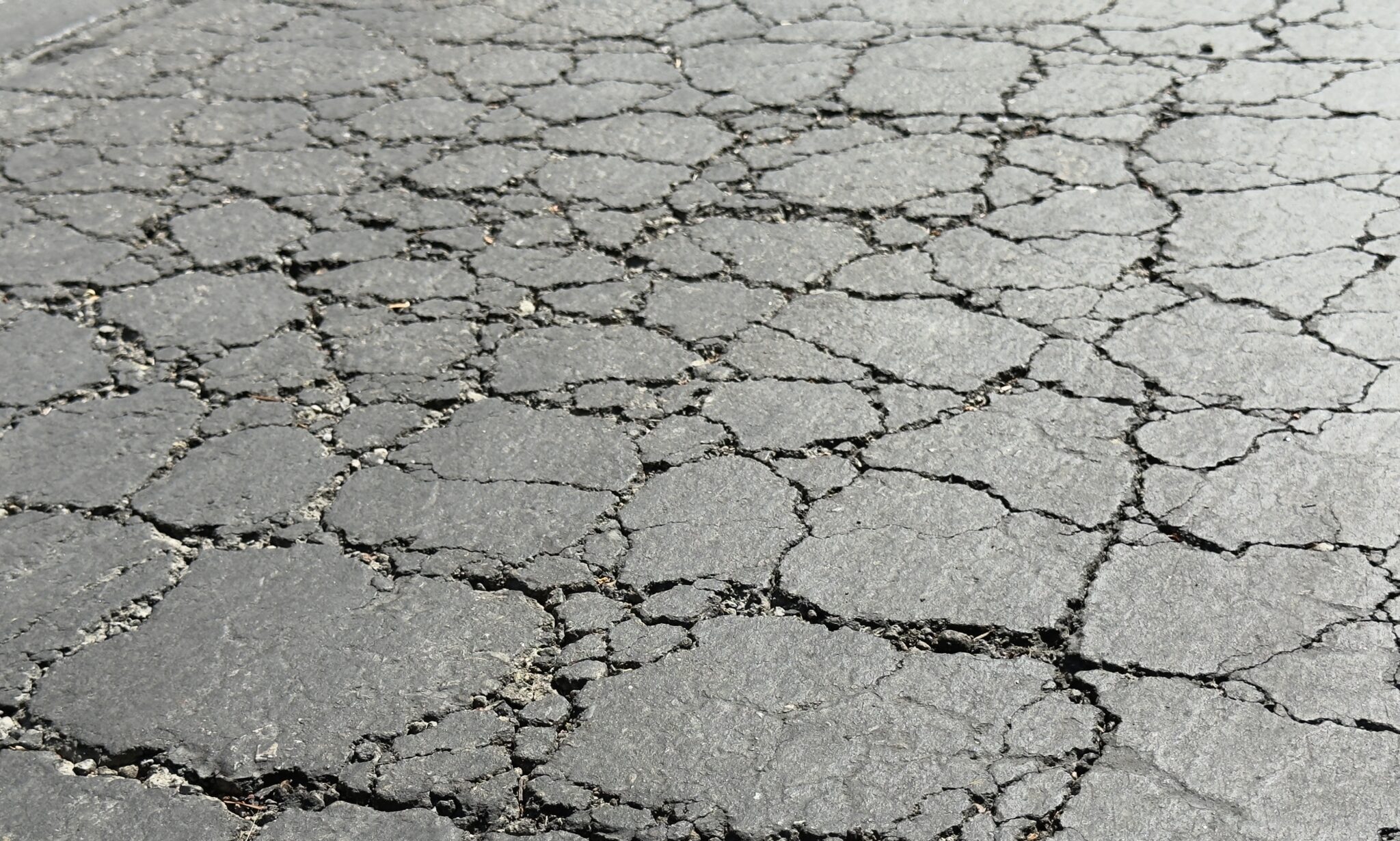
Standing water compromises flexible asphalt pavement through binder stripping and subgrade softening. As surface water penetrates micro-fissures in the wearing course, vehicle tires passing over the pooled area generate positive and negative pore pressures that force moisture deeper into the aggregate base. Over repeated load cycles, the saturated base loses bearing capacity, leading to rapid alligator cracking, base depressions, and potholes on the upstream edge of the device.
Professional installation practices mandate drainage accommodations to safeguard pavement life as part of a comprehensive parking lot maintenance program. Experienced paving crews construct edge cutouts, terminating the hump or bump 6 to 12 inches short of the curb line to preserve unobstructed gutter flow. Alternatively, where grade constraints require a curb-to-curb installation to prevent drivers from swerving onto sidewalks, contractor crews core subterranean drainage bypass pipes through the device base or reconstruct the cross-slope to direct water around the crown of the hump.
California Regulations: Fire Lane Compliance and Property Liability
Section 503.4.1 of the California Fire Code explicitly prohibits the installation of traffic calming devices on designated fire apparatus access roads without prior written authorization from the local fire code official. Commercial property managers often assume that private roads permit arbitrary speed control measures, only to receive municipal code enforcement citations demanding the immediate removal of unpermitted speed bumps that obstruct first responders.
Fire response apparatus, particularly aerial ladder trucks and heavy structural pumpers, suffer substantial mechanical stress when navigating abrupt elevation changes. Studies conducted by municipal fire departments indicate that a standard 3-inch speed bump delays emergency vehicle response times by up to 10 seconds per device while risking damage to expensive onboard medical equipment and steering systems. Consequently, municipal Fire Marshals across California frequently reject traditional speed bump proposals on primary access drives, permitting only engineered speed humps or speed cushions featuring wheel cutouts that allow wide-track emergency vehicles to pass unaffected.
Premises liability under California civil law introduces further operational exposure for property owners. If an unpainted, poorly illuminated, or non-standard speed bump damages an automobile’s oil pan or triggers a personal injury claim, the property owner can face liability for maintaining a dangerous condition on the premises. Compliance requires painting traffic calming profiles with retroreflective traffic marking paint, installing California MUTCD-compliant W17-1 warning signs, and maintaining clear sight distance so drivers can identify the profile change well in advance.
Hot-Mix Asphalt vs. Bolt-Down Rubber: Material Selection and Durability
Selecting between hot-mix asphalt (HMA) and prefabricated bolt-down rubber modules influences both initial capital expense and long-term pavement durability. Each material delivers distinct performance profiles under heavy commercial traffic:
- Structural Bond and Pavement Integration: Hot-mix asphalt devices form a permanent, monolithic structure with the underlying roadway when properly constructed with a tack coat adhesive and keyed-in tapered edges. Rubber modules rely entirely on mechanical anchor bolts drilled into the asphalt course. Under repeated heavy vehicular braking, these mechanical anchors pull loose, enlarge drill holes, and introduce pathways for moisture intrusion directly into the structural base.
- Load Bearing and Heavy Vehicle Deflection: Asphalt humps withstand constant loading from garbage trucks, delivery vans, and logistics transport without shifting. Prefabricated rubber devices, while flexible, tend to deform, crack, or tear under high-torque commercial turning maneuvers, requiring periodic tightening of hardware and module replacement.
- Long-Term Maintenance and Surface Rehabilitation: Asphalt traffic calming structures can be sealcoated, milled, and overlaid alongside the surrounding parking surface during scheduled maintenance. When rubber modules fail or tear free from their moorings, they leave exposed anchor holes and broken surface cavities that require immediate targeted asphalt repair solutions to prevent progressive subgrade deterioration.
For high-volume retail centers, industrial facilities, and master-planned communities, hot-mix asphalt remains the industry standard for durability, aesthetics, and structural integration. Prefabricated rubber units serve well for short-term seasonal traffic control or temporary construction detours where permanent roadway modifications are not yet justified.
Property managers evaluating traffic calming options in California must balance immediate vehicle deceleration goals against municipal fire safety mandates and subgrade drainage integrity. Contact our technical team for an on-site pavement evaluation to engineer a traffic calming layout that protects pedestrians while preserving your asphalt investment.