Rubberized asphalt incorporates recycled tire rubber into paving materials to improve certain performance characteristics. Depending on the mixture design and application, it can help resist cracking, support durability, and put recycled materials to productive use. But it is not automatically the best choice for every road, driveway, or commercial parking lot.
The decision depends on pavement condition, traffic loads, drainage, installation requirements, and long-term maintenance. Property owners and facility managers should evaluate these factors rather than rely on broad durability or sustainability claims.
What Is Rubberized Asphalt?
Rubberized asphalt is an asphalt paving material modified with rubber derived primarily from recycled vehicle tires. The rubber is processed into crumb rubber and incorporated into the asphalt binder or mixture through a specified production process. The resulting material can behave differently from conventional asphalt under traffic and environmental stress.
In California, rubberized hot mix asphalt (RHMA) is used in transportation infrastructure under Caltrans specifications. Rubberized asphalt should not be confused with rubber-based crack sealants or waterproofing membranes: those products serve different purposes and cannot replace a paving mixture.
Understanding Rubberized Asphalt and Asphalt-Rubber
Rubberized asphalt is a broad description of asphalt materials incorporating rubber, whereas asphalt-rubber refers to a more specific modified binder produced through controlled interaction between asphalt cement and rubber particles.
Caltrans construction guidance identifies crumb rubber modifier content of 18% to 22% by total asphalt-rubber binder mass in specified applications. That percentage describes the binder, not the finished pavement. Mixtures marketed under similar names can therefore have different performance and installation requirements.
How Rubberized Asphalt Is Made and Installed
Rubberized asphalt is produced by incorporating processed tire rubber into asphalt materials through controlled mixing. In wet-process applications, crumb rubber interacts with heated asphalt binder before the binder is combined with aggregates. Other approved systems use different production methods.
Manufacturing begins by processing discarded tires into crumb rubber and removing steel and other unwanted components. Aggregate selection, binder characteristics, production temperature, and quality-control procedures influence the finished material. Recycled content is useful, but environmental impact also depends on transportation, construction, maintenance, and eventual rehabilitation.
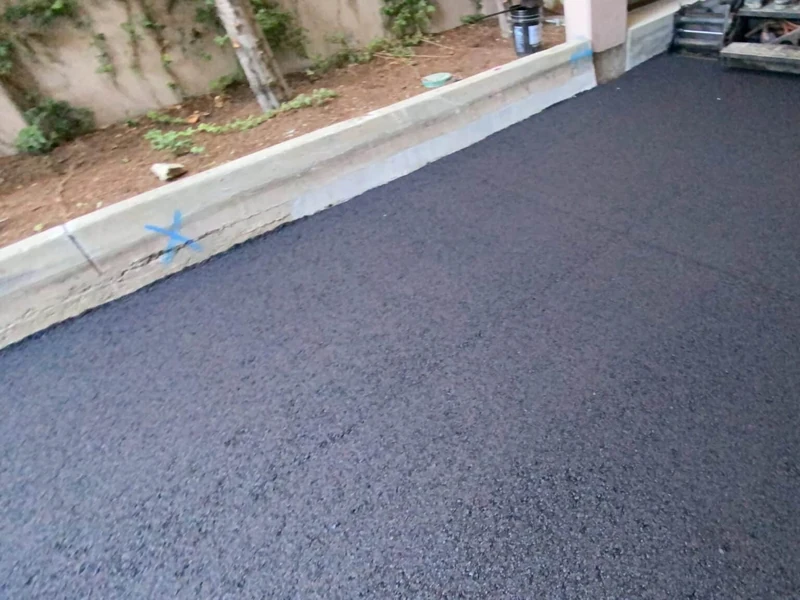
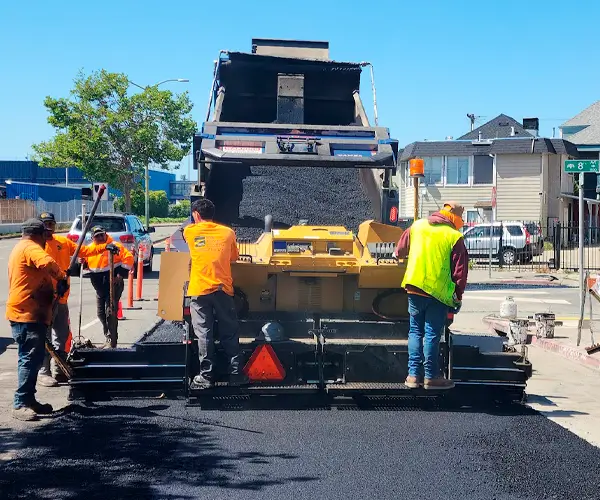
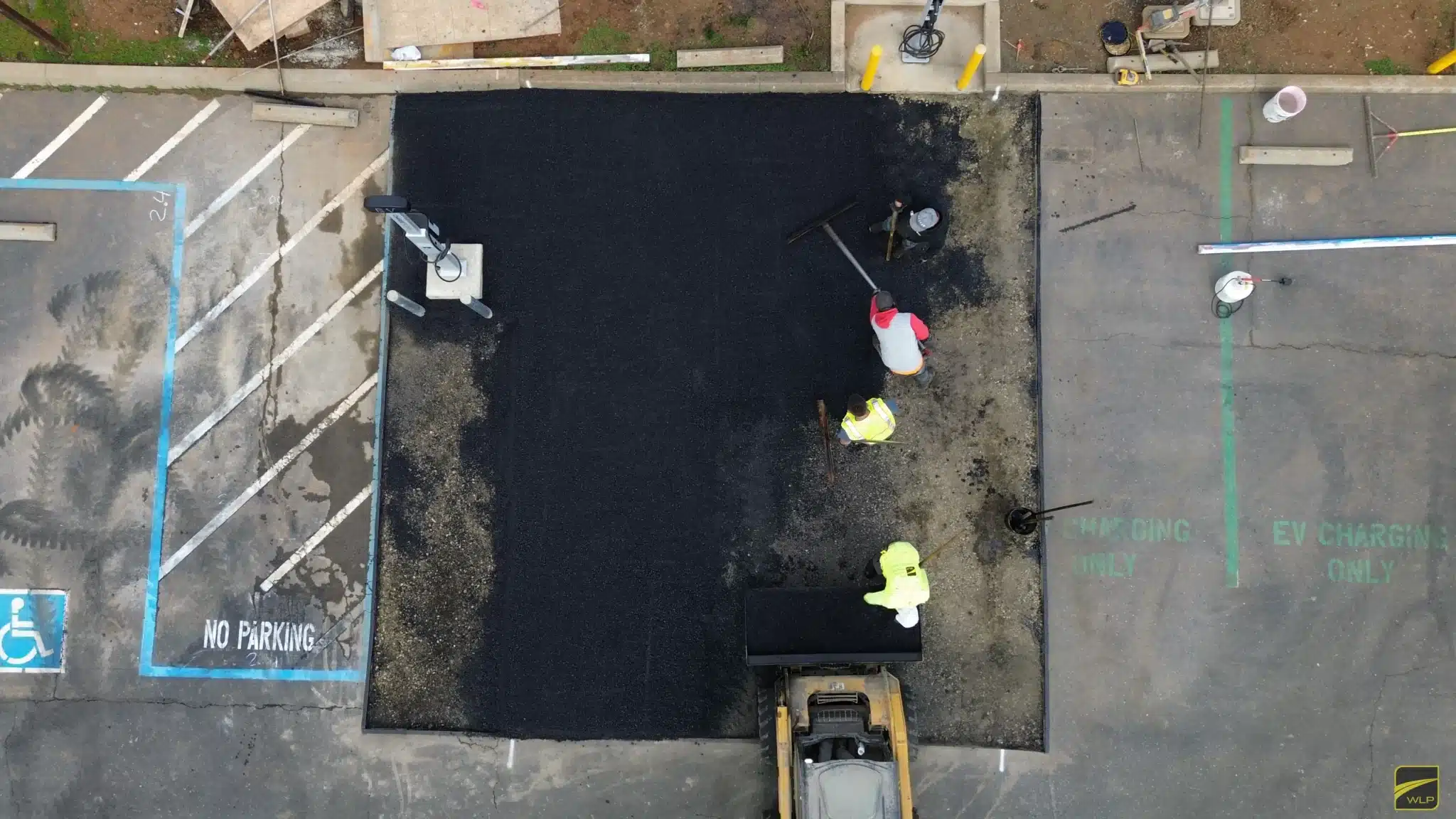
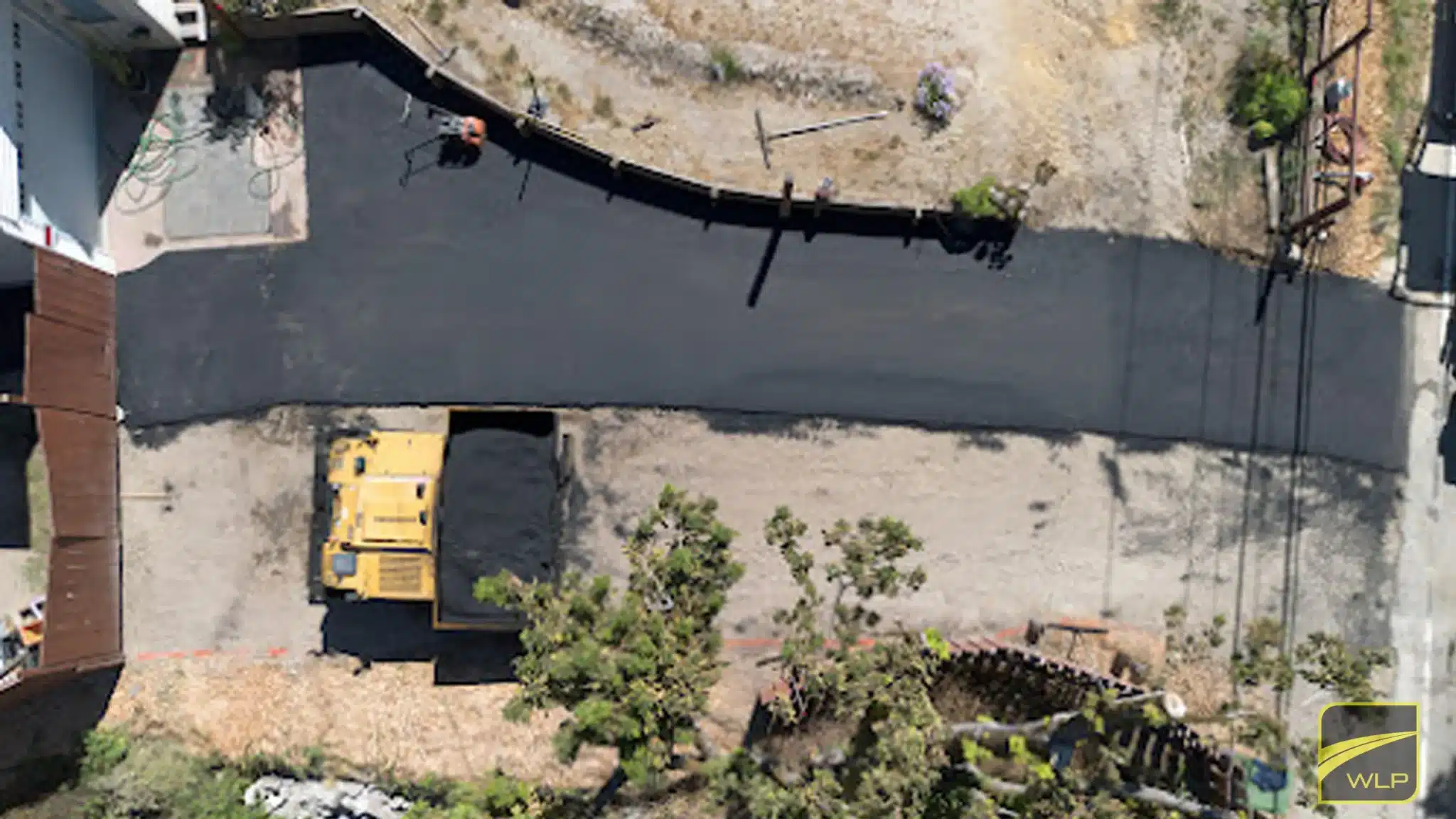
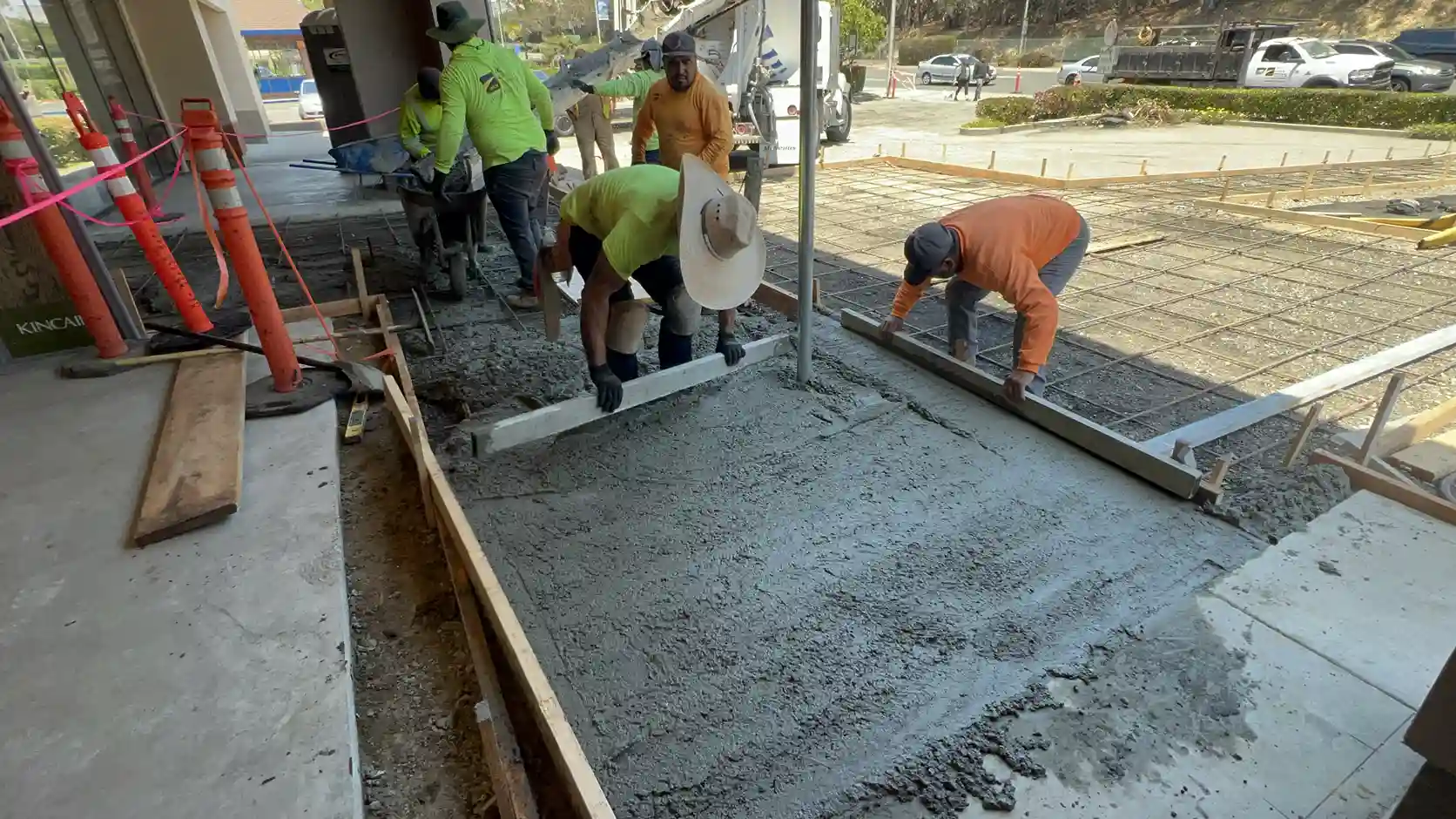
Successful rubberized asphalt installation depends on proper surface preparation, a stable base, and appropriate drainage to prevent water accumulation and protect the pavement structure over time. Mixture temperature, compaction, and suitable weather conditions also play an important role in achieving consistent results. Because some rubberized asphalt systems require specialized handling, paving projects in Northern California should account for seasonal rainfall and site-specific conditions when planning installation.
What Are the Benefits of Rubberized Asphalt?
Rubberized asphalt can offer advantages in cracking resistance, pavement performance, and recycled-material utilization when the mixture is properly designed and installed. Its performance is not uniform across every formulation or project.
Rubber modification can influence the binder’s ability to accommodate movement caused by traffic and temperature changes, helping resist certain types of cracking. It cannot permanently solve unstable soils, base failures, or drainage problems beneath an overlay.
Certain mixtures may resist deformation and deterioration under suitable service conditions. California tire-recycling programs recognize rubberized asphalt as a productive application for recovered tire materials, although recycled content alone does not prove a lower lifecycle environmental impact.
Some roadway applications have demonstrated lower tire-pavement noise. CalRecycle has described reductions of approximately 2–3 decibels under certain roadway conditions; that result cannot be promised for low-speed commercial parking lots.
Rubberized Asphalt vs. Conventional Asphalt
Conventional asphalt remains a practical material for roads, parking lots, and access areas. Rubberized asphalt introduces additional material and production considerations that may offer performance advantages under specific conditions.
Rubberized asphalt can cost more initially because of specialized materials, production requirements, and transportation logistics. The relevant comparison includes preparation, structural repairs, installation, traffic management, maintenance, and rehabilitation—not simply the cost per ton.
Rubberized asphalt may last longer in some applications, but there is no guaranteed lifespan. Pavement thickness, base stability, traffic, drainage, construction quality, and maintenance govern the outcome. A well-designed conventional pavement can outperform a poorly installed rubberized system.
Meet the Asphalt Options
Three options. Tap to see what’s inside.
Conventional Asphalt
A paving mixture of aggregates and asphalt binder. It remains a practical option for roads, parking lots, and access areas when designed for the site.
Rubberized Asphalt: A broad category of asphalt materials made with processed tire rubber. Depending on the mixture, it can help resist certain types of cracking.
Asphalt-Rubber: A specific rubber-modified binder made by combining asphalt cement and rubber particles under controlled conditions. It is used within a paving mixture.
These terms overlap: asphalt-rubber is a binder, not a separate finished pavement. The right choice depends on traffic, pavement condition, drainage, and installation. Illustrations are schematic, not to scale; yellow highlights are illustrative.
Where Does Rubberized Asphalt Make Sense?
Rubberized asphalt is appropriate when its documented properties address a defined pavement need and the project can satisfy design and construction requirements. Highways and public roads are established applications, supported by agency specifications.
Commercial access roads may be candidates where repeated vehicle loads and rehabilitation objectives justify the material. Heavy vehicles create concentrated stresses when braking, turning, or standing, so the entire pavement structure must be evaluated.
Commercial parking lots can also be considered, but low-speed turning, stationary loads, delivery traffic, and localized drainage often matter more than highway performance. Conventional asphalt may provide a more practical solution when it meets the site’s requirements.
When Rubberized Asphalt May Not Be the Best Choice
Rubberized asphalt may not be suitable when the existing pavement has unresolved structural damage, the specified mixture is unavailable locally, or its expected benefits do not justify added complexity. Material selection should follow a pavement-condition assessment.
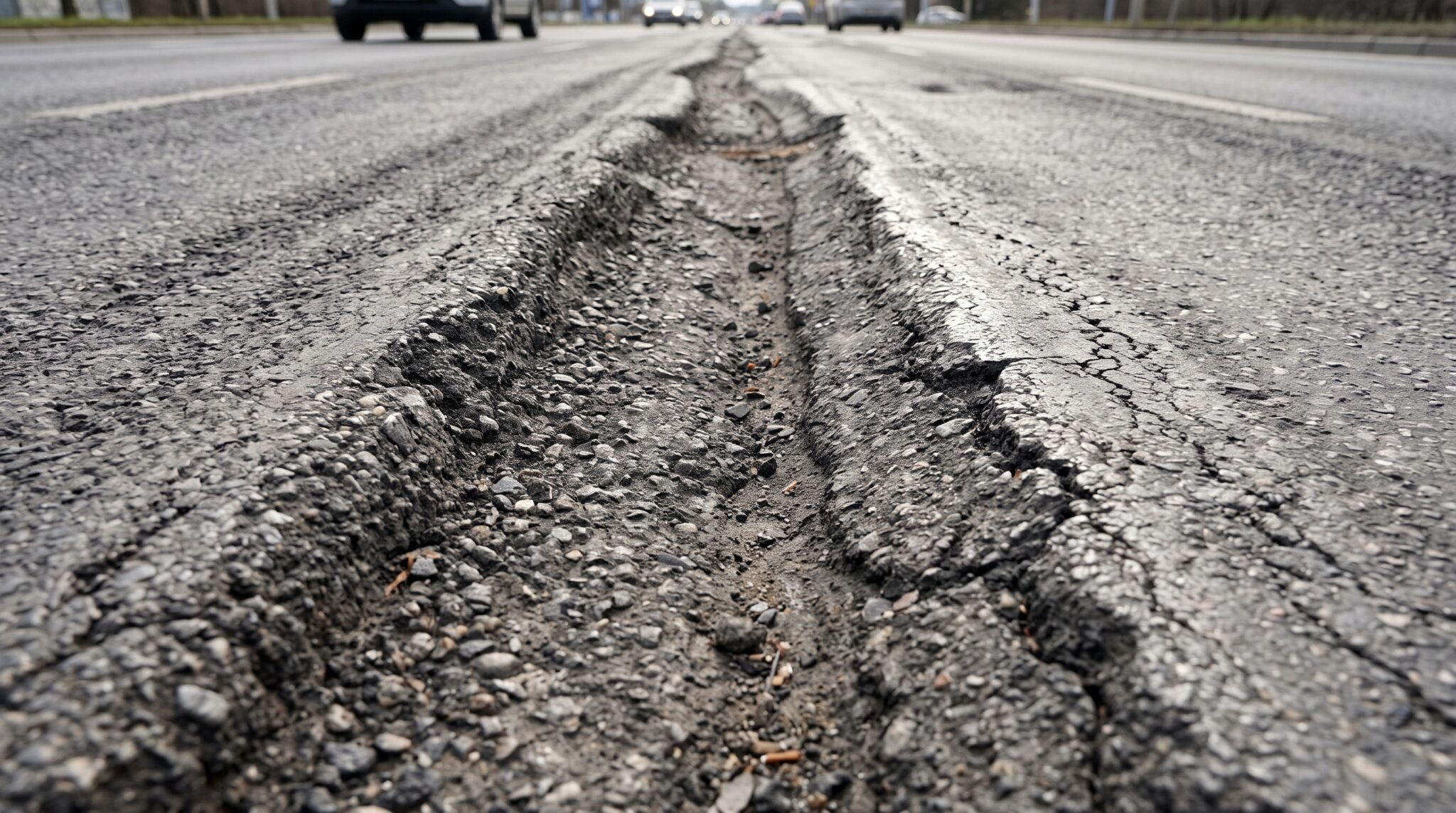
Alligator cracking, repeated settlement, severe deformation, and moisture-related damage can indicate failures below the surface. An overlay cannot replace reconstruction, base stabilization, or drainage improvements when those repairs are needed.
Supplier proximity, production capability, transportation time, and temperature management affect project feasibility. For lightly used areas with a sound base and adequate drainage, conventional asphalt may meet performance needs at a more practical cost.
What Should You Evaluate Before Choosing Rubberized Asphalt?
Before selecting rubberized asphalt, assess the existing pavement, expected traffic, drainage, mixture specifications, supplier availability, and lifecycle costs. Distinguish superficial distress from failures that extend into the supporting structure.
Traffic volume, vehicle weight, turning movements, braking, stationary loading, and surface geometry all influence pavement performance. Water entering the pavement system can cause damage regardless of binder formulation.
Compare construction costs with future inspection, repair, and rehabilitation. An asphalt road maintenance strategy should address the causes of deterioration.Depending on the pavement’s condition, localized treatments such as crack sealing and crack filling may be sufficient to address surface cracks without requiring full resurfacing.
A paving proposal should identify the specified mixture, preparation work, construction method, and quality-control requirements. We Love Paving’s field operations team can help evaluate California commercial pavement conditions and appropriate rehabilitation options. The right pavement is the one suited to the property’s actual use and long-term needs.