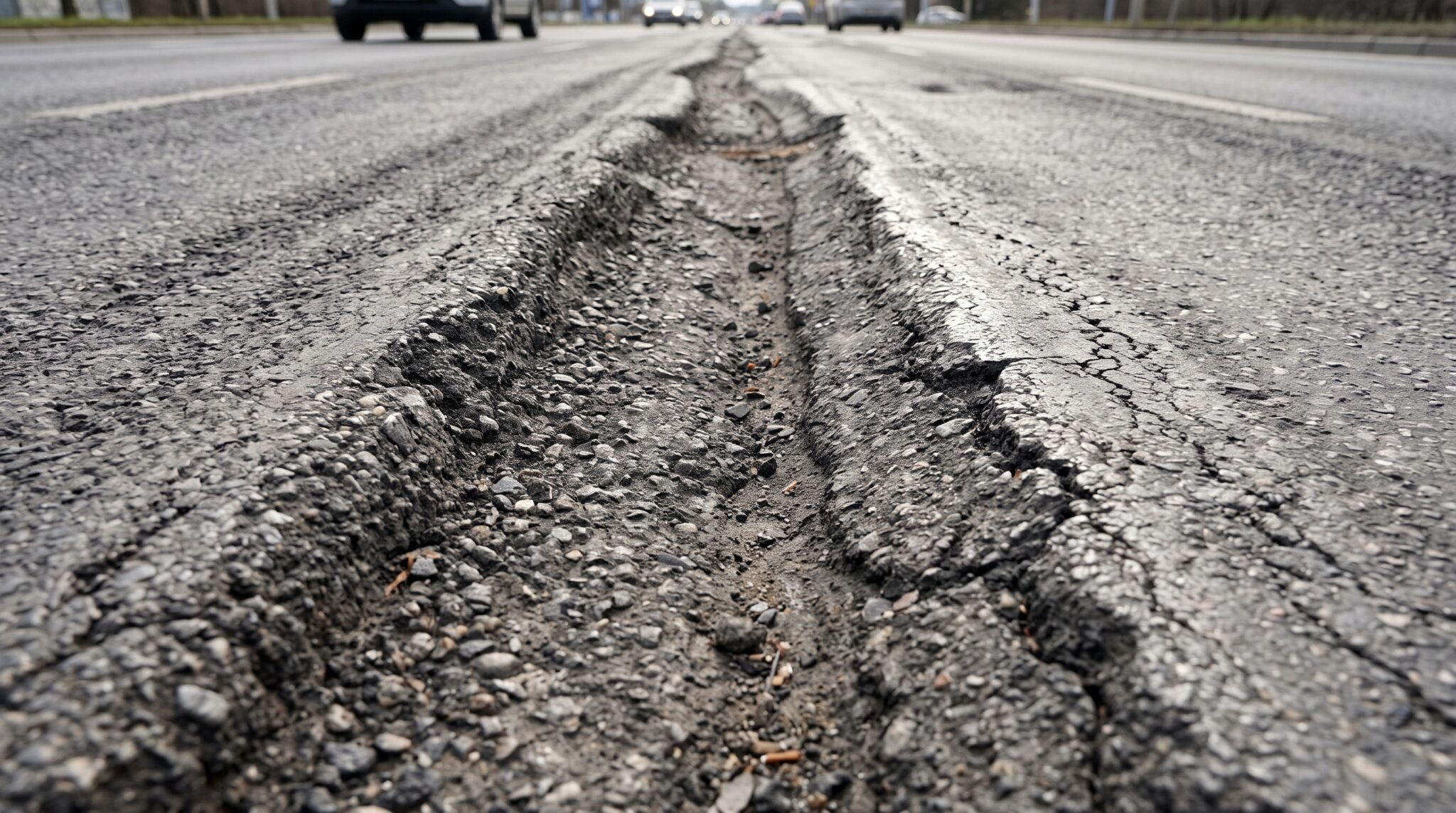
Rutting in asphalt pavement refers to permanent, longitudinal surface depressions that develop directly within the wheel paths of repetitive vehicular traffic. Rather than a localized pothole or superficial weathering, rutting represents an irreversible mechanical displacement: the pavement structure has physically deformed under stress, resulting in visible troughs along the drive lanes accompanied in many cases by raised longitudinal ridges along the edges. For commercial parking facilities, HOA roadways, and distribution centers across California, these depressions are more than a cosmetic nuisance; they pose substantial liability concerns by channeling rainwater, triggering hydroplaning risks, accelerating moisture infiltration into underlying structural layers, and indicating that the pavement system is failing to carry the actual vehicular loads imposed upon it.
Understanding the engineering nature of rutting is essential for facility managers and property owners because applying a superficial cosmetic fix such as a simple sealcoat or thin skin patch will invariably fail within weeks or months. Rutting stems from non-elastic plastic strain accumulation, meaning the pavement materials have absorbed shear stresses exceeding their shear strength or consolidation limits. Whether the root failure originates inside the top layers of the asphalt concrete itself or deep within the aggregate base and subgrade soils determines the entire repair strategy. Addressing rutting effectively requires diagnosing whether the instability is superficial or structural, assessing depth against established engineering thresholds, and executing targeted milling or full-depth reconstruction rather than temporary cover-ups.
Mix Rutting vs. Subgrade Rutting: Field Diagnostic Criteria
The visual presence of longitudinal ruts does not immediately reveal which structural layer has failed, yet identifying the failure plane is the single most critical diagnostic step prior to selecting a remediation plan. Asphalt rutting fundamentally occurs in two primary modes: mix rutting (often called surface rutting or plastic deformation) and subgrade rutting (structural consolidation failure). Mix rutting occurs strictly within the top asphalt concrete layers typically the upper 2 to 3 inches when repeated heavy axle loads induce internal shear failure within an insufficiently stiff or over-asphalted hot mix. Visually, mix rutting is characterized by distinct lateral upheavals, where the asphalt binder and mineral aggregates have physically squeezed outward under tire pressures, forming pronounced humps or ridges directly adjacent to the sunken wheel troughs.
Subgrade rutting, by contrast, indicates a failure deep within the aggregate base course or the untreated native subgrade soils beneath the pavement section. When heavy structural loads pass over a pavement whose aggregate base is inadequately thick, improperly compacted, or saturated with unmanaged groundwater, the entire structure sinks downward into the subgrade. In the field, subgrade rutting presents as broad, wide depressions along the wheel paths with gentle transitions and completely flat margins, showing an absence of lateral shear ridges along the trough boundaries. If a property manager commissions surface milling on a roadway experiencing subgrade rutting, the newly laid surface will deform again almost immediately because the structural foundation beneath remains compromised and unable to support vehicular dead weight.
Recognizing these geometric signatures allows property managers and inspectors to avoid costly misdiagnoses. When field crews place a standard straightedge across the distress area, a sunken track flanked by bulging shoulders indicates mix instability that can frequently be solved by removing and replacing the surface lift. Conversely, a uniform dip without lateral displacement signals that water damage, subgrade pumping, or inadequate structural design has compromised the foundation, necessitating deeper sub-base remediation before any surface repaving can succeed.
Root Causes in Commercial Parking Lots and Heavy Traffic Corridors
Commercial facilities experience asphalt rutting primarily when heavy wheel loads interact with high operational pavement temperatures and canalized traffic patterns. In commercial shopping centers, industrial logistics yards, and multi-family residential complexes, heavy vehicles most notably commercial refuse collection trucks, cross-dock delivery semi-trailers, and transit buses consistently follow exact, unyielding drive lanes. An average loaded three-axle garbage truck imposes structural axle loads ranging between 30,000 and 40,000 pounds, delivering repetitive downward and horizontal shear pressures. When combined with slow speeds, frequent stops, and tight turning radiuses, this concentrated channelization subjects the asphalt matrix to maximum shear deformation cycles without allowing the viscoelastic materials time to recover elastically between passes.
Climate conditions dramatically amplify this vulnerability across California and particularly within Northern California inland valleys. While ambient temperatures may register at 95°F to 105°F during summer heat spells, dark asphalt surfaces routinely absorb solar radiation, elevating internal pavement temperatures beyond 140°F (60°C). As thermal levels rise, asphalt binder viscosity drops substantially, reducing the overall dynamic modulus of the mix. If the original pavement mix design utilized an asphalt binder with inadequate high-temperature performance grading (such as failing to specify appropriate Superpave PG grades for severe standing-load conditions), or if rounded natural sands were overutilized instead of high-friction crushed angular aggregates, the aggregate skeleton cannot interlock effectively under heavy wheels, leading directly to permanent plastic displacement.
Subsurface moisture and compaction inconsistencies during the construction phase constitute the third foundational trigger. In regions experiencing intense winter precipitation, inadequate surface drainage or high groundwater tables can saturate the untreated aggregate base course. Moisture softens fine soil particles, reducing the subgrade California Bearing Ratio (CBR) and destroying inter-aggregate friction. Simultaneously, if the original paving contractor achieved air void contents exceeding 8% through under-compaction, post-construction vehicular traffic acts as a secondary compactor over time, crushing and densifying the wheel lanes into premature longitudinal trenches.
Measuring Severity Levels and Operational Safety Hazards
Quantifying rut depth is vital for establishing whether an asphalt surface poses an immediate safety hazard and determining the urgency of intervention. In professional pavement condition assessments, severity is benchmarked using standardized evaluation criteria, such as ASTM D6433 (Standard Practice for Pavement Condition Index Surveys for Roads and Parking Lots) and Caltrans maintenance guidelines. Field teams evaluate rutting by laying a 6-foot to 10-foot straightedge perpendicularly across the wheel path, measuring the maximum vertical distance between the bottom of the straightedge and the lowest point of the trough:
- Low Severity (1/4 inch to 1/2 inch / 6 to 13 mm): The depression is visibly detectable and noticeable during vehicle operation, but driving control remains unaffected. Immediate structural intervention is rarely critical, though monitoring is necessary to observe acceleration rates.
- Medium Severity (> 1/2 inch to 1 inch / > 13 to 25 mm): The depression creates noticeable vehicle pull and steering resistance. Rainwater collects inside the wheel rut rather than shedding toward catch basins. Corrective planning should begin before base layers become saturated.
- High Severity (> 1 inch / > 25 mm): Severe channelization creates pronounced vehicle hydroplaning hazards during wet weather, causes low-clearance vehicles to drag, and exposes the pavement to rapid structural breakdown. At this depth, the asphalt binder often begins developing fatigue-driven alligator cracking along the edges of the trough, facilitating rapid water intrusion directly into the structural base.
Leaving rutted pavement unaddressed introduces severe financial and operational consequences for commercial property owners. When rainwater fills depressions exceeding half an inch in depth, vehicle tires lose direct contact with the road surface at moderate speeds, generating liability exposures for tenant collisions or pedestrian slip-and-fall claims near crosswalks. Furthermore, ponding water softens the asphalt matrix through moisture-induced stripping, accelerating the conversion of linear ruts into catastrophic pothole clusters and deep structural base washouts.
Corrective Engineering: Milling, Patching, and Structural Reconstruction
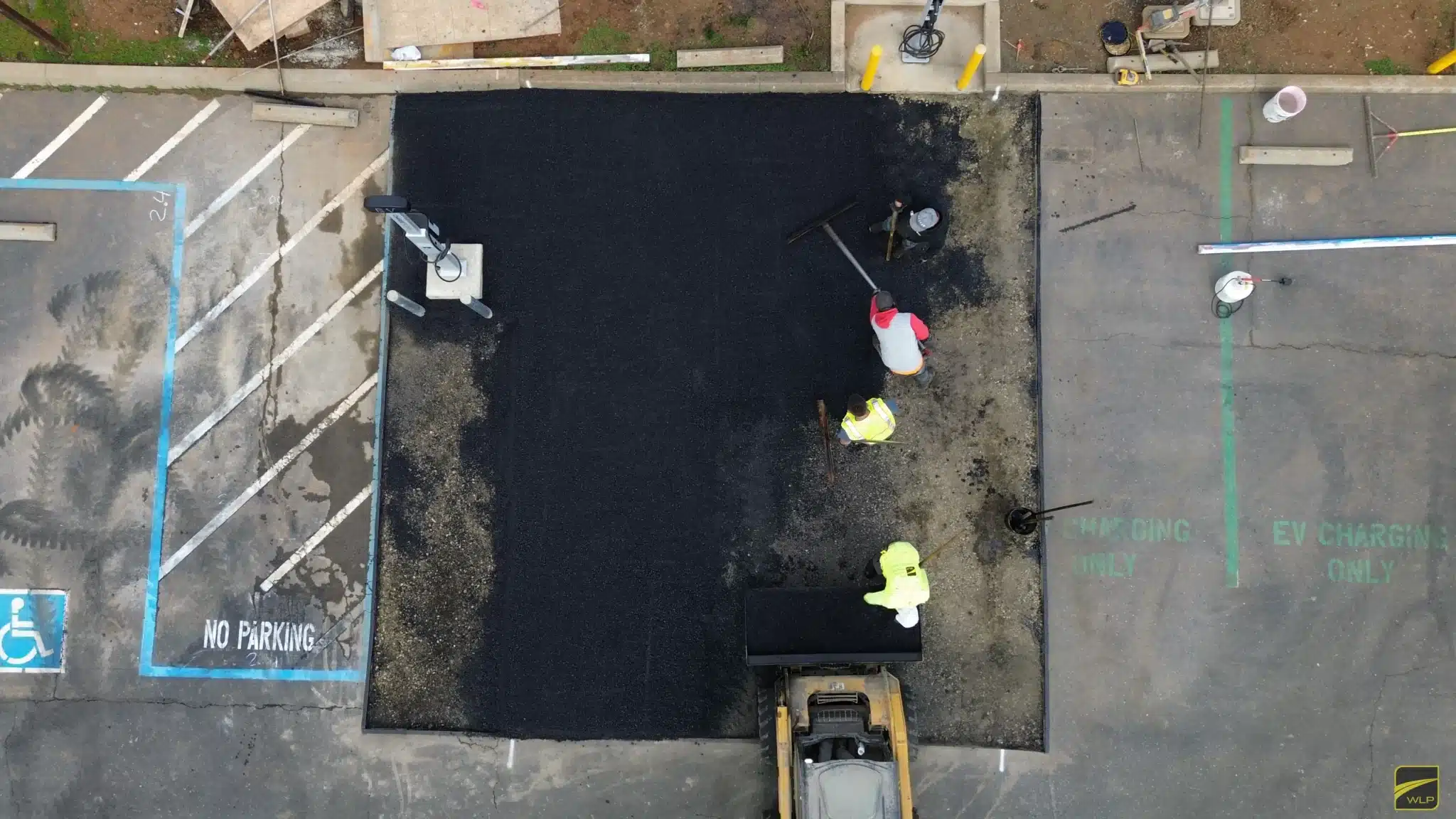
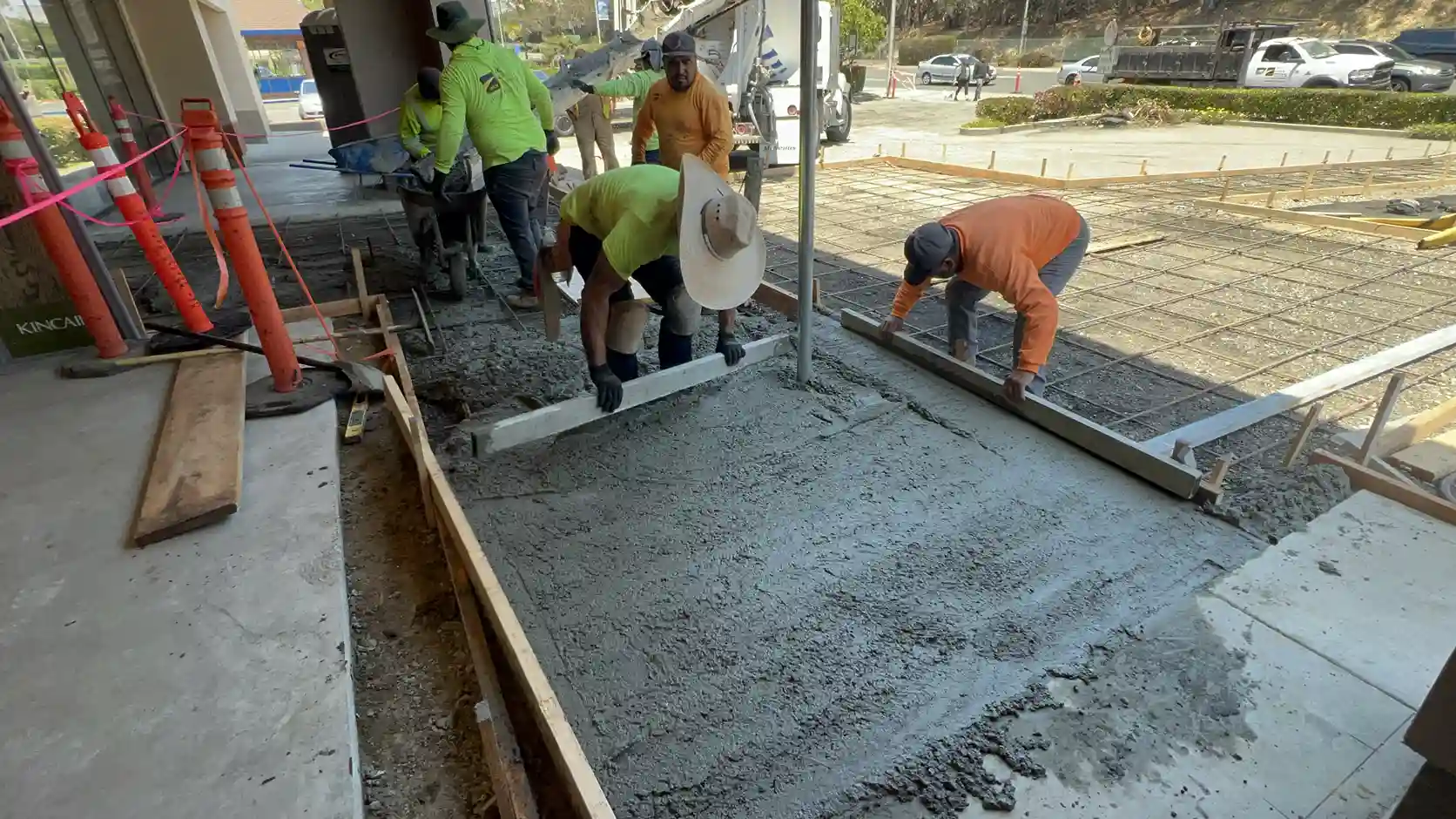
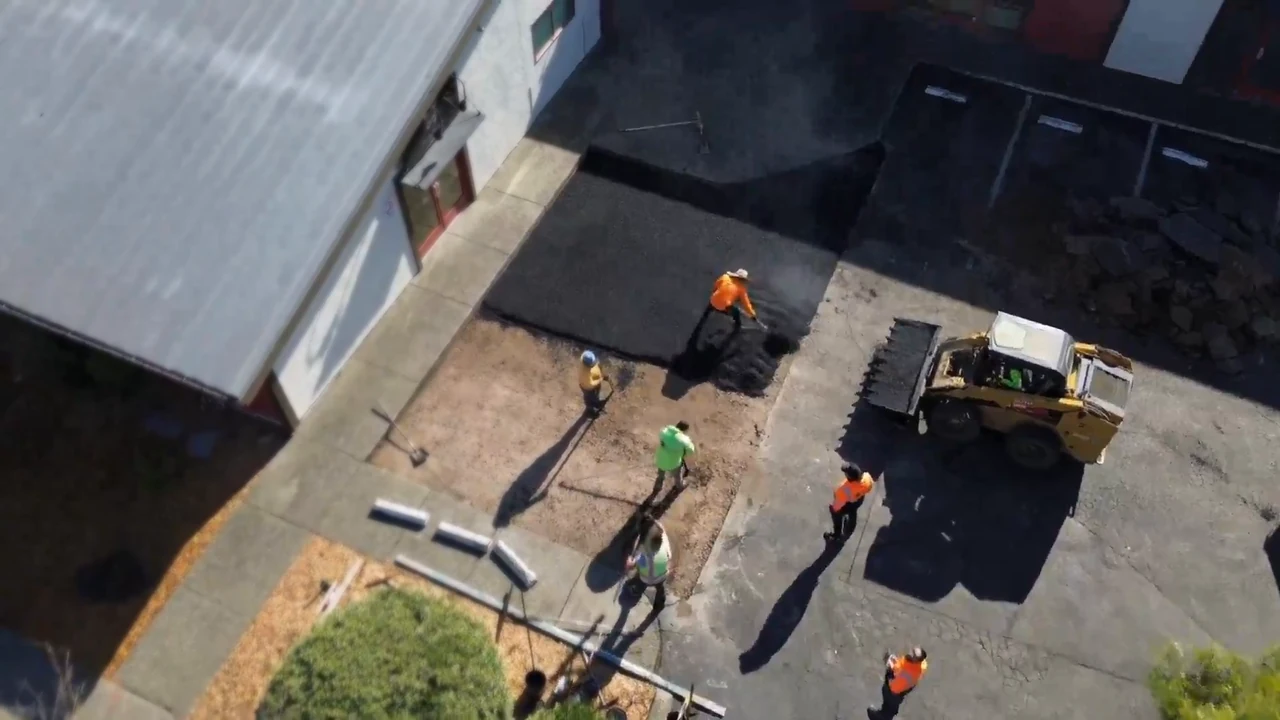
Selecting the appropriate engineering repair depends entirely on whether diagnostic measurements reveal surface mix failure or deep subgrade destabilization. When rutting is strictly confined to the upper asphalt concrete layers and exhibits lateral upheavals without subgrade settlement, asphalt milling and inlay (often termed mill and fill) provides the most cost-effective and structurally sound remedy. Specialized cold milling machines grind down the unstable, rutted surface lift generally removing 1.5 to 3 inches of compromised material without disturbing the sound aggregate base course below. After cleaning and applying a heavy tack coat conforming to municipal standards, crews install and compact a high-stability hot-mix asphalt (HMA) designed with stiff, polymer-modified binders and crushed angular aggregates specifically formulated to resist heavy static loads.
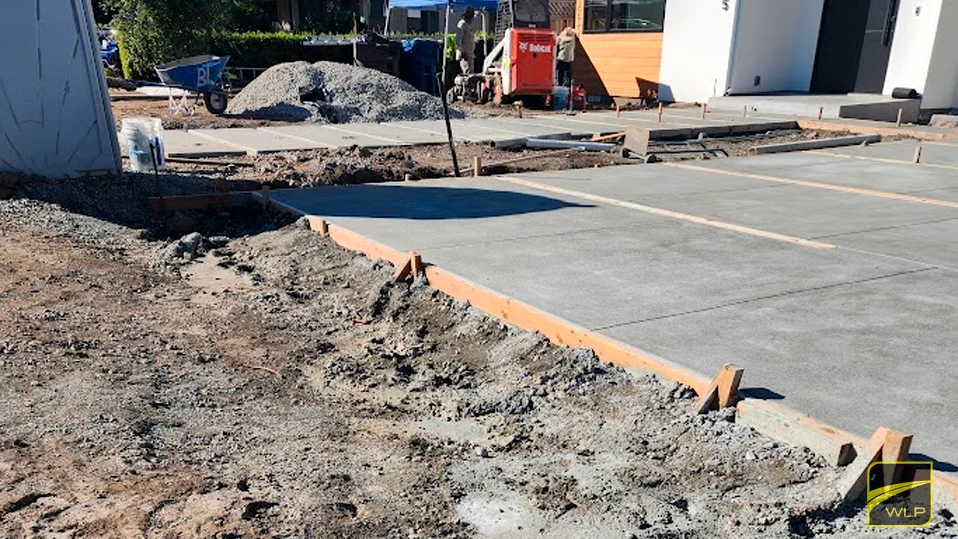
When testing reveals that rutting originates from subgrade settlement, poor soil compaction, or sub-base moisture saturation, surface milling alone will fail. In these situations, property managers must utilize specialized asphalt patching methods capable of rebuilding the load-bearing strata from the bottom up. Full-depth reclamation and deep structural patching require excavating the asphalt layers, removing wet or unstable subgrade soils, installing stabilizing geotextile fabrics where native clay soils exhibit low bearing strength, and placing compacted Class 2 aggregate base before paving new asphalt courses. Property managers seeking a comprehensive overview of budgeting, logistics, and repair scopes can consult our commercial asphalt patching strategy to align structural solutions with long-term capital improvement cycles.

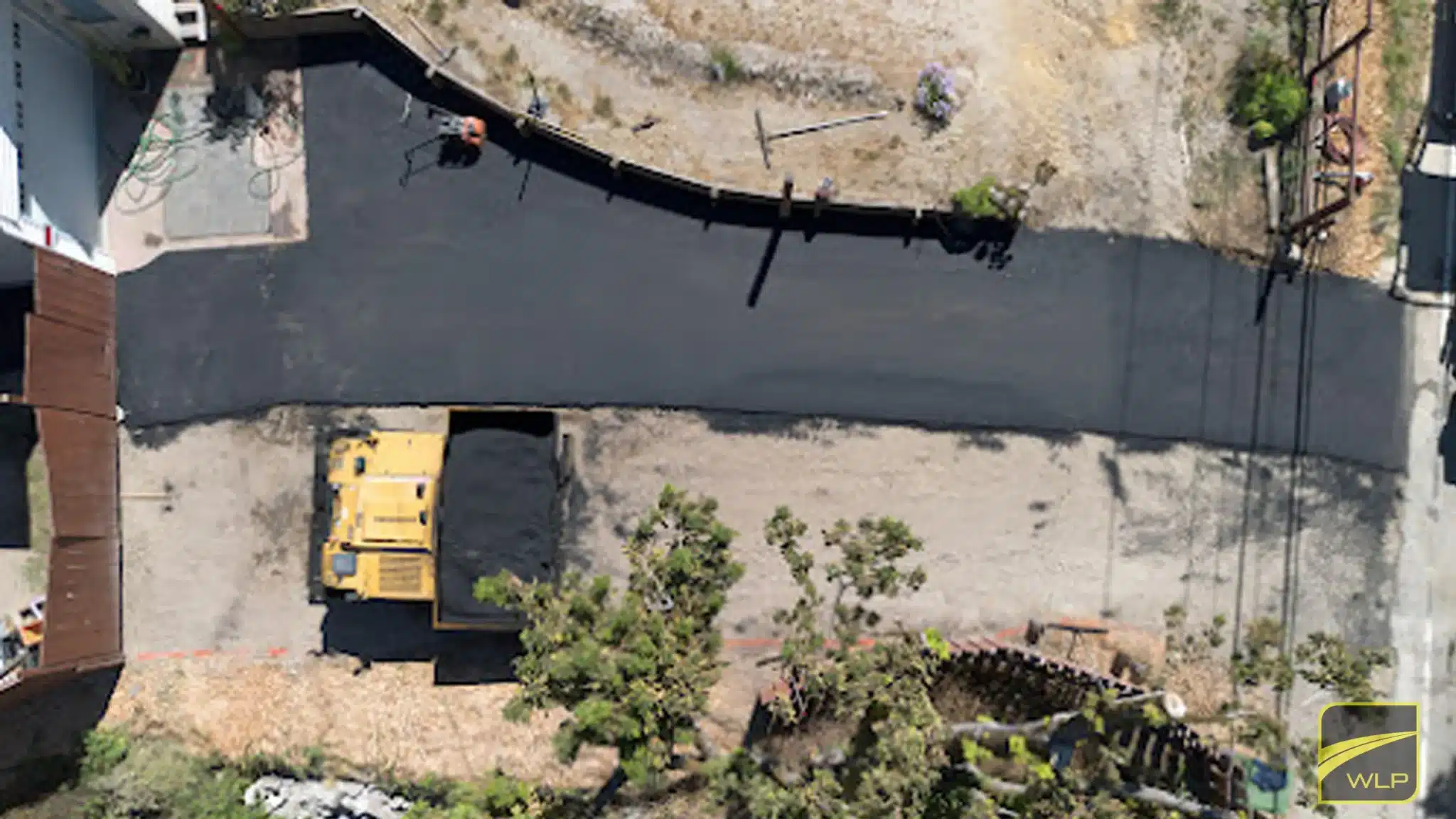
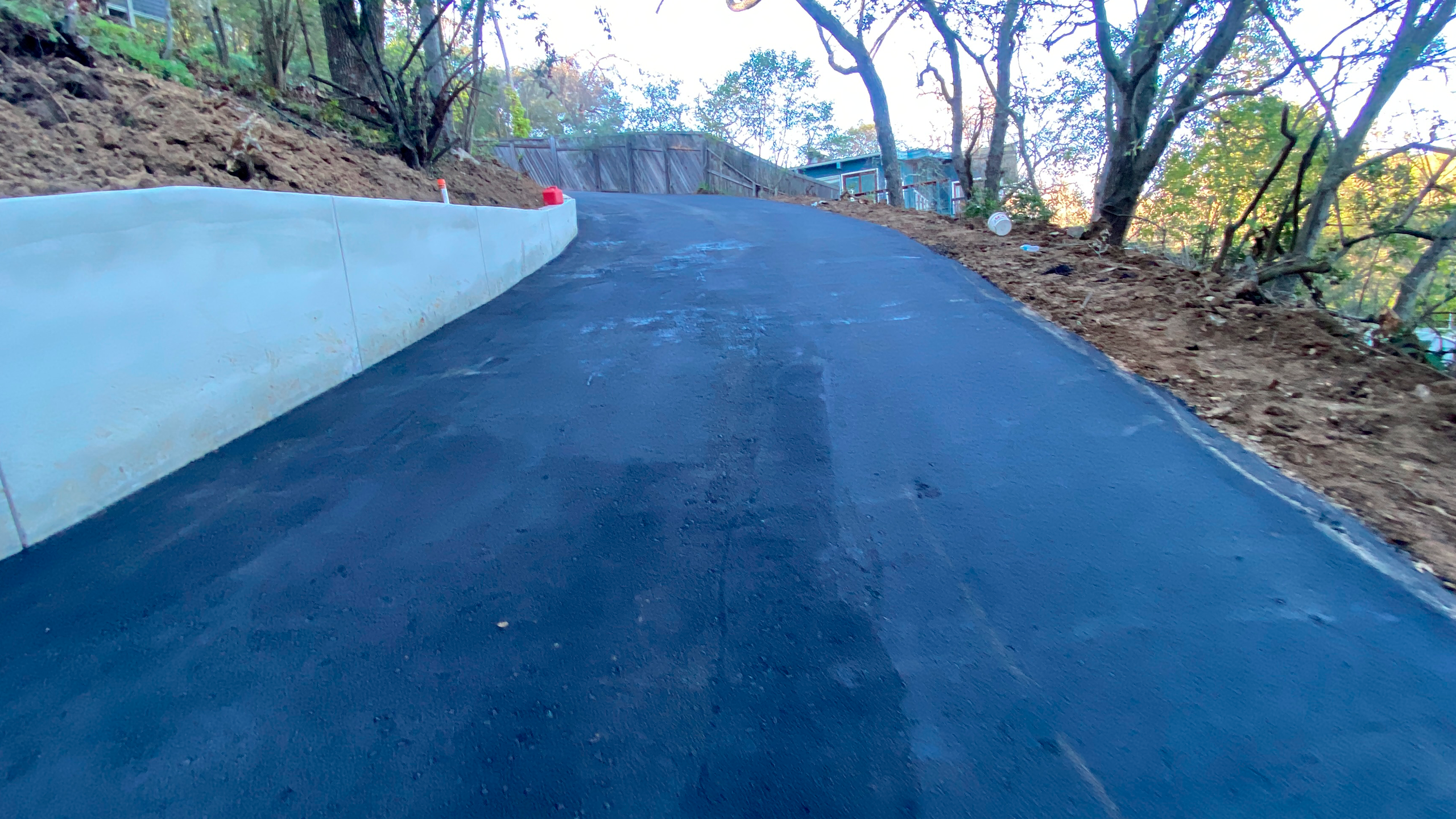
Under no circumstances should property owners attempt to remediate rutting through surface sealcoats, slurry seals, or thin skin patches. A sealcoat is an emulsion formulated to protect healthy asphalt from ultraviolet oxidation and surface fluids; it possesses zero structural integrity and will not bridge or level a plastic depression. Similarly, placing a feathered asphalt skin patch directly inside an active wheel rut creates a weak, unbonded scab that quickly delaminates under tire shear stresses. Long-term structural integrity requires either removing the unstable asphalt lift entirely or engineering a robust pavement section from the subgrade upward through professional asphalt paving in California.