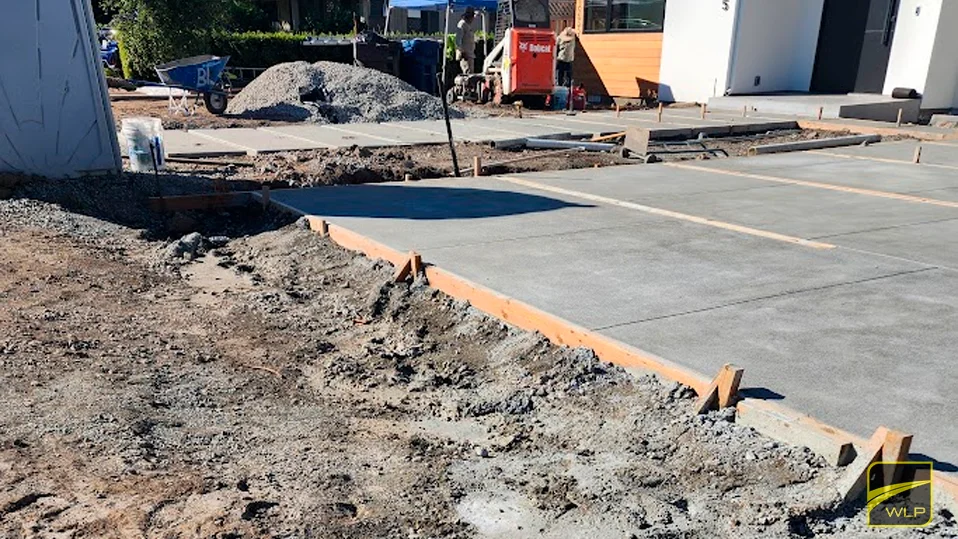
Concrete inherently shrinks as it cures and expands when temperatures rise, making random cracking inevitable if internal stresses have no place to go. Concrete joints act as planned stress-relief points, guiding where cracks occur and separating slabs from fixed structures. For commercial properties across Northern California where expansive clay soils and microclimate temperature swings place continuous stress on flatwork installing the correct types of concrete joints is fundamental to structural longevity.
The 3 Core Types of Concrete Joints and How They Work
Concrete joints fall into three main functional categories: control (contraction) joints, expansion (isolation) joints, and construction joints. Control joints introduce weakened planes to handle shrinkage during curing, expansion joints isolate slabs from adjacent elements to absorb thermal movement, and construction joints define the stopping point between different concrete pours. Choosing the right design depends on load expectations, slab thickness, and environmental exposure.
| Joint Type | Primary Purpose | Movement Handled | Common Location |
|---|---|---|---|
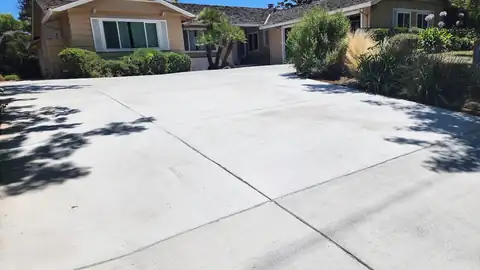
| Control Joint (Contraction) | Forces concrete to crack in a clean, invisible straight line underneath, preventing random surface cracking as the slab cures and shrinks. | Drying Shrinkage & Internal Strain | Sidewalks, parking lots, driveways, commercial flatwork |
| Expansion Joint (Isolation) | Acts as a flexible shock absorber, giving expanding slabs room to flex during hot weather without crushing walls, curbs, or columns. | Thermal Expansion & Structural Isolation | Building foundations, light pole bases, wall abutments, curbs |
| Construction Joint | Creates a seamless bridge between separate daily pours using dowels or keyways to transfer heavy vehicle weight without edge breaking. | Vertical Shear & Pour Strain | Daily pour stopping points, loading docks, commercial aprons |
Control Joints: Timing, Spacing, and Depth Rules
A control joint creates a straight, intentionally weakened line across a slab so that tensile stresses caused by drying shrinkage cause a clean crack beneath the surface mark rather than across the visible pavement. According to ACI 302.1R guidelines, saw-cut control joints must reach a minimum depth of 1/4 the total slab thickness (for example, 1.5 inches deep for a 6-inch slab). If the cut is too shallow, internal stress will bypass the joint and form random surface cracks.
Spacing for control joints typically spans 24 to 30 times the slab thickness, capped at roughly 15 feet for standard commercial paving. Timing is equally critical: in hot interior regions of California like the Central Valley, saw cutting must occur between 4 to 12 hours after pouring as soon as the surface can support the equipment without raveling to stay ahead of rapid moisture loss and unguided tensile cracking.

Expansion and Isolation Joints: Managing Thermal and Structural Movement
Expansion joints, often called isolation joints, completely break the bond between adjacent concrete slabs or between a slab and a rigid structure such as a building foundation, drainage inlet, or light pole base. When summer temperatures spike, concrete expands; without a compressible filler material (such as asphalt-impregnated fiberboard or closed-cell foam) placed through the full depth of the joint, the expanding slab exerts intense lateral force against adjoining structures, causing spalling or buckling.
In areas with expansive soil conditions frequently encountered across Bay Area job sites isolation joints also prevent differential ground movement from transferring bending forces directly into flatwork. Proper execution requires positioning full-depth joint material prior to pouring, ensuring no rigid concrete bridges cross the gap.
Construction Joints: Pour Interruptions and Load Transfer Systems
Construction joints mark the boundary where one concrete pour stops and another begins later, whether due to daily project limits or planned batching schedules. Unlike control joints that rely on aggregate interlock, a construction joint is a complete vertical plane that must handle vertical shear stress from heavy vehicular traffic. Without mechanical load transfer devices, wheel loads can cause differential settling across the seam.
For commercial aprons and loading bays, modern concrete paving services integrate smooth steel dowel bars or keyways embedded within the construction joint. These smooth dowels allow horizontal expansion and contraction while keeping both sides of the joint aligned vertically, preventing edge breaking under heavy delivery trucks.
Commercial Joint Maintenance and Joint Sealing in Northern California
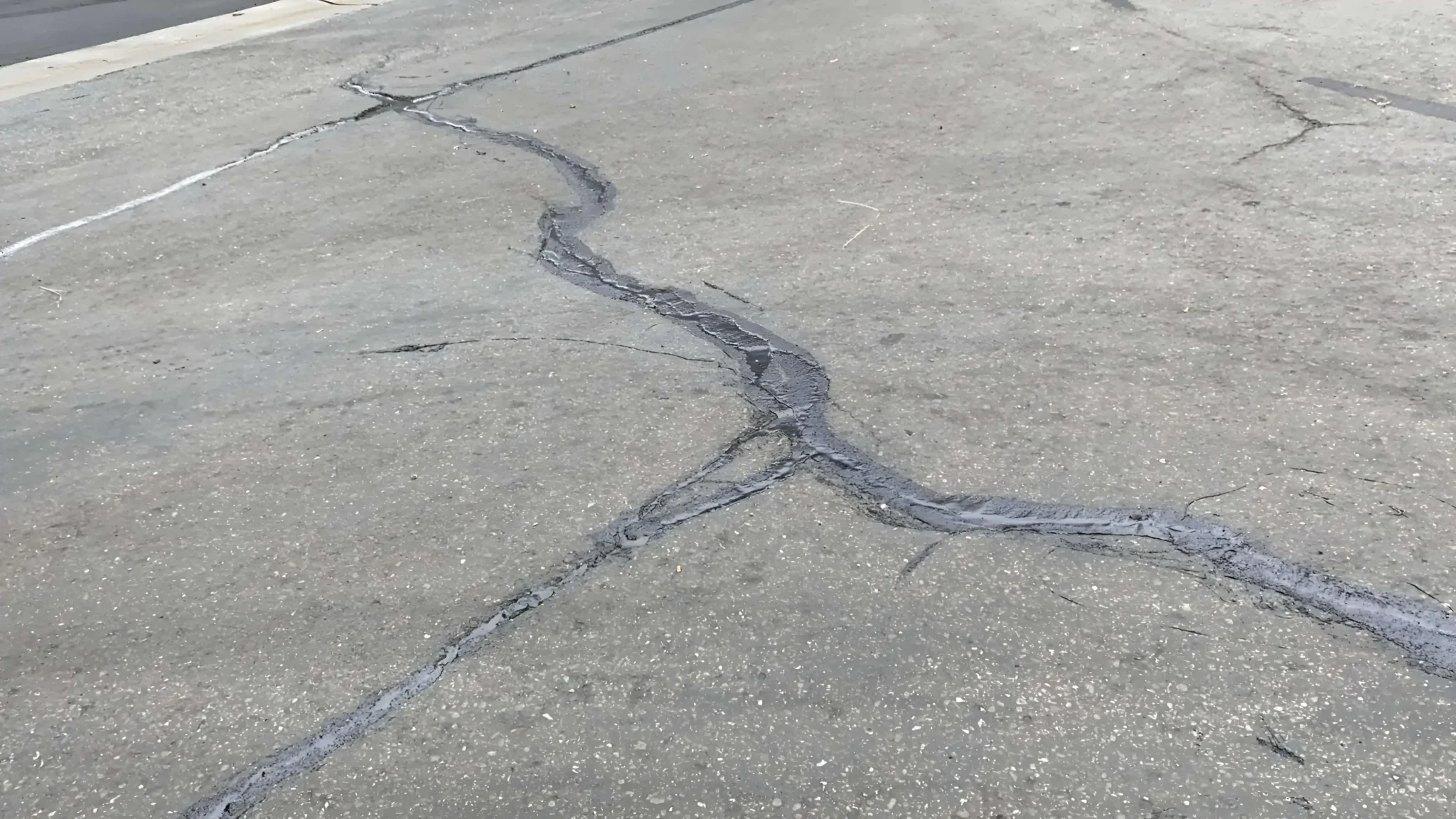
Creating precise joints is only half the battle; maintaining them is what prevents long-term pavement destruction. Unsealed or poorly sealed joints allow rainwater and irrigation runoff to penetrate the subbase, softening the underlying soil and eventually leading to base failure or sub-slab erosion. Additionally, trapped incompressible debris like sand and gravel prevents joints from closing during warm weather, concentrating stresses that shatter joint edges.
Protecting flatwork against water intrusion requires elastomeric sealants, such as cold-applied polyurethane or silicone, installed over a proper backer rod. Addressing joint maintenance early helps avoid widespread pavement cracking mechanisms that compromise safety and aesthetics. Relying on a team equipped for professional concrete installation ensures your property’s joints are designed, cut, and sealed to handle California’s traffic and climate demands.