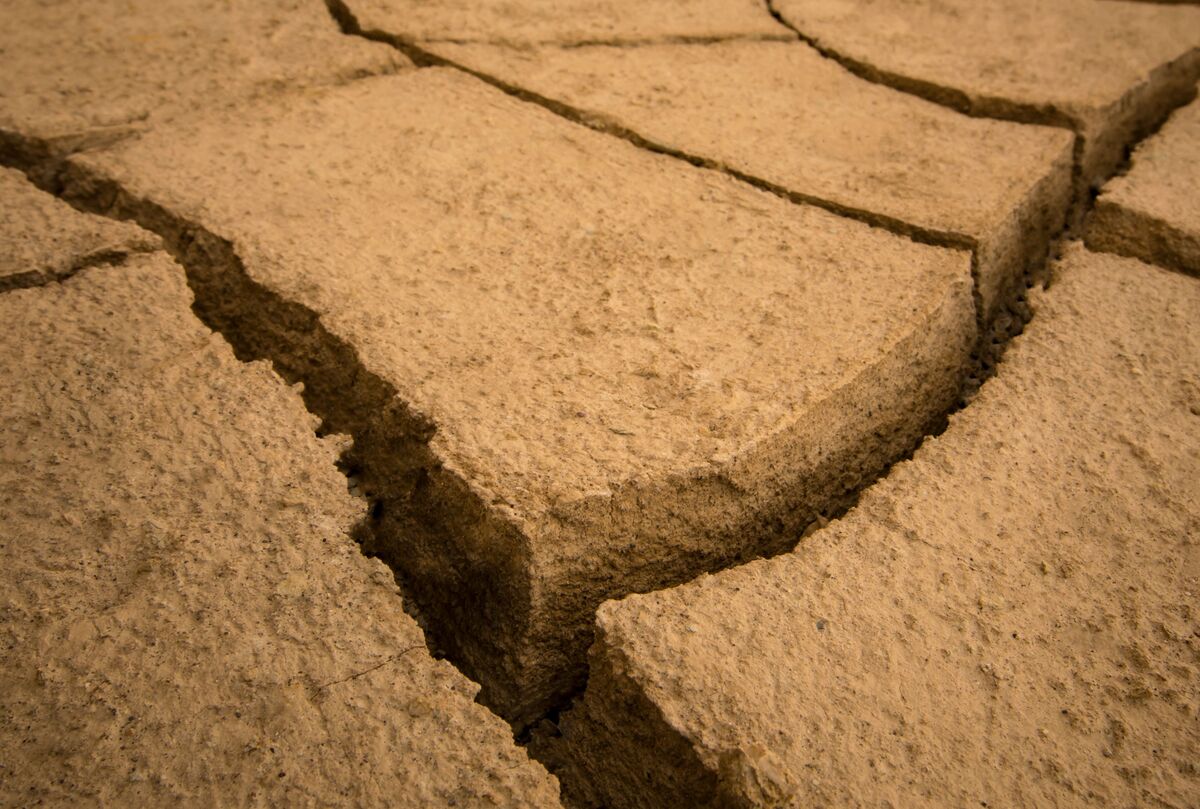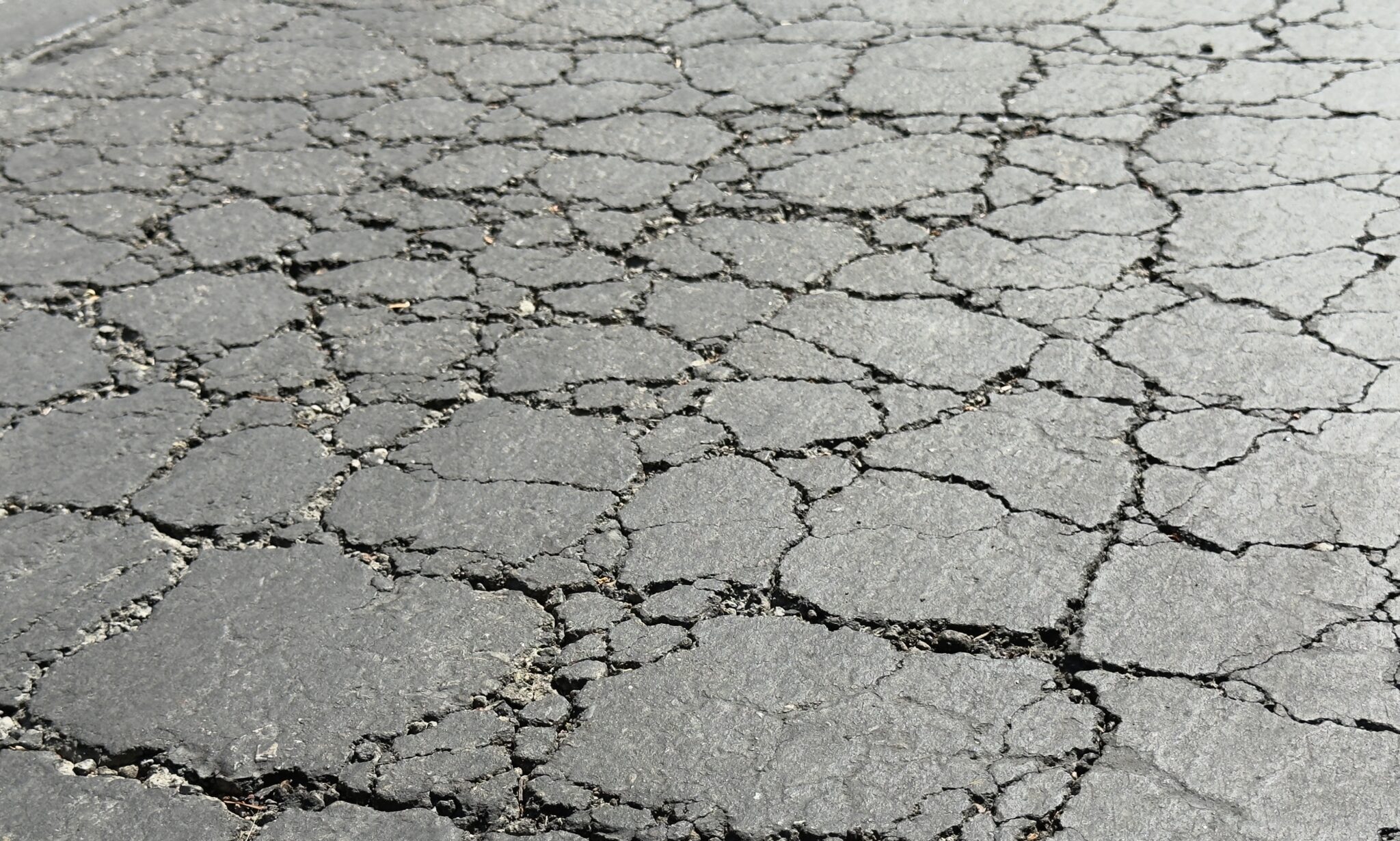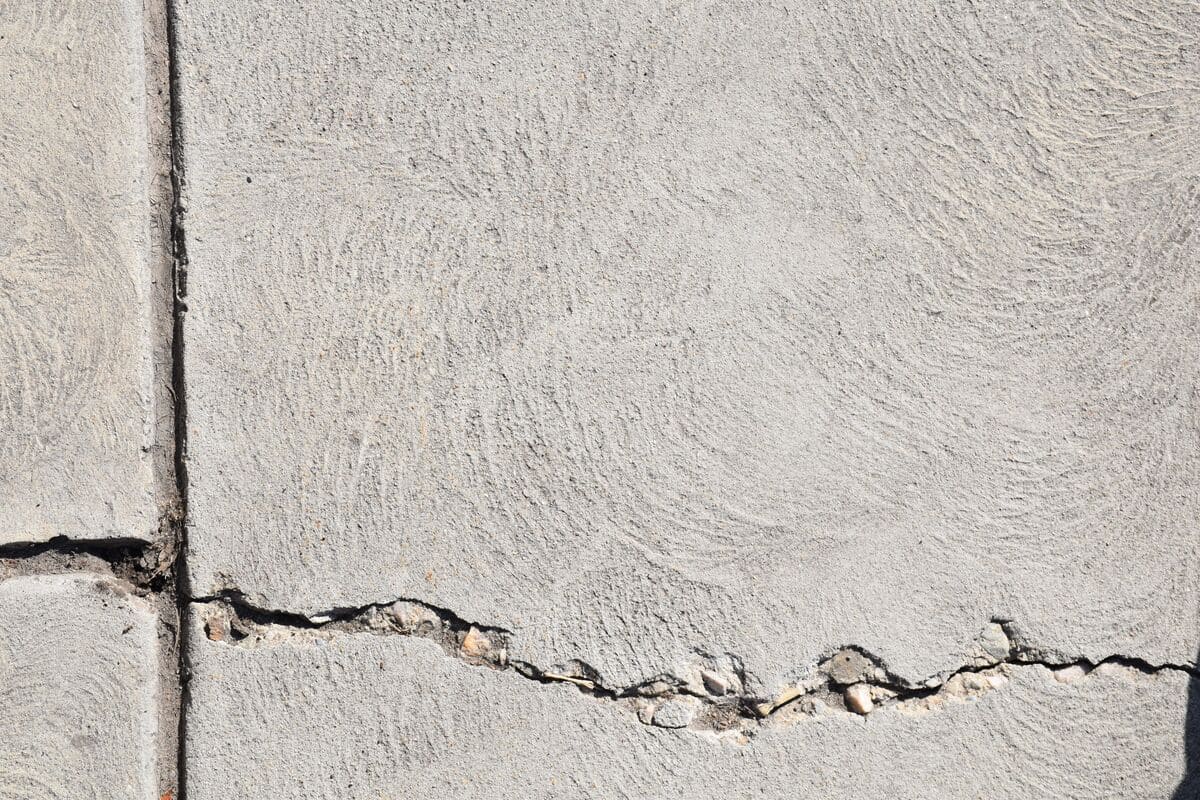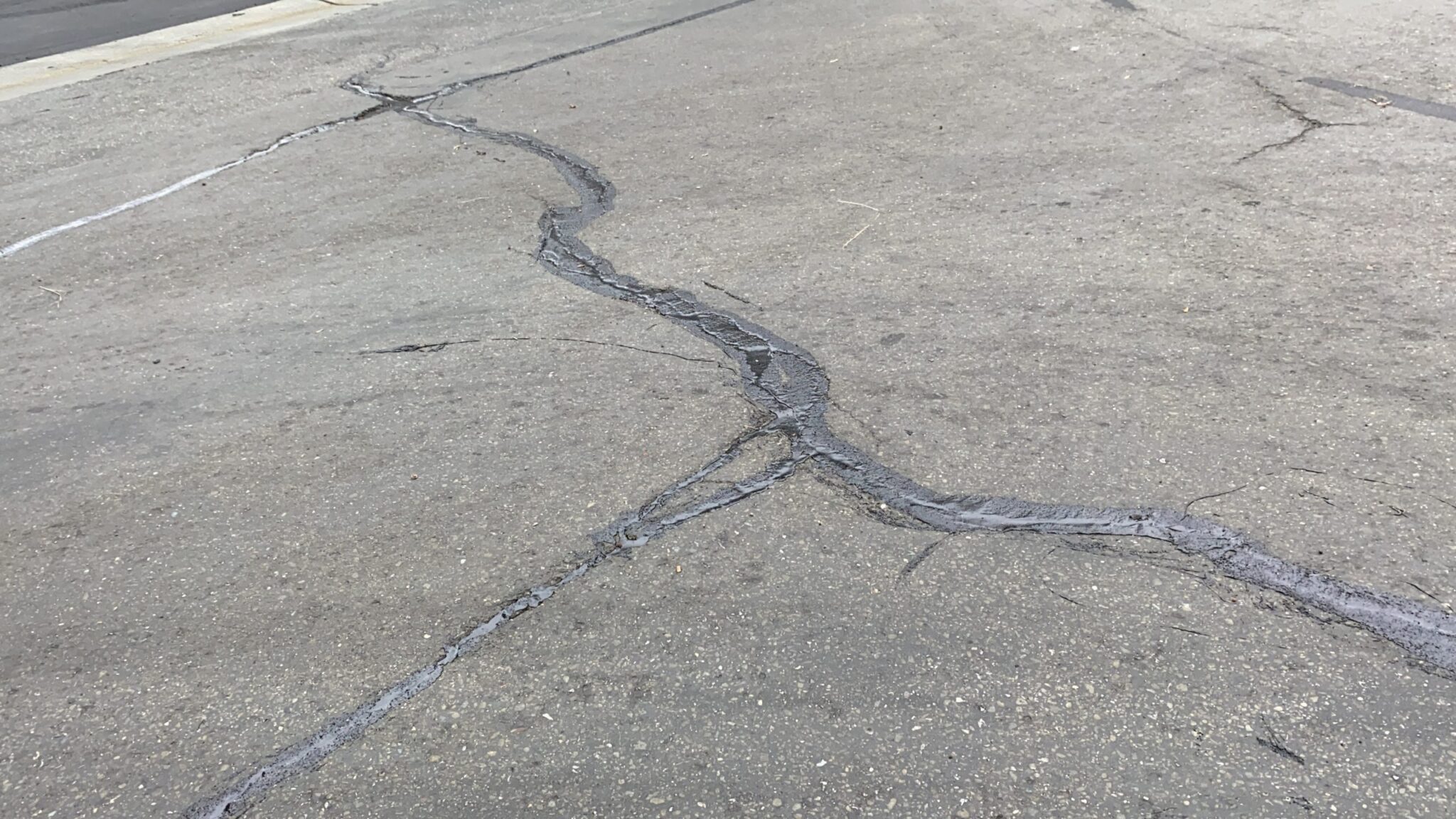
Asphalt block cracking presents as an interconnected grid of square or rectangular fractures across a paved surface, dividing the pavement into distinct slabs ranging from one square foot to one hundred square feet. Property managers, HOA directors, and commercial facility coordinators often spot this geometric pattern across parking stalls and idle circulation zones, immediately fearing that the pavement base has collapsed under heavy traffic. According to the field operations team at We Love Paving (CSLB Licensed #1049649, C12 Earthwork and Paving), block cracking is an environmental, non load associated distress rather than a structural foundation failure.
Understanding the physical mechanism behind these rectangular fractures saves commercial property owners significant capital. Misinterpreting asphalt block cracking as deep subbase failure leads to costly, unnecessary excavations leads to costly, unnecessary excavations and structural rebuilds, while mistaking it for superficial hairline weathering results in premature pavement failure when winter moisture breaches the structural aggregate base. This technical guide outlines the chemical and thermal drivers of block cracking, details the measurement standards established by ASTM D6433 and Caltrans engineering guidelines, and provides an actionable blueprint for targeted, long term repair.
What Is Asphalt Block Cracking and What Causes It?
Asphalt block cracking occurs when the asphalt binder loses its volatile compounds, oxidizes under solar exposure, and shrinks as daily temperatures drop, pulling the surface apart into rectangular patterns. Unlike fatigue distress caused by excessive heavy axle weights, block cracking can appear across areas that receive zero vehicle traffic. The distress develops primarily as an aging phenomenon in the top layer of the asphalt concrete, where the flexible bitumen transforms into a rigid, brittle material that can no longer expand and contract with environmental cycles.
In California, high levels of ultraviolet radiation and solar heat absorption accelerate this photo oxidation process significantly. Asphalt binder consists of maltenes, which provide flexibility and cohesion, and asphaltenes, which provide structural body. As direct sunlight and atmospheric oxygen bake the pavement, the volatile maltene fractions evaporate or convert chemically into heavier asphaltenes. Over time, the asphalt surface stiffens and loses tensile relaxation properties. When night falls and ambient temperatures drop, the pavement matrix attempts to contract volumetrically. Because the rigid asphalt layer is restrained by friction against the underlying aggregate base, tensile stresses build within the mix. Once these internal tensile forces exceed the reduced tensile strength of the aged binder, the surface snaps along intersecting stress lines, creating characteristic rectangular blocks.
Vehicle traffic patterns also play a surprising role in the distribution of block cracking across commercial properties. Regular vehicular travel provides a continuous kneading action, as warm rubber tires compress the surface aggregate and help maintain binder flexibility near the surface. In contrast, peripheral parking spaces, overflow stalls, and wide commercial storage yards receive minimal tire kneading. As a result, commercial property managers routinely notice that rarely used parking stalls develop pronounced block cracking years before the primary entrance lanes show any sign of distress. Inadequate initial compaction during construction can also exacerbate this vulnerability, as elevated air voids permit oxygen and water vapor to penetrate deep into the asphalt matrix, accelerating binder oxidation throughout the full depth of the wearing course.

Block Cracking vs Alligator Cracking: How to Avoid a Costly Misdiagnosis
Distinguishing block cracking from alligator cracking is the single most critical diagnostic decision a property owner can make, as the two distresses stem from entirely different root causes and require vastly different budgets. Block cracks form large, orthogonal rectangles that typically measure between 1 foot by 1 foot and 10 feet by 10 feet across the pavement surface, occurring in traffic lanes and idle parking stalls alike. Alligator cracking, technically termed fatigue cracking, forms small, multifaceted polygons measuring only a few inches across, resembling the skin of a reptile, and develops exclusively within repeated vehicle wheel paths.
The engineering difference between these two conditions dictates whether your repair requires surface intervention or deep reconstruction. Block cracking is driven by climatic stress and binder stiffness in the upper asphalt lift, meaning the aggregate subbase below the pavement remains stable, dry, and structurally sound. Conversely, alligator cracking indicates that heavy axle loads have caused excessive tensile strain at the bottom of the asphalt layer, repeatedly flexing the pavement over a weakened, moisture saturated base until structural fatigue cracks propagate upward to the surface. Treating alligator cracking with topical crack fillers is completely ineffective because the underlying base will continue to deflect under vehicle movement, reopening the surface within weeks.
Confusing these two distress mechanisms leads to substantial misallocation of maintenance capital. If a contractor misidentifies asphalt block cracking as alligator cracking, they may advise an owner, they may advise an owner to fund complete structural dig outs, subbase recompaction, and full depth paving over hundreds of square yards, charging tens of thousands of dollars for foundation issues that do not exist. On the other hand, misdiagnosing alligator cracking as block cracking leads facility managers to approve surface level sealing that fails almost immediately when commercial delivery trucks enter the site. Careful inspection of crack spacing, pattern geometry, and location relative to vehicle wheel paths reveals the correct diagnosis and protects the capital budget.
Cracking
Usually a Surface issue: large rectangular grids (1’×1′ to 10’×10′) caused by climate & asphalt aging.
Smart fix: Topical crack sealing & surface treatment. Do not pay for full reconstruction!
Cracking
Always Structural fatigue: small reptile-skin polygons in wheel paths over a weak, wet base.
Smart fix: Deep full-depth dig-out & subbase recompaction. Surface sealers will fail in weeks.
Severity Levels and Repair Options: The ASTM D6433 Decision Matrix
Commercial pavement distress surveys rely on the standardized criteria of ASTM D6433 (Standard Practice for Roads and Parking Lots Pavement Condition Index Surveys) to determine crack severity and select appropriate repair methods. Under this standard, asphalt block cracking severity is quantified by crack width by crack width and the condition of the fractured edges. Measuring these physical parameters allows facility managers to balance preventative preservation against structural restoration, ensuring that repair funds address the exact physical state of the pavement.
| Severity Level (ASTM D6433) | Crack Width / Edge Condition | Structural Mechanism | Recommended Engineering Protocol |
|---|---|---|---|
| Low Severity | Width < 1/4 inch (6 mm); edges are sharp and unspalled; no aggregate loss. | Purely environmental; structural integrity of the asphalt layer remains fully intact. | High pressure air cleaning followed by specialized rubberized crack sealing or rejuvenating surface seal. |
| Medium Severity | Width between 1/4 inch and 1/2 inch (6 to 13 mm); minor spalling along fracture edges. | Water infiltration actively threatens aggregate subbase stability; thermal contraction cycles widen voids. | Compressed hot air lance prep, hot pour rubberized crack sealing, followed by a protective surface seal. |
| High Severity | Width > 1/2 inch (13 mm); severe spalling, fragmented edges, or loose aggregate blocks. | Surface layer continuity is broken; loose blocks rock under light loads, allowing extensive moisture penetration. | Routing and structural mastic placement, or localized asphalt milling and resurfacing of the aged wearing course. |
For low severity block cracking, prompt action yields the highest return on investment. When cracks measure less than a quarter inch wide, thermal contraction has only recently begun splitting the brittle surface. At this early stage, installing an elastomeric seal keeps rainwater from penetrating downward into the untreated aggregate subbase, preventing moisture damage before seasonal rains arrive.
When fractures advance to medium and high severity, surface treatments must address physical material displacement. High severity block cracking often features broken edges where vehicle tires dislodge aggregate chunks, creating secondary ravelling along the crack perimeter. Standard liquid sealers cannot span these wide voids or stabilize loose perimeter fragments. In advanced stages where the blocks themselves exhibit internal movement or secondary micro cracking, removing the oxidized wearing course through targeted milling and installing a new hot mix asphalt surface course becomes the only durable solution.
Why Applying Sealcoat Alone Fails on Block Cracking
Applying standard liquid sealcoat directly over unsealed block cracks is among the most frequent maintenance errors made on commercial asphalt. While a fresh sealcoat provides an attractive, uniform black appearance for the first few weeks, it possesses virtually zero tensile elasticity. As soon as temperatures shift overnight, the underlying pavement blocks contract along existing fracture planes. Because the rigid sealcoat film cannot bridge active thermal movements, the thin surface skin tears directly above the old fractures within months, leaving cracks exposed to moisture and oxidation.
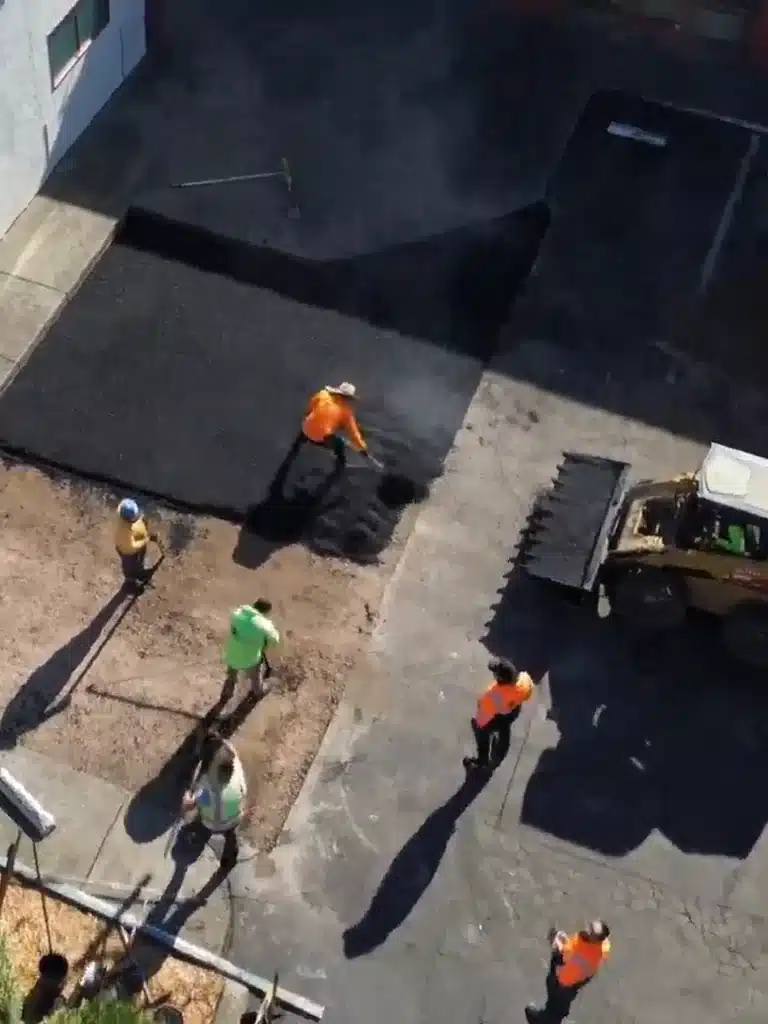
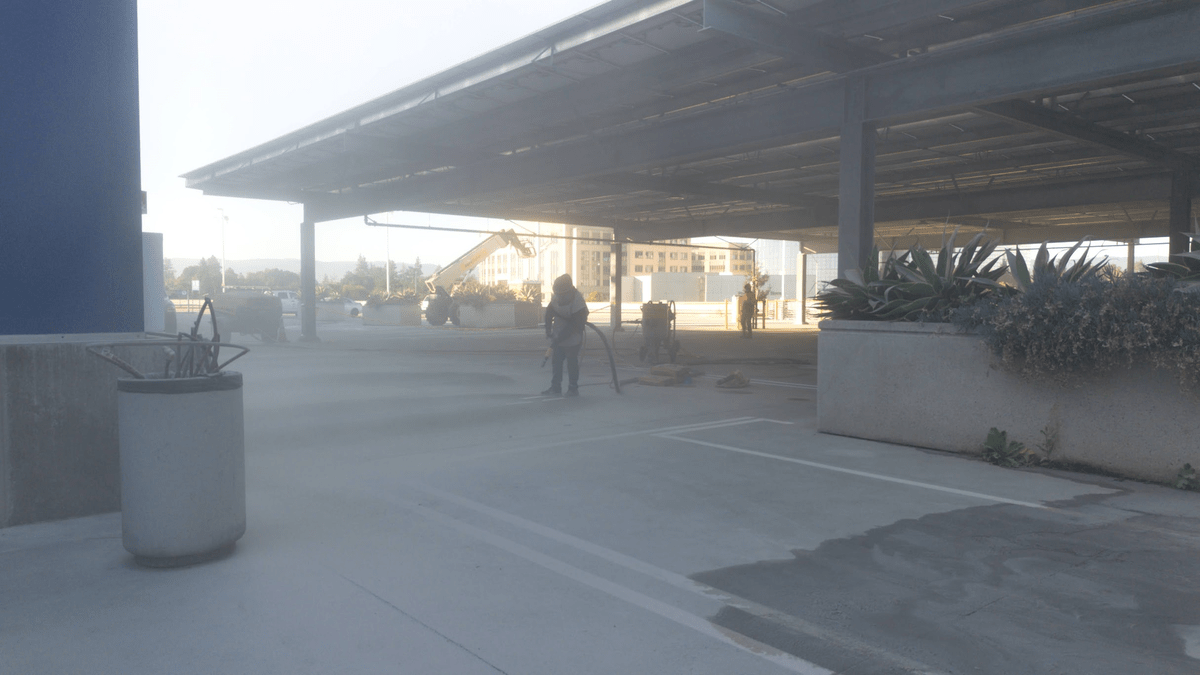
Long term remediation requires dedicated hot pour rubberized crack sealing prior to any surface treatment. Professional field crews utilize specialized melter applicators that heat elastomeric rubberized asphalt compounds to temperatures between 375 and 400 degrees Fahrenheit. Before applying the sealant, crews clean every crack channel using compressed hot air lances operating at velocities up to 3,000 feet per second. This thermal blasting procedure removes accumulated dirt, vegetation, and moisture while warming the crack sidewalls, ensuring complete chemical and mechanical bonding between the hot rubber and the asphalt matrix.
Once the hot rubberized compound is injected, it forms a flexible, watertight gasket that expands and contracts with shifting ambient temperatures without debonding. After the crack sealant has cooled and cured completely, applying a commercial asphalt sealcoating application across the entire parking facility provides the secondary layer of defense. The topcoat shields the surrounding, oxidized pavement against continued solar UV exposure, effectively halting binder degradation between the sealed blocks.

Preventive Maintenance Protocol for Commercial Parking Lots
Preserving commercial asphalt against rapid block cracking requires a systematic maintenance schedule tailored to local environmental factors and site traffic dynamics. Because oxidation begins the day new asphalt is installed, preventative measures must be applied proactively throughout the life of the asset:
Schedule Biannual Drainage and Surface Inspections: Walk commercial properties in late summer before rainfall begins and again in early spring. Check peripheral, low traffic parking areas first, where lack of vehicle tire kneading accelerates surface embrittlement.
Seal Fractures at the Low Severity Threshold: Treat all linear and block cracks once openings reach an eighth to a quarter of an inch in width. Keeping moisture out of the pavement system at this stage prevents subbase softening and structural degradation.
Apply Protective Sealcoats on a 3 to 5 Year Cycle: Maintain a protective wearing film to shield the asphalt binder from UV radiation and moisture absorption. In sunny climates, regular reapplication significantly slows the chemical conversion of flexible maltenes into brittle asphaltenes.
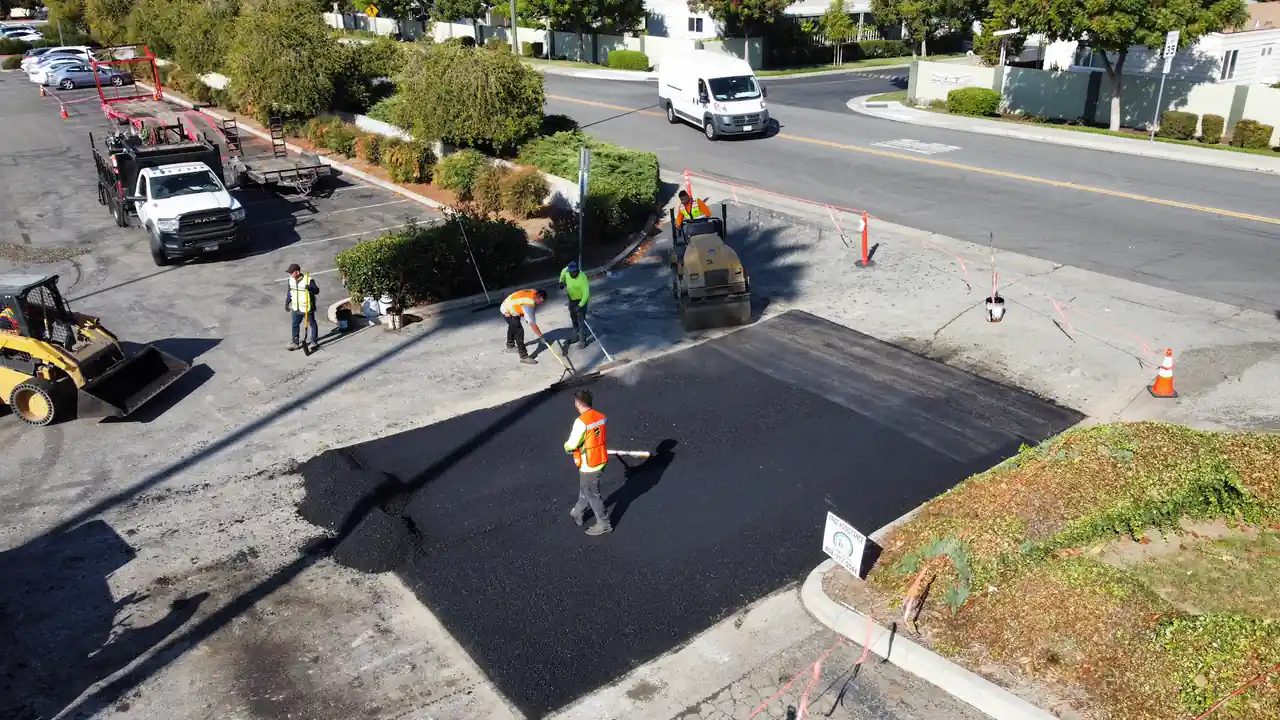
Transition to Structural Repairs When Block Density Compromises Ride Quality: When block fractures become dense, wide, and heavily spalled across more than 25 percent of a parking area, topical sealants can no longer restore surface continuity. In these conditions, plan for asphalt milling and resurfacing to replace the brittle surface with a resilient, well compacted asphalt mix.
Facility managers overseeing commercial parking assets in California can schedule an onsite pavement condition index evaluation with the technical team at We Love Paving to assess crack severity, verify base stability, and determine the exact scope of preventative or structural maintenance required.