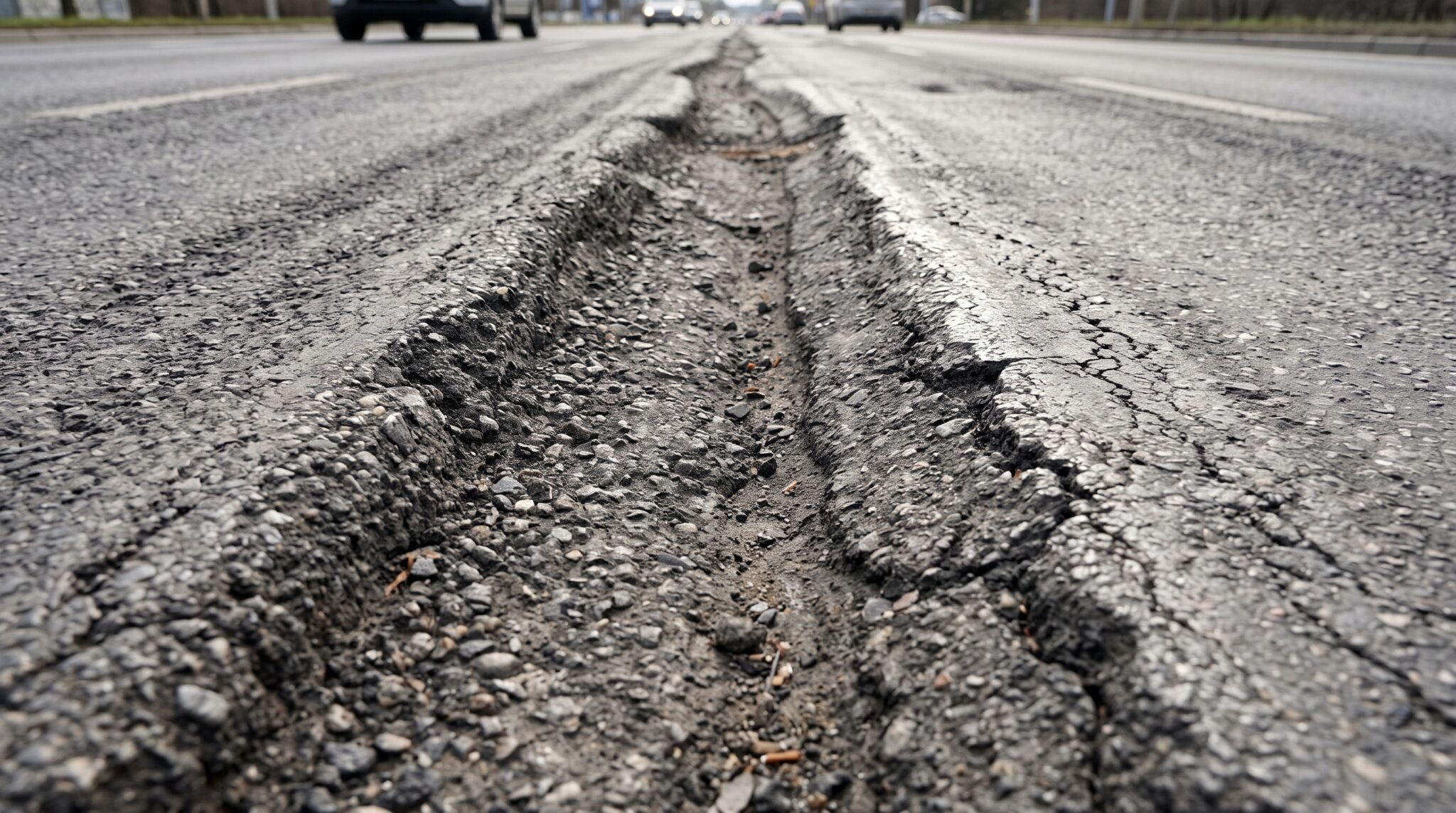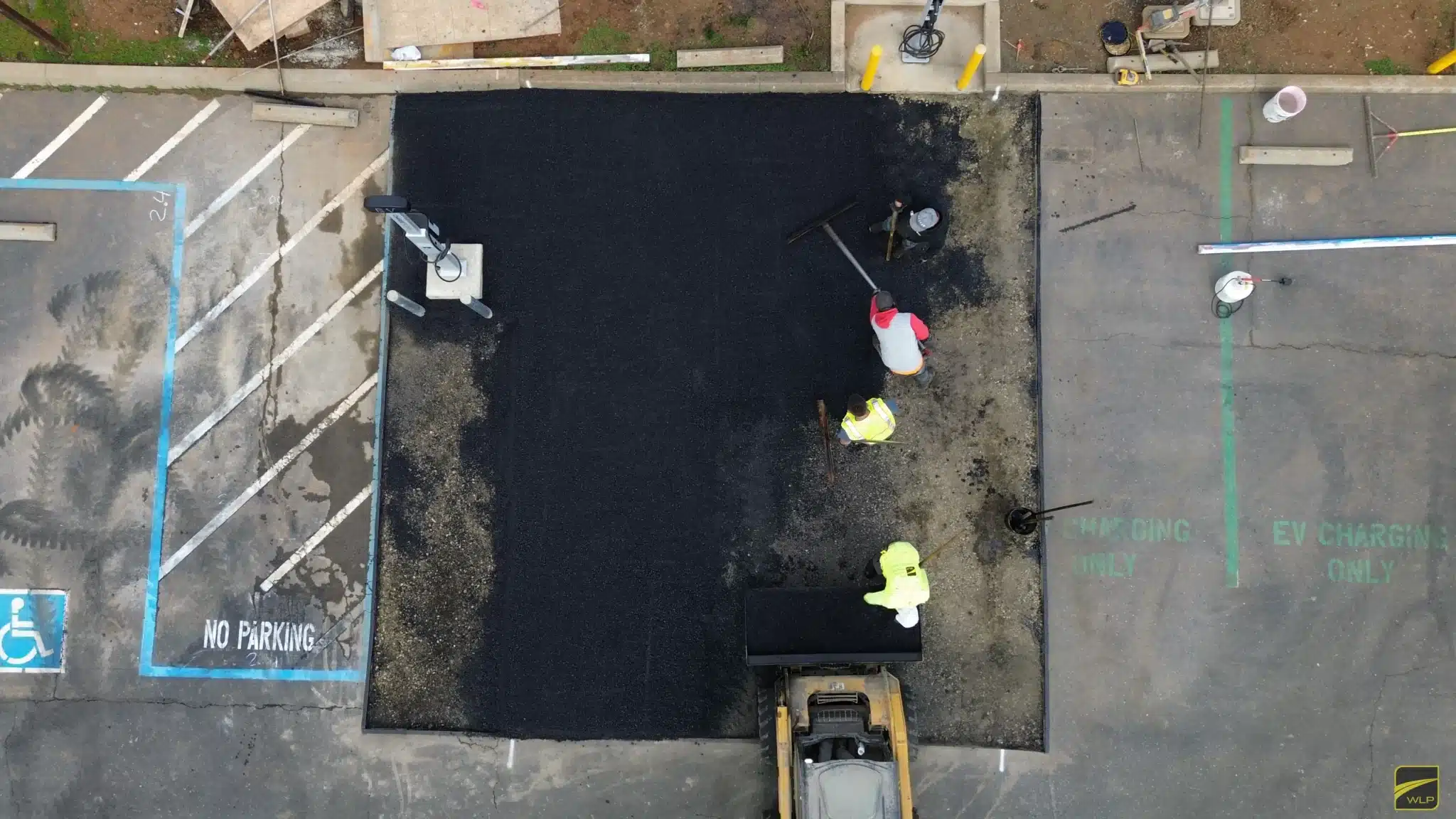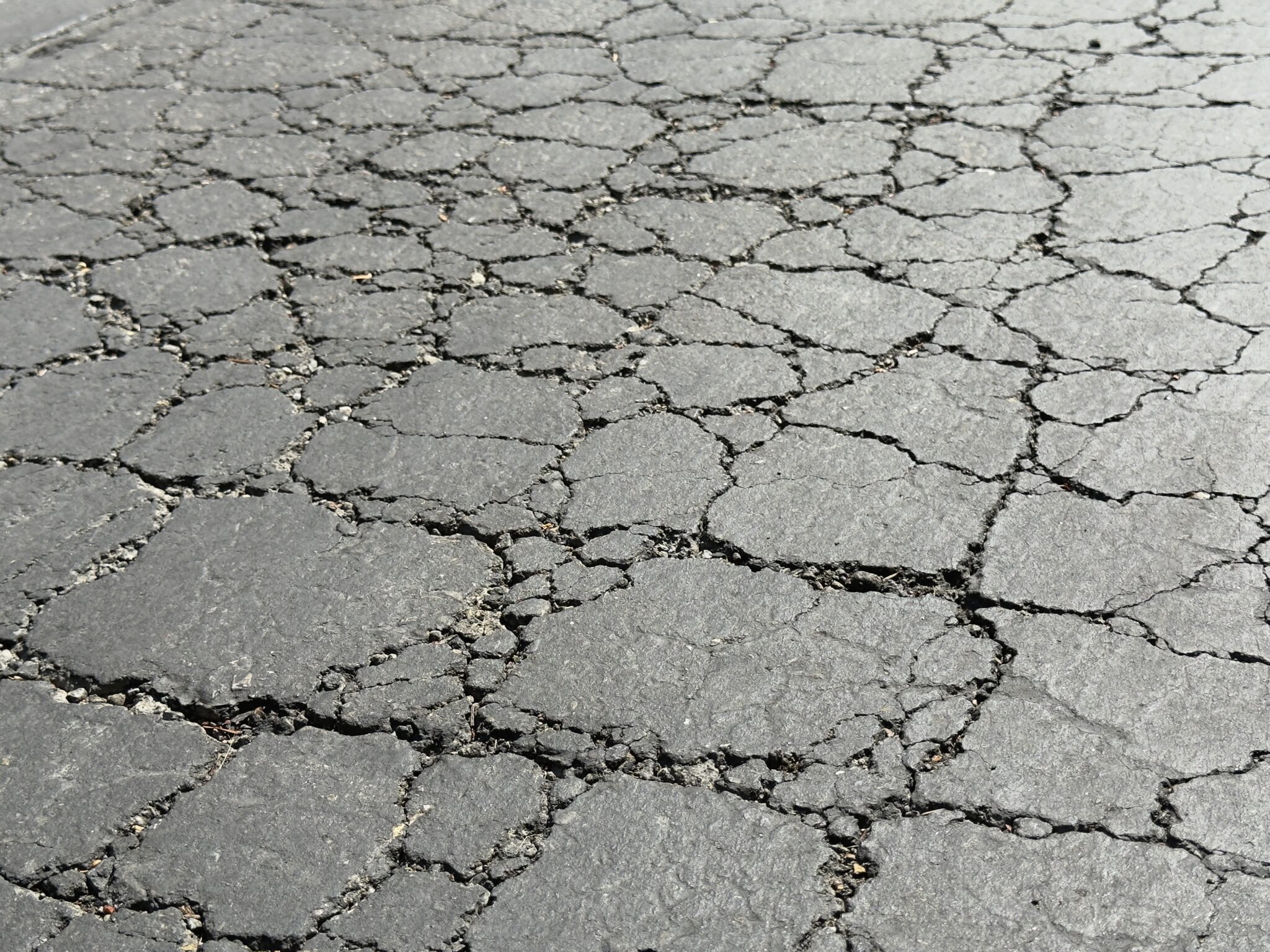
Crazing refers to a network of fine, shallow microcracks that form across the surface of hardened concrete in an irregular, spiderweb-like hexagonal pattern. Commercial property owners, facility managers, and HOA board members often notice these hair-thin lines shortly after a new concrete pour, immediately fearing that the slab has suffered structural failure or subgrade collapse. The sudden visual change can be alarming, particularly on high-profile retail aprons, industrial loading areas, or newly completed parking flatwork where aesthetic standards and longevity are paramount.
Field diagnostic assessments conducted by We Love Paving’s field operations team (CSLB Licensed #1049649, C12 Earthwork and Paving) show that crazing is an inherently superficial material condition rather than a structural defect. These micro-fissures do not penetrate the bulk concrete matrix, nor do they diminish the slab’s engineered compressive strength or load-bearing capacity. However, while crazing does not signal imminent structural failure, dismissing it entirely in heavy commercial environments can lead to premature surface degradation.
Understanding the root physical mechanisms behind crazing, verifying that the pattern is not masking deeper distress, and selecting targeted preventative treatments allows property managers to safeguard their commercial flatwork. With the right approach to surface protection and regular inspection, commercial concrete slabs maintain their intended service life without turning minor cosmetic flaws into costly capital expenditures.
The Science Behind Crazing: Why Surface-Level Shrinkage Occurs
Concrete crazing occurs when the thin, cement-rich surface paste dries and shrinks significantly faster than the underlying mass of the slab. Freshly mixed concrete is a composite material composed of coarse aggregates, fine sand, water, and Portland cement. As the concrete begins to set, excess mixed water naturally travels upward toward the surface through microscopic capillary channels, a normal process known as bleeding. If finishing procedures commence while bleed water is still resting on the slab, or if finishing crews prematurely float and trowel the surface, the water-to-cement ratio of that top layer becomes severely compromised.
Under American Concrete Institute guidelines (ACI 302.1R, Guide for Concrete Floor and Slab Construction), crazing cracks are defined as hairline surface fissures that rarely exceed 1/8 inch (approximately 3 millimeters) in depth. They are confined strictly to the exterior cement paste skin and do not sever the coarse aggregate particles distributed beneath. The physical driving force behind this network is differential shrinkage: as moisture leaves the high-paste surface layer, the top few millimeters contract rapidly. The damp, dimensionally stable concrete directly below resists this movement, setting up high tensile stresses in the weak surface skin. Because concrete has inherently low tensile strength during its early curing stages, the surface yields by micro-fissuring into interlocking hexagonal cells typically measuring between 0.75 and 3 inches in width.
Environmental exposure during placement accelerates this phenomenon across commercial job sites. Throughout Northern California particularly in the inland valleys of Sacramento, the Central Valley, and the Tri-Valley area summer and autumn weather conditions regularly generate high ambient temperatures, low relative humidity, and dry afternoon winds. According to ACI 305R (Guide to Hot Weather Concreting) and Caltrans Section 90 specifications, when the surface evaporation rate exceeds 0.20 pounds per square foot per hour (1.0 kg/m²/h), moisture evaporates from the top of the slab faster than normal bleed water can rise to replace it. Without immediate surface protection or proactive curing membranes, this intense moisture differential guarantees the development of crazing across newly finished flatwork.
Diagnosing Commercial Slab Cracks: A Step-by-Step Field Identification Guide
Field identification of concrete cracking begins by evaluating geometric pattern, aperture width, and cross-sectional depth to distinguish harmless crazing from active structural failures. Commercial pavements endure constant mechanical loading, thermal expansion, and environmental exposure. Misdiagnosing a deep structural rupture as cosmetic crazing leaves foundational damage unaddressed, while mistaking minor crazing for structural failure leads to unnecessary, budget-draining tear-outs. A methodical field assessment evaluates the surface across three distinct tiers of crack distress.
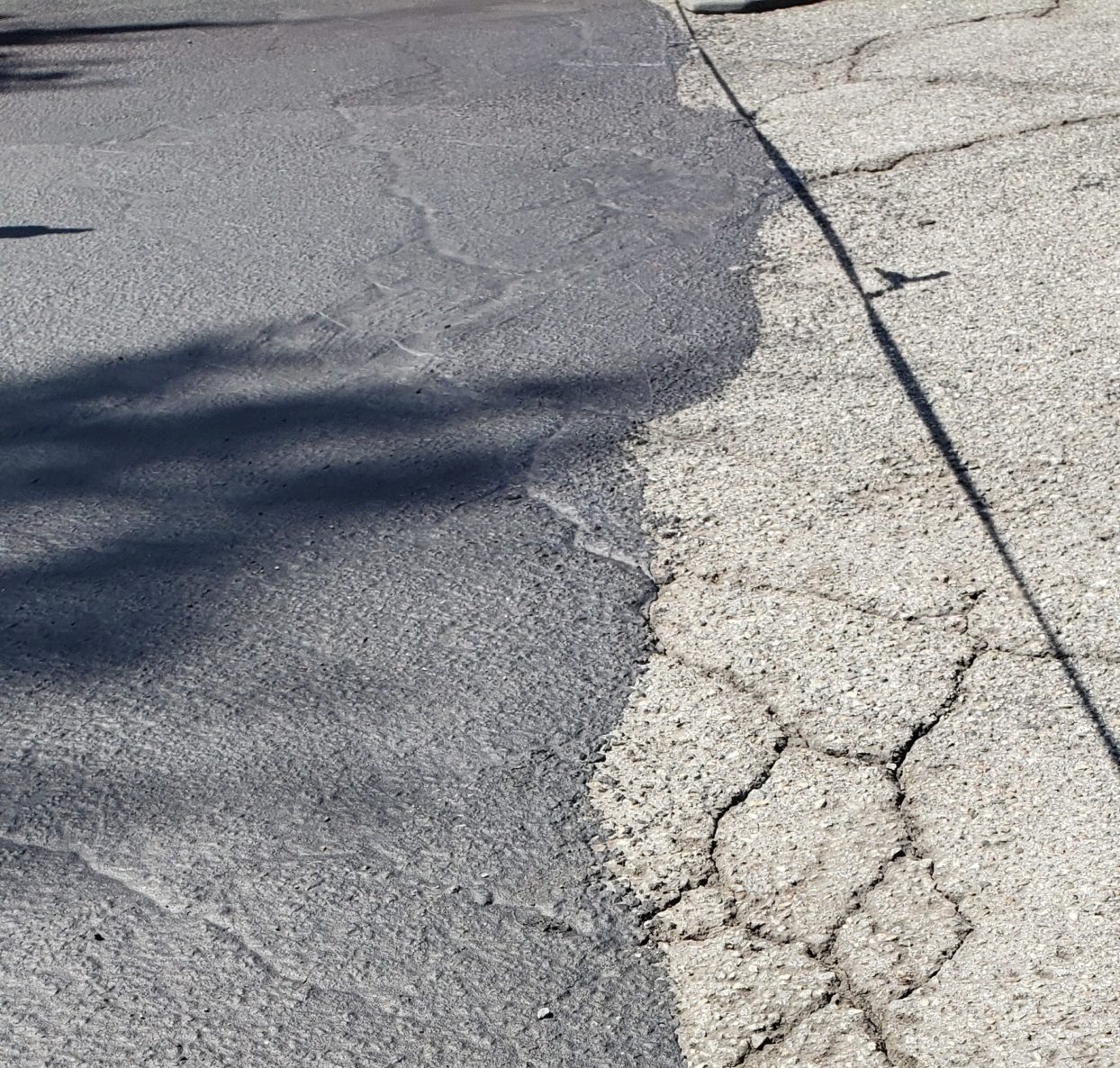
Tier 1: Closed Hexagonal Network (Concrete Crazing)
- Visual appearance: A dense, interlocking web of irregular polygons resembling cracked ceramic glaze or dried mud. The individual cells measure between 20 and 75 millimeters across.
- Physical properties: The aperture width is microscopic, measuring less than 0.004 inches (0.1 millimeters). Crazing cracks are often completely invisible when the concrete is bone-dry, but they become strikingly prominent when wet or when industrial grime and tire dust settle into the micro-crevices.
- Functional impact: Purely cosmetic. The cracks penetrate no deeper than 3 millimeters into the surface paste, leaving the structural cross-section and load distribution properties of the slab completely intact.
Tier 2: Early Linear Fractures (Plastic Shrinkage Cracks)
- Visual appearance: Relatively straight, parallel, or slightly diagonal cracks that appear across the concrete surface within two to six hours of placement, often running perpendicular to prevailing jobsite winds.
- Physical properties: These fissures exhibit wider surface openings, typically ranging from 0.04 to 0.12 inches (1 to 3 millimeters) wide, and can penetrate between 1 and 2 inches (25 to 50 millimeters) down into the slab. They occur while the concrete remains in a semi-plastic state before final hydration bonds are established.
- Functional impact: Moderate durability risk. While plastic shrinkage cracks do not initially displace the slab, their deeper penetration allows rainwater, deicing salts, and oils to reach embedded rebar or welded wire reinforcement, requiring protective sealant intervention.
Tier 3: Continuous Full-Depth Fractures (Structural and Subbase Cracks)
- Visual appearance: Long, continuous, irregular fractures that travel across entire slab panels, cut through saw-cut control joints, and extend through curbs or adjacent pavements.
- Physical properties: These cracks sever the slab completely through its entire cross-section, fracturing coarse aggregate stones cleanly in half. They frequently display vertical faulting, where one side of the crack sits visibly higher than the other due to uneven subgrade movement.
- Functional impact: Active structural failure. These openings stem from subgrade settlement, poor soil compaction, inadequate base rock depth, or repetitive axle overloading. Leaving these fractures open allows surface runoff to erode the underlying stone aggregate, transforming manageable repairs into structural cracks that compromise the pavement base and demanding complete reconstruction.
Commercial Property Risks: When Does Cosmetic Crazing Turn Problematic?
Concrete crazing does not reduce the structural compressive strength of a commercial slab, but it can accelerate secondary surface degradation under demanding commercial operations. In standard parking stalls, low-traffic access roads, or office park walkways, crazing remains permanently cosmetic throughout the life of the asset. The material beneath remains sound, and the microcracks will not spontaneously expand into structural fractures. However, when crazed slabs are located in industrial yards, retail loading docks, or distribution facilities, high-intensity operational factors alter that calculation.
Facilities operating forklifts, pallet jacks with hard polyurethane wheels, and heavy mechanical sweepers subject the top surface paste to severe, concentrated shear stresses. Because crazing has already separated the top two to three millimeters of cement paste into micro-islands, repetitive wheel chatter and dynamic point loads can break down the edges of those hexagonal cells. This process, known in pavement engineering as micro-spalling or raveling, causes the brittle paste to flake away, generating concrete dust and leaving a rough, pocked surface that accelerates tire wear on warehouse equipment.
Moisture intrusion presents another secondary operational concern for outdoor commercial flatwork. When rainwater or irrigation runoff fills crazing fissures, it carries atmospheric carbon dioxide directly into contact with unhydrated cement compounds. This triggers accelerated surface carbonation, which permanently darkens the microcracks and makes the spiderweb pattern visible even after the slab dries. In valley regions of Northern California that experience occasional winter frost events, moisture trapped within these shallow fissures can freeze, gradually spalling the weakened top paste layer. Furthermore, petroleum leaks, hydraulic oils, and chemical spills penetrate the open pores, resulting in deep, indelible stains that complicate maintenance routines and make it harder to identify common commercial pavement distresses during routine property audits.
Maintenance and Remediation: Realistic Options for Property Managers
Property managers cannot resolve concrete crazing using standard commercial crack sealants or rout-and-seal procedures, because the micro-fissures are far too narrow to accept viscous compounds. Hot-poured rubberized asphalt sealants and cold-applied elastomeric mastics require a crack reservoir of at least 1/8 to 1/4 inch wide to achieve the required depth-to-width ratio and proper sidewall bonding. Attempting to apply traditional commercial crack sealing and filling methods to a crazed slab results in unsightly, smeared bands of rubber across the concrete surface that provide zero protection while permanently defacing the property’s exterior.
The most effective preventative maintenance strategy for exterior crazed concrete is applying deep-penetrating silane or siloxane chemical sealers. Rather than forming a plastic film on top of the slab which can trap rising ground moisture, turn milky, or peel under vehicle tires penetrating sealers chemically react with the free silica and calcium hydroxide inside the concrete capillaries. This reaction creates a microscopic hydrophobic zone inside the crazing network that sheds standing water, automotive fluids, and deicers while leaving the slab fully breathable to subsurface vapor transmission. For interior commercial floors or enclosed loading bays experiencing dusting from crazed surfaces, applying reactive lithium or sodium silicate densifiers hardens the top paste layer, chemically consolidating loose particles and boosting surface abrasion resistance against forklift traffic.
Mechanical diamond grinding is frequently proposed as a cosmetic cure, but it rarely delivers the clean visual outcome that property managers expect. Because crazing cracks typically penetrate two to three millimeters deep, standard cosmetic polishing or light grinding will not reach the bottom of the fissures. Instead, grinding cuts through the fine surface paste to expose the sand and coarse aggregate beneath, often making the residual dark lines stand out in sharper contrast against the newly exposed aggregates. If an existing commercial slab exhibits extensive crazing in a high-visibility architectural entryway or public courtyard where cosmetic uniformity is mandatory, the proper approach involves mechanical profiling followed by the installation of a high-strength polymer-modified cementitious micro-topping. This engineered resurfacing system establishes an entirely new, unblemished wearing course without the disruption or cost of slab replacement.
Prevention Best Practices for New Commercial Concrete Pours
Preventing concrete crazing on future capital improvement projects requires diligent quality control over mix design, environmental site conditions, and finishing operations. Once concrete has hardened and crazing cracks have formed, they cannot be erased without resurfacing; therefore, commercial property owners, general contractors, and facility engineers must enforce stringent placement standards before transit mixers arrive on-site.
The most frequent human error leading to crazing is the premature finishing of concrete while bleed water remains pooled on the surface. When a fresh slab is struck off and bull-floated, water naturally rises to the top. Finishing crews must wait until this bleed water has completely evaporated before initiating power floating or steel troweling. Working bleed water back into the upper paste dramatically elevates the local water-cement ratio, creating a weak, porous, high-shrinkage skin that inevitably crazes. Similarly, finishers must never sprinkle dry Portland cement or stone dust over wet bleed areas to speed up finishing a destructive jobsite shortcut that produces an ultra-rich paste layer with extreme shrinkage characteristics.
Establishing an immediate, continuous curing protocol provides the ultimate defense against differential shrinkage. In California’s arid and wind-prone inland corridors, specifications should require the application of liquid membrane-forming curing compounds meeting ASTM C309 or ASTM C1315 standards immediately after final texturing or troweling. Alternatively, implementing wet-burlap curing or moisture-retaining curing blankets for a minimum of seven days ensures that the surface paste remains fully saturated throughout initial hydration. This controlled curing environment allows the concrete to develop sufficient tensile strength to withstand early drying stresses, ensuring that the completed commercial flatwork remains durable, functional, and visually clean across its full service life.