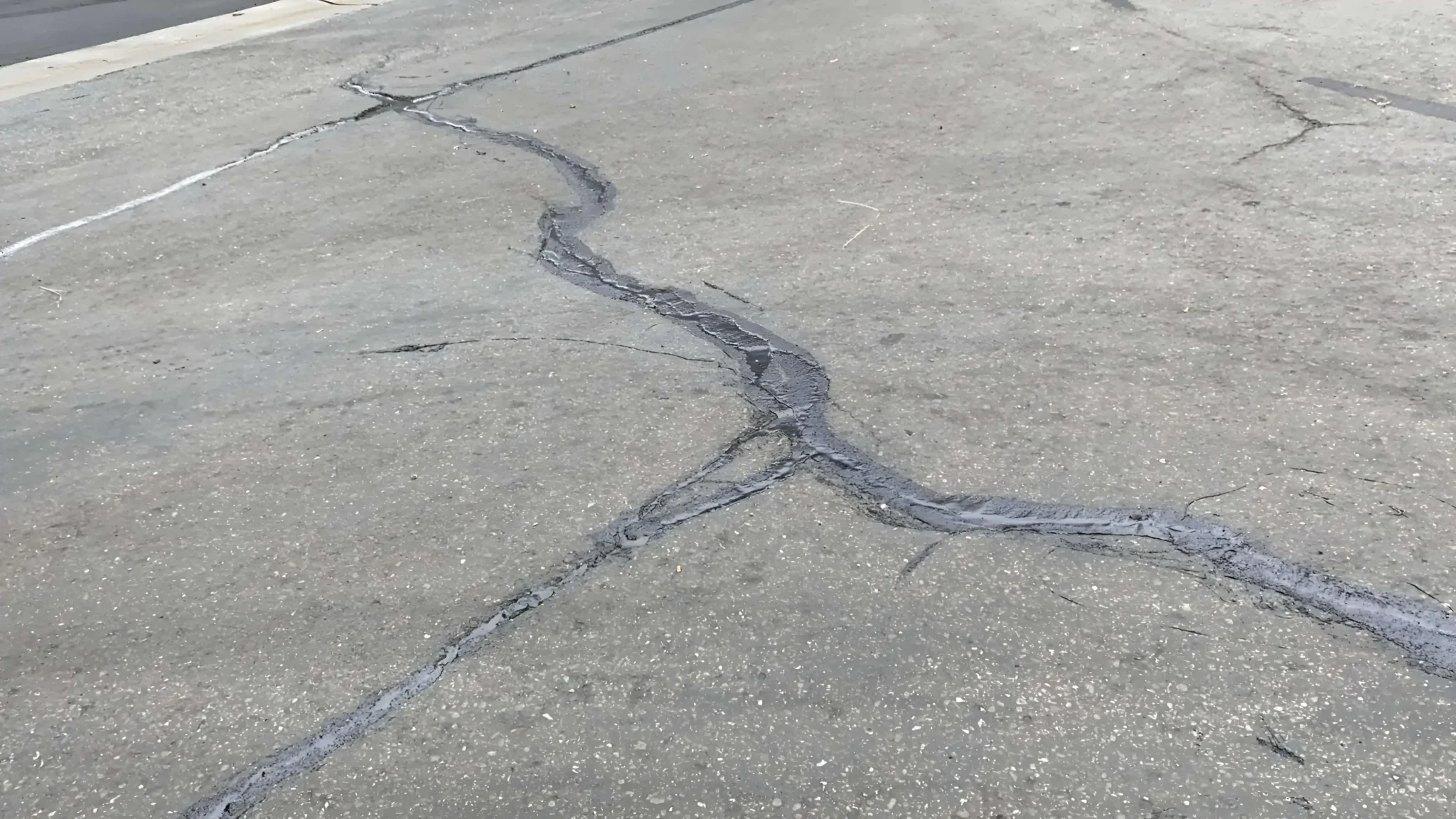
Crack sealing is for working cracks, the ones that open and close more than an eighth of an inch a year, and it uses a rubberized sealant that stretches. Crack filling is for cracks that barely move and uses a stiffer, cheaper material. Both apply to cracks 0.12 to 1 inch wide. Alligator cracking gets neither. It gets patched.
The crack sealing vs crack filling question gets settled on most invoices by whichever term the estimator typed, and that is where the trouble starts. A lot that got “crack filling” at the price of filling, on cracks that needed sealing, looks fine in October and has reopened by February.
Crack Sealing vs Crack Filling: the Number that Decides
Caltrans draws the line in its Maintenance Technical Advisory Guide with annual horizontal movement, and the Federal Highway Administration’s crack treatment manual uses the same test, because a crack that moves has to be treated with a material that moves with it. A crack that opens and closes more than 0.12 inch over a year is a working crack, and it gets sealed. Under 0.12 inch it is non-working, and filling is enough. The width window is the same for both, 0.12 to 1.00 inch. Narrower than that and the material cannot get in. Wider, and you are looking at a patch, not a sealant.
Type tells you most of what movement will. Transverse cracks (the ones running across the drive aisle) and thermal cracks move with temperature, so they are working cracks almost by definition. Block cracks spaced far apart and longitudinal edge cracks usually sit still. Longitudinal cracks along a cold joint, and longitudinal reflective cracks, appear on both sides of the Caltrans table: those are the ones you decide with a measurement, because a glance will not tell you.
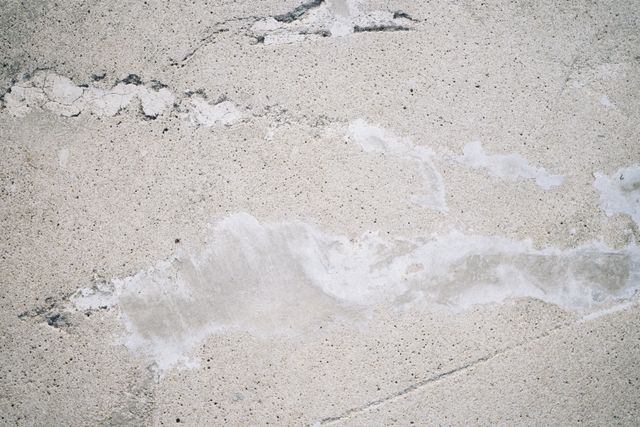
Edge condition is the third check. Sealing wants a crack with minimal edge breakdown, under a quarter of its length; filling tolerates up to half. Past that, the sidewalls are too crumbled to hold anything and the money belongs in patching.
What the Material Has to Do
A sealant has one job: stay bonded to both walls while the crack opens in January and closes in July. That takes a hot-applied, rubber-modified asphalt with real elasticity. A filler has a simpler job, keeping water and sand out of a crack that does not move, so asphalt emulsions and fiber-modified asphalts do it at lower cost. Put a filler in a working crack and it tears in the first cold snap.
The number that never shows up on a proposal is service life, and both guides publish it. For fillers in non-working cracks, the FHWA manual gives 2 to 4 years for asphalt emulsion placed flush in an unrouted crack, and 6 to 8 years for rubber or fiber-modified asphalt placed flush or overbanded. For sealants in working cracks, rubberized asphalt in a routed crack reaches 5 to 9 years; the same material in an unrouted crack gives 2.5 to 5. Routing, which means cutting a clean reservoir along the crack before sealing, is the step behind that difference.
It is also the step that disappears when the bid is low. A routed seal costs more per foot on the day of the job and less per year of service, which is the comparison a property manager should be making.
Crack Sealing vs. Crack Filling: A Quick Comparison
Understanding the difference between crack sealing and crack filling comes down to how much the pavement moves, the condition of the edges, and the type of material required. The table below breaks down the Caltrans and FHWA standards to help you see exactly what your lot needs for maximum protection and the lowest long-term cost.
| Evaluation Criteria | Crack Sealing | Crack Filling | Benefit / Result |
|---|---|---|---|
| Movement Level | Working cracks (> 0.12″ of movement a year) | Non-working cracks (< 0.12" of movement a year) | Material won’t tear in winter ¹ |
| Crack Width & Type | 0.12″ to 1″. Transverse and thermal cracks. | 0.12″ to 1″. Block and longitudinal edge cracks. | Precise protection (cracks > 1″ get patched) |
| Edge Condition | Minimal breakdown (under 25% of length) | Tolerates breakdown up to half (50%) of the crack | Maximum adhesion to sidewalls |
| Material Used | Hot-applied, rubber-modified asphalt | Asphalt emulsions or fiber-modified asphalt | True elasticity vs. Cost-effective protection |
| Estimated Service Life | 5 to 9 years (routed) / 2.5 to 5 years (unrouted) | 2 to 4 years (emulsion) / 6 to 8 years (fiber-modified) | Lower long-term cost per year of service ² |
When Neither One is the Answer
Alligator cracking, the interconnected pattern that looks like reptile skin, is a subgrade or fatigue failure. Sealing it does nothing for the cause. The Caltrans guide lists alligator, fatigue, reflective, edge and slippage cracking as pavement where sealing and filling are not efficient, which is a polite way of saying the material goes in, the pavement keeps failing underneath it, and the next crew cuts it all out anyway.
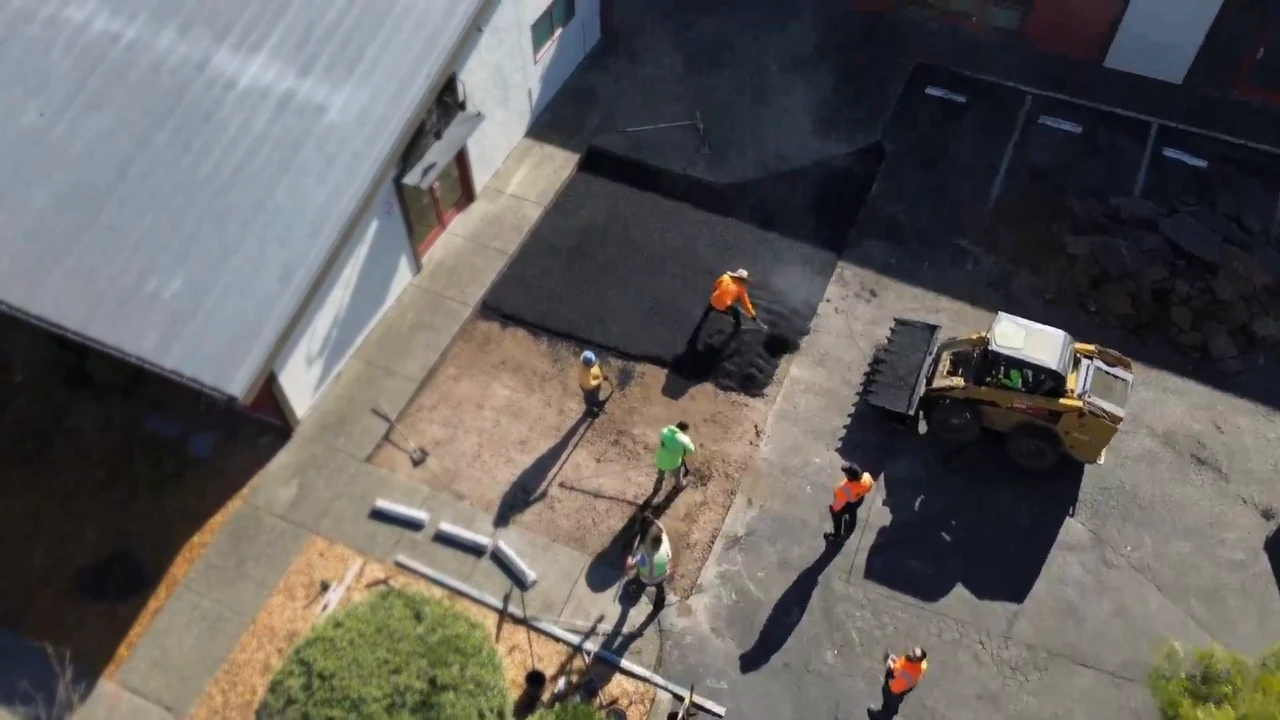
Those areas need to be cut out and patched, or, when it is the whole aisle, milled and overlaid. A crack seal quote that covers an alligatored loading dock apron is paying for material that will end up under a patch.
Two more disqualifiers. Cracks wider than an inch are patch territory. So are cracks with edges broken along more than half their length.
Timing: the Season Decides How well the Seal Holds
Working cracks are widest in cool weather and narrowest in summer heat. Both guides want the sealant placed when the crack is somewhere between its midpoint and its widest, so that over the year it neither has to stretch to its limit nor get squeezed out of the channel. Caltrans says spring, fall or winter. The FHWA manual puts the sweet spot at moderately cool temperatures of 7 to 18 degrees Celsius, roughly 45 to 65 Fahrenheit, and notes that a crack at that temperature also sits partly open, so enough material gets in without cutting. Non-working cracks can be filled any time of year.
In Northern California that makes fall the natural window: the lot is dry and nights are cool, so the sealant cures before the first storms. Sealing during a July heat wave in the Central Valley puts material into a crack at its narrowest, and every cold night afterward pulls on it. The pavement also has to be dry and the crack clean, with compressed air or a hot air lance run through it before any sealant goes in. Sealant applied over damp dust bonds to the dust.
Crack Sealing Before Sealcoating: the Order Matters
Sealcoat is a thin surface coating, and it will not bridge an open crack. So the cracks get sealed first and the sealant cures fully; the sealcoat goes over the whole lot after that. Reverse the order and the sealcoat splits along every crack line the first time the cracks move, while the sealant sits on top of a coating it never bonded to. On a lot that is due for both, budget them as one job, sequenced.
There is a finishing detail worth asking about. An overband is a thin band of sealant spread past both edges of the crack, and the Caltrans guide reports that in California it was found to hurt ride quality and appearance, so it is not recommended unless it is finished flush with the pavement. A flush finish under a fresh sealcoat leaves nothing visible.

What to ask Before Signing
- Which cracks on this lot are working and which are not, and how did you decide?
- What material are you using, and is it hot-applied rubberized asphalt or an emulsion?
- Will the working cracks be routed before sealing?
- Are the alligatored areas being patched, or are they being sealed?
- If sealcoating is on the plan, how long will the sealant cure before the coating goes on?
A contractor who can walk the lot with a piece of chalk and answer those five has done this before, and the answers are worth more than the price at the bottom of the page, because the price only tells you what the job costs this year. We Love Paving (CSLB Lic. #1049649) seals, fills, patches and sealcoats commercial lots across Northern California. Free estimate that tells you which cracks are which.