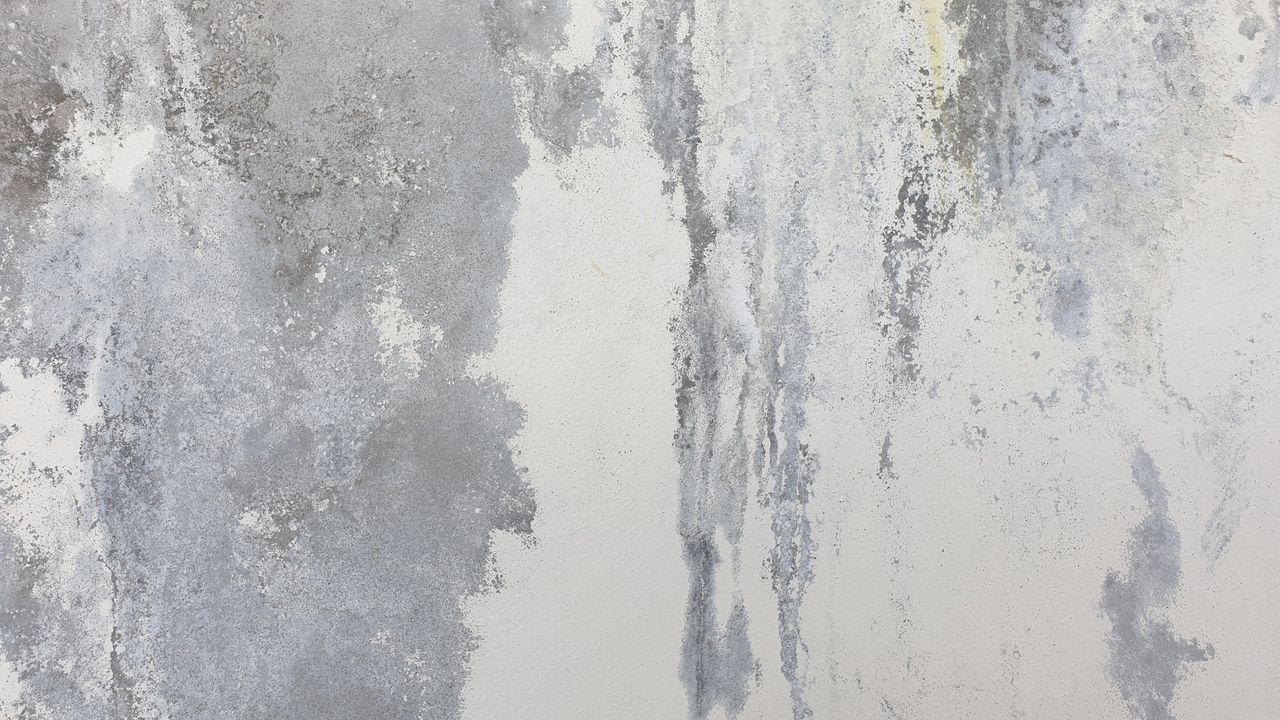
Concrete scaling the progressive flaking and peeling of the top mortar paste that exposes underlying aggregate is often treated in industry literature as a simple freeze-thaw problem. However, on commercial assets across California’s Central Valley and Bay Area, the root cause is rarely limited to extreme winter temperatures.
In microclimes like Merced, Fresno, and Modesto, concrete scaling is overwhelmingly driven by thermal swings, wind-induced rapid surface drying during placement, and early finishing errors under local weather conditions. Understanding how these factors impact commercial parking lots, loading bays, and aprons allows property managers to separate minor surface defects from major structural risks and apply long-term engineering solutions.
Field Diagnosis: Scaling vs. Spalling vs. Crazing
When We Love Paving’s field operations team inspects commercial flatwork in Northern California, accurately identifying the defect mechanism is the first step toward avoiding unnecessary full-panel teardowns:
| Variable | Compliance Factor | Technical Strategy | Field Data |
|---|---|---|---|
| Concrete Scaling | Shallow Flaking (1/16″ to 1/4″ Depth) | Trapped Bleed Water & Wet Freeze Swings | Overlay / Resurfacing Viable |
| Concrete Spalling | Deep Delamination & Rebar Exposure | Internal Pressure, Rusting Steel & Heavy Axle Load | Full Slab Replacement Needed |
| Concrete Crazing | Hairline Fine Pattern Cracks (< 1/16″ Depth) | Rapid Evaporation from Dry Winds & Hot Sun | Cosmetic Issue / Non-Structural |
The Central Valley “Bleed Water Trap”: Why Commercial Concrete Scales
While national standards (ACI/NRMCA) focus heavily on deicing chemicals, field data from Northern California commercial sites reveals a distinct localized pattern:
1. Rapid Evaporation and Premature Surface Troweling
In Central Valley conditions where dry winds and high afternoon temperatures collide with high ambient humidity in the morning, freshly poured concrete undergoes uneven evaporation. Finishing crews rushed by dry surface conditions often float or trowel the surface while internal bleed water is still rising. This traps a high water-cement ratio (w/c) slurry right under the surface skin, forming a brittle, low-strength crust that flakes off under vehicle traffic within 12 to 24 months.
2. Thermal Swing Saturation
In regions like Merced, winter nights frequently dip below freezing while daytime temperatures rise significantly. Rainwater saturates the porous, weakly finished top mortar layer. As night falls, the trapped water expands by ~9% in the cap pores. Without proper air-entrainment micro-bubbles to relieve hydraulic pressure, the top 1/8 to 1/4 inch of concrete peels away.
3. Chemical Washdown & Fertilizer Runoff
On commercial retail and industrial sites, high-pressure washing with aggressive degreasers or fertilizer overspray containing ammonium nitrates accelerates chemical deterioration of the cement paste, turning light surface scaling into deep aggregate exposure.
Case Study: Restoring a Commercial Concrete Parking Lot in Merced, CA
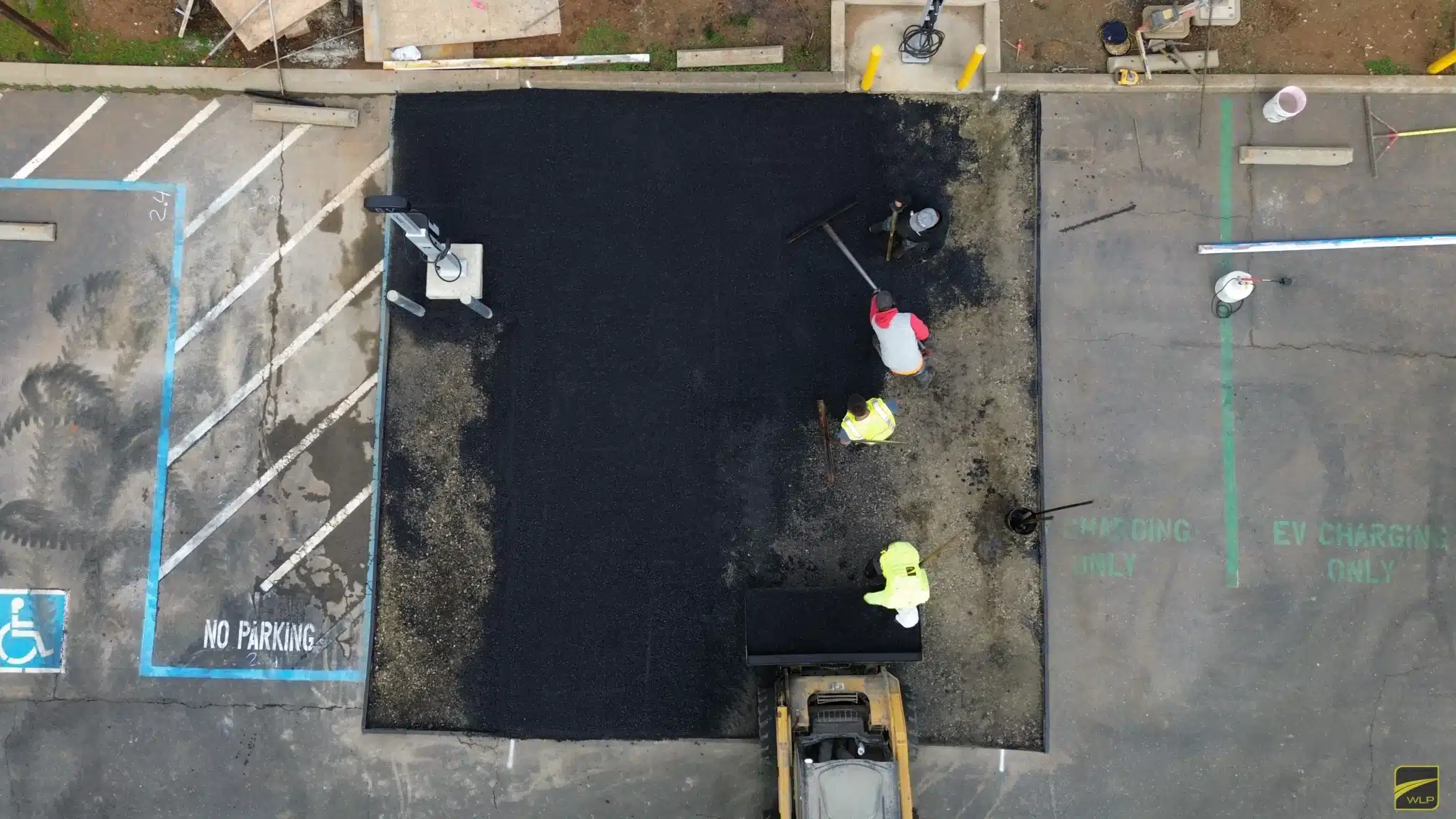
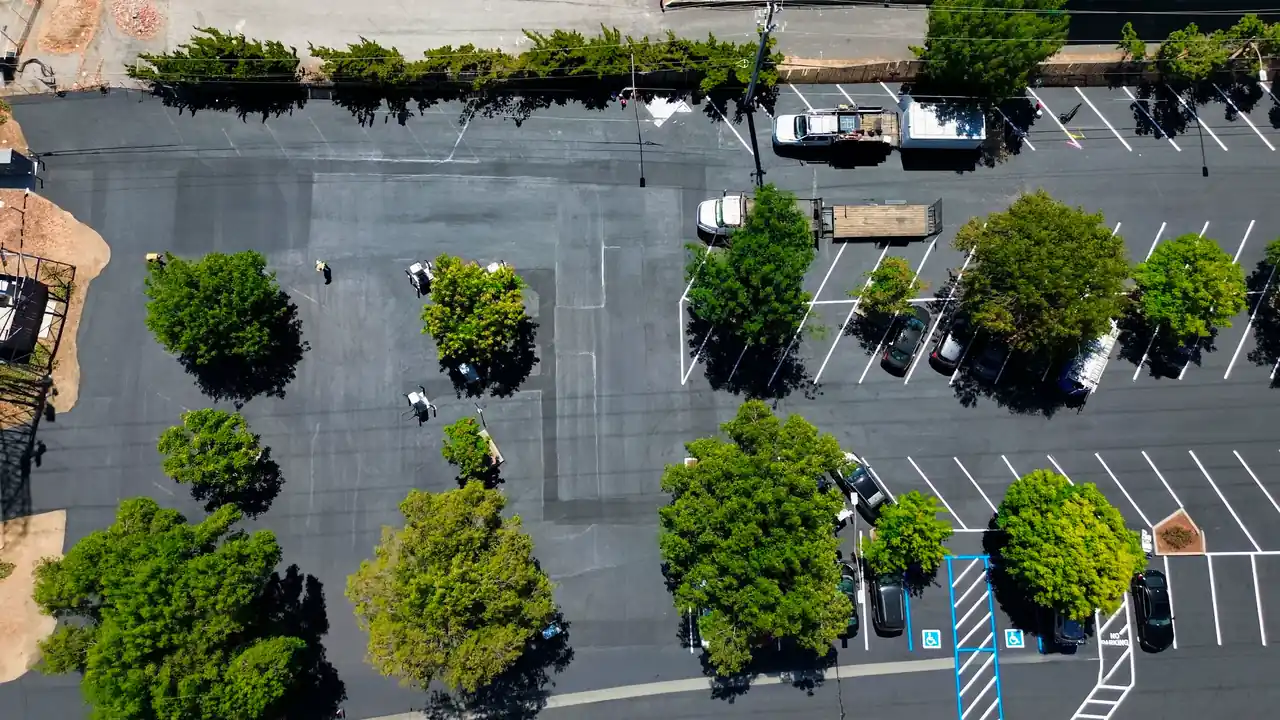
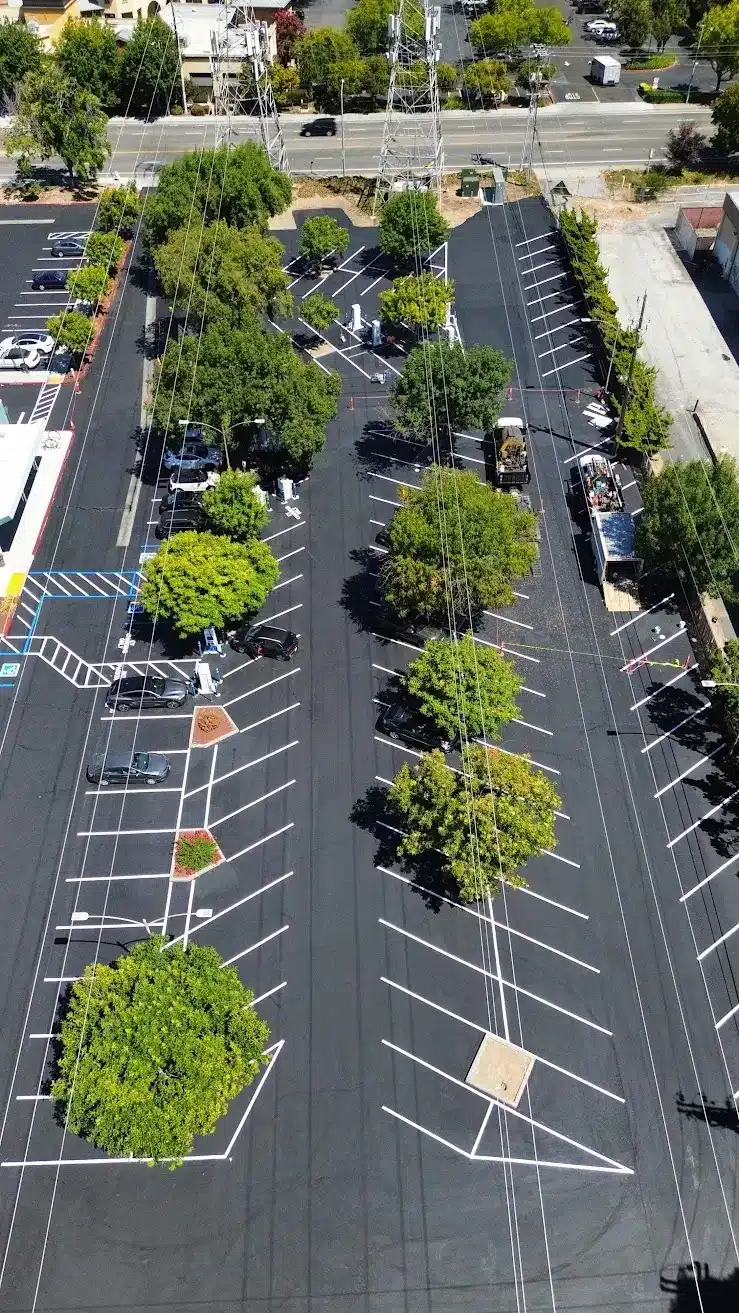
A clear example of addressing structural scaling and subbase degradation in the region is WLP’s commercial concrete parking lot project in Merced, CA.
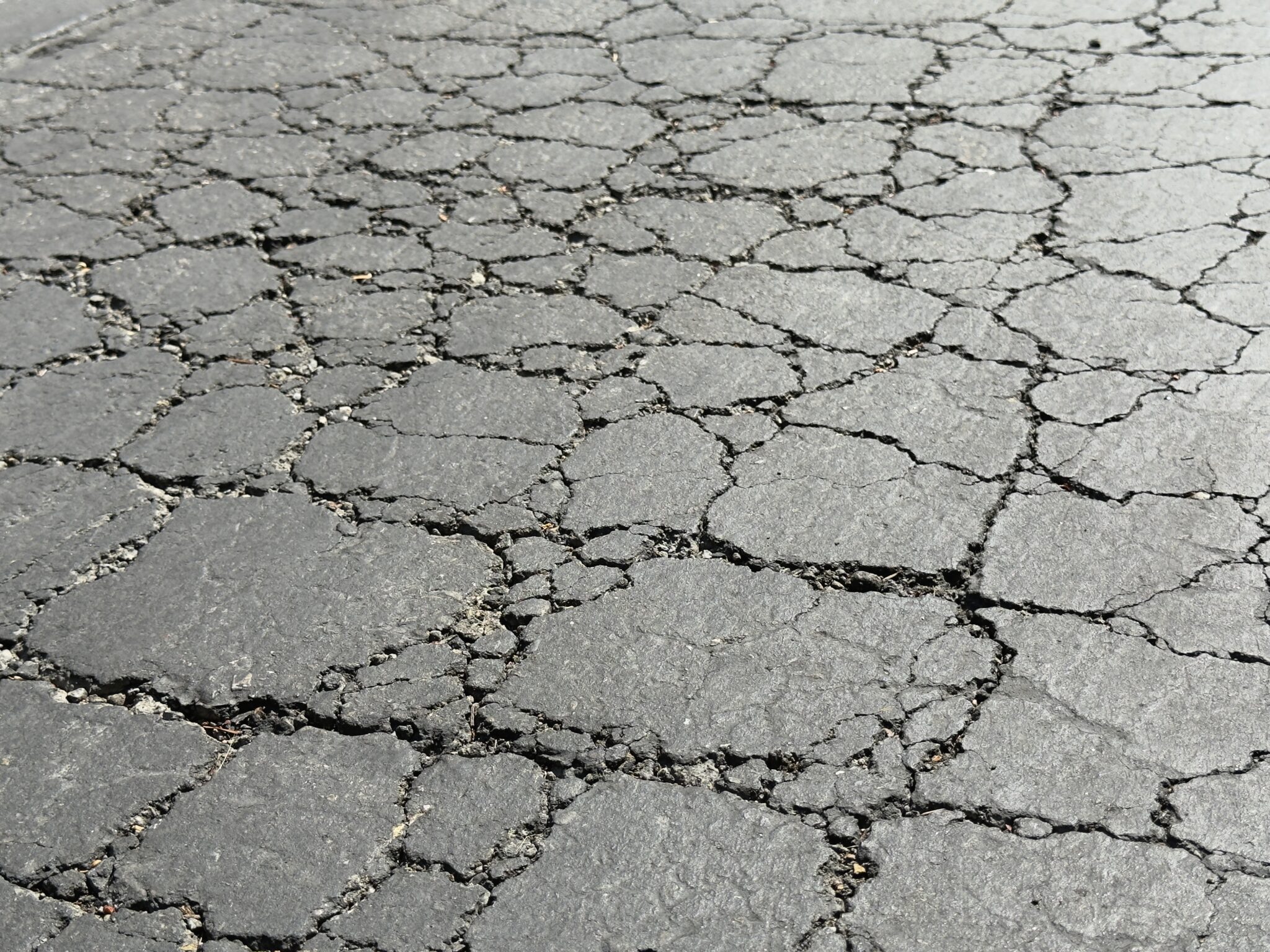
(Defective Mix / Bleed Trap)
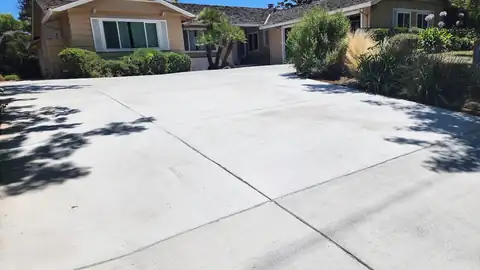
(High-Durability Spec)
The Challenge
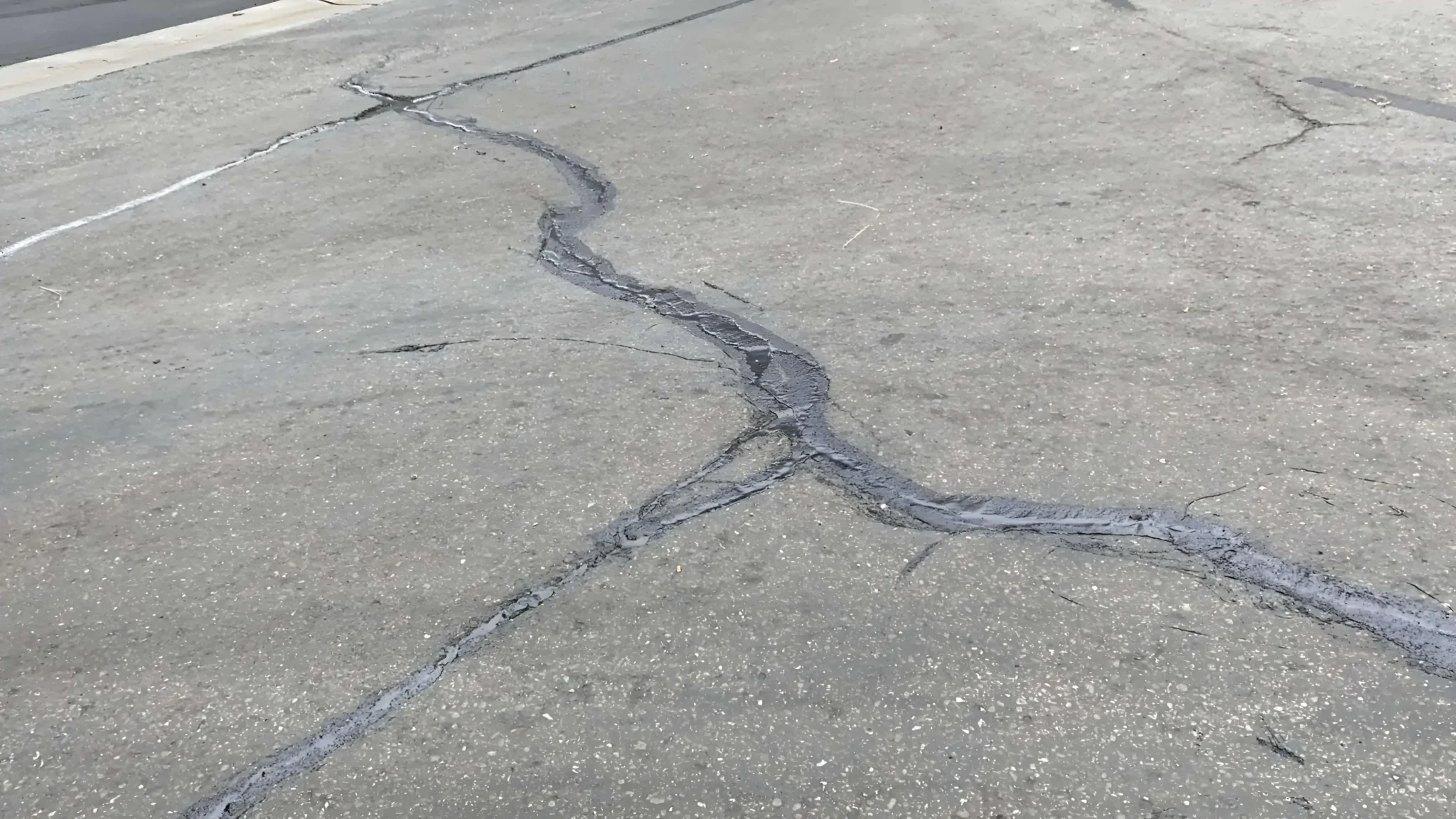
The existing commercial parking lot suffered from severe surface scaling, localized joint crumbling, and moisture penetration caused by years of thermal cycling and heavy commercial vehicle movement. Light resurfacing was insufficient due to depth-of-damage and subbase settlement.
The Field Solution
- Targeted Demolition: Saw-cutting and removing severely scaled and unstable panels down to the subbase.
- Subbase Stabilization: Re-compacting and grading the underlying aggregate base to ensure uniform load distribution and eliminate standing water traps.
- Engineered Concrete Placement: Pouring a low w/c ratio concrete mix (below 0.45) specified with air-entrainment additives to handle Central Valley freeze-thaw cycles.
- Strict Curing Discipline: Enforcing complete bleed-water evaporation before final texturing and applying ASTM C309-compliant liquid curing membranes immediately to lock in hydration strength.
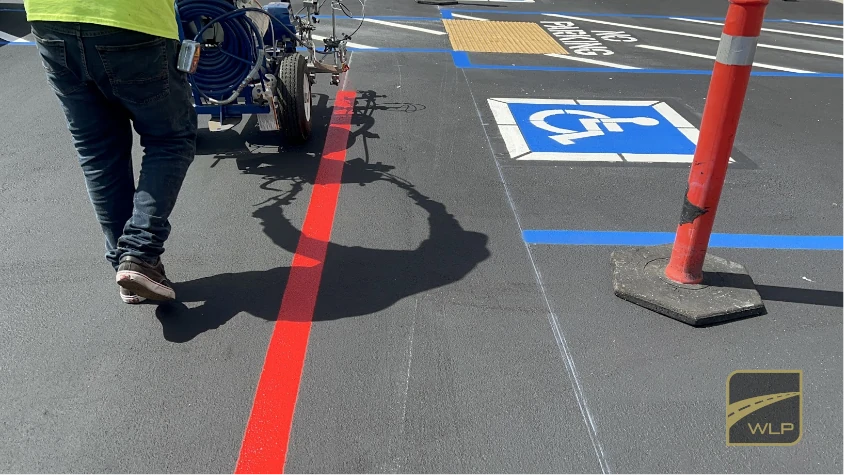
The result was a durable, high-load parking surface engineered to resist surface peeling and handle heavy commercial traffic for decades.
Prevention Standards for Commercial Installations
To prevent scaling on new installations, project specifications must strictly enforce field practices:
- Enforce Bleed Water Evaporation Rules: Finishing crews must never “bless the concrete” by adding water to the surface or troweling while bleed water is present.
- Specify Low w/c Ratios & Air Content: Require a maximum water-cement ratio of 0.45 and an air entrainment of 5% to 7.5% for all exterior commercial slabs.
- Timely Curing Protection: Apply liquid membrane-forming curing compounds immediately following final texturing to prevent rapid surface moisture loss.
When planning new installations or panel replacements, property owners should consult experienced specialists in commercial concrete paving services in California to guarantee quality control during pour operations.
Commercial Repair Decisions: Overlay vs. Full Replacement
When evaluating scaled flatwork, property managers must base their decision on damage depth and structural integrity:
1. Surface Resurfacing (Light Scaling < 1/4 Depth)
If the concrete below the top 1/4 inch is sound and rebar is unexposed, shot-blasting the surface and applying a polymer-modified cementitious resurfacer sealed with a penetrating silane/siloxane water repellent will restore appearance and protection.
2. Full Panel Replacement (Severe Scaling > 1/4 Depth & Structural Distress)
When scaling is accompanied by deep cracking, base settlement, or rebar oxidation, overlays will bond poorly and fail under heavy vehicle loads. Full panel saw-cutting and replacement as executed in our Merced project is necessary to restore structural rating.
When assessing material options for high-traffic zones, property owners often balance long-term durability against maintenance costs by reviewing commercial property surface selection for concrete versus asphalt applications, as well as evaluating damaged commercial concrete curbs and flatwork.

Partnering with California’s Commercial Paving Experts
Concrete scaling is a preventable and repairable defect when backed by proper engineering diagnosis and field execution.
We Love Paving’s field operations team (CSLB Licensed #1049649, C12 Earthwork and Paving) brings decades of Northern California experience to every commercial evaluation, delivering clear field diagnoses, durable panel replacements, and long-term asset protection.