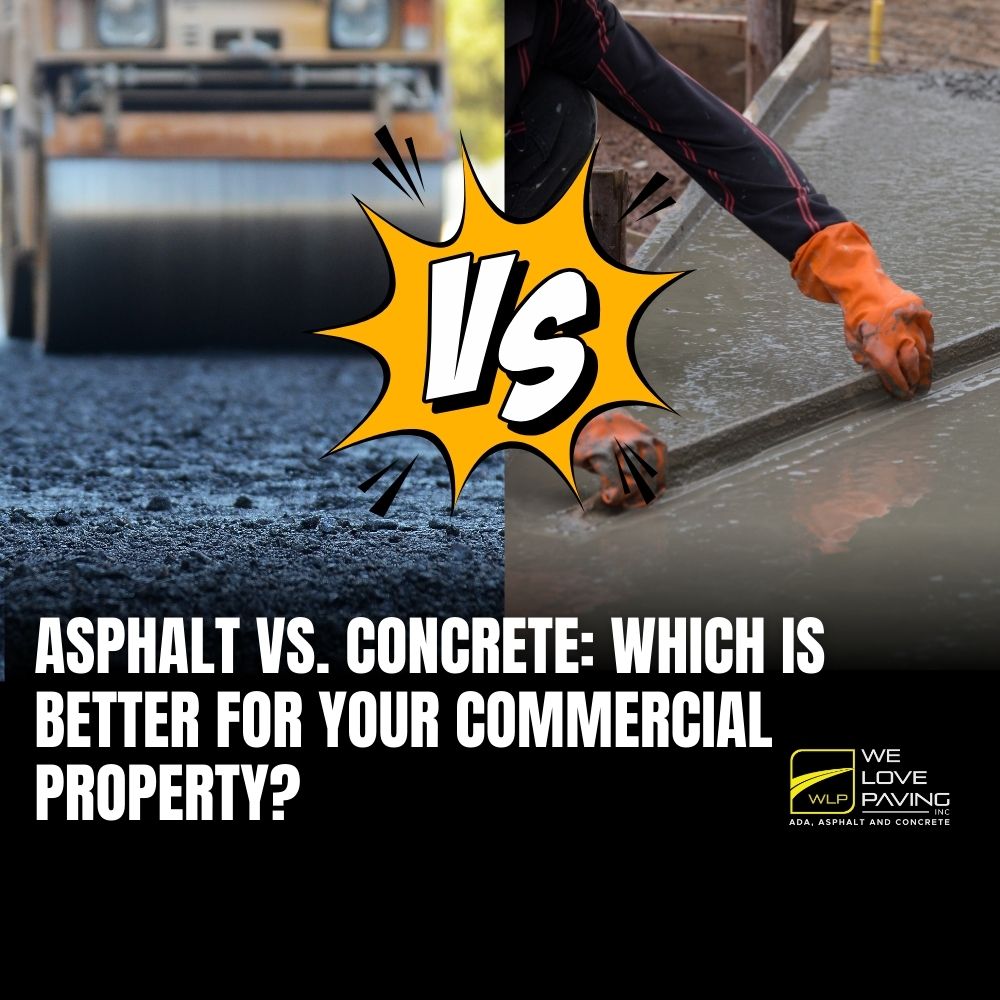
“Pavement vs concrete” is a common comparison, but it starts with a technical problem.
Concrete is pavement too.
A commercial parking lot, driveway, loading area, or access road can be paved with asphalt, concrete, pavers, or other hard-surface materials. So the real question is not pavement vs concrete. The useful question is asphalt pavement vs concrete pavement: which surface makes more sense for your commercial property, your traffic, your maintenance budget, and your ownership timeline?
That distinction matters because bad material decisions are usually caused by oversimplified comparisons.
Some owners choose asphalt because it is often faster to install and easier to phase. Others prefer concrete because it can perform well in certain high-load or long-term-use conditions. Neither answer is automatically correct. A retail parking lot, apartment community, warehouse yard, office building, medical property, and industrial site may all have different surface priorities.
The better decision starts with how the property actually functions.
What kind of vehicles use the lot? How often? Where do they turn? Where does water collect? How important is downtime? How long does the owner plan to hold the asset? Is the concern first cost, lifecycle cost, appearance, repair flexibility, load capacity, or maintenance predictability?
Those questions matter more than a generic claim that one material is always better.
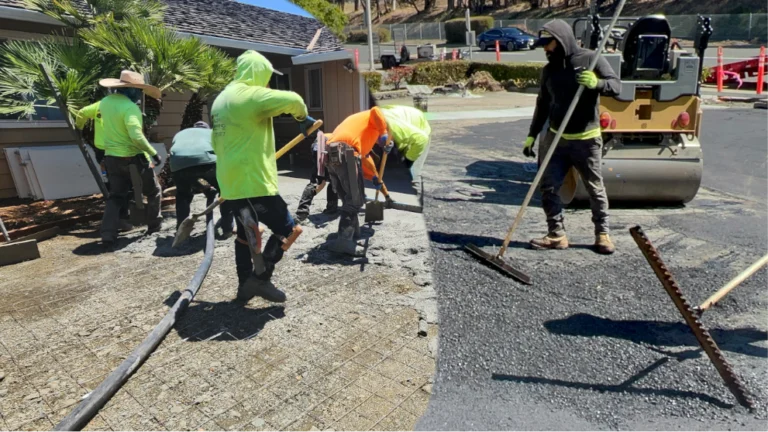
Asphalt Pavement and Concrete Pavement Solve Different Problems
Asphalt and concrete are both hard-surface paving materials, but they behave differently.
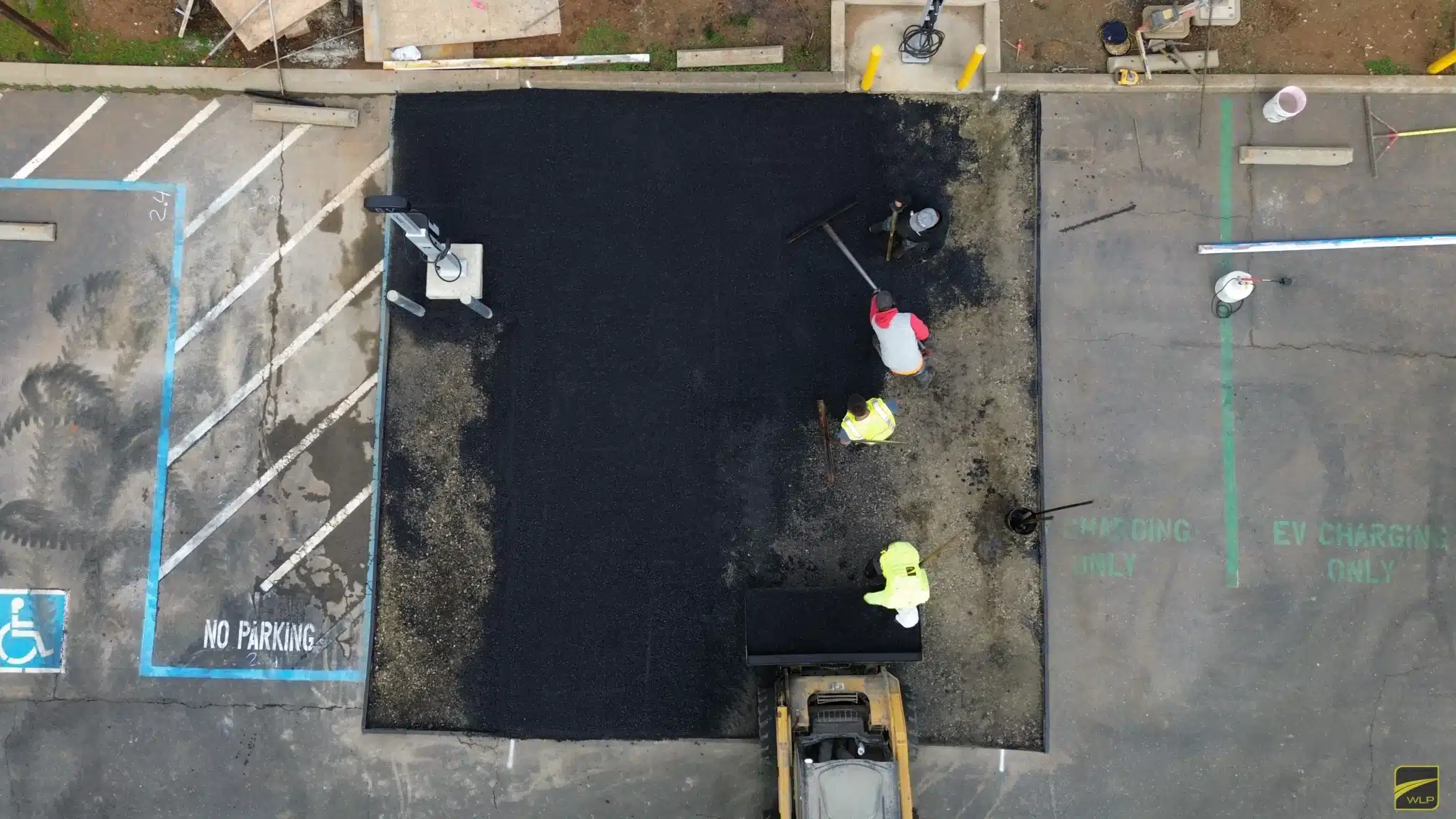
Asphalt is flexible pavement. It has some ability to move with temperature changes, traffic loads, and ground movement. It is commonly used for commercial parking lots, drive lanes, private roads, and large paved areas because it can often be installed and repaired more efficiently than concrete.
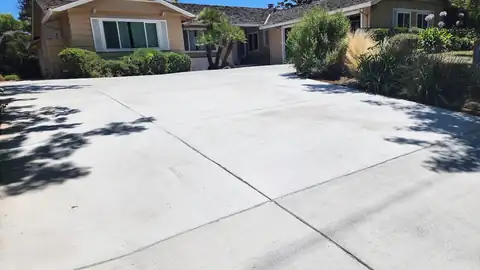
Concrete is rigid pavement. It is harder and less flexible. It can be strong under certain load conditions, but it behaves differently when the base moves, when joints fail, or when sections crack. Concrete is often used for sidewalks, curbs, ramps, loading pads, dumpster pads, aprons, and areas where rigidity or surface durability is important.
The mistake is treating the decision as a beauty contest.
A property may need asphalt in one area and concrete in another. For example, asphalt may make sense for a large parking field, while concrete may be better for dumpster pads, pedestrian routes, curbs, or high-stress loading areas. The right property design often combines materials rather than forcing one surface to do every job.
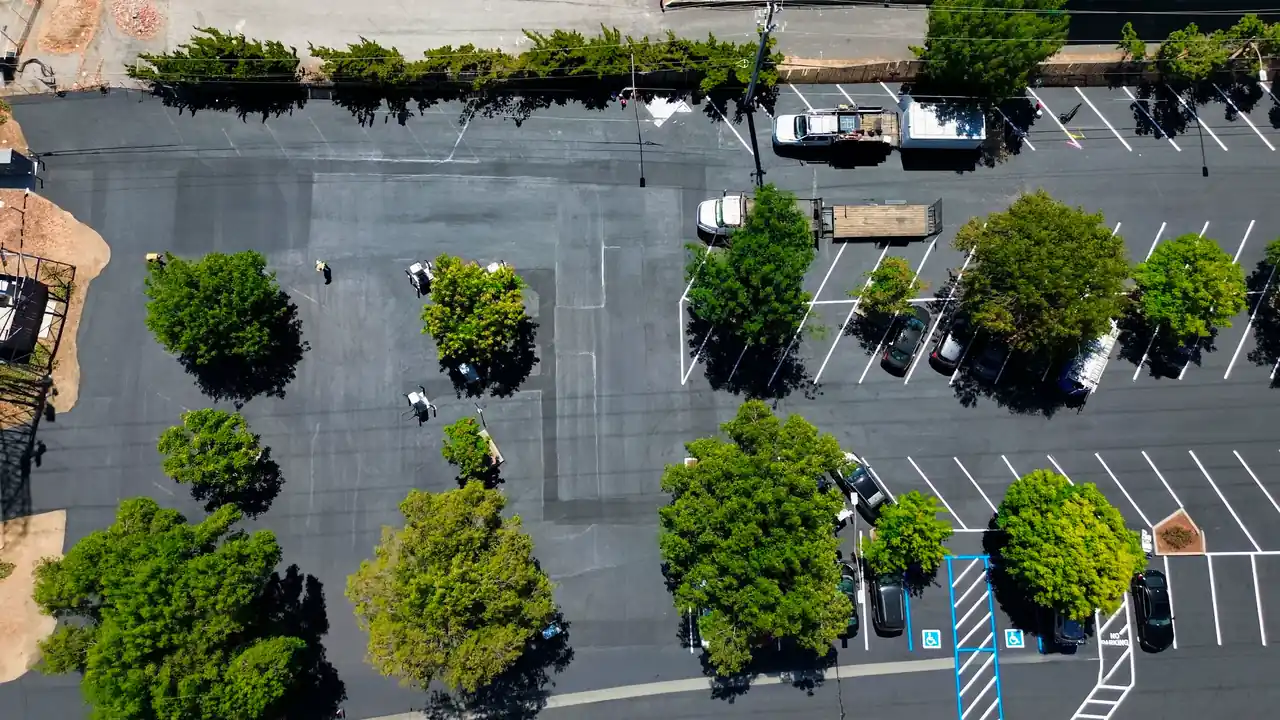
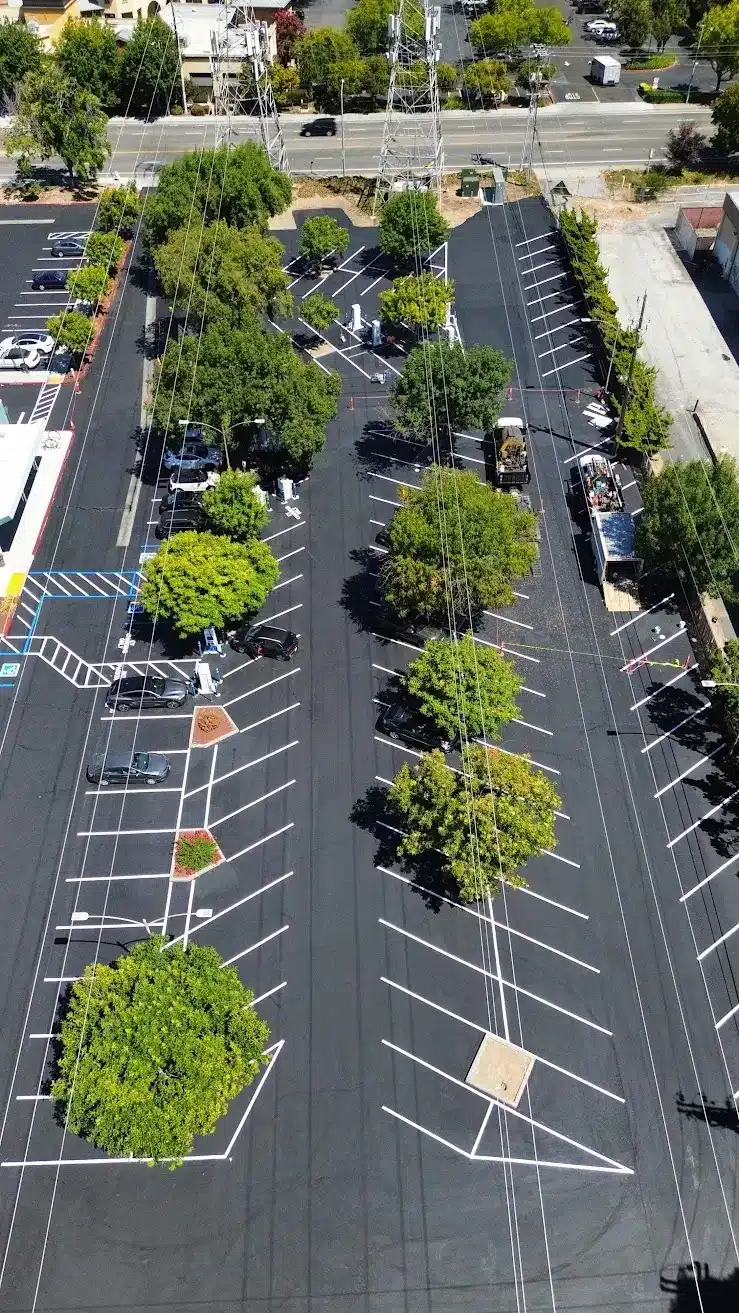
For owners planning a larger parking area, commercial parking lot paving should be evaluated around traffic flow, drainage, maintenance access, and long-term use, not just upfront material preference.
First Cost Is Only One Part of the Decision
Asphalt often has a lower initial installation cost than concrete for large commercial areas, but that does not automatically make it the cheaper long-term choice in every case.
Concrete often costs more upfront, but may perform well in certain locations when designed and installed for the correct use. Asphalt may require more routine maintenance over time, but repairs and resurfacing can often be easier to phase across a commercial property.
The weak comparison is: “Which one is cheaper?”
The better comparison is: “Which one creates the best cost structure for this property?”
A landlord holding a property for three years may think differently than an institutional owner holding for twenty. A warehouse with heavy truck traffic may prioritize load performance differently than a small retail center. A medical office may prioritize clean appearance, accessible routes, and minimal disruption. A multifamily property may care about resident access, budget predictability, and phased repairs.
Cost is not a single number. It includes installation, maintenance, repair access, downtime, drainage correction, striping, surface protection, and eventual resurfacing or replacement.
That is why the broader asphalt maintenance conversation matters. The installation decision is only the beginning. The long-term cost depends on how the pavement is maintained after it is built.
Traffic Type Should Drive the Material Choice
Commercial pavement fails faster when the surface is not matched to the traffic.
Passenger vehicles, delivery vans, trash trucks, fire access vehicles, forklifts, box trucks, and tractor-trailers do not stress pavement the same way. The worst wear usually happens where vehicles turn, brake, idle, load, or follow the same path repeatedly.
That is why a material choice should start with traffic behavior.
A retail lot may need a broad, maintainable asphalt surface with good drainage and clear striping. A warehouse may need stronger planning around truck lanes, loading docks, aprons, and turning areas. An apartment community may need a surface that can be maintained in phases without disrupting every resident at once. A restaurant or grocery center may need extra attention around delivery zones, trash enclosures, and drive-through lanes.
Concrete may be better in certain high-load, high-impact, or slow-turning areas. Asphalt may be better for broad parking fields and access drives where flexibility, repairability, and phasing matter.
The right answer may be hybrid.
Use asphalt where it performs well and is easier to maintain. Use concrete where concentrated stress, edge durability, or site function justify it. That is a stronger strategy than forcing the same material across every square foot.
Maintenance Flexibility Often Favors Asphalt
One reason asphalt remains common for commercial properties is repair flexibility.
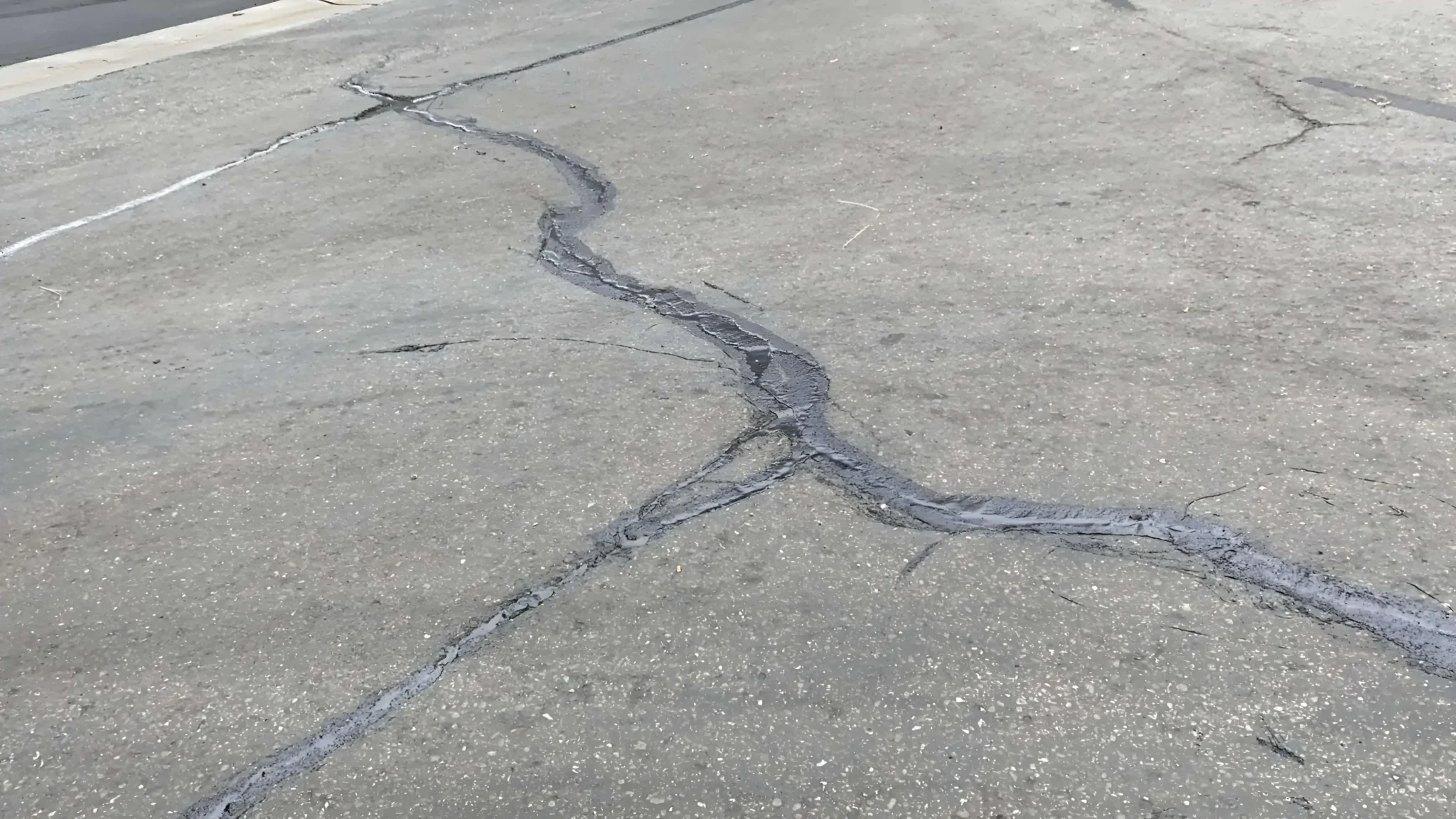
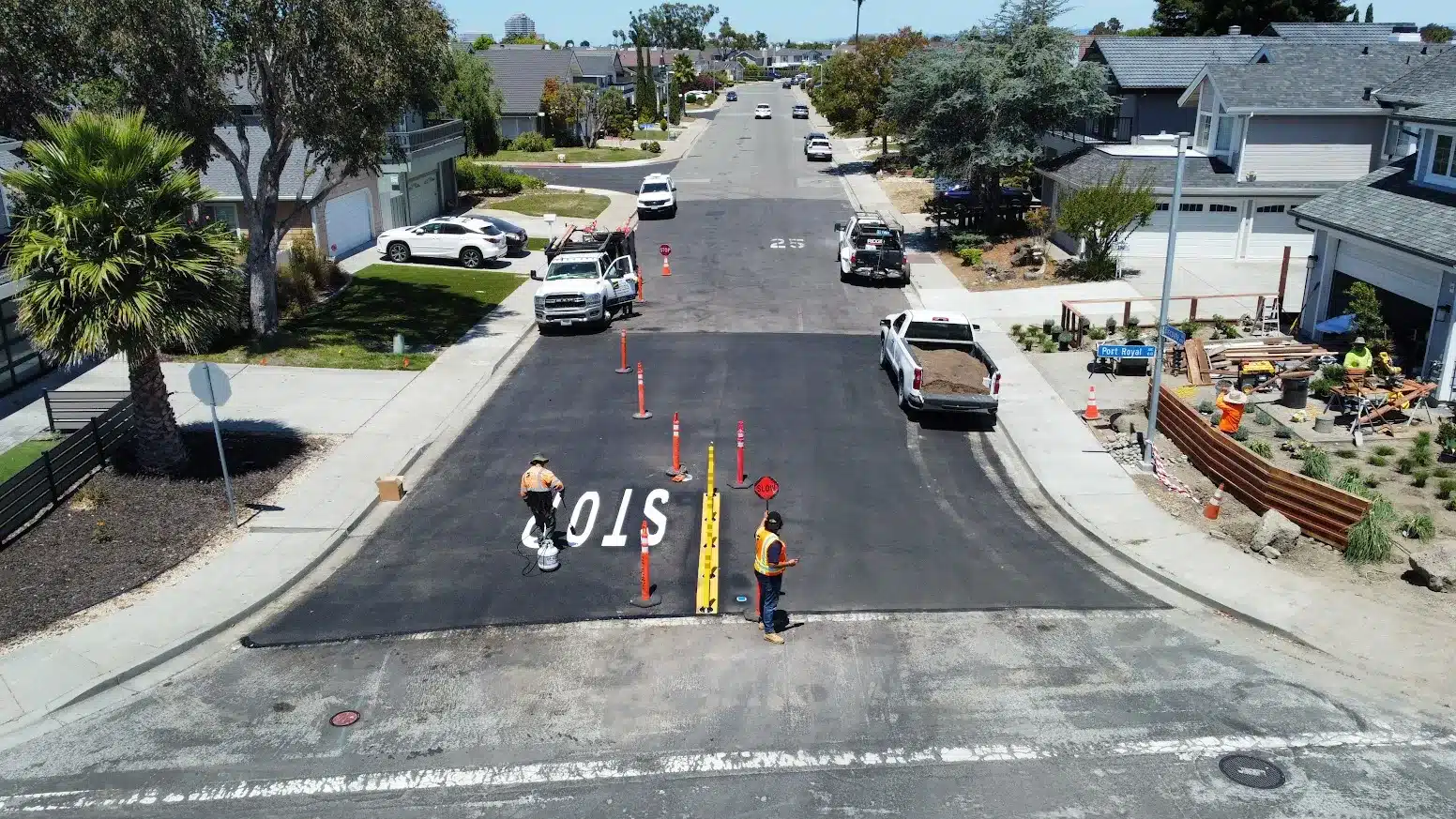
Asphalt can often be patched, crack-filled, sealcoated, resurfaced, or phased in ways that help owners manage access and budgets. That does not mean asphalt is maintenance-free. It means the maintenance tools are familiar, scalable, and often practical for active properties.
Concrete repairs can be more disruptive depending on the area, curing needs, panel replacement, joint work, and traffic demands. Concrete can perform very well, but when it fails, the repair approach may be less forgiving in certain commercial settings.
This does not make asphalt automatically superior. It means owners should be honest about future maintenance behavior.
Will the property manager inspect the lot regularly? Will cracks be addressed early? Will sealcoating or resurfacing be planned before the surface breaks down? Will repairs be budgeted before potholes appear? If not, asphalt can deteriorate faster than expected.
A poor maintenance plan can ruin either material.
For asphalt surfaces, paving maintenance can help preserve the pavement before small cracks, surface wear, and water intrusion turn into larger repair issues.
Drainage Can Matter More Than the Material
A bad drainage design can make both asphalt and concrete perform poorly.
Water is one of the most important forces in pavement deterioration. If water sits on the surface, enters cracks, pools near edges, or repeatedly runs across the same weak areas, the material choice alone will not save the property.
This is where many comparison articles become too shallow.
They discuss asphalt and concrete as if the material is the whole system. It is not. Pavement performance depends on base preparation, grading, drainage, thickness, compaction, joints, edge support, traffic load, and maintenance.
A concrete surface with poor joint performance or water intrusion can fail. An asphalt surface with poor drainage can crack, ravel, soften, and develop potholes. Both materials need water to move correctly.
Commercial owners should review:
- Low spots where water remains after rain
- Drainage paths across drive aisles
- Areas near catch basins or trench drains
- Edges where runoff weakens support
- Loading areas where water and heavy traffic overlap
- Transitions between asphalt and concrete
If a site has recurring drainage problems, arguing about pavement vs concrete is premature. Fix the water behavior first, or both options may underperform.
Appearance Depends on Use, Not Just Material
Concrete and asphalt create different visual impressions.
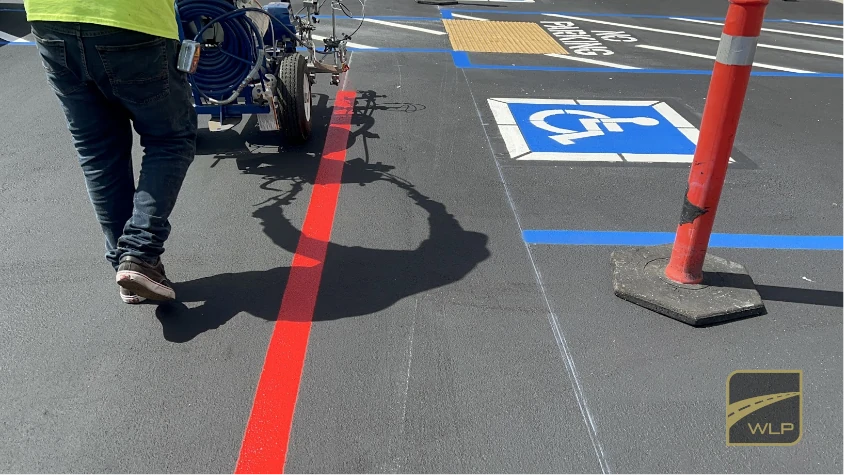
Fresh asphalt gives a clean, dark, uniform look that can make striping stand out clearly. Concrete can create a lighter, more rigid, permanent appearance in areas like sidewalks, aprons, curbs, and pads. Both can look professional when installed and maintained well. Both can look neglected when cracked, stained, patched poorly, or allowed to deteriorate.
The property type should influence the appearance decision.
Retail centers need a lot that feels organized and easy to navigate. Office properties need clean arrival areas. Multifamily properties need common areas that feel maintained. Industrial properties may prioritize function and load performance over appearance, but they still need safe, usable access.
A commercial property’s exterior surface affects how the asset is perceived. Pavement condition can influence first impressions, tenant confidence, buyer perception, and the sense that the property is being actively managed.
Repair Timing Is Different for Asphalt and Concrete
Asphalt and concrete do not fail the same way.
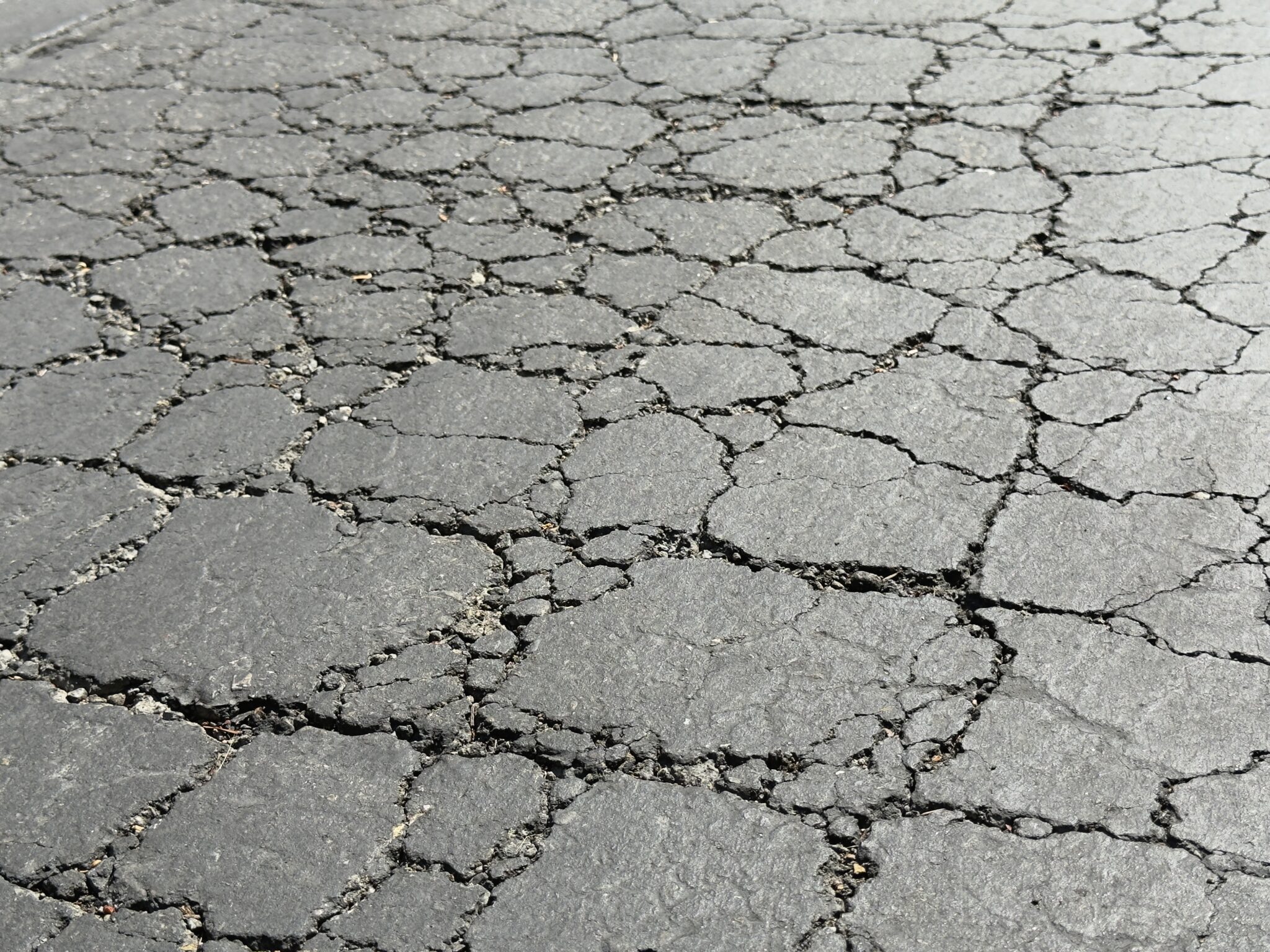
Asphalt often shows distress through fading, cracking, raveling, potholes, edge damage, or surface oxidation. If caught early, maintenance may help slow deterioration. If ignored, water and traffic can move the pavement from surface wear into structural repair.
Concrete often shows distress through cracking, joint failure, spalling, settlement, slab movement, or surface scaling. Repairs may require panel work, joint correction, grinding, replacement, or other targeted methods depending on the issue.
The important point is not which failure mode sounds worse. The important point is timing.
Owners lose money when they apply the wrong repair logic to the wrong material. Sealcoating does not fix failed asphalt. Patching does not solve a drainage problem. Replacing one concrete panel may not fix poor base support. Resurfacing asphalt may not make sense if the underlying pavement is already unstable.
If an asphalt lot is already showing potholes, broken edges, or repeated patch failure, parking lot repair may need to come before surface treatments or cosmetic upgrades.
The comparison between sealcoating vs repaving is especially relevant when an owner is trying to decide whether asphalt still has enough useful life for maintenance or whether a larger scope is needed.
There Is No Universal Winner
The honest answer is that neither asphalt nor concrete wins every commercial property.
Asphalt may be better when the owner needs cost-efficient coverage, easier phasing, faster installation, flexible maintenance options, and practical repair planning for large paved areas. Concrete may be better where rigidity, load concentration, curbs, pads, aprons, pedestrian routes, or specific site conditions justify the added cost and installation requirements.
The wrong decision is choosing based on reputation alone.
“Concrete lasts longer” is too simplistic. So is “asphalt is cheaper.” Both statements can be true in some contexts and misleading in others.
A better decision uses the property’s actual conditions:
| Decision Factor | Asphalt Pavement May Fit When | Concrete Pavement May Fit When |
|---|---|---|
| Large parking areas | Broad coverage and phasing matter | Budget allows higher upfront cost |
| Heavy turning loads | Needs stronger design and maintenance | Load concentration justifies rigidity |
| Repair planning | Flexible patching or resurfacing helps | Panel replacement is acceptable |
| Appearance | Dark surface and striping contrast matter | Light, rigid, defined areas matter |
| Downtime | Faster return-to-use may be useful | Longer curing or staging is manageable |
| Site layout | Parking fields and drive aisles dominate | Pads, sidewalks, aprons, and curbs dominate |
The material decision should come after site evaluation, not before it.
Choose the Surface That Matches the Property Strategy
The best commercial paving decision is not asphalt or concrete in isolation. It is choosing the surface system that supports how the property is used.
A landlord focused on tenant access may value phasing and fast repairs. A warehouse owner may prioritize loading areas and truck movement. A retail owner may prioritize customer circulation and striping visibility. A long-term asset manager may care most about lifecycle cost. An HOA may need predictable maintenance and minimal disruption.
Those priorities shape the answer.
At We Love Paving, we look at asphalt vs concrete decisions through a practical property-use lens: how vehicles move, where water goes, which areas take the most stress, how maintenance will be handled, and whether the surface supports the commercial property’s long-term function instead of just looking good on installation day.