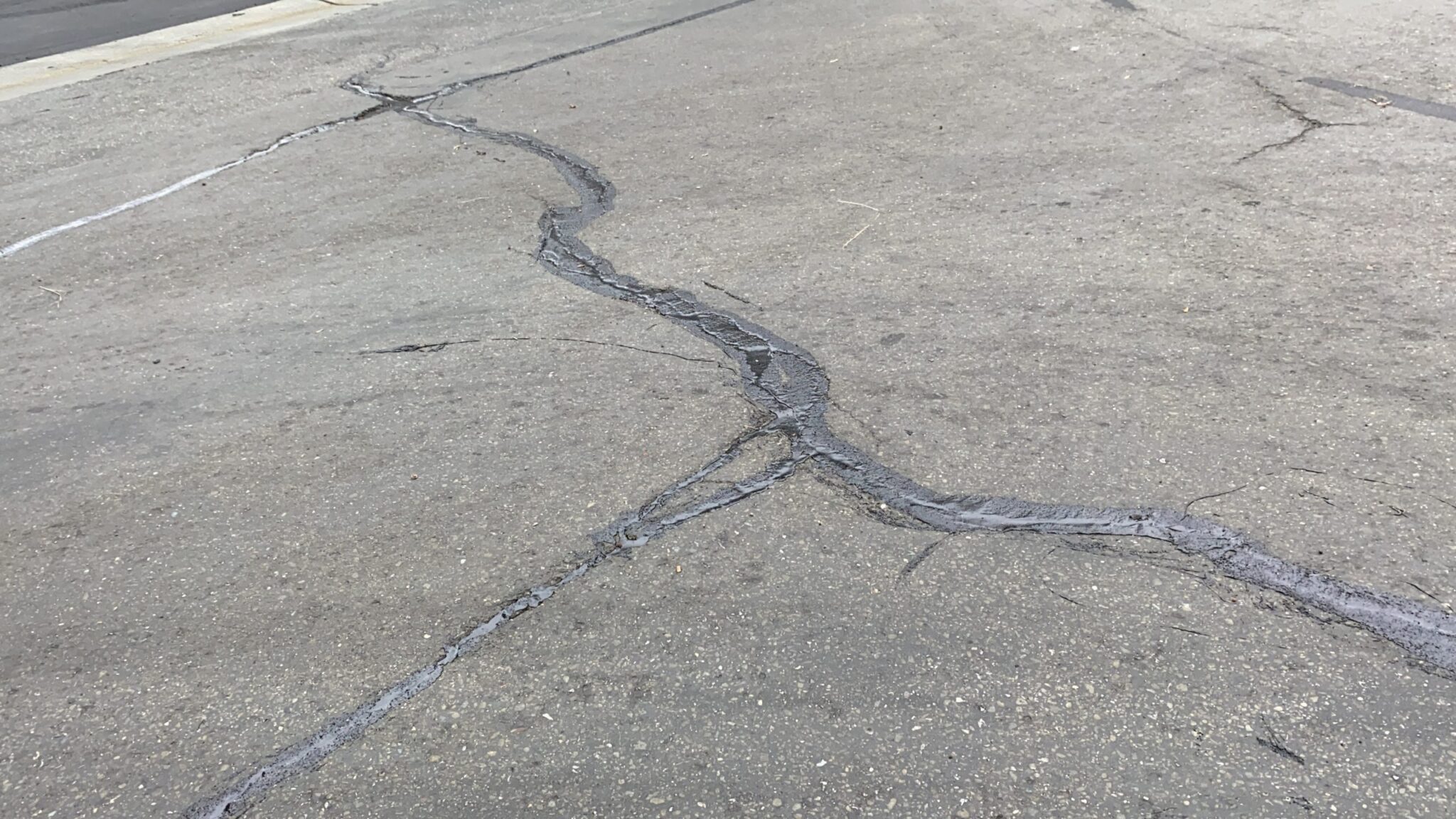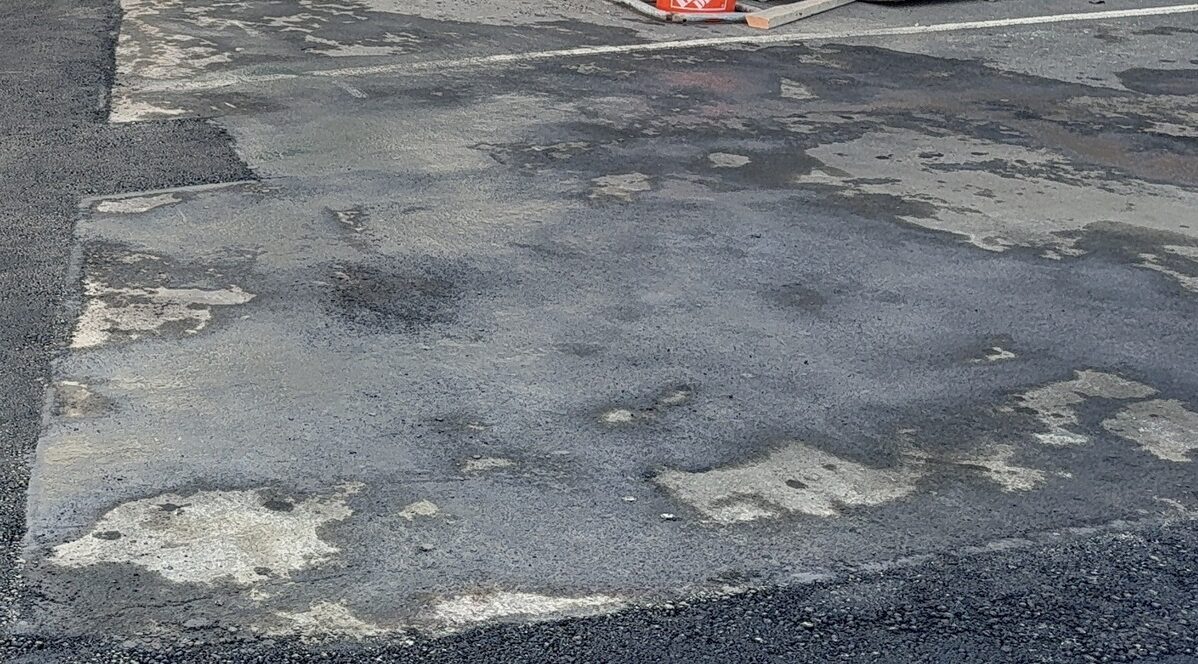
Asphalt bleeding is the upward migration of liquid asphalt binder to the pavement surface, creating a shiny, dark, and often sticky film that covers the exposed aggregate. On commercial parking lots, drive lanes, and loading areas, this condition typically becomes noticeable during warm afternoons when high surface temperatures soften the binder and vehicle tires draw it upward.
Identifying this defect accurately before scheduling maintenance protects your budget and surface safety. Property managers frequently mistake active bleeding for oil leaks or weathered sealcoat, leading them to apply fresh sealcoat directly over the affected area. Because sealcoat adds another layer of bituminous material on top of an already oversaturated surface, doing so traps excess binder, worsens slipperiness, and accelerates surface failure.
What Is Asphalt Bleeding and How Is It Different From Surface Stains?
Asphalt bleeding occurs when excess asphalt binder expands under heat and fills the tiny air spaces between aggregate stones, eventually pushing above the surface as a glossy black film. Unlike normal pavement wear, which exposes rough aggregate edges as the surface ages, bleeding submerges those stones beneath a smooth layer of free bitumen that softens when warm and hardens again as temperatures drop overnight.
In pavement engineering, professionals distinguish between two stages of this condition: bleeding and flushing. Bleeding refers to the active upward movement of liquid binder that becomes tacky and tracks onto tires or shoes in hot weather. Flushing describes the resulting surface state where aggregate macrotexture disappears because the stones are completely submerged in binder, leaving a glass-like finish even after the pavement cools.
Confirming whether a dark, glossy patch is true asphalt bleeding requires comparing it against two common lookalikes on commercial properties:
- Automotive oil or hydraulic fluid spills: Petroleum-based leaks chemically dissolve the asphalt binder, creating a dull, soft, or crumbly spot that stays greasy regardless of ambient temperature and carries a distinct fuel or oil odor. True bleeding consists of pure asphalt binder, lacks a solvent smell, and turns firm when cool.
- Excess or poorly cured sealcoat buildup: Over-applied sealcoat typically shows brush or squeegee marks, fine shrinkage cracks, or localized peeling where thick layers failed to bond. Bleeding emerges directly from the internal structure of the hot mix asphalt rather than flaking off as a separate top film.
Air voids are largely filled with excess binder, which cools into a firm, dark sheen around upper stones.
Low viscosity and depleted air voids force liquid binder above aggregate peaks under traffic loads.
Internal air voids are collapsed and oversaturated; aggregate stones remain completely drowned in binder.
Softened excess binder eliminates stone-on-stone interlock, raising the risk of wheel-path rutting.
Glossy dark patches appear between stones, though tackiness drops until afternoon heat returns.
Shiny, sticky bitumen coats the surface, tracks onto tires and shoes, and becomes slick when wet.
Smooth, glass-like finish persists even in cool morning temperatures with minimal wet-weather grip.
Thick, glossy bitumen film tracks heavily across adjacent concrete and creates severe slip hazards.
Inspect during warm afternoons before scheduling sealcoat; adding sealer will trap excess binder.
Do not sealcoat. Blot minor spots with dry angular sand or evaluate for micro-milling.
Surface sand blotting is no longer effective; plan for mechanical milling and mix replacement.
High-severity condition (ASTM D6433). Mill out the binder-rich layer and repave with balanced HMA.
Why Does Asphalt Bleeding Happen on Commercial Pavements?
Asphalt bleeding happens when the volume of liquid binder inside the pavement exceeds the available air voids in the compacted mat, leaving the binder nowhere to expand except upward under heat and traffic loads. While high summer temperatures trigger the visible symptoms, the underlying imbalance usually originates during mix production, installation, or prior surface maintenance.
Several distinct factors contribute to binder over-saturation in commercial pavements:
- Plant mix design and binder imbalances: When a batch contains too much liquid asphalt or insufficient air voids within properly proportioned hot mix asphalt, thermal expansion forces the excess binder toward the surface. Fine-graded mixes with tight void structures are particularly sensitive to even minor binder overages during production.
- Construction and maintenance application errors: Applying an overly heavy tack coat between asphalt lifts creates a reservoir of excess liquid binder that can migrate upward through a thin overlay. Similarly, applying repeated coats of sealcoat on a rigid calendar schedule before traffic wears down the previous layer builds a binder-rich crust that softens and tracks in hot weather.
- Thermal load and heavy traffic compaction: Across warm regions of California, asphalt surfaces absorb significant solar heat, raising pavement temperatures well above ambient air readings and lowering binder viscosity. Repeated wheel loads from delivery trucks, trash haulers, and turning vehicles continue to compact the warm mat, squeezing out remaining air voids and pushing liquid binder to the top.
Because traffic compaction and solar exposure vary across a single property, bleeding rarely appears uniformly. Drive aisles with slow-moving heavy trucks, tight turning radii, and unshaded south- or west-facing stalls typically show glossy wheel paths long before shaded perimeter spaces are affected.
Safety Hazards, ADA Risks, and the Link to Asphalt Rutting
The immediate operational hazard of asphalt bleeding is a sharp reduction in surface skid resistance. Pavement friction depends on both the microtexture of individual aggregate stones and the macrotexture created by spaces between those stones. Once liquid binder coats and submerges the aggregate, tires and footwear contact a smooth bituminous film that offers very little traction, especially during the first rain after a dry spell.
For commercial property owners, reduced friction creates serious liability and accessibility concerns. When bleeding develops along pedestrian walkways, crosswalks, or ADA-compliant access aisles and curb ramps, wet conditions can turn standard walking paths into slip hazards. During hot afternoons, softened binder also adheres to vehicle tires and shoe soles, tracking black residue onto concrete sidewalks, crosswalk markings, and interior building flooring.
Beyond surface traction, persistent bleeding often signals an underlying stability issue within the asphalt layer. The same combination of excess binder, low air voids, and high pavement temperatures reduces stone-on-stone interlock inside the mix. Without adequate aggregate friction to carry heavy axle loads, the warm asphalt mixture can deform laterally under repeated wheel passes, progressing into permanent wheel-path rutting that traps stormwater and requires structural milling.
How to Evaluate Severity and Choose the Right Repair Method
Selecting the right repair depends on how extensively the excess binder covers the aggregate and whether the pavement structure remains stable. Under ASTM D6433 (Standard Practice for Roads and Parking Lots Pavement Condition Index Surveys), asphalt bleeding is categorized into low, moderate, and high severity levels based on surface coverage and tackiness during warm conditions.
| Severity Level (ASTM D6433) | Surface Appearance & Heat Behavior | Friction & Operational Risk | Recommended Repair & Sealcoat Viability |
|---|---|---|---|
| Low Severity | Excess binder is visible on the surface only during a few hot days of the year; aggregate remains largely visible and binder rarely sticks to shoes or tires. | Minimal traction loss in dry weather; localized slickness possible when wet. | Monitor the area and blot minor tacky spots with clean, dry coarse sand or fine aggregate screenings. Delay sealcoating until excess surface binder wears down. |
| Moderate Severity | Binder forms a noticeable black film covering significant portions of the aggregate; surface becomes tacky and adheres to shoes or tires for several weeks in warm weather. | Moderate to high slip and skid risk when wet; visible tire tracking onto adjacent concrete and striping. | Apply heated or dry angular sand/fine aggregate followed by rolling to restore surface texture, or perform shallow micro-milling. Do not apply conventional sealcoat. |
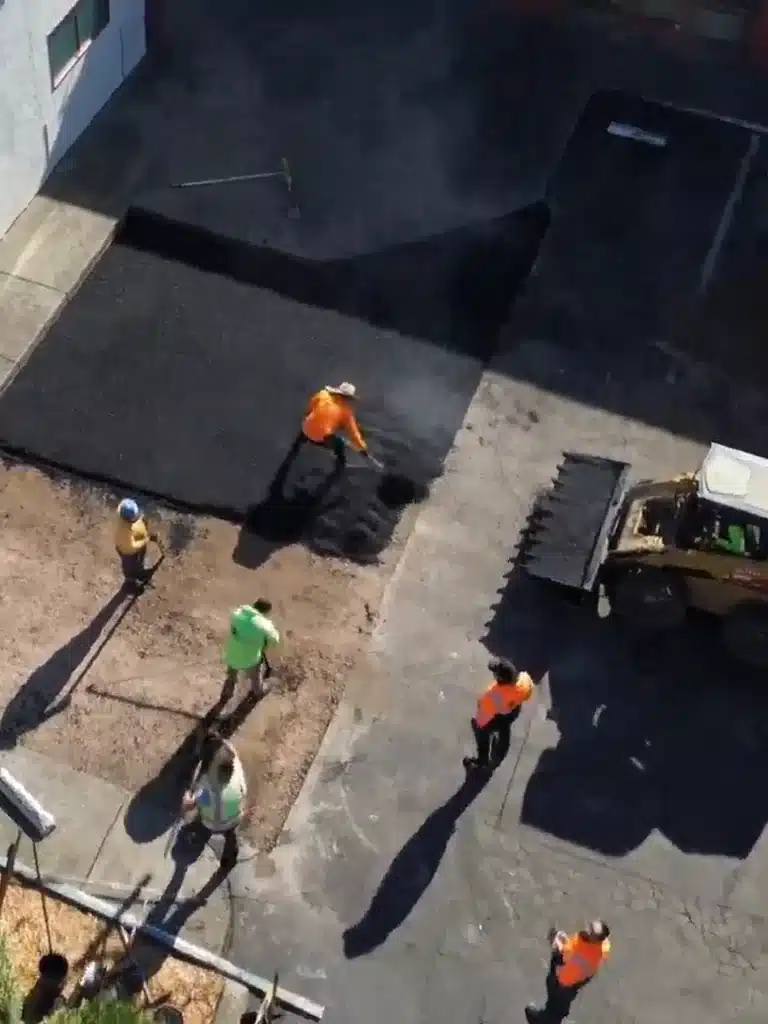
| High Severity | Extensive free binder completely submerges the aggregate, creating a smooth, shiny, or flushed surface that tracks heavily in warm weather and often pairs with wheel-path deformation. | Severe loss of skid resistance in wet conditions and elevated liability on drive lanes and pedestrian routes. | Mill out the binder-rich asphalt layer and repave with a properly designed hot mix asphalt. Surface sealants and sand blotting will not resolve the defect. |
A common mistake in commercial pavement maintenance is attempting to hide moderate or high-severity bleeding beneath a fresh coat of asphalt emulsion or coal-tar sealer. Conventional sealcoat is designed to protect oxidized, dry asphalt by replenishing lost surface fines and binder. Applying it over bleeding pavement introduces more liquid binder onto a surface that already has too much, compounding tackiness and delaying proper texture restoration. Final treatment selection always requires checking core depth, drainage, and base stability on site.
How to Prevent Asphalt Bleeding in New Paving and Maintenance Projects
Preventing asphalt bleeding starts with strict mix design verification and disciplined application controls during construction and routine preservation. When specifying new paving or overlays in California, requiring compliance with established agency benchmarks such as Caltrans Standard Specifications Section 39 (Hot Mix Asphalt) helps ensure the plant mix maintains balanced binder content and adequate air voids to accommodate thermal expansion without flushing.
Equally important is controlling liquid applications between lifts and during preventive maintenance. Following distribution calibration standards like those outlined in Caltrans Standard Specifications Section 37 (Bituminous Seals) prevents heavy tack coat puddles that bleed through thin overlays. For existing parking lots, property managers should schedule sealcoating based on actual aggregate exposure and oxidation rather than fixed annual or biennial intervals, ensuring previous coats have worn thin before adding new material.
When glossy, tacky patches appear on your lot, an on-site evaluation clarifies whether the surface needs targeted aggregate blotting, shallow milling, or localized full-depth repair. Consulting with We Love Paving’s field operations team (CSLB Licensed #1049649, C12 Earthwork and Paving) allows you to diagnose the exact cause of binder migration and select a corrective treatment tailored to your property’s traffic loads and local climate conditions.