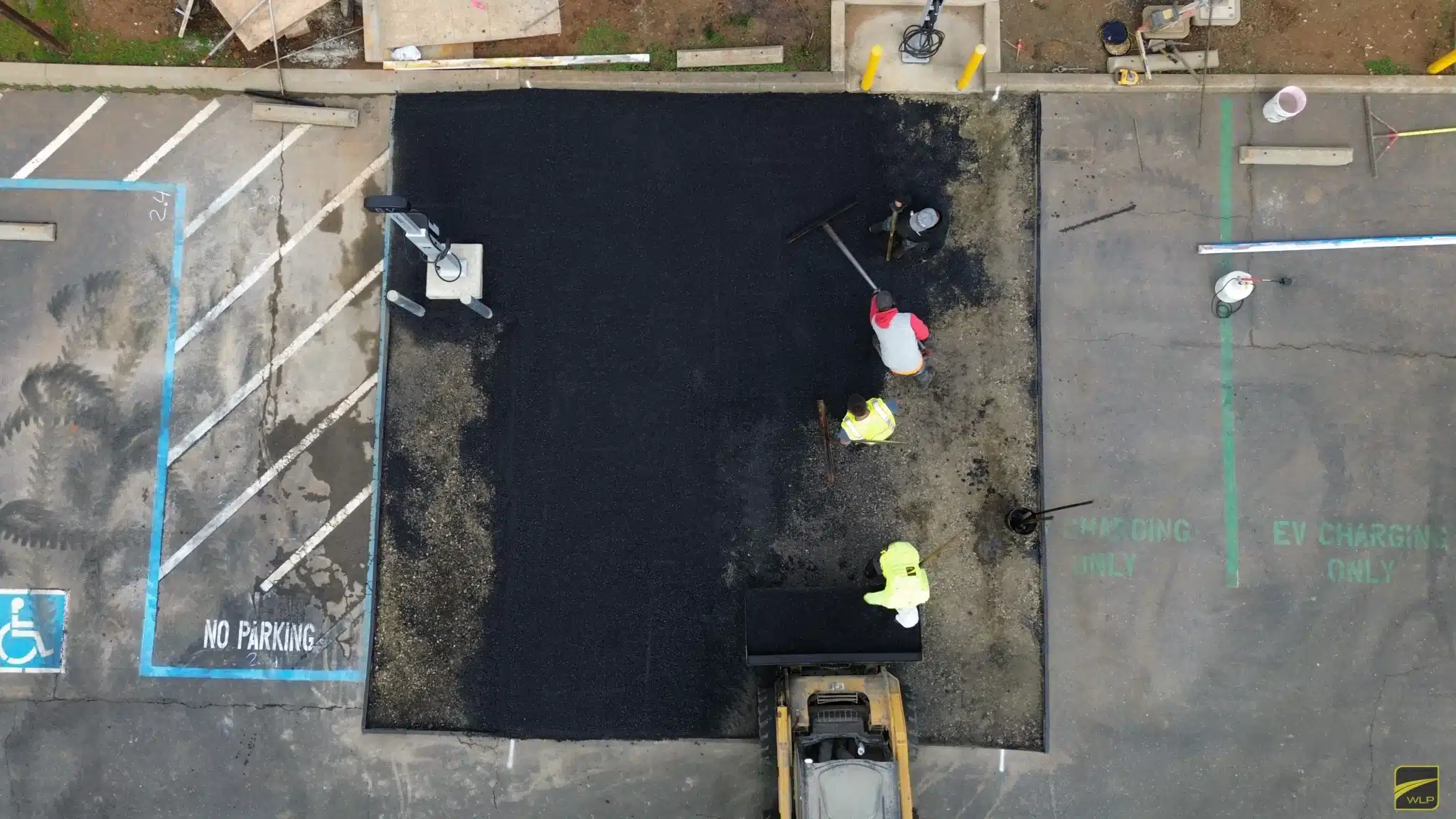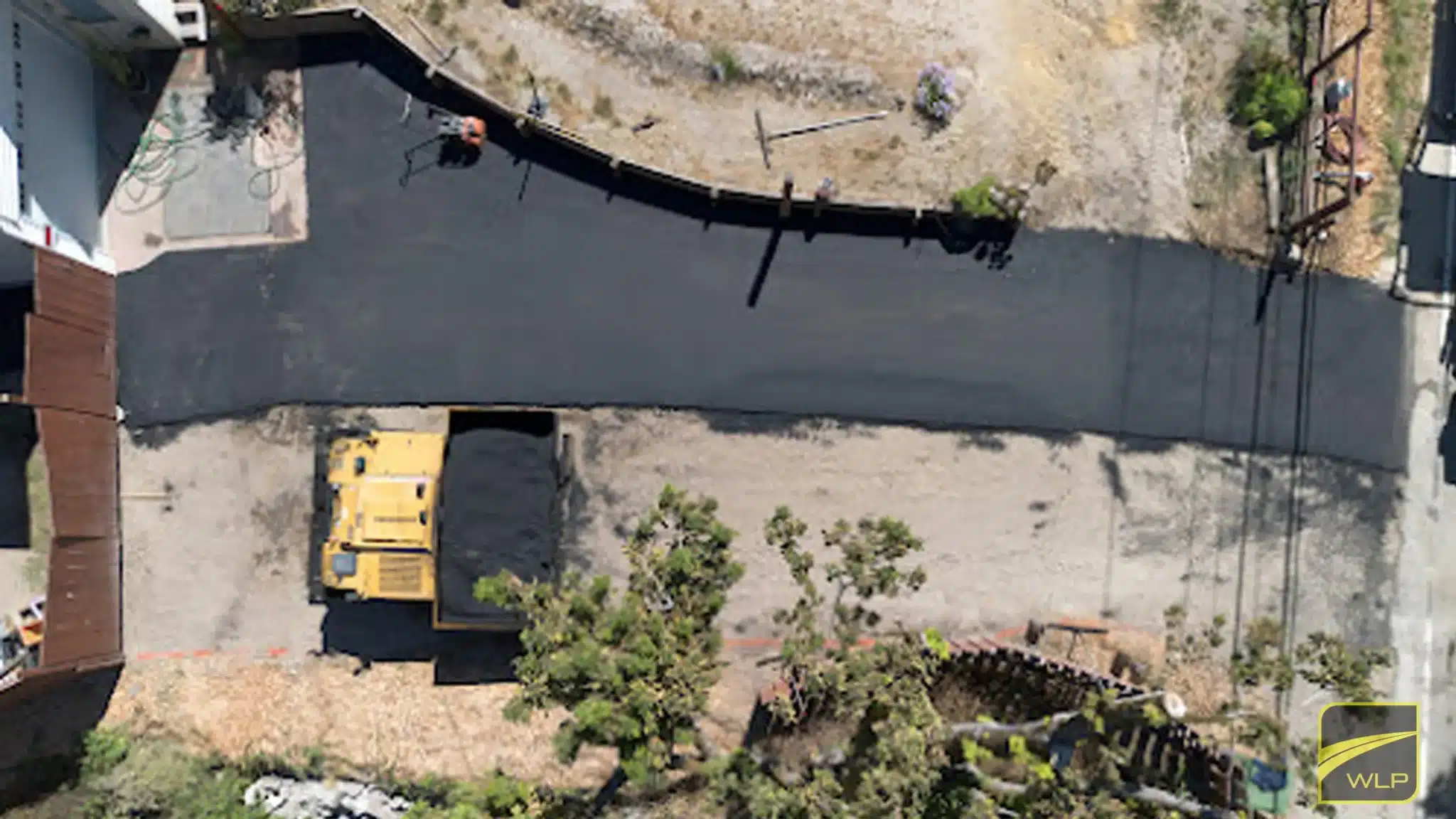
The first asphalt road in human history was constructed in 615 BC in Babylon, where natural bitumen was used to bind burnt brick thoroughfares. However, the first modern engineered asphalt road using prepared bituminous mixtures was built in 1870 in Newark, New Jersey, by Belgian chemist Edmond J. DeSmedt. In California, asphalt paving evolved through a distinct dual-region development: Southern California initially harnessed natural surface seeps like the La Brea and Carpinteria tar pits in the mid-19th century, while Northern California leveraged industrial oil refining in the 1890s to pave major urban corridors in San Francisco and Sacramento. Understanding this historical progression explains how early binder experiments transformed into the rigorous Caltrans Hot Mix Asphalt (HMA) standards governing commercial paving today.
The Global Timeline: From Ancient Babylon to Newark, New Jersey (1870)
The foundational concept of binding crushed rock with heavy hydrocarbons dates back over two millennia before the industrial revolution. Around 615 BC, King Nabopolasar of Babylon recorded paving processional roadways with burnt brick set in a mortar of natural asphalt and reed mats. These early applications relied exclusively on raw bitumen exuded from natural geological deposits. Centuries later, European explorers documented massive asphalt reserves in the Western Hemisphere, such as Sir Walter Raleigh’s 1595 account of Pitch Lake in Trinidad. However, these raw materials remained secondary surfacing choices until urban expansion in the 19th century demanded a dust-free, resilient alternative to cobblestones and wooden block paving.
The true shift toward modern pavement technology occurred in July 1870 on William Street in Newark, New Jersey. Belgian chemist Edmond J. DeSmedt applied the first scientifically blended sheet asphalt pavement in the United States, utilizing natural bitumen imported from Trinidad combined with graded sand and hydraulic lime. The commercial success of this experimental strip led to the first major public infrastructure test in 1876, when the United States Congress commissioned the paving of 54,000 square yards on Pennsylvania Avenue in Washington, D.C. This federal project proved that engineered asphalt could handle heavy horse-drawn traffic, setting off a wave of municipal paving adoptions across American metropolitan centers.
During this pioneering era, civil engineers faced significant hurdles with mix stability and temperature sensitivity. Early sheet asphalt lacked coarse aggregate, making surfaces prone to shoving under heavy loads during summer heat and cracking under winter freezes. The technical breakthrough came in 1901 when Frederick J. Warren patented “Bitulithic” pavement a precursor to modern Hot Mix Asphalt (HMA) that incorporated scientifically graded crushed stone ranging from coarse gravel to fine dust. By optimizing aggregate interlock, Warren reduced the required binder content while dramatically increasing structural load capacity, laying the engineering groundwork for 20th-century highway systems.
Southern California’s Early Natural Asphalt: La Brea and Carpinteria
Long before industrial oil refineries operated along the Pacific coast, Southern California contained some of the world’s most prominent surface asphalt seeps. For centuries, the indigenous Chumash people harvested natural bitumen from the coastal seeps of Carpinteria in Santa Barbara County and the interior seeps of La Brea in the Los Angeles Basin. This heavy, sticky substance was utilized to waterproof plank canoes (tomols), seal basketry, and adhere stone tools. During the Spanish colonial and Mexican rancho periods, residents extracted asphaltum from these same pits to seal adobe roofs and seal cattle-drawn cart pathways throughout the region.
As urban centers expanded in Southern California during the mid-19th century, civil authorities sought local materials to improve muddy pueblo roads. By the 1860s and 1870s, municipal road crews in Los Angeles and Santa Barbara spread raw asphaltum directly from the Carpinteria seeps over dirt thoroughfares. While this natural binder successfully suppressed dust during dry summer months, raw asphaltum lacked precise binder-to-aggregate ratios. Under intense summer sunlight, these early surfaces softened into unrefined tar beds, while heavy winter rains eroded the unbound subgrade beneath them.
Despite its initial technical limitations, Southern California’s natural asphalt industry served as a critical stepping stone toward industrial refining. The geological presence of heavy crude seeps alerted early petroleum prospectors to the rich oil basins of Kern County, Ventura, and Los Angeles. By the late 1880s, early oil companies began distilling local heavy crude oil, producing asphaltic residue that was far more consistent than raw surface seep material. This shift allowed Southern California municipalities to transition from crude seep applications to early manufactured asphalt pavements, laying the foundation for regional transport networks.
Northern California’s Urban Paving Expansion: San Francisco to Sacramento
While Southern California experimented with natural surface deposits, Northern California experienced rapid urban density following the Gold Rush and the establishment of maritime trade hubs along San Francisco Bay. By the 1880s, cities like San Francisco, San Jose, and Sacramento faced severe infrastructure bottlenecks. Heavy freight wagons transporting agricultural yield from the Central Valley destroyed wood block streets and created rutted, impassable mud channels during winter rains. Municipal leaders required high-durability surfaces that could withstand heavy axle loads at major port access points and freight depots.
Northern California’s transition to asphalt paving accelerated in the 1890s through the establishment of regional petroleum refineries along the San Francisco Bay and East Bay corridors, including early refining facilities in Richmond and Oleum. These refineries processed asphaltic-base crude oils piped from Northern Central Valley oil fields. Unlike Eastern U.S. cities that imported costly Trinidad pitch via Atlantic shipping routes, Northern California municipalities obtained locally refined petroleum binder at a fraction of the transportation cost. This local industrial capacity enabled extensive street modernization projects across San Francisco and Sacramento before the turn of the 20th century.
In Sacramento, early paving projects integrated asphalt overlays above crushed rock bases to create smooth surfaces for horse-drawn carts and early commercial transport. The city’s low-lying river delta geology required engineers to address drainage and subgrade stabilization early on, leading to stricter compaction requirements for urban streets. The engineering techniques refined during this northern expansion established early benchmarks for regional contractors, illustrating the long-standing principles behind construction paving practices in Sacramento and Northern California.

Unifying NorCal and SoCal: The Rise of California’s Highway System
By the close of the 19th century, the disparity between isolated municipal road networks in Northern and Southern California highlighted the urgent need for a unified state transport system. In 1895, the California State Legislature established the Bureau of Highways, marking the official beginning of statewide transportation planning. The Bureau’s first three commissioners traveled extensively across all 57 counties on horseback and horse-drawn buggies, mapping out a recommended 4,500-mile highway network designed to connect rural agricultural valleys with urban coastal markets.
The rapid rise of the automobile in the 1910s transformed asphalt from a city street luxury into an essential state infrastructure material. In 1912, California voters approved the first $18 million highway bond issue, initiating construction on the primary north-south arterial routes that would eventually become U.S. Route 101 and Interstate 5. Early highway engineers specified asphalt concrete surfaces over crushed stone bases to accommodate regional climate extremes from the freezing winter conditions of northern mountain passes to the extreme thermal expansion in southern desert valleys.
As traffic volumes and truck axle weights increased exponentially following World War II, state highway officials established standardized material testing protocols that led to the formation of the California Department of Transportation (Caltrans). Caltrans pioneered modern mix design criteria, introducing rigid requirements for aggregate angularity, binder viscosity, and compaction density. Today, whether constructing commercial parking facilities or municipal arterials, engineers balance the structural trade-offs between flexible asphalt mixes and rigid pavements, reflecting the ongoing evolution of rigid concrete versus flexible asphalt pavement.
Historical Comparison: Ancient Bitumen, 19th Century California, and Modern HMA
The evolution of asphalt paving materials reflects a dramatic shift in chemical precision, aggregate engineering, and structural longevity. The table below illustrates key performance metrics across three distinct eras of paving history:
| Performance Characteristic | Ancient Babylonian Bitumen (615 BC) | 19th Century California Seep Asphalt (1870s) | Modern Caltrans Hot Mix Asphalt (HMA) |
|---|---|---|---|
| Primary Binder Source | Raw surface bitumen seep deposits | Raw seep asphaltum (Carpinteria / La Brea) | Performance-Graded (PG) refined asphalt binder |
| Aggregate Structure | None (used as mortar for burnt brick) | Unsorted local beach sand or river gravel | Scientifically graded crushed stone with angular fracture |
| Mixing & Heating Method | Hand-heated over open fire pits | Cold-spread or ambient bucket heating | Plant-mixed at 280°F–320°F with precise moisture control |
| Compaction Technology | Manual hand tamping | Horse-drawn iron rollers | Heavy vibratory steel-drum and pneumatic rollers |
| Average Lifespan | Variable (functional for brick adhesion) | 1 to 3 years before severe thermal rutting | 15 to 25+ years with planned maintenance |
Built to Last: The Legacy of California Paving
Understanding the history of asphalt paving shows that building reliable surfaces has always required continuous technical adaptation and material precision. From ancient bitumen thoroughfares to the early regional developments across Southern California’s natural seeps and Northern California’s industrial refining, every historical breakthrough laid the groundwork for higher standards of structural integrity. Today, that same commitment drives modern commercial paving. By combining advanced aggregate grading, precise temperature controls, and Caltrans-aligned specifications, We Love Paving ensures every parking lot, roadway, and commercial site delivers exceptional durability and long-term value across California.