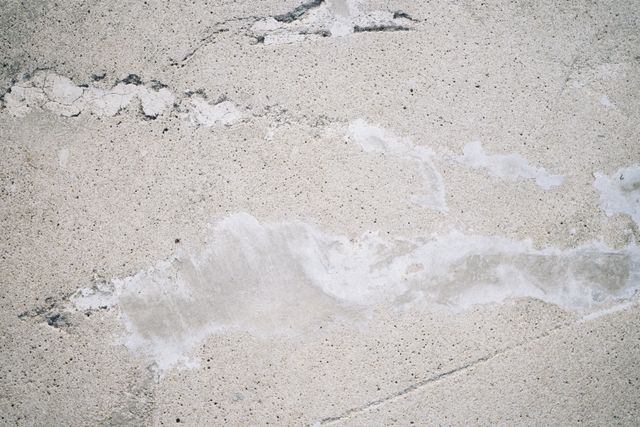
Concrete flaking, often referred to as surface scaling, occurs when the uppermost layer of a concrete slab weakens, cracks, and peels away in thin sheets or flakes. This issue typically stems from a combination of excessive water in the concrete mixture, premature finishing during installation, and environmental stresses like freeze-thaw cycles or chemical exposure. Left unaddressed, surface flaking exposes the aggregate underneath, accelerating moisture infiltration and leading to severe structural degradation over time.
For commercial property managers and facility directors, identifying the root cause of concrete scaling is essential for implementing the correct repair strategy. While superficial scaling can often be restored using specialized polymer overlays or penetrative sealants, deeper degradation may signal fundamental slab failure requiring structural section replacement. Understanding the precise mechanical and environmental triggers behind flaking allows property owners to protect their hardscape investments and maintain safe, durable paved surfaces.
Understanding Concrete Flaking: Surface Scaling vs. Structural Spalling
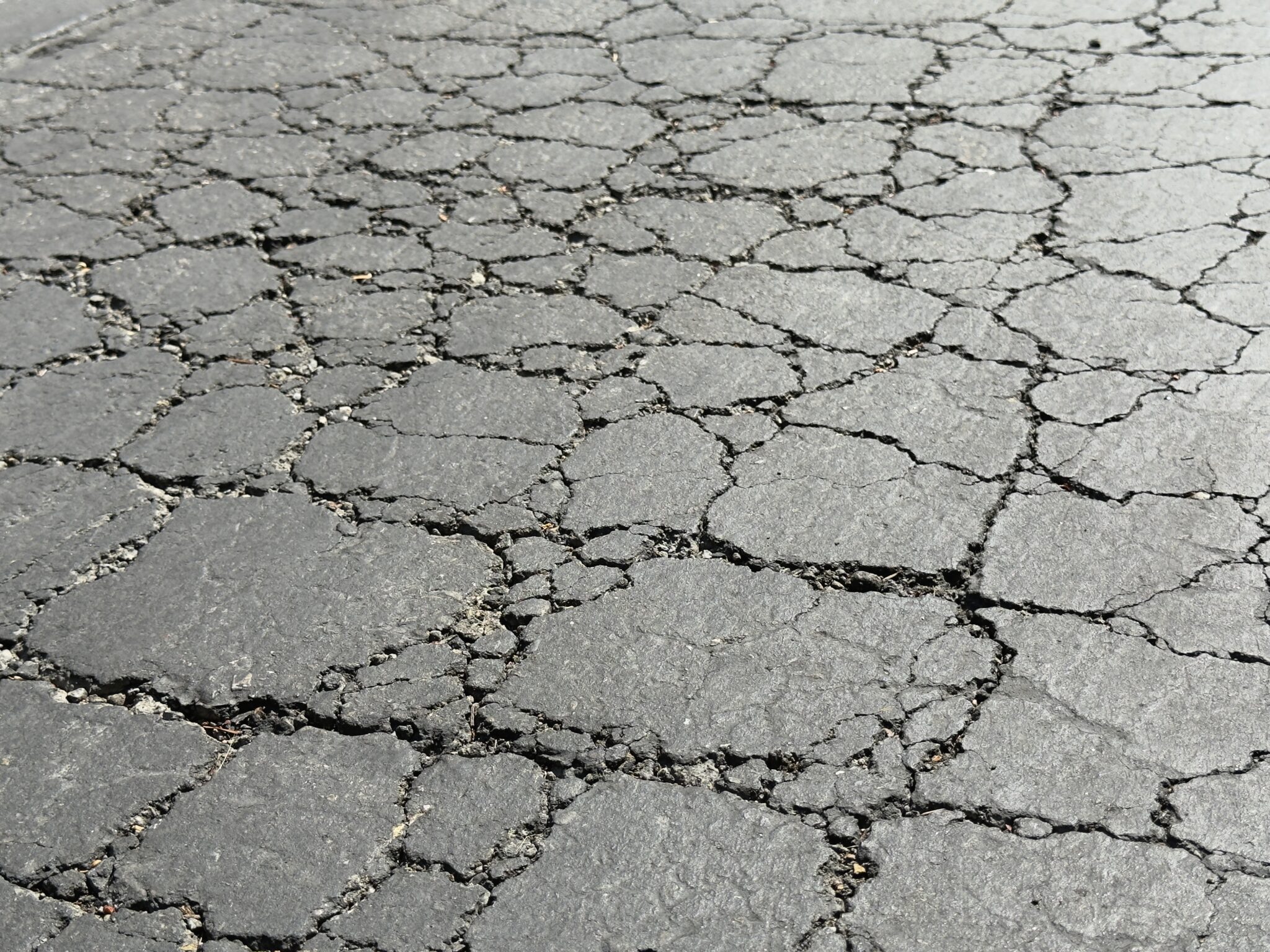
Concrete flaking, technically known as surface scaling, refers to the loss of the thin surface paste layer, usually extending to a depth of 1/16 to 1/4 inch. It leaves the coarse aggregate underneath exposed and creates an uneven, dusty surface texture. In contrast, structural spalling involves deeper, larger chunks of concrete breaking away from the slab, frequently extending down to the internal reinforcing steel. While scaling is primarily a surface paste failure, spalling often indicates severe sub-surface stress, rebar corrosion, or severe impact damage.
The distinction between scaling and spalling dictates the appropriate remediation path. Surface scaling primarily affects the cosmetic appearance and surface wear of the slab without immediately compromising its overall load-bearing capacity. However, because scaling strips away the protective cement paste, it leaves the porous aggregate vulnerable to water absorption. If water penetrates these exposed areas and undergoes thermal expansion, minor surface flaking can rapidly evolve into deep structural spalling.
Installation and Finishing Errors That Weaken the Top Layer
The primary cause of concrete surface flaking is improper finishing technique during placement, specifically working the concrete while bleed water is still present. According to the American Concrete Institute (ACI 302.1R guidelines), as concrete settles after pouring, excess mixing water naturally rises to the surface a process known as bleeding. If finishers bull-float or trowel the surface before this bleed water evaporates completely, they force the water back into the top layer of the cement paste. This drastically increases the water-cement ratio at the surface, reducing its final compressive strength and creating a weak, porous crust.
Adding excess water to the mix truck to improve workability on-site similarly compromises surface integrity. High water-to-cement ratios reduce the overall density of the cured matrix, leaving microscopic voids throughout the slab. Additionally, rapid surface drying caused by high winds or hot ambient temperatures can cause premature crusting. When the top skin dries faster than the underlying mass, internal tensile stresses pull the brittle top layer apart, causing it to flake off once subjected to traffic load or thermal shifts.
Environmental Triggers and Chemical Exposure
Environmental conditions significantly accelerate the deterioration of weakened concrete surfaces. Moisture trapped within a porous surface paste expands by approximately 9% when it freezes. This expansion exerts intense internal hydraulic pressure against the walls of the cement matrix. If the tensile strength of the surface paste has been compromised by finishing errors or high water content, repeated freeze-thaw cycles will shatter the thin top layer, causing it to scale off in thin flakes.
Chemical exposure further compounds surface flaking, particularly in commercial parking areas and driveways. Deicing chemicals, such as sodium chloride or calcium chloride, lower the freezing point of water, increasing the frequency of freeze-thaw cycles at the surface level. Furthermore, chemicals can react with calcium hydroxide in the cement matrix, leaching out binding agents and softening the surface. In industrial environments, exposure to fertilizers, salts, and harsh cleaning agents penetrates unsealed pores, breaking down the chemical bond of the paste and causing continuous surface shedding.
How to Evaluate the Damage: Repair or Replace?
Determining whether to repair or replace flaking concrete depends on the depth of the damage and the underlying structural soundness of the slab. A field evaluation begins with a sounding test, where a chain drag or hammer is used across the surface; a hollow ring indicates subsurface delamination, while a solid metallic ring confirms structural integrity. If flaking is confined strictly to the top paste layer (less than 1/4 inch deep) and the underlying concrete remains dense and crack-free, a surface restoration approach is viable.
| Evaluation Criteria | Surface Restoration (Repair) | Full Slab Replacement |
|---|---|---|
| Damage Depth | Less than 1/4 inch (surface paste) | Greater than 1/2 inch into aggregate |
| Subsurface Soundness | Solid sound during chain drag test | Hollow sound, extensive delamination |
| Cracking & Settlement | Hairline surface crazing only | Deep structural cracks or displacement |
| Corrective Action | Micro-topping or polymer resurfacing | Full-depth saw cutting & reconstruction |
When surface scaling covers less than a third of the total slab area, applying a high-strength polymer-modified cementitious overlay can restore a smooth, wear-resistant finish. However, if the slab exhibits extensive deep spalling, active settling, or severe cracking alongside flaking, topical repairs will fail prematurely. Understanding what causes concrete to flake helps facility owners recognize when surface scaling is a symptom of broader installation failures that necessitate full section replacement.

Proven Prevention Strategies for Durable Concrete Surfaces
Preventing concrete flaking requires strict adherence to proper mix design, placement standards, and post-installation care. Specifying low water-cement ratios (ideally below 0.45 for exterior commercial slabs) ensures high density and lower permeability. In regions subject to thermal fluctuations, incorporating air-entraining admixtures creates microscopic air bubbles within the cement matrix, providing expansion chambers for freezing water and preventing hydraulic pressure buildup.
Mix Design Optimization
Controlled Finishing Practices
Complete Curing Protocol
Penetrative Surface Protection
Following placement, implementing a thorough curing process is critical. Curing maintains sufficient moisture and temperature conditions for complete cement hydration, allowing the surface layer to achieve its maximum potential strength. Applying a penetrative silane or siloxane sealant 28 days after placement creates a hydrophobic barrier beneath the surface pores. Unlike film-forming acrylic sealers that can peel, penetrative sealants chemically bond within the concrete matrix, blocking liquid water infiltration while allowing vapor to escape.
The Future of Your Pavement Starts at the Surface
At We Love Paving, our hands-on field experience has taught us that durable commercial concrete never happens by accident it is built through precise mix formulation, patience during finishing, and uncompromised curing protocols. Surface flaking or scaling might look like a minor cosmetic issue at first, but leaving exposed cement paste vulnerable to moisture infiltration and thermal shifts is the fastest route to costly structural failure. Whether your property requires a timely protective overlay or a full section replacement, our field operations team is ready to deliver an expert evaluation and the exact engineering solution needed to protect your hardscape investment for years to come.