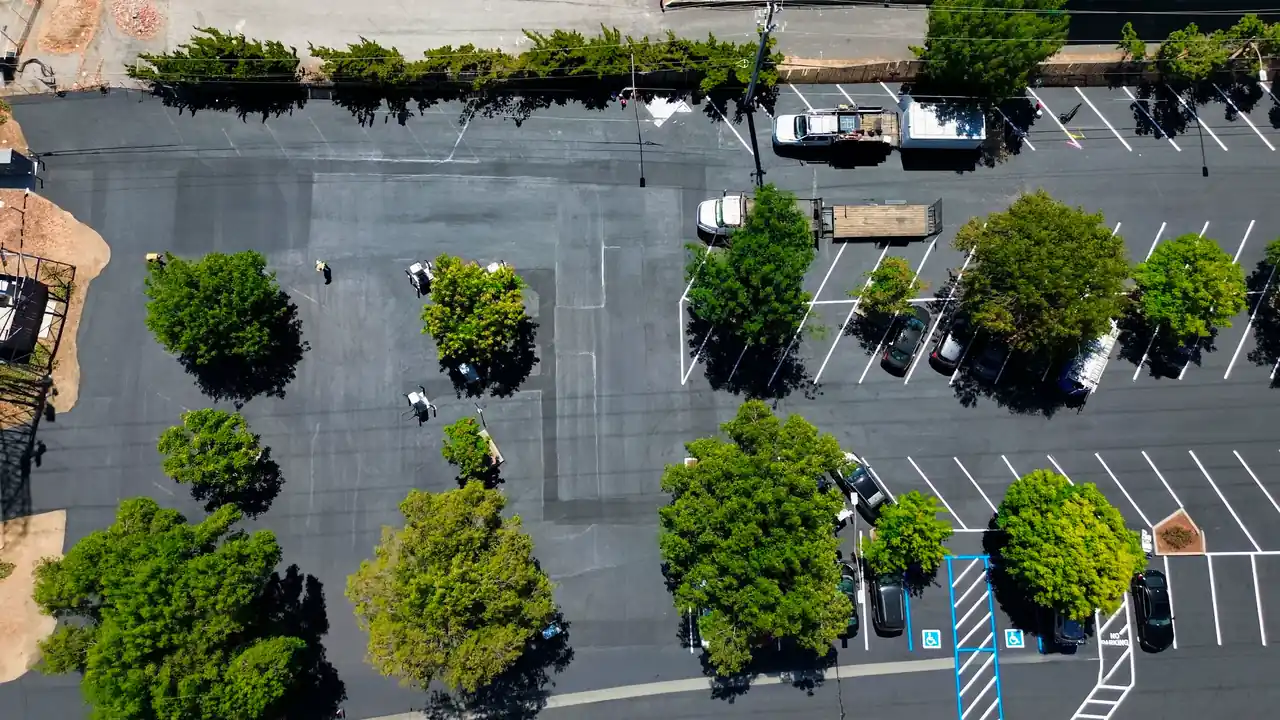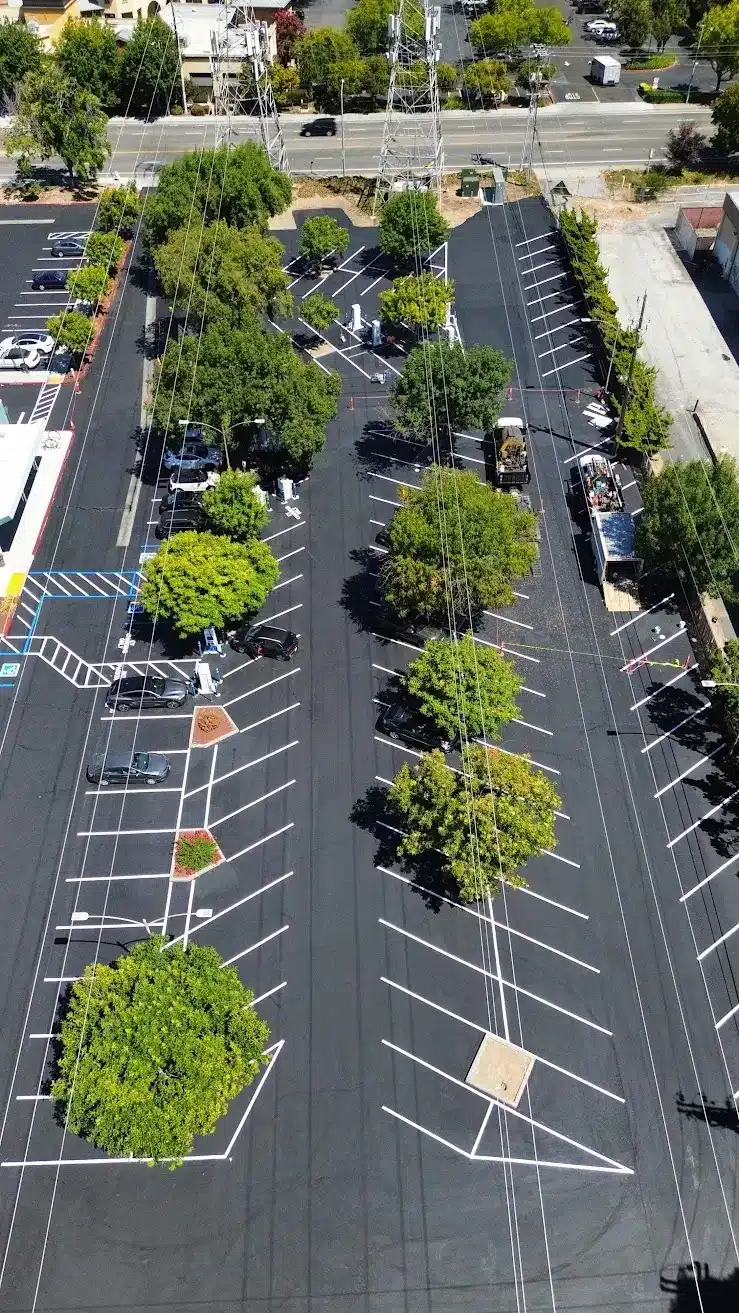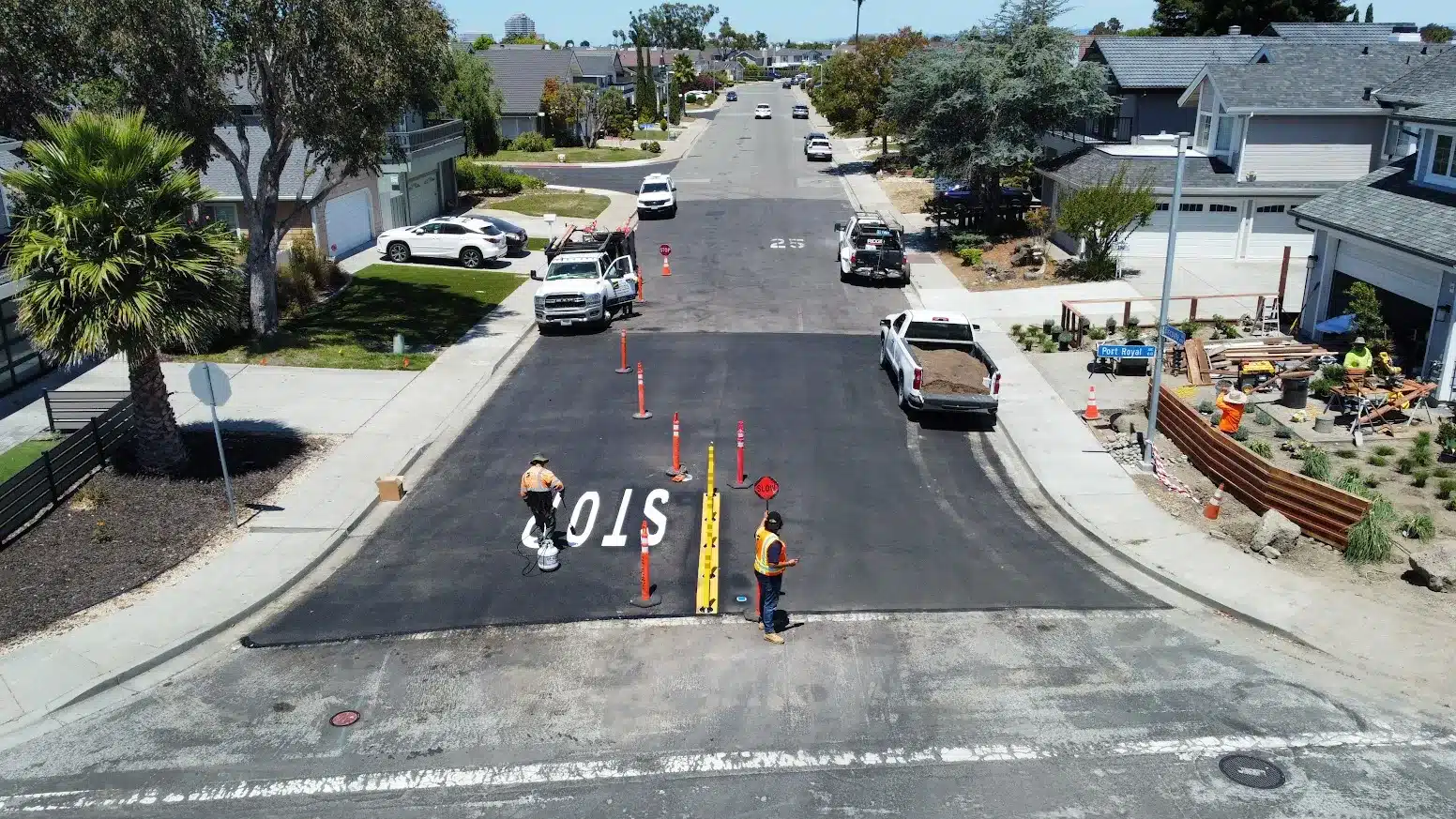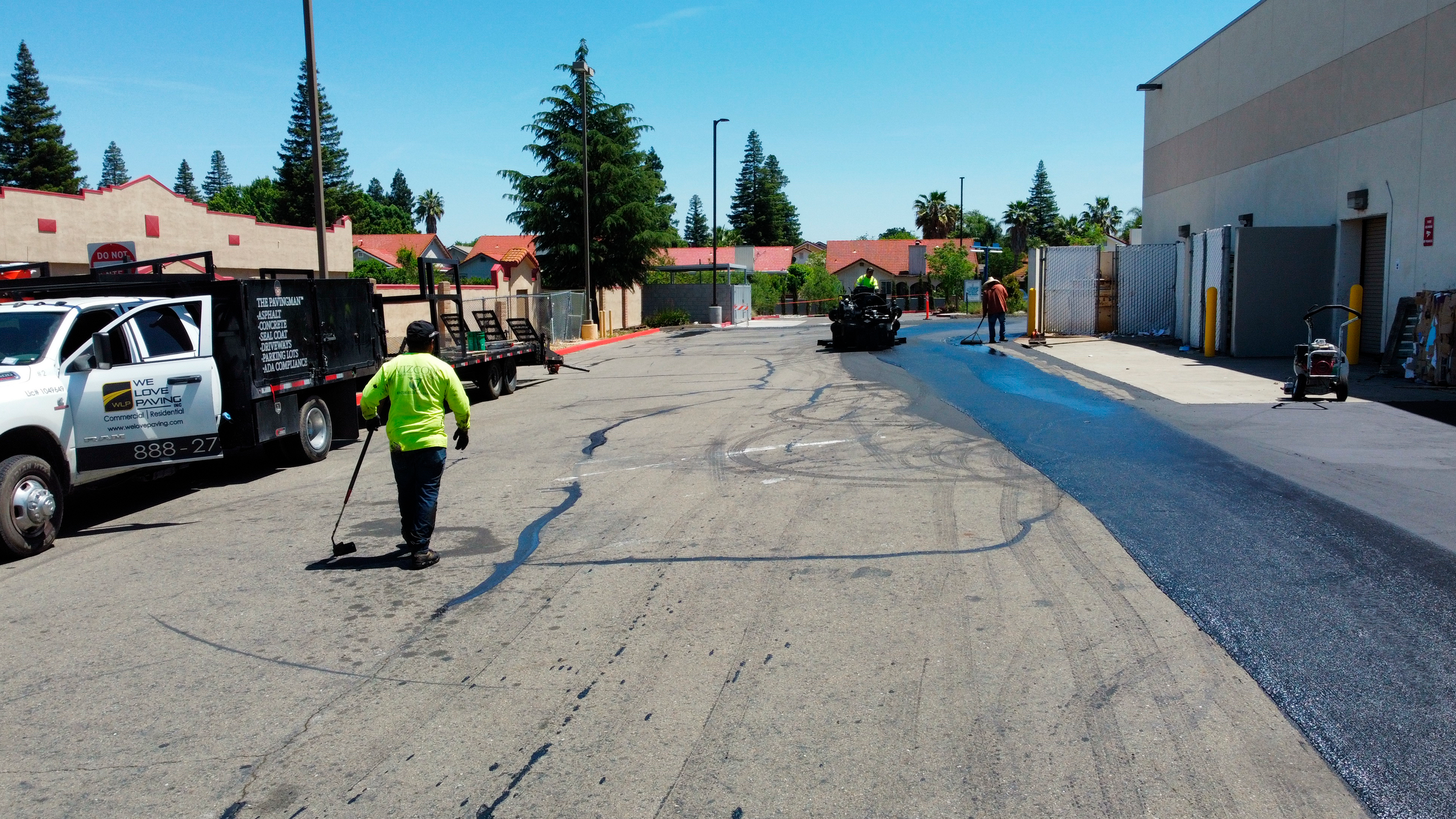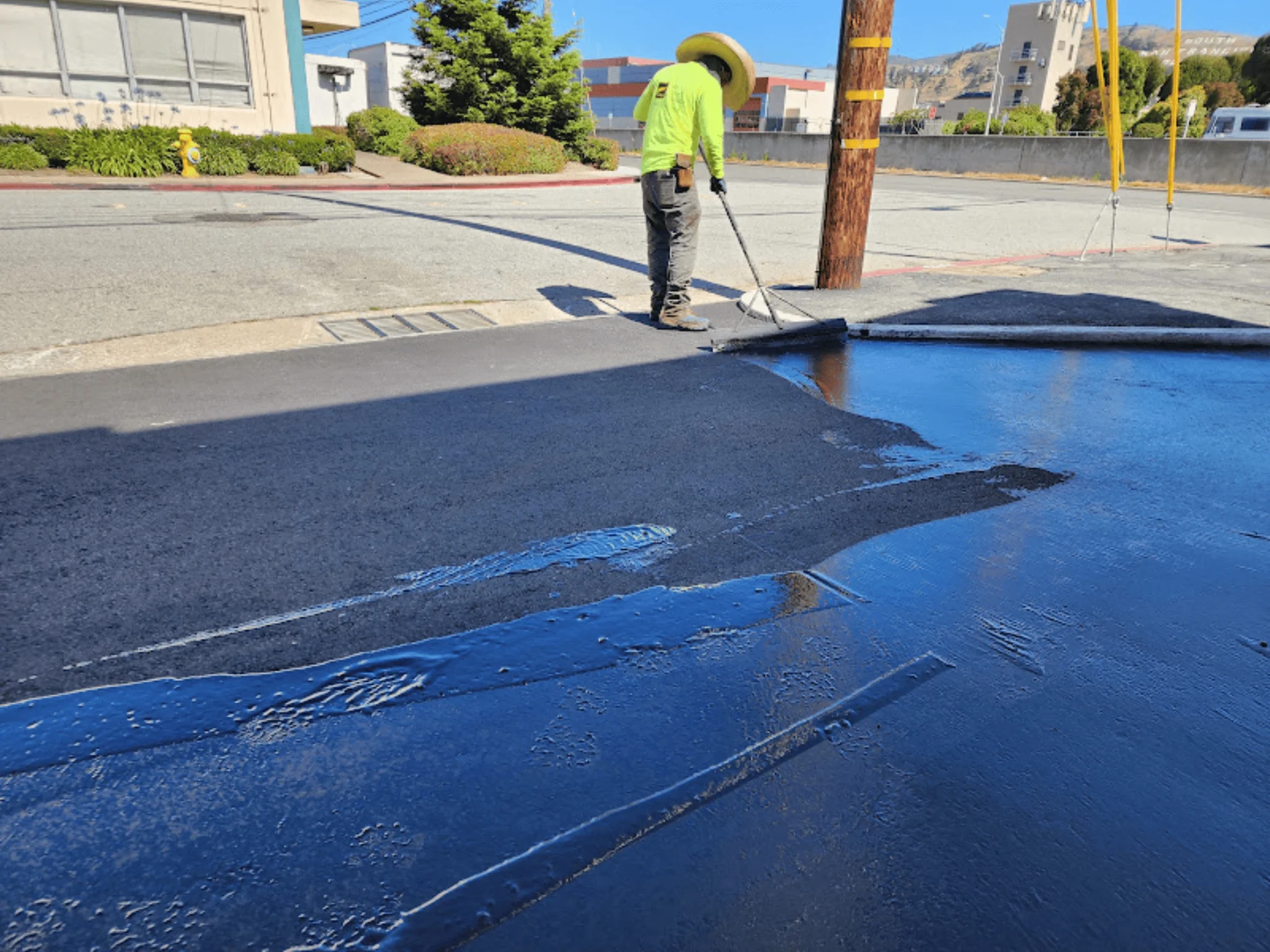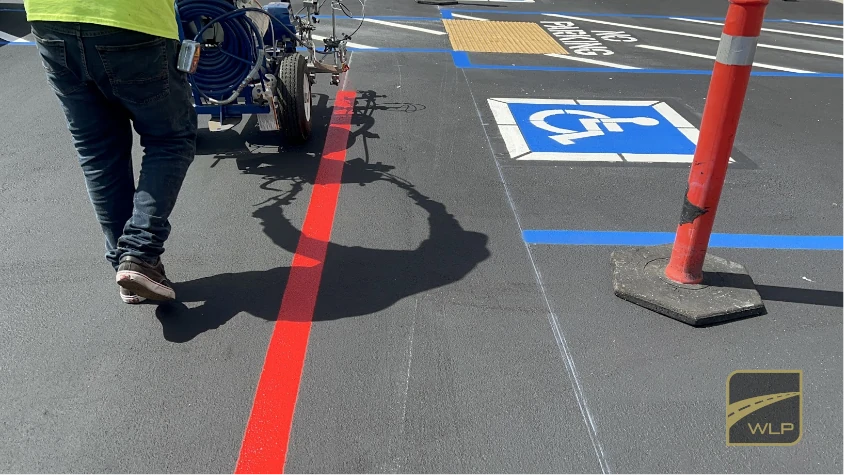
A compliant fire lane goes beyond applying a fresh coat of red paint to your curbs. In California, commercial properties and Homeowner Associations face strict enforcement from local fire marshals regarding emergency access routes. Failing a fire inspection results in immediate fines, but a poorly constructed access road poses a severe life-safety risk during an incident. We Love Paving’s field operations team frequently inspects commercial properties across Northern California where the painted markings meet code, but the asphalt beneath them is structurally compromised. True compliance requires a dual approach: high-visibility traffic striping capable of withstanding local weather, and a pavement base engineered to support massive emergency vehicles.
The Hidden Structural Requirement: Paving for 75,000-Pound Fire Engines
The California Fire Code explicitly requires fire apparatus access roads to support a minimum vehicle load of 75,000 pounds. You cannot simply designate any existing asphalt path as a fire lane. The underlying subbase and asphalt thickness must be engineered to prevent surface collapse when a fully loaded, multi-ton fire engine parks and deploys its outriggers during an active emergency.
Many property managers focus entirely on the visual aspect of the lane, ignoring the structural integrity of the pavement. If a commercial lot was originally graded for standard passenger vehicles, the asphalt might only be two inches thick over a minimal base. When a 37-ton ladder truck drives over that surface, especially during Northern California’s wet winter months when the soil subgrade is saturated, the pavement will fracture. Upgrading a standard driveway into a compliant emergency route often requires deep-depth asphalt patching or full-depth reclamation to build a load-bearing foundation before a single drop of red paint is applied.
California Fire Code Dimensions: Width, Clearance, and Signage
Fire lanes must maintain an unobstructed width of at least 20 feet and an exclusive vertical clearance of 13 feet 6 inches. These dimensions apply to the entire length of the designated emergency access route, ensuring that large ladder trucks can navigate turns and deploy equipment without hitting low-hanging tree branches or architectural overhangs.
Local fire marshals measure these clearances strictly during annual inspections. For properties managing condominium parking layouts, fitting a 20-foot clear path often requires reconfiguring resident parking spaces or removing standard stalls entirely. Additionally, any dead-end fire access road exceeding 150 feet in length must include an approved turnaround area, such as a cul-de-sac with a minimum 40-foot turning radius or a hammerhead design, allowing heavy apparatus to exit the property safely without reversing long distances.
Striping Specifications: Red Curbs and Stencil Standards in Northern California
Curbs designated as fire lanes must be painted safety red and clearly stenciled with “NO PARKING – FIRE LANE” in white lettering measuring at least three inches high. The stenciling must be repeated at intervals of no more than 50 feet along the entire length of the restricted zone to ensure visibility from any stopped vehicle.
Executing professional parking lot striping in Northern California requires materials formulated for high UV exposure and heavy seasonal rain. Standard water-based paints fade quickly under the California sun, leading to compliance failures within a year. We apply durable, traffic-grade alkyd or thermoplastic materials that bond securely to the asphalt and retain their reflective qualities. For properties without raised curbs, the fire lane perimeter must be defined by a six-inch-wide red stripe painted directly onto the flat pavement, paired with the mandatory white stenciling.

Maintenance Decisions: When to Restripe vs. When to Repave
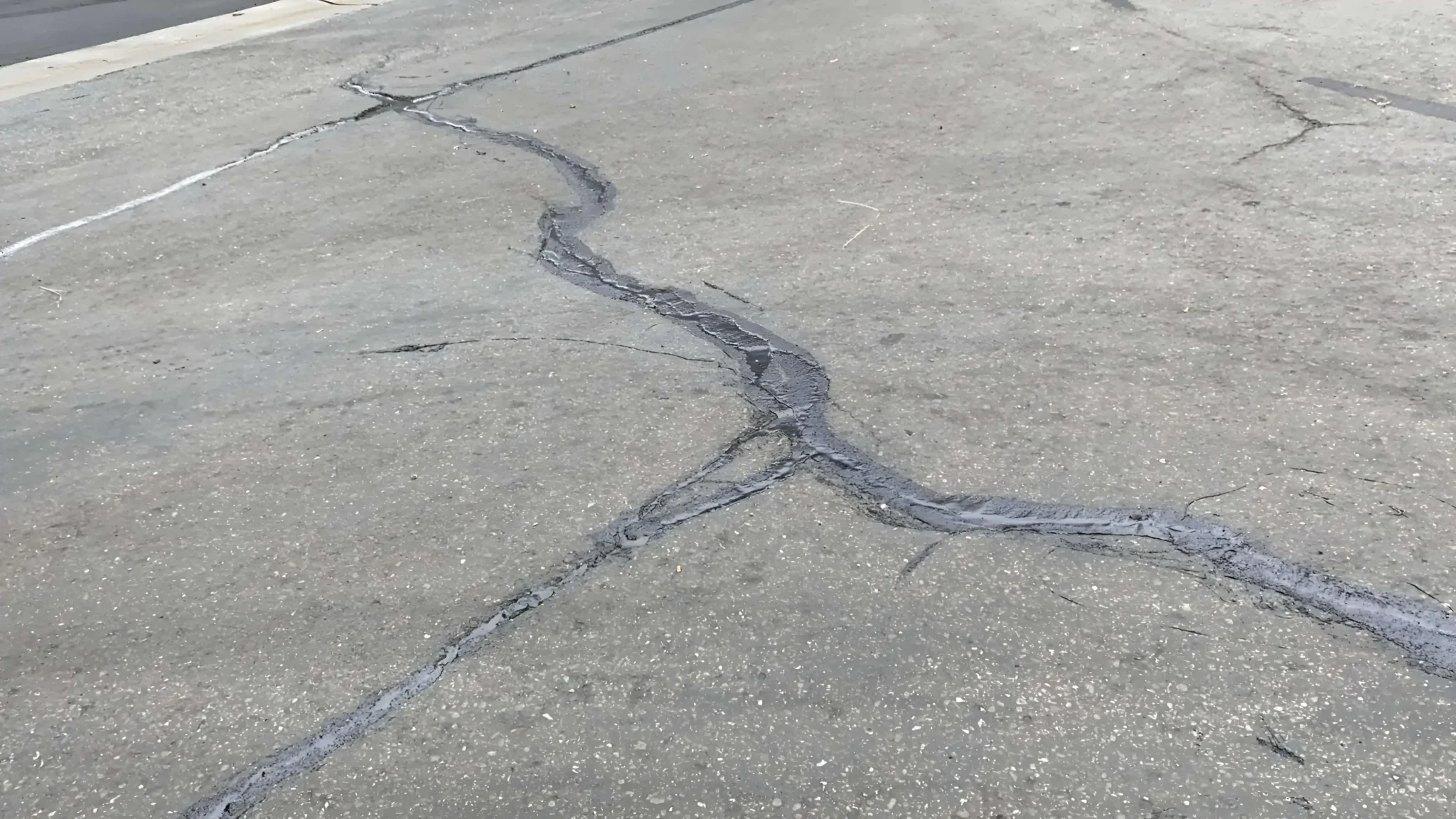
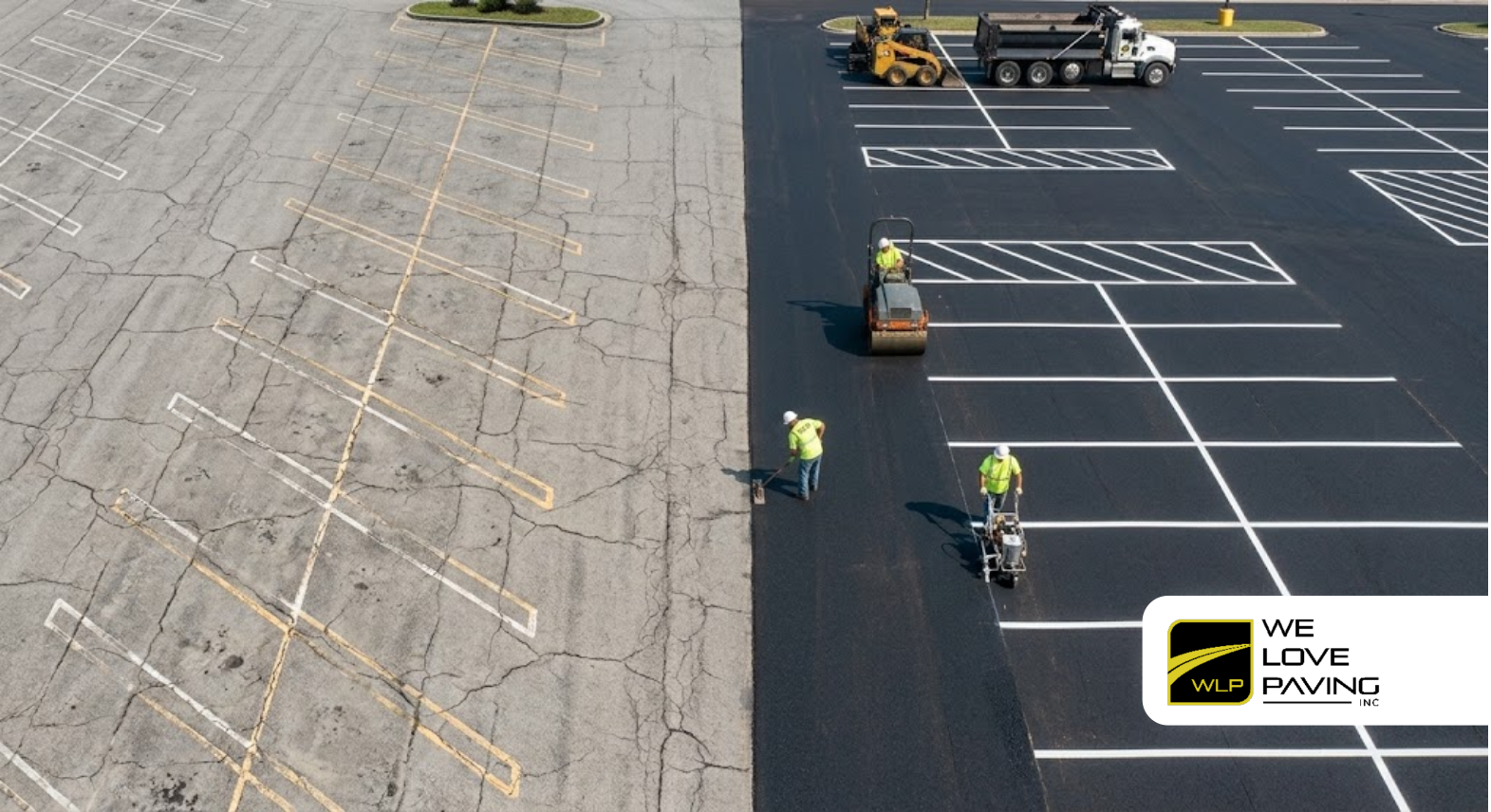
You should restripe your fire lanes when the red paint begins to fade or the stenciled lettering chips, typically every 12 to 18 months, provided the asphalt below remains intact. You must repave when the lane shows alligator cracking, deep potholes, or rutting, as these defects indicate the base can no longer support the mandated 75,000-pound emergency load.
Property managers often try to stretch their maintenance budgets by painting over heavily cracked asphalt. This fails the fire code’s structural requirement and wastes money, as the paint will quickly deteriorate along the active crack lines. Proper paving for HOAs dictates that all structural defects in the designated emergency route must be hot-rubber crack sealed, patched, or fully resurfaced before new striping is applied. If your facility is due for a fire marshal inspection or your current markings are severely faded, contact We Love Paving to evaluate both the surface visibility and the structural integrity of your emergency access routes.