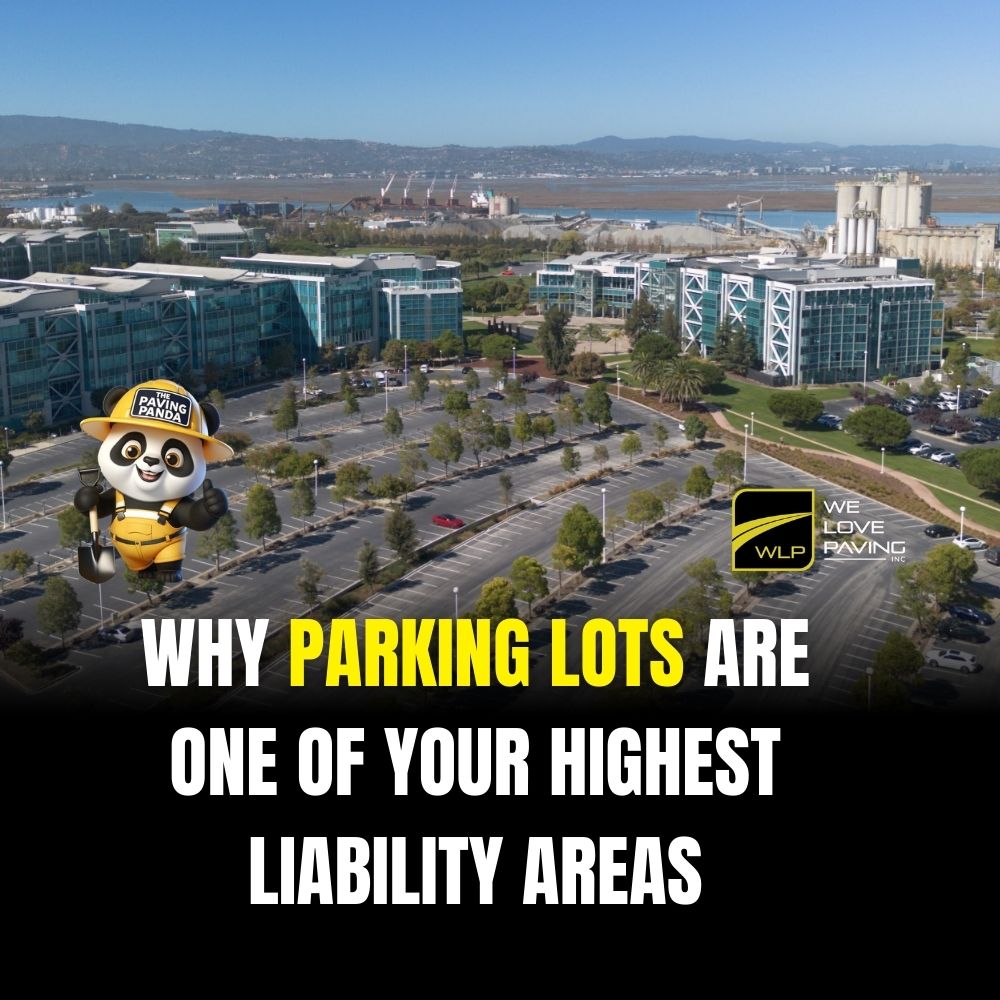
When property managers think about liability, attention usually goes to interior spaces — lobbies, hallways, elevators, restrooms.
But in reality, some of the highest legal and safety exposure starts outside.
Parking lots are one of the most common sources of:
-
ADA complaints
-
Slip-and-fall claims
-
Injury incidents
-
Costly reactive repairs
And most of the risk builds quietly, long before anyone files a complaint.
Parking Lots Are Public, High-Exposure Areas
Unlike interior spaces, parking lots are:
-
Open to the public
-
Used by vehicles and pedestrians simultaneously
-
Exposed to weather year-round
-
Governed by strict, measurable regulations
Every visitor, tenant, delivery driver, or inspector must pass through the parking lot first.
That makes it a high-visibility, high-liability zone.
ADA Compliance Is Measurement-Based, Not Opinion-Based
One of the biggest reasons parking lots create liability is ADA enforcement.
ADA compliance in parking areas is based on:
-
Slopes
-
Dimensions
-
Surface conditions
-
Striping visibility
-
Clear access routes
These are objective measurements, not subjective opinions.
Even small deviations — such as a slope drifting above 2% or a faded access aisle — can become enforceable violations.
And because asphalt naturally moves over time, lots that were once compliant can quietly fall out of tolerance.
Surface Conditions Create Hidden Risk
Cracks, uneven pavement, poor patch transitions, and raveling are more than maintenance issues.
In parking lots, they can:
-
Create trip hazards
-
Compromise accessible routes
-
Increase slip-and-fall exposure
-
Trigger ADA complaints
The challenge is that many of these issues don’t look dramatic.
A surface may appear “good enough” while still failing accessibility or safety standards.
Drainage Problems Multiply Liability
Standing water in parking lots is never just cosmetic.
Poor drainage can:
-
Obstruct accessible parking stalls and routes
-
Increase slip risk
-
Accelerate pavement deterioration
-
Hide underlying surface defects
If water remains after rainfall, it often signals slope or structural issues — both of which carry compliance and safety implications.
Striping Is Enforceable, Not Decorative
Faded or incorrect striping is one of the most commonly cited ADA issues.
Accessible stalls, access aisles, fire lanes, and loading zones must be:
-
Clearly visible
-
Correctly sized
-
Properly marked
When markings fade or become inconsistent, the property becomes vulnerable — even if the pavement itself appears intact.
Deferred Maintenance Increases Legal Exposure
One of the most common liability patterns we see is deferred maintenance.
When small issues are postponed because the lot “still works,” damage compounds.
Deferred maintenance often leads to:
-
Larger repair scopes
-
Fewer corrective options
-
Higher emergency costs
-
Increased legal exposure
Waiting rarely saves money — and it rarely reduces risk.
Why Parking Lot Issues Are Often Missed
Parking lots tend to be overlooked because:
-
Problems develop gradually
-
Damage often starts below the surface
-
Compliance issues aren’t always visually obvious
-
Inspections are irregular or reactive
By the time issues are addressed, exposure has already increased.
The We Love Paving Perspective
At We Love Paving, we view parking lots as critical risk-management assets, not just surfaces.
Our evaluations focus on:
-
ADA-related measurements
-
Surface and base condition
-
Drainage patterns
-
Traffic and load stress
-
Past repair impact
-
Preventive maintenance planning
Our goal is to identify risks early — before they become legal, safety, or budget problems.
Clarifying One Thing: This Is Preventable
Most parking lot-related liability issues are:
-
Predictable
-
Measurable
-
Preventable
With routine inspections and proactive maintenance, properties can significantly reduce exposure while extending pavement life.
Stay Ahead of Risk
If your parking lot hasn’t been evaluated recently, now is the right time.
A brief assessment can:
-
Identify early compliance issues
-
Prevent emergency repairs
-
Reduce liability exposure
-
Protect long-term budgets
📩 Contact We Love Paving to schedule a parking lot assessment and ensure your pavement supports safety, accessibility, and compliance — not risk.