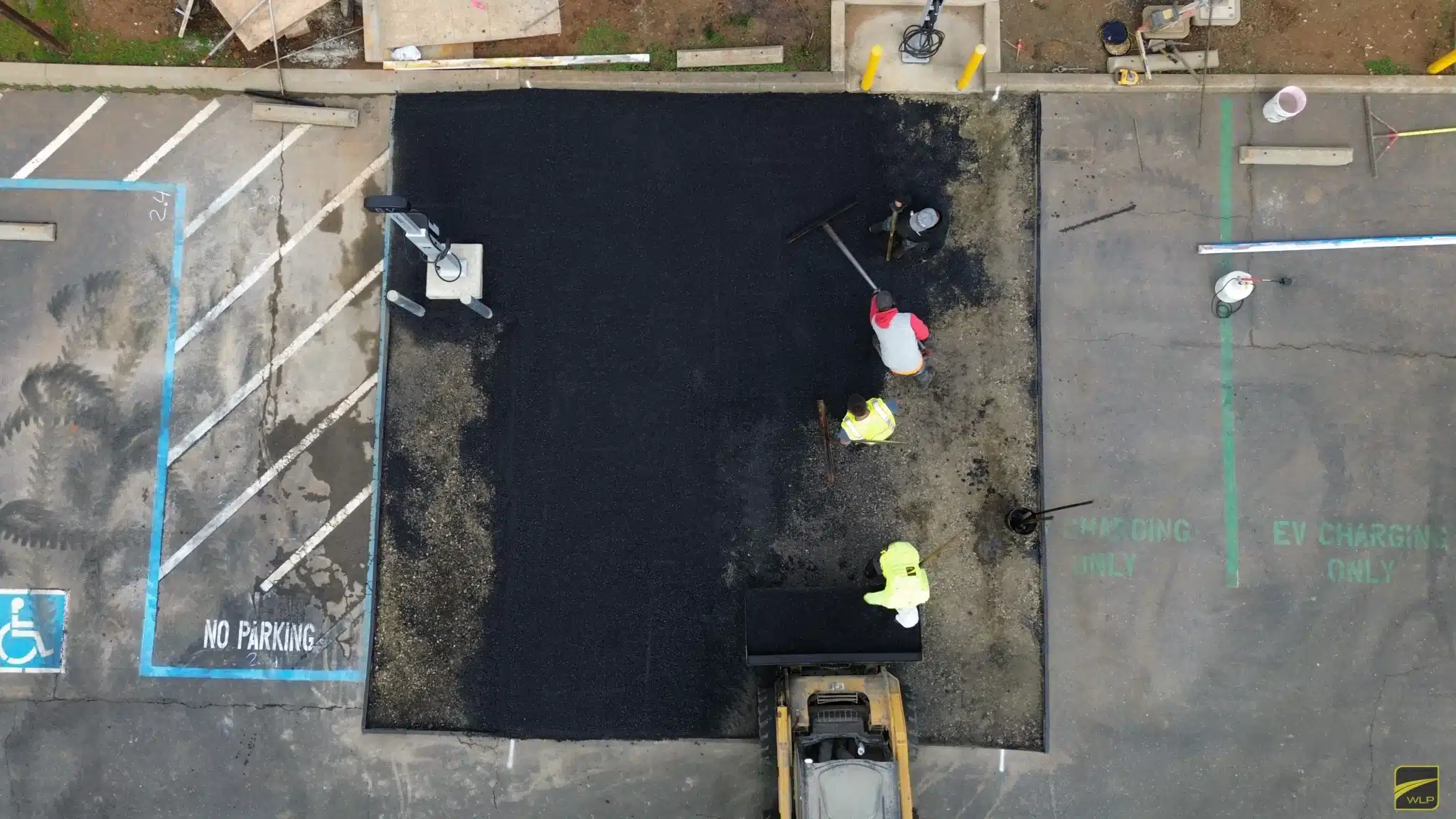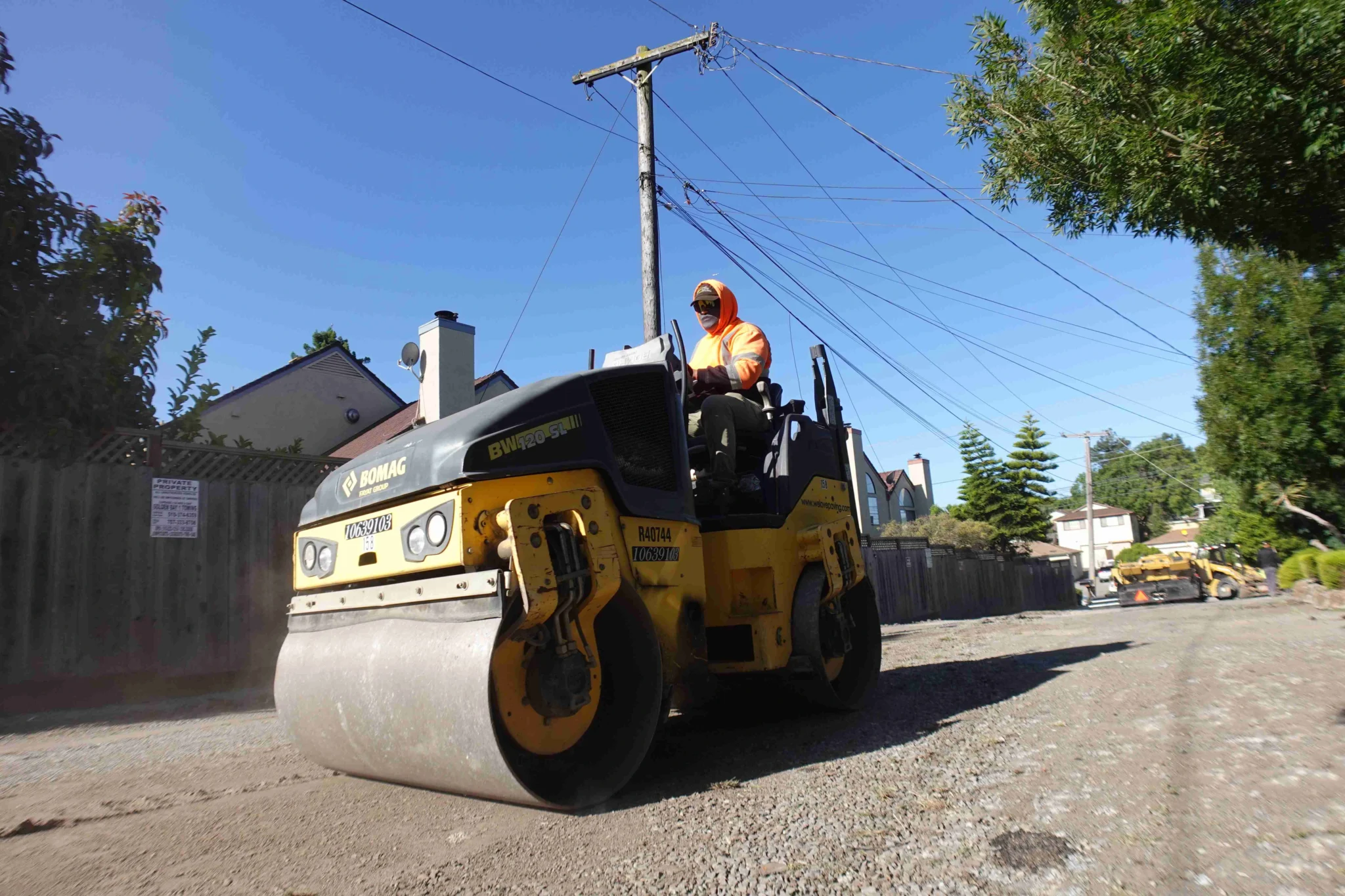
Roller compacted concrete offers industrial property developers a high-density, high-strength alternative to traditional pavements by blending the structural benefits of conventional concrete with the rapid installation speed of asphalt. This zero-slump material eliminates the need for forms, rebar, or extensive labor, relying instead on heavy vibratory rollers to achieve deep particle interlocking. Commercial facilities throughout Northern California increasingly adopt this engineering choice to fortify distribution centers, heavy equipment yards, and logistics terminals. The method delivers rapid project turnaround times while establishing a robust platform engineered to sustain continuous heavy axle traffic without premature structural fatigue.
What Is Roller Compacted Concrete and How Does It Work?
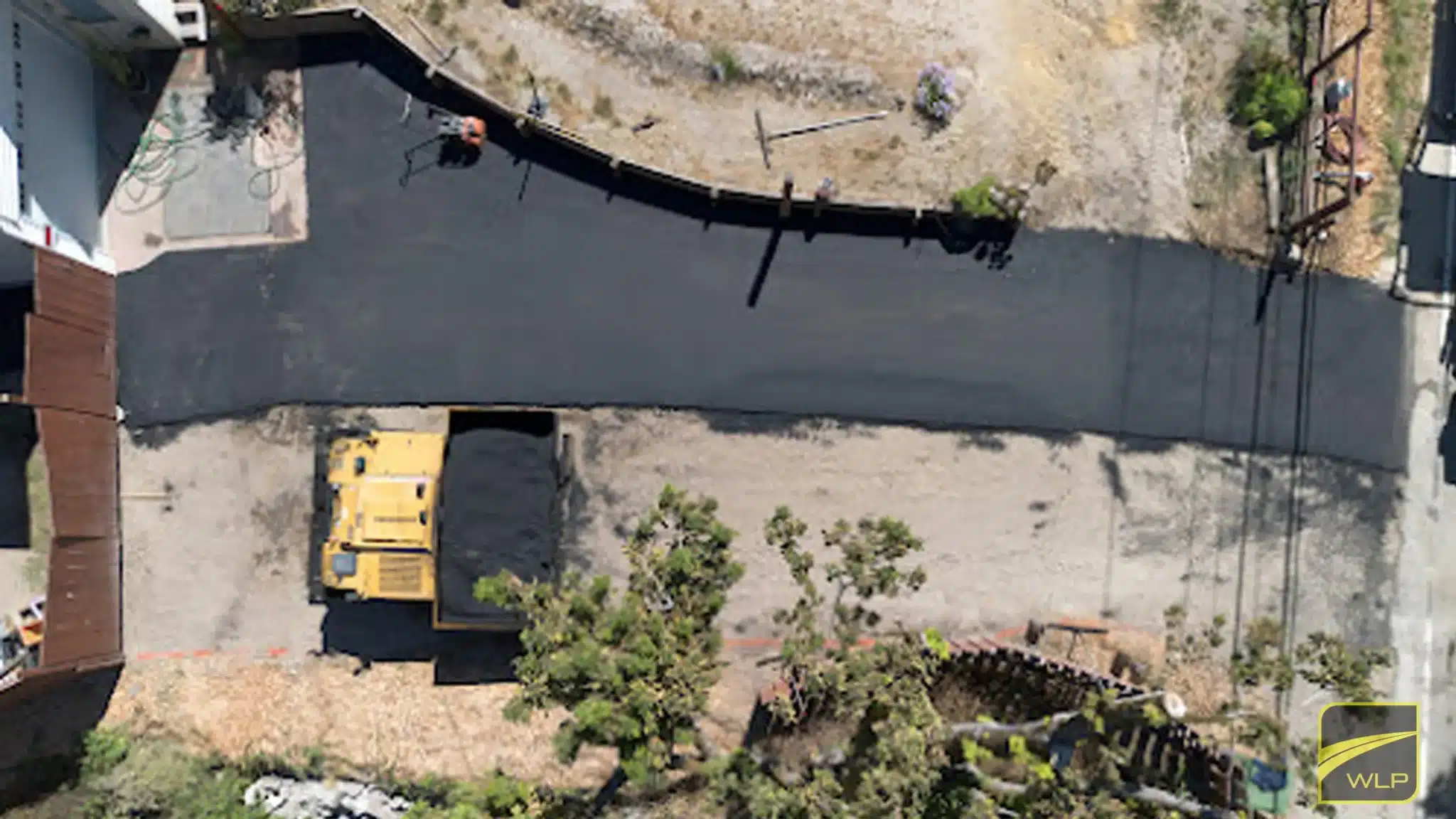
Roller compacted concrete is a specialized structural mix containing a lower water content than standard concrete, resulting in a zero-slump material that is placed using asphalt-type pavers and compacted by heavy vibratory rollers. The mix design utilizes well-graded aggregates, cementitious materials, and water, combined to produce a dry blend that supports immediate compaction forces. According to standard testing protocols like ASTM C1435, the material achieves its high performance through mechanical consolidation rather than water-driven chemical fluidity. The intense compaction reduces internal voids, creating a dense, matrix-like structure that optimizes aggregate-to-aggregate contact.
Once the aggregate matrix is mechanically compressed, the chemical hydration process bonds the structural elements into a single monolithic slab. Because the concrete does not require rebar or wire mesh for structural integrity, internal tensile stresses are absorbed directly through the dense, interlocked aggregate distribution. This mechanical action allows the pavement to bear significant weight almost immediately after placement, establishing a strong structural base that continues to cure and gain compressive strength over time.
Key Differences Between RCC, Conventional Concrete, and Asphalt
Understanding how roller compacted concrete compares to standard materials helps commercial property managers select the appropriate option for high-traffic zones. RCC bridges the operational gap between traditional commercial concrete paving and flexible structures, offering distinct variations in placement speed, tensile reinforcement, and final surface aesthetics.
| Metric Performance | Roller Compacted Concrete (RCC) | Conventional Portland Concrete | Flexible Hot Mix Asphalt |
|---|---|---|---|
| Compressive Strength | 4,000 to over 7,000 PSI | 3,000 to 5,000 PSI | N/A (Flexible Matrix) |
| Reinforcement Needed | None (Structural Interlock) | Steel Rebar / Wire Mesh | None |
| Installation Speed | High (Asphalt Paver Method) | Moderate (Requires Forms) | High (Rapid Rolling) |
| Curing / Traffic Ready | 24 to 48 Hours (Heavy Loads) | 7 to 28 Days | 24 Hours |
| Surface Finish | Open Texture / Industrial | Smooth / Broom Finished | Smooth / Sealed |
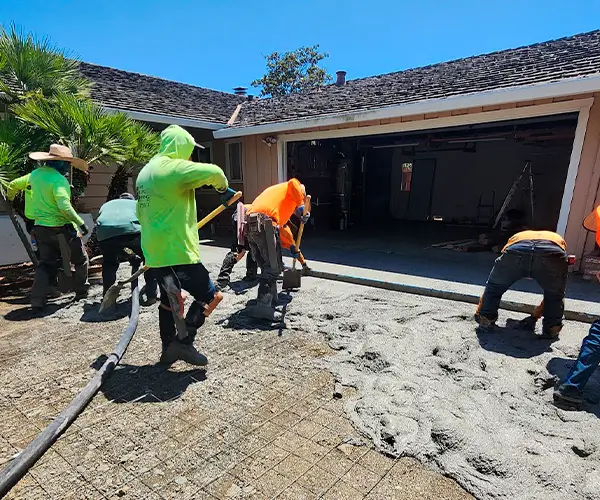
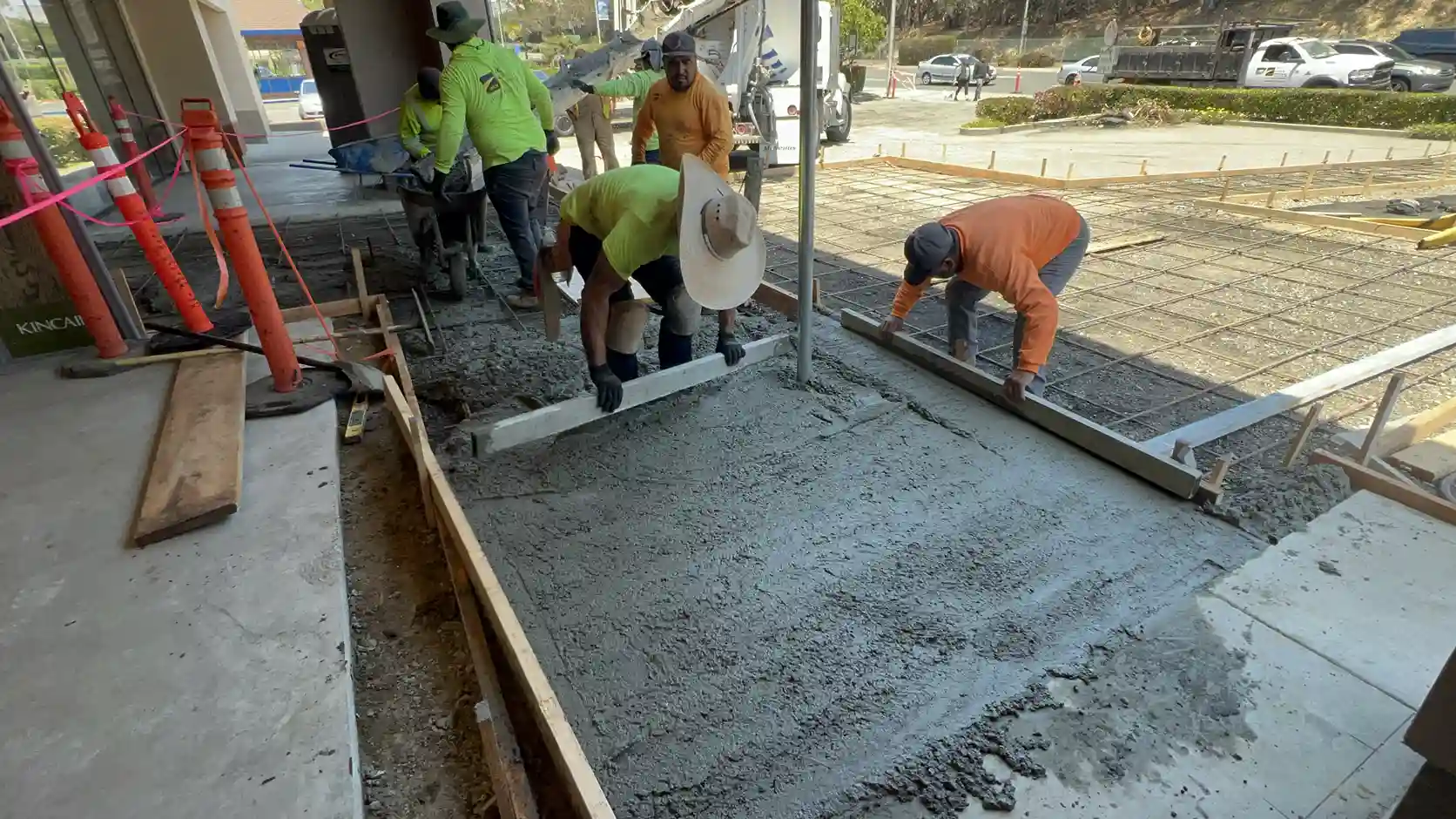
While evaluating options like asphalt vs concrete, engineers choose RCC when high compressive limits must be achieved without the long curing delays associated with traditional concrete slabs. Traditional concrete demands manual forms and expansive finishing work to secure smooth exterior aesthetics. Conversely, RCC relies on high-density paving equipment to lay down continuous ribbons of durable material, prioritizing structural throughput and bulk load-bearing capacities over polished architectural presentation.
Structural Advantages of RCC for Industrial & Commercial Properties
The dense engineering structure of roller compacted concrete makes it highly resilient against the extreme physical pressures present in busy logistics terminals and industrial layouts. Traditional asphalt surfaces can experience rutting or shoving under heavy braking or prolonged static loading, particularly where heavy machinery operates. RCC eliminates these failures because its hardened aggregate matrix resists high point-loading forces, preventing landing gear from punching holes into the surface during hot weather conditions.
Furthermore, industrial environments expose pavements to chemical hazards such as hydraulic fluids, fuels, and heavy solvents that can degrade flexible asphalt binders over time. The tight cementitious matrix of RCC prevents these fluids from penetrating deep into the core, preserving the structural integrity of the pavement slab. This resistant surface quality minimizes long-term maintenance needs, ensuring that shipping lanes and loading docks remain operational without frequent disruptions for localized surface patching or extensive depth rehabilitation.
Essential Considerations for Installing RCC in Northern California
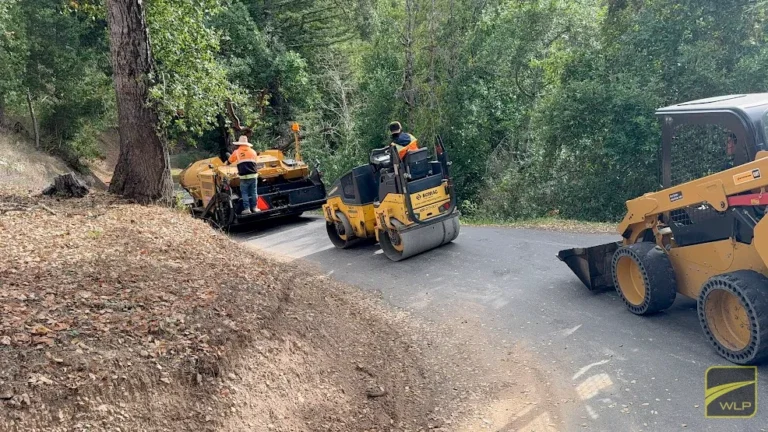
Deploying roller compacted concrete within Northern California requires careful attention to specific regional soil characteristics and shifting seasonal microclimates. The technical team at We Love Paving emphasizes managing the moisture evaporation window during hot Central Valley summers, where dry air can compromise cement hydration if the mix is left uncompacted for more than 45 minutes. Contractors must coordinate continuous concrete plant deliveries with high-density paving machinery to ensure the material is consolidated at its optimal moisture content before hydration advances too far.
Geotechnical conditions in areas surrounding Sacramento and the East Bay often present expansive clay soils, such as Yolo and Adobe matrices, which expand and contract significantly with seasonal rainfall. To prevent differential settling or subsurface failures, regional installations must feature a well-compacted, stable aggregate subbase that conforms to local Caltrans specifications. Properly addressing these underlying site elements ensures the pavement structure distributes heavy vehicle weights uniformly, preventing cracking during early thermal contraction and dry winter cycles.
Cost Efficiency and Lifecycle ROI for Property Owners
Roller compacted concrete provides commercial property investors with significant savings in upfront installation labor and long-term maintenance costs. By removing the need for traditional formwork, steel reinforcement bars, and labor-intensive surface troweling, commercial teams can install large areas of pavement rapidly, reducing project timelines and minimizing tenant down-time. These expedited logistics directly lower initial construction expenditures compared to traditional thick-slab Portland cement applications designed for industrial loads.
Over a typical 20-to-30-year lifecycle, RCC lowers total cost of ownership because it eliminates the routine resealing, crack-filling, and mill-and-overlay cycles common with flexible pavements. While evaluating long-term strategies, some managers explore alternative layout modifications, such as layering asphalt over concrete to achieve a smoother surface texture while retaining a rigid, high-load foundation underneath. Partnering with experienced professionals ensures that industrial pavements are designed to maximize return on investment, providing durable performance that stands up to heavy commercial use.