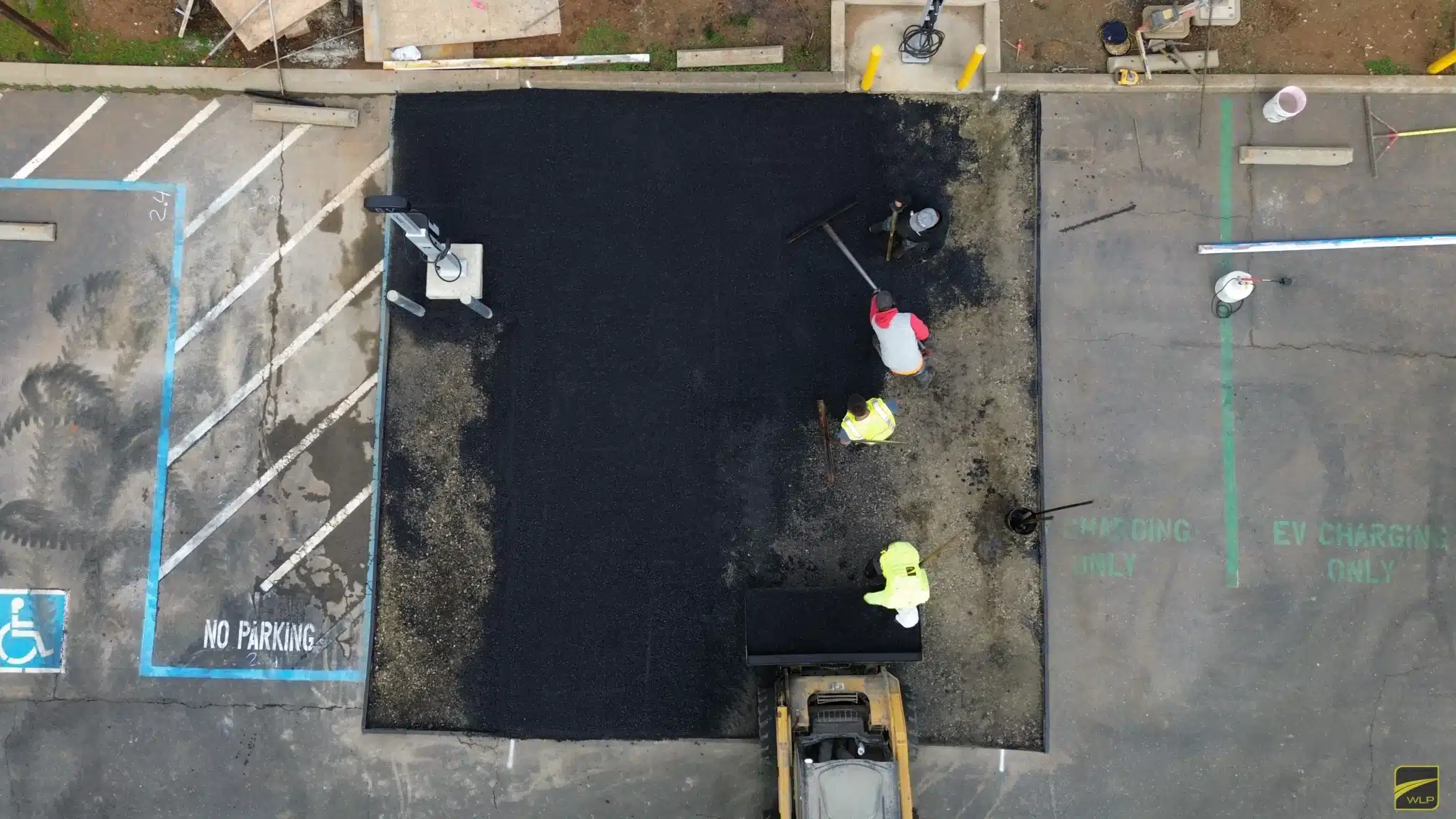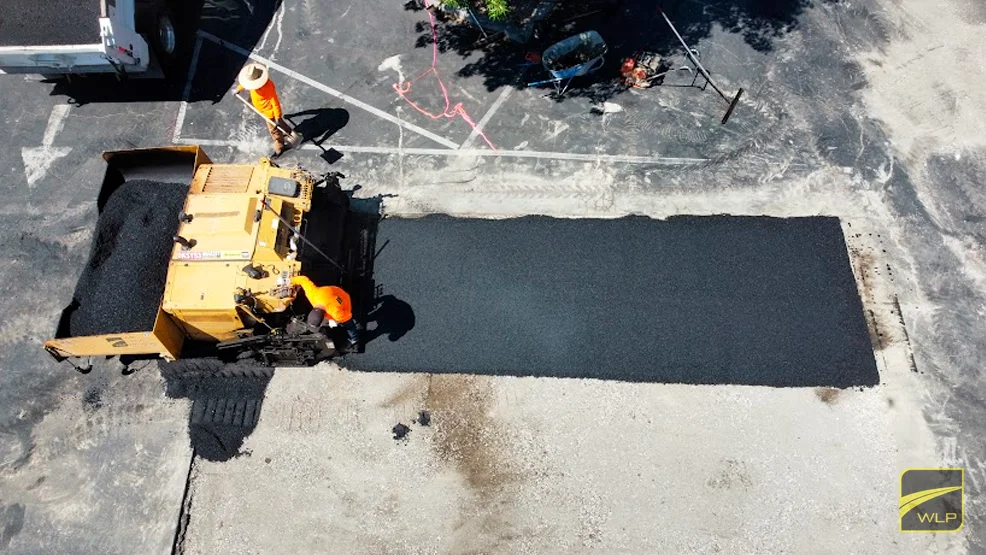
Maintaining commercial parking lots and multi-family roadways requires balancing long-term durability with minimal business disruption. Traditional saw-cut patching often leaves behind vulnerable seams that allow water intrusion, leading to premature pavement failure. Infrared asphalt repair solves this structural weakness by using controlled thermal radiation to reheat existing asphalt in place, creating a seamless, monolithic bond with fresh hot mix. Prepared by the technical paving team at We Love Paving, this guide examines how thermal restoration works, where it provides the highest return on investment, and when property managers should deploy it over conventional methods.
What Is Infrared Asphalt Repair and How Does It Work?
Infrared asphalt repair is a pavement restoration technology that uses infrared light radiation to heat existing asphalt to its original workable temperature 275°F – 320°F without burning the bitumen binders. The process penetrates 1.5 to 3 inches into the surface, allowing crew members to scarify the softened material, blend in rejuvenators along with small amounts of new hot mix, and compact the area into a continuous structure.
Unlike traditional methods that require heavy excavation and milling, thermal heating works by transferring rays deep into the pavement layer without direct flame contact. Direct combustion flames damage the asphalt by oxidation, turning the essential petroleum binders brittle. Infrared equipment controls the absorption rate, preserving the structural integrity of the existing aggregates while making the top layer fully malleable. Once scarified, fresh virgin asphalt is added to restore grade alignment, followed by mechanical compaction that locks the old and new materials together into a unified mass.
The Seamless Thermal Weld: Eliminating the Cold Joint Failure Point
Infrared repair eliminates cold joints by heating the perimeter of the target area alongside the damaged asphalt, allowing the new material to fuse thermally with the surrounding pavement. Standard saw-cut patching creates a cold joint, an interface where hot asphalt is compacted against cold, hard edges. Over time, temperature fluctuations cause differential expansion, opening microscopic gaps at this seam where water penetrates and destroys the underlying base layer.
In Northern California coastal and valley climates, morning fog and seasonal moisture accelerate cold joint degradation. When water seeps into these saw-cut seams, vehicle weight creates hydrostatic pressure that breaks apart the bond, generating secondary potholes. Thermal infrared restoration avoids this by creating a continuous, fused edge. Because the surrounding pavement reaches the same plastic state as the newly added asphalt, the roller compactor blends both zones together without leaving a seam. This thermal weld stops water infiltration at the surface level, preventing subsurface erosion without relying on temporary rubberized joint sealants.
When to Use Infrared Repair (and When Full-Depth Replacement Is Required)
Infrared asphalt repair is ideal for surface-level distresses where the subbase remains structurally sound, such as shallow potholes, trip hazard depressions, oil spot deterioration, and seam separation. However, it is not a universal substitute for full-depth replacement when subgrade failure or deep base saturation is present. Evaluating pavement condition according to standard distress categories ensures correct application.
| Pavement Distress Type | Infrared Repair Suitable? | Primary Reason |
|---|---|---|
| Surface Potholes & Depressions | Yes | Restores grade without disturbing settled base layers. |
| Catch Basin Surrounds | Yes | Seals perimeter edges against water pooling around drains. |
| Surface Alligator Cracking (Top 2″) | Yes | Re-binds fractured top layer with recycling rejuvenators. |
| Subgrade / Base Failure | No | Deep structural movement requires excavation and subbase compaction. |
| Pavement Heaving / Soft Subbase | No | Thermal repair cannot correct unstable soil beneath the asphalt. |
When addressing surface defects, choosing infrared over complete excavation reduces project costs and preserves undisturbed base compaction. For comprehensive pavement evaluations, properties requiring broader interventions can utilize full-scale asphalt paving California services to address deep structural deficiencies before surface thermal repairs are considered.
Operational Advantages for Commercial Property Managers
For commercial real estate managers, infrared repair minimizes site disruption by dramatically accelerating turnaround times compared to traditional excavation. A standard thermal repair zone takes approximately 20 to 30 minutes to heat, process, and compact, allowing vehicle traffic to resume within one to two hours after completion.
Beyond traffic management, infrared restoration delivers distinct economic and environmental benefits:
- Reduced Material Waste: By recycling the existing asphalt in place, thermal repair minimizes the tonnage of waste sent to local landfills.
- Lower Equipment Overhead: Eliminating heavy milling machines, haul trucks, and jackhammers reduces site noise and diesel emissions in active retail environments.
- Elimination of Saw-Cut Noise: Shopping centers and office parks can remain open without intrusive concrete-sawing noise interrupting tenants.
Understanding these operational differences helps property owners select between thermal restoration and alternative asphalt patching methods based on site usage and daily traffic volumes.
The Step-by-Step Infrared Repair Process
Executing a durable infrared repair requires precise temperature control and structured field procedures. Crews must monitor thermal penetration continuously to prevent overheating the asphalt surface while ensuring the lower depth reaches full plasticity.
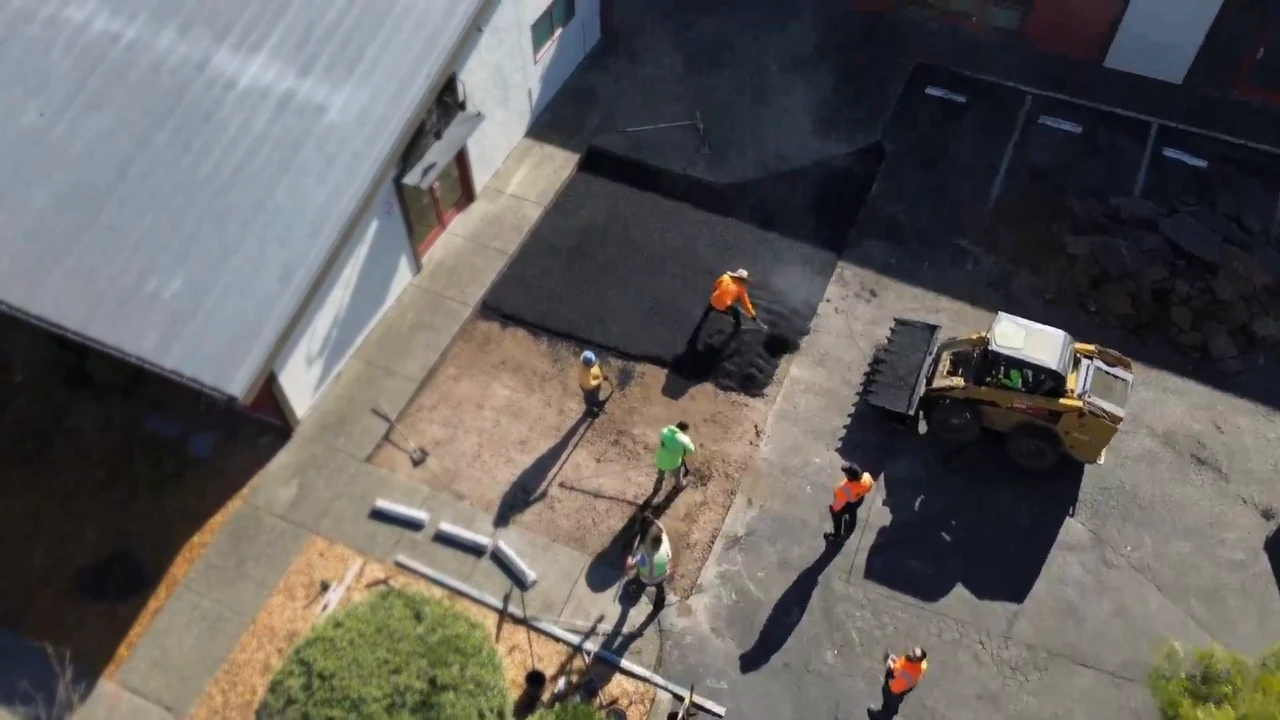
- Surface Preparation & Cleaning: The technicians sweep the area to remove loose gravel, dirt, and standing moisture. Clean surfaces ensure uniform heat transfer into the asphalt matrix.
- Thermal Heating Placement: The infrared heating unit is positioned directly over the repair area, extending roughly 3 to 6 inches beyond the damaged boundary. Thermal rays heat the surface for 8 to 12 minutes until reaching target depth plasticity.
- Escarification & Rejuvenation: Once softened, the crew uses rakes to scarify the heated asphalt, breaking up deteriorated sections. An asphalt rejuvenator spray is applied to restore depleted light oils and bitumen flexibility.
- Fresh Mix Integration & Grading: Small quantities of virgin hot-mix asphalt are added to account for lost mass and bring the surface back to proper flush elevation, matching surrounding slope contours.
- Compaction: A multi-ton vibratory roller compacts the thermal patch starting from the outer perimeter inward, fusing the softened existing pavement with the new material into a single smooth surface.
Proper execution during each stage relies on fundamental material knowledge. Understanding how liquid binders bind aggregates during high-temperature processing is fully detailed in our guide on asphalt paving, illustrating why thermal fusion maintains long-term structural integrity.

Partner with Commercial Paving Specialists in Northern California
Choosing the right maintenance strategy preserves property value while avoiding unnecessary capital expenditure on premature repaving. Infrared thermal restoration offers an efficient, seamless solution for surface defects, but matching the technology to your parking lot’s specific subgrade condition requires professional site evaluation. The experienced field team at We Love Paving evaluates pavement degradation using industry-standard engineering criteria to deliver lasting results across Northern California. Contact our specialists today to schedule an on-site pavement inspection and learn how thermal repair can extend the service life of your commercial assets.