The cement process is an advanced sequence of chemical transformations and mechanical steps that converts raw earth minerals into the hydraulic binder powering modern infrastructure. From quarry extraction and high-temperature pyroprocessing in rotary kilns to fine finish grinding, every stage dictates the structural integrity of the final mixture. This guide breaks down how high-grade cement is manufactured and how its chemical activation drives the performance of heavy-duty paving projects across Northern California.
The cement manufacturing process begins with the extraction of limestone, clay, shale, and iron ore from open-pit quarries. These raw materials are crushed and blended to achieve a precise chemical balance dominated by calcium oxide, silicon dioxide, aluminum oxide, and ferric oxide. In commercial paving applications, maintaining exact proportions during this raw meal preparation is essential, as the ratio of calcium to silica directly controls the long-term load capacity and chemical resistance of the finished binder.
Primary jaw crushers reduce rock boulders from nearly a meter in diameter down to fragments smaller than three inches. Secondary impact crushers refine the rock further before cross-belt gamma-ray analyzers evaluate the elemental composition. Computerized proportioning systems then adjust the feeder belts to ensure the raw mixture maintains a target lime saturation factor. For industrial developments requiring high durability, even minor deviations in silica modulus can alter the performance profile of the ultimate paving installation.
Thermal Processing: The Rotary Kiln and Clinker Formation
Pyroprocessing transforms the finely ground raw meal into cement clinker through extreme thermal treatment inside a multi-stage preheater tower and rotary kiln. As the material reaches temperatures between 1,400 °C to 1,500 °C (2,550 °F to 2,730 °F), calcination releases carbon dioxide and fuses the oxide compounds into solid nodular nodules. This sintering phase synthesizes four primary mineral phases: tricalcium silicate (C3S), dicalcium silicate (C2S), tricalcium aluminate (C3A), and tetracalcium aluminoferrite (C4AF), which dictate rapid strength development and ultimate structural density.
Inside the preheater calciner, heat recovery technology raises raw meal temperatures to approximately 900 °C in seconds, initiating decarbonation before the material enters the inclined rotary kiln. As the kiln rotates, the material moves toward the intense flame zone, where mineral phase transformations occur. Rapid air cooling of the emerging clinker nodules preserves the reactive crystal structure of C3S (alite) and C2S (belite). This thermal management directly dictates how the binder will perform when mixed into commercial concrete paving formulations, influencing both initial setting speed and long-term durability against vehicular stress.
Finish Grinding and Cement Classification (ASTM & Caltrans Standards)
Finish grinding intergrinds cooled clinker nodules with approximately 3% to 5% natural gypsum in high-capacity ball mills or vertical roller mills to produce fine cement powder. The addition of gypsum controls the hydration rate of tricalcium aluminate, preventing instantaneous flash setting during batch mixing. For infrastructure and commercial paving in California, manufacturers classify cements according to ASTM C150 standards or blended specifications like ASTM C595, ensuring specific sulfate resistance and low-carbon compliance under Caltrans Section 90 regulations.
Selecting the correct cement type dictates how a pavement survives local soil chemistry and traffic demands. Caltrans frequently specifies Type II/V Portland cement or Type IL Portland-limestone cement for commercial parking lots and industrial aprons in Northern California. Type II/V protects sub-grades from moderate-to-severe sulfate attack present in regional soil profiles, while Type IL reduces embedded carbon emissions by up to 10% without sacrificing compressive performance. Engineering the particle fineness (Blaine surface area) ensures optimal workability when balancing mix designs between concrete and asphalt materials for heavy-duty commercial installations.

From Factory to Jobsite: The Hydration Process in Concrete Paving
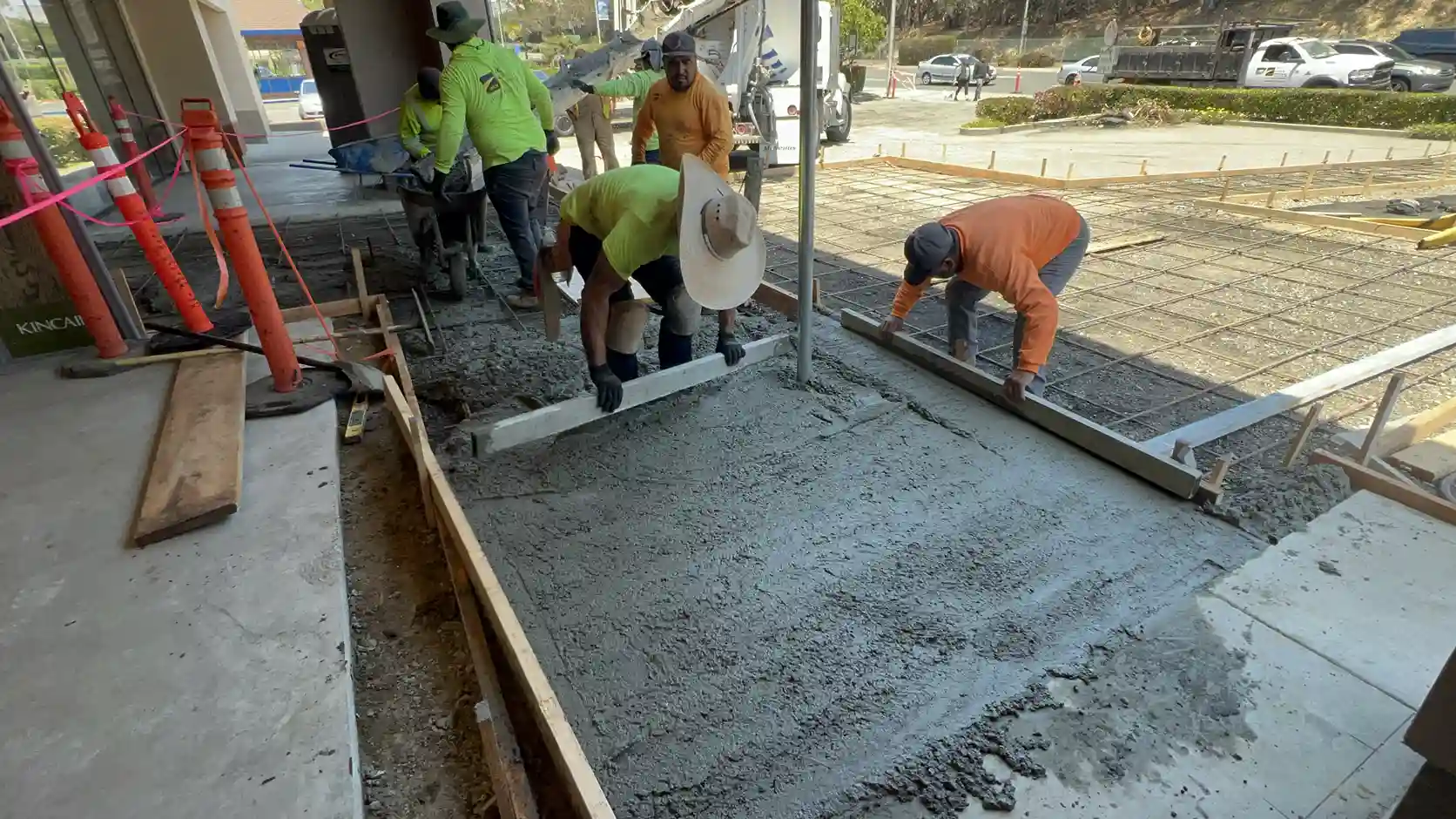
The cement process does not conclude at the manufacturing plant; it transitions into an exothermic chemical reaction called hydration when mixed with water and aggregates on the jobsite. As cement particles react with water, calcium silicate hydrate (C-S-H) gel forms alongside calcium hydroxide crystals, creating an interlocking matrix that permanently binds sand and gravel into a rigid pavement structure. Controlling water-cement ratios and field curing conditions determines whether the slab achieves its target compressive strength (f’c ≥ 4,000 PSI) or suffers from early shrinkage cracks.
Microclimates across Northern California (such as coastal fog in the Bay Area versus ambient summer heat above 100 °F / 38 °C in the Central Valley) dramatically influence hydration rates. High temperatures accelerate early reaction kinetics, causing rapid slump loss and elevated thermal stresses if unmitigated. Field technicians utilize liquid membrane-forming curing compounds or wet burlap blankets to maintain moisture equilibrium within the curing matrix. Proper hydration management prevents premature water evaporation, ensuring full chemical conversion of C3S and C2S phases into dense C-S-H gel for long-term load distribution.
Quality Control and Structural Performance in Commercial Paving
Translating raw cement manufacturing precision into long-lasting commercial pavements requires stringent quality control protocols across material batching, placement, and joints design. Industrial facilities, logistics centers, and retail properties require concrete slabs designed to withstand heavy wheel loads, steering shear forces, and environmental degradation over decades. By leveraging specialized mix designs tailored to California soil and climate conditions, contractors deliver high-durability surfaces using precision paving solutions that prevent joint spalling and structural subgrade failure.
To discuss specifications, mix formulations, or structural paving assessments for your Northern California property, contact We Love Paving today to consult with our technical engineering team.