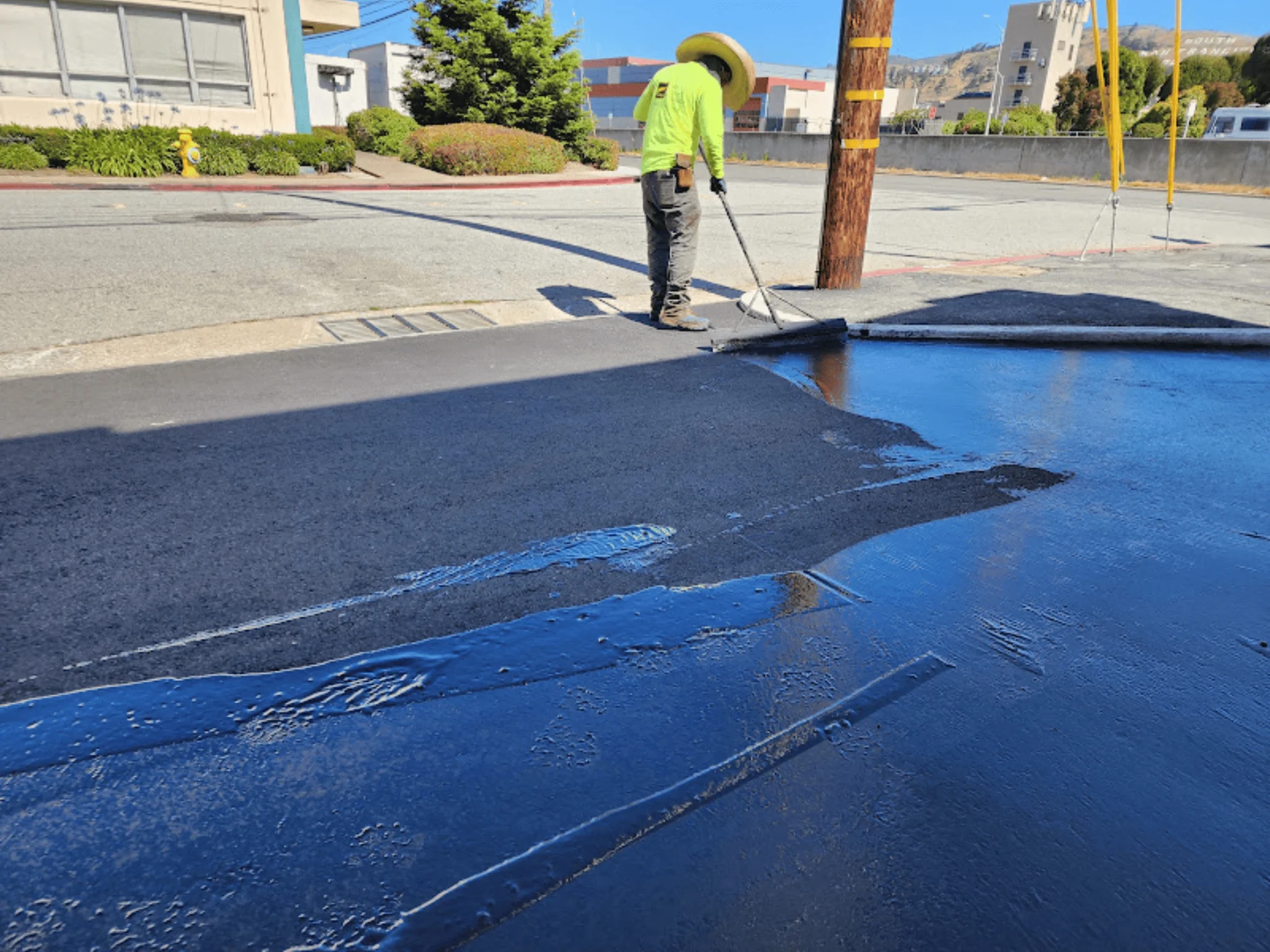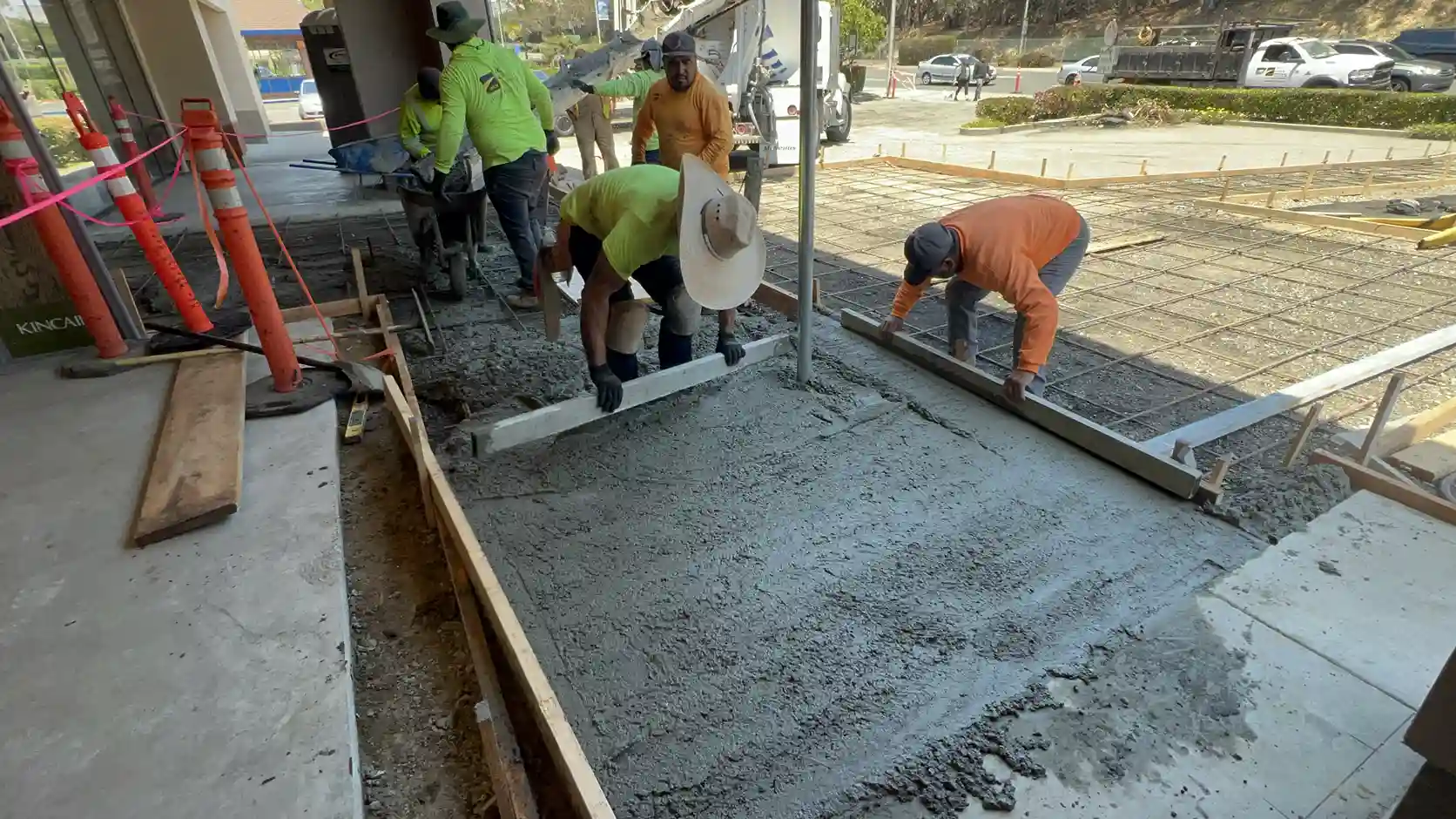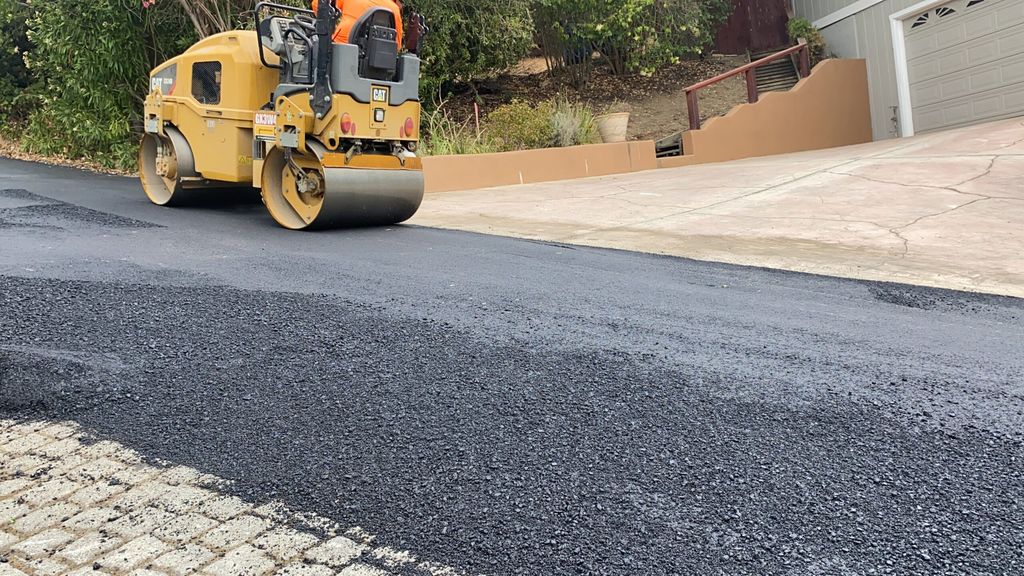
We Love Paving project
We Love Paving · Northern California

Asphalt Paving

15-Year Written guarantee available on qualifying projects
24H Proposal turnaround after project review
    Prefer to talk?
    Call (888) 273-0077
    No commitment. Request a clear project review, scope guidance, and next-step recommendation before making a decision.

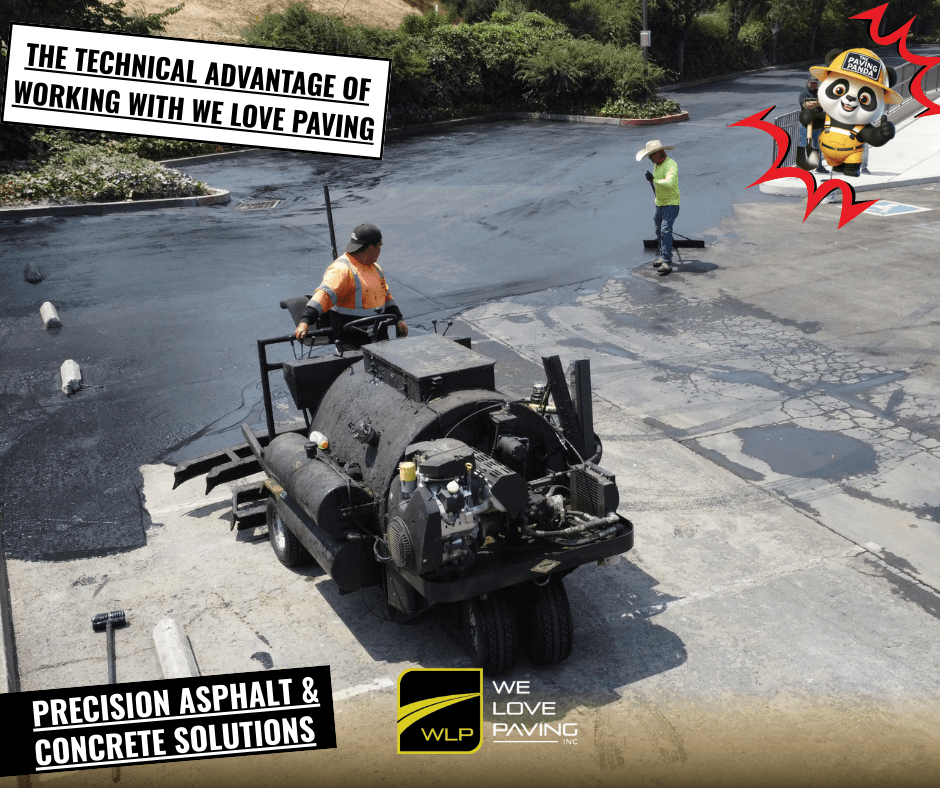
    The Technical Advantage of Working with We Love Paving: Precision Asphalt & Concrete Solutions

    We Love Paving services in Santa Clara. Professional paving contractor serving Santa Clara and Downtown San Jose areas.
    Estimation Tools

    Calculate costs in seconds

    Fast, accurate estimates that help you close more jobs. Less guesswork, more profit.

    When it comes to high-performance paving, technical execution is everything. At We Love Paving, we don’t just lay asphalt — we engineer durable surfaces that meet strict load requirements, drainage standards, ADA compliance, and lifecycle cost-efficiency goals. Our clients rely on us for code-compliant, structurally sound, and long-lasting pavement systems designed for real-world usage.

    This article highlights the technical considerations that separate our work from traditional paving contractors — and why WLP is trusted across California for mission-critical paving projects.


    1. Engineered Subgrade Preparation

    Every successful paving project begins with proper base preparation. Our process includes:

    • Soil evaluation and compaction testing

    • Sub-base installation using Class II aggregate or treated base

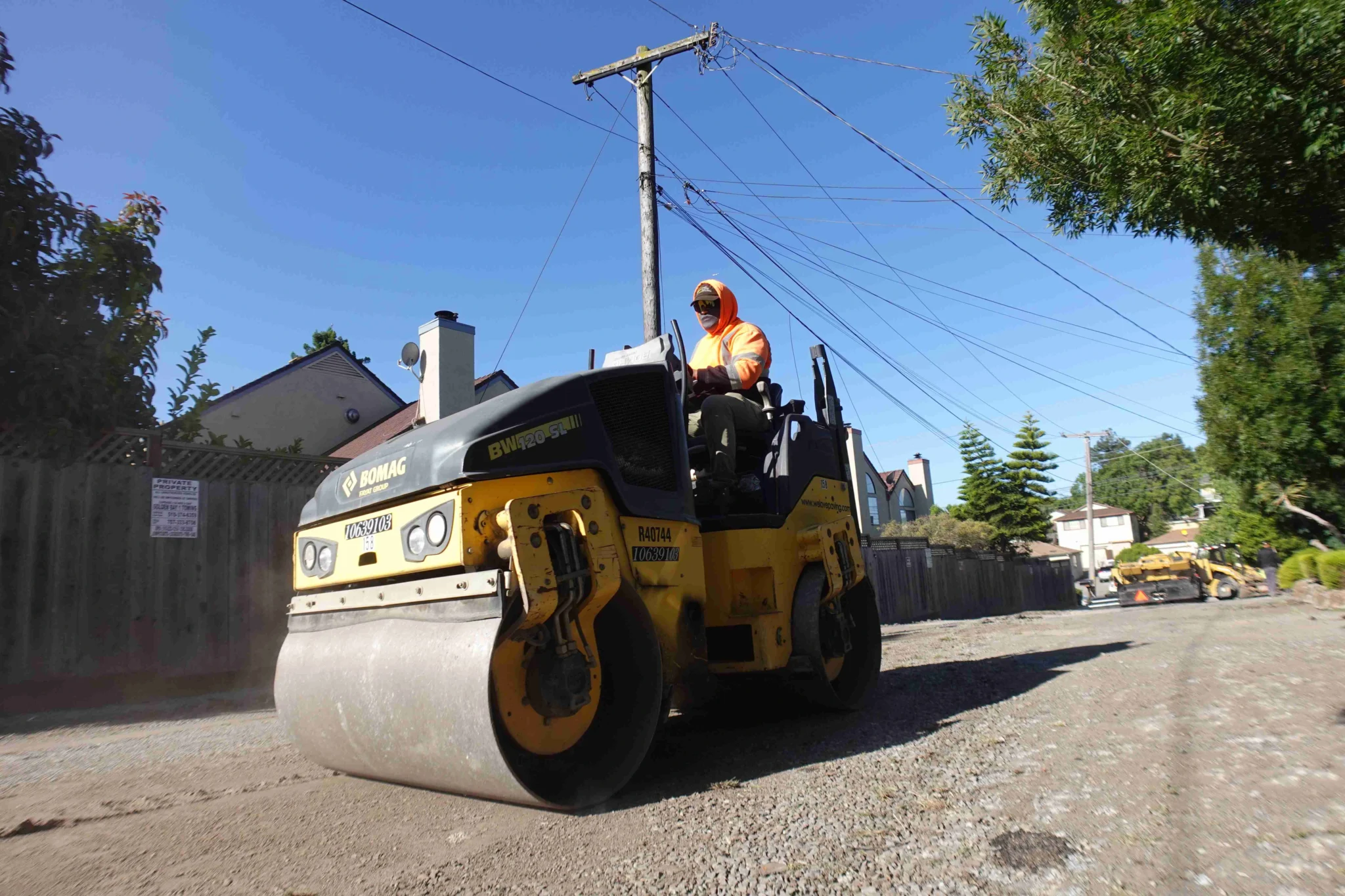
    • Proof-rolling and final grading to eliminate soft spots and ensure even compaction

    • Laser-guided elevation planning for precise slope and water drainage

    Whether for light-duty parking or industrial truck loading zones, our base prep meets or exceeds Caltrans and ASTM standards.


    2. Asphalt Design & Application

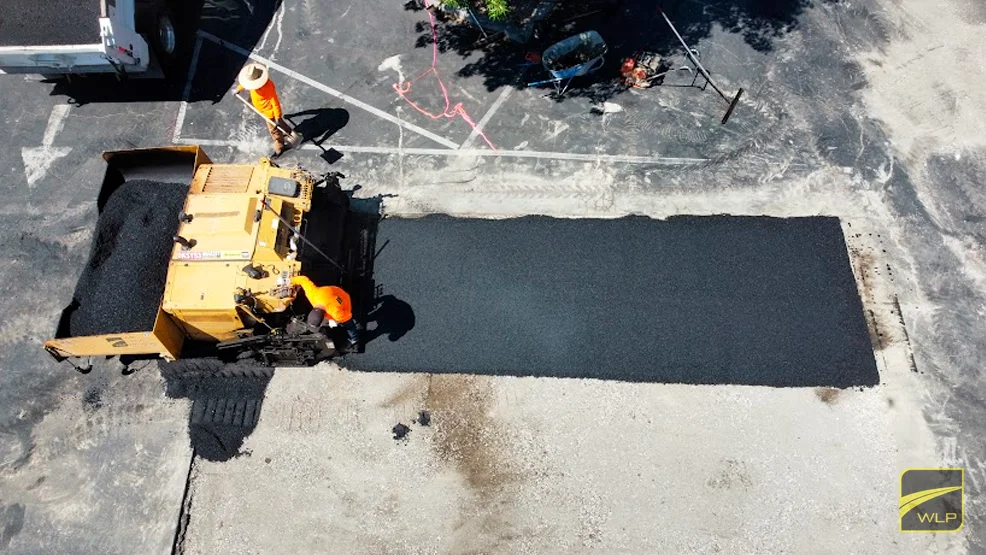
    Our asphalt paving work is designed for longevity, surface performance, and environmental exposure. Key technical specs include:

    • Hot mix asphalt (HMA) types selected based on traffic loads and regional climate

    • Layered applications with compacted thickness typically ranging from 2″ to 6″

    • Joint construction techniques (longitudinal & transverse) to prevent cracking

    • Compaction density targets (92%–95%) verified with nuclear density gauges

    • Tack coat application for superior bond between layers

    Our equipment is GPS-calibrated for precision, and all materials are sourced from certified California suppliers.


    3. ADA Compliance & Code Standards

    All WLP paving projects meet or exceed ADA, CBC, and local municipal standards, including:

    • Proper cross slopes (max 2%) on accessible routes

    • Detectable warning surfaces on curb ramps

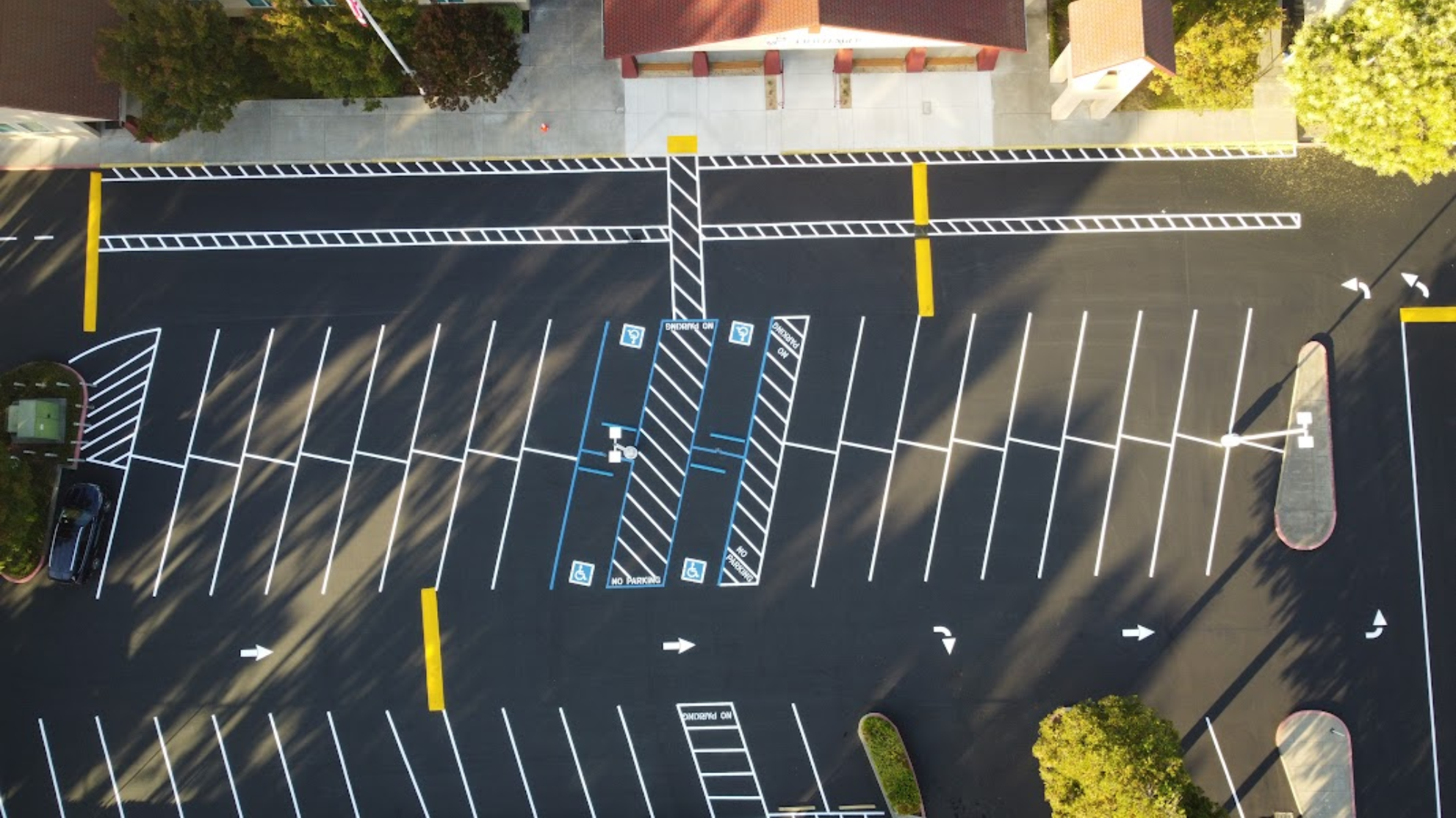
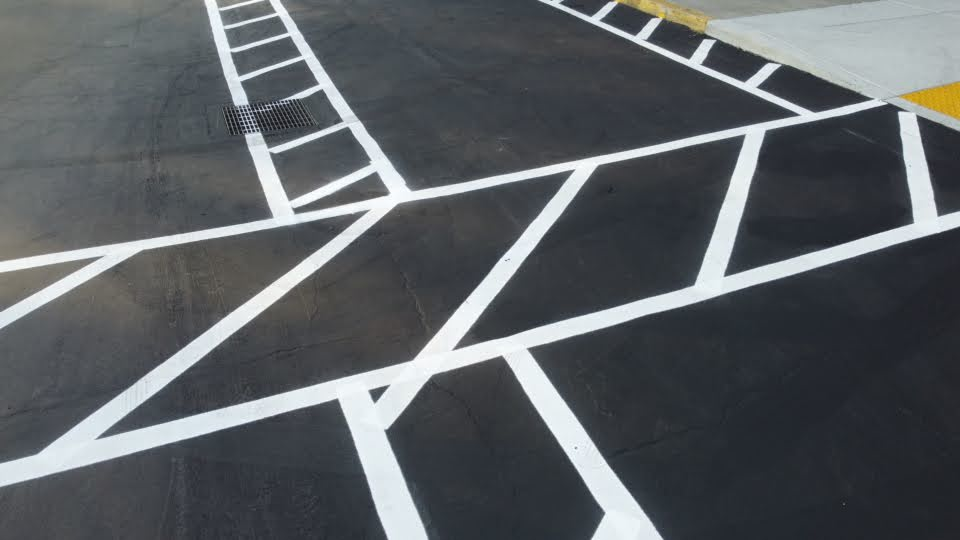
    • Compliant parking stall dimensions, striping angles, and signage

    • Van-accessible ADA stalls with access aisles and slope verification

    • Path-of-travel continuity with no abrupt vertical transitions

    We work closely with civil engineers and inspectors to ensure full documentation and pass-first-time approvals.


    4. Concrete Flatwork & Structural Pads

    For high-load and high-traffic zones, our concrete division specializes in:

    • 6″–10″ thick structural pads for dumpsters, loading docks, and heavy equipment

    • Rebar reinforcement and doweling per ACI standards

    • Integral curbs and sidewalks with precise formwork and finish

    • Expansion joint placement for thermal movement

    • Curing compound applications for extended service life

    All concrete mixes are batched to spec and tested for slump, air content, and compressive strength (4,000–5,000 PSI typical).


    5. Preventative Maintenance Strategy

    Long-term pavement performance relies on routine care. We provide:

    • Sealcoating using high-solids, coal tar or asphalt-based sealers

    • Crack filling with hot-applied rubberized material (ASTM D6690)

    • Pothole patching using infrared or cut-and-replace methods

    • Drainage and grading inspections to prevent water intrusion and sub-base failure

    • Thermoplastic or paint striping for long-lasting visibility and compliance


    Conclusion:
    At We Love Paving, every detail matters. Our technical approach — from subgrade to surface finish — is what allows us to consistently deliver high-performance, low-maintenance pavement systems for commercial, industrial, and municipal clients.

    📞 Contact us today for a site inspection or spec-driven estimate. We’ll build it right, the first time.


    Need Immediate Help?

    Let's Talk About Your Project

    Don't wait until minor damage turns into major expenses. Our team of experts is ready to provide you with guaranteed solutions. Contact us now for direct advice from a professional.

    Frequently Asked Questions (FAQ)

    Got Questions? Find Your Answers Here!!

    How does We Love Paving ensure subgrade structural integrity for commercial projects?

    Proper subgrade integrity is achieved through rigorous soil evaluation and compaction testing using Class II aggregate. We utilize laser-guided elevation planning to eliminate soft spots and meet Caltrans and ASTM standards, ensuring that both drainage and load-bearing capacity are optimized for heavy-duty industrial traffic and long-term pavement stability.

    What is the technical standard for high-performance asphalt compaction?

    We apply Hot Mix Asphalt (HMA) in layers ranging from 2 to 6 inches, verifying a compaction density of 92% to 95% using nuclear density gauges. By utilizing GPS-calibrated equipment and longitudinal joint construction techniques, we prevent premature cracking and ensure the surface withstands regional climate exposure and traffic loads.

    What are the critical ADA compliance requirements for parking lot paving?

    All paving must maintain a maximum 2% cross slope on accessible routes and feature zero abrupt vertical transitions per California Building Code (CBC) standards. We integrate detectable warning surfaces and precise van-accessible stall dimensions to ensure full regulatory compliance and guaranteed pass-first-time approvals from local municipal inspectors.

    Why are structural concrete pads required for high-load industrial zones?

    High-load zones require structural pads between 6 to 10 inches thick, reinforced with rebar and doweling per ACI standards. These pads are engineered to reach a compressive strength of 4,000 to 5,000 PSI, incorporating strategic expansion joints for thermal movement to prevent failure under heavy equipment and dumpster weights.

    What does a preventative maintenance strategy under ASTM D6690 involve?

    Our maintenance strategy centers on sealing cracks with hot-applied rubberized material meeting ASTM D6690 standards to stop water intrusion. By combining high-solids sealcoating with infrared pothole patching and routine drainage inspections, we protect the sub-base and significantly extend the pavement’s lifecycle while reducing overall management costs.

    Professional customer review project by We Love Paving in Northern California, California. Verified local construction quality.

    Fred / Founder

    Fred, Founder and Regional Operations Manager at We Love Paving, comes from a family that values hard work and discipline. Growing up watching his parents work long hours with integrity and dedication, Fred learned early on that quality paving isn’t just about asphalt, it’s about consistency, accountability, and doing the job right.

    Share

    Posts That Might Interest You

    Sacramento Paving Solutions: Can You Put Asphalt Over Dirt?

    Sacramento Paving Solutions: Can You Put Asphalt Over Dirt?

    May 21, 2026

    In Sacramento, California, where the weather is mostly warm and the urban landscape is continually evolving, maintaining durable and attractive driveways, pathways, and parking areas is essential. One common question that homeowners and property managers often ask is whether it’s possible to put asphalt directly over dirt. This comprehensive guide will explore the feasibility, benefits,

    Is Asphalt Hard to Maintain?

    Is Asphalt Hard to Maintain?

    May 20, 2026

    Asphalt is a popular material for driveways, parking lots, and roadways due to its durability, cost-effectiveness, and ease of installation. However, like any material, it requires maintenance to ensure longevity and optimal performance. In this blog post, we will explore the challenges and best practices of asphalt maintenance to determine whether it is indeed hard

    Signs Your Parking Lot Needs Maintenance Before Small Problems Spread

    Signs Your Parking Lot Needs Maintenance Before Small Problems Spread

    May 18, 2026

    The signs your parking Lot needs maintenance rarely appear all at once. A parking lot usually warns you in stages. First, the striping fades. Then small cracks appear. Water starts sitting in the same low area after rain. A pothole forms near the entrance. The surface looks dry, gray, and brittle. Tenants, customers, residents, or

    Pavement vs Concrete: Which Is Better for Your Commercial Property?

    Pavement vs Concrete: Which Is Better for Your Commercial Property?

    May 18, 2026

    “Pavement vs concrete” is a common comparison, but it starts with a technical problem. Concrete is pavement too. A commercial parking lot, driveway, loading area, or access road can be paved with asphalt, concrete, pavers, or other hard-surface materials. So the real question is not pavement vs concrete. The useful question is asphalt pavement vs

    Next

    Estimation Tools

    Calculate costs in seconds

    Fast, accurate estimates that help you close more jobs. Less guesswork, more profit.