Commercial property managers often use the terms interchangeably, yet confusing a storm drain with a catch basin can lead to expensive infrastructure missteps. While both components operate within the same municipal storm water management ecosystem, they perform entirely different structural roles. In Northern California, where seasonal atmospheric rivers deliver heavy, concentrated rainfall, understanding this distinction is crucial. Mismanaging these units does not just trigger minor pooling; it creates deep underground structural water damage that directly destroys your commercial asphalt investment from the subbase up.
The Fundamental Difference Between Storm Drains and Catch Basins
The core difference between a storm drain and a catch basin lies in their scale and mechanical function within a drainage network. A storm drain is the entire infrastructure pipeline network designed to transport massive volumes of untreated rainwater from commercial properties and streets directly to regional waterways. A catch basin is a single, localized structural vault that serves as the entry point to that network, built with a subterranean sump designed to trap heavy sediments and debris before they can enter and clog the main storm pipelines.
What is a Storm Drain? The Infrastructure Network
A storm drain functions as the macro-transportation highway for regional stormwater management. Unlike municipal sanitary sewer systems that route wastewater to treatment facilities, storm drains redirect surface runoff directly to local rivers, bays, and oceans. These systems consist of massive lateral concrete or HDPE pipelines buried beneath parking lots and public roadways, working entirely via gravity to prevent widespread civil flooding during peak weather events.
The Macro Components of Storm Systems
The broader storm system encompasses regional retention ponds, engineered concrete culverts, outfalls, and massive trunk lines managed under strict municipal environmental guidelines. Because the water enters local eco-systems untreated, federal and state regulations mandate strict control over what enters these systems. For property owners, this network is an asset that demands seamless integration with your surface grading to ensure rapid water evacuation during heavy California downpours.
What is a Catch Basin? The Asphalt Protection Shield
A catch basin is the physical point of entry where localized surface water transitions into the subterranean drainage infrastructure. Positioned at low elevation points across parking structures and curb lines, its primary objective is filtration and sediment containment. Without catch basins, the heavy organic matter, gravel, and trash carried by stormwater would immediately choke the lateral connection lines, triggering chronic blockages that are exceptionally costly to clear deep underground.

Anatomy of a Commercial Catch Basin
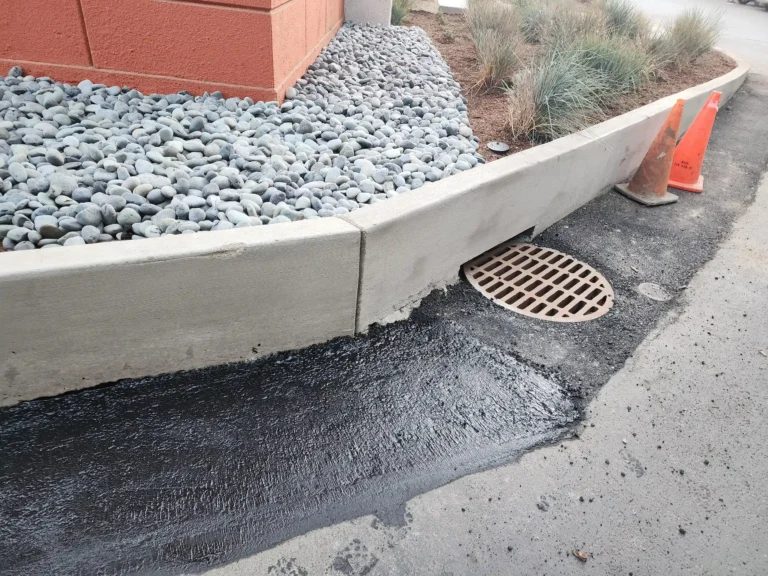
A standard commercial catch basin features a heavy-duty steel grate rated for severe traffic loading, a concrete masonry or precast vault body, and an outlet pipe positioned well above the bottom floor of the basin. This interior structural void below the pipe invert acts as a permanent settling pit. As heavy rainwater rushes through the steel grate, gravity drops heavy sediments, asphalt raveling particles, and trash to the bottom of the basin, allowing only the relatively clean surface water to rise and exit through the high-level outlet pipe.
How Failure in a Catch Basin Destroys Commercial Asphalt
When a catch basin fails structurally, the physical integrity of the surrounding asphalt pavement deteriorates rapidly. The junction between a rigid concrete catch basin structure and a flexible asphalt pavement surface is a zone exposed to severe mechanical stress. If water is allowed to bypass the containment vault due to structural cracks, the subterranean damage will manifest directly on your asphalt parking lot surface.
Subbase Erosion and Pothole Formation
The structural weight of vehicles driving over a parking lot is supported by the engineered rock base below the surface layer. If the mortar joints or precast adjustment rings of a catch basin crack, stormwater escapes into the surrounding soil instead of exiting through the pipeline. This escaped water washes away the fine aggregates within the subbase, causing a destructive process known as internal erosion or undermining.
As the structural foundation is hollowed out, the asphalt loses its load-bearing capacity, leading to alligator cracking, deep depressions, and sinkholes directly adjacent to the steel grate. Property managers who address these internal joint failures early avoid a much costlier problem down the road: full-depth asphalt restoration instead of simple surface patching. The same logic applies below the surface; a solid asphalt base layer needs the right material selection from the start to prevent structural shifting under heavy vehicle loads.
Maintenance and Local Regulations in Northern California
In Northern California, municipal stormwater authorities enforce strict standards on commercial property runoff quality under regional Water Quality Control Board mandates. Commercial facilities are legally required to prevent oil, silt, and construction debris from migrating into public storm infrastructure. Neglecting catch basin maintenance can lead to regulatory fines and operational disruptions once winter downpours hit.
To ensure your layout handles these conditions, evaluating asphalt drainage longevity shows that keeping water away from the pavement layers is the single most effective way to extend the lifespan of your asphalt asset. Catch basins must be professionally vacuumed and cleared of silt before the heavy autumn rainfall window opens in October. Furthermore, when repairing or updating these utility structures, compliance with local municipal codes ensures your property maintains optimal drainage flow while completely avoiding civil liabilities tied to standing water hazards or premature asphalt structural decay.
Protecting Your Property’s Drainage and Pavement
A storm drain network cannot protect your property if the individual catch basins feeding it are compromised by debris or structural cracking. Proactive inspection of your collection vaults prevents subterranean water infiltration, keeping your foundational subbase dry and your surface level and sound. If you have noticed sinking asphalt, perimeter cracking around your steel grates, or slow standing water drainage in your parking facilities, it’s worth acting before the next storm arrives. The engineering team at We Love Paving provides targeted drainage inspections, vault repairs, and comprehensive asphalt paving in California to stabilize your commercial property infrastructure before the next storm season arrives.