Coal tar sealer is a coal-processing byproduct refined into a liquid emulsion designed to coat asphalt pavements. Industrially produced during the conversion of coal into coke for steel manufacturing, coal tar contains a dense mix of aromatic hydrocarbons. When applied to asphalt, it forms a rigid surface barrier that resists gas, motor oil, and ultraviolet radiation. Because crude petroleum asphalt binders naturally break down when exposed to vehicular fluids, coal tar became the primary defense mechanism for heavy-traffic commercial lots, filling stations, and retail centers during the late 20th century.
Despite its historical popularity for deep black aesthetic appeal and chemical resistance, coal tar sealer presents significant physical limitations on pavement longevity. The cured film is inherently rigid and inflexible compared to the underlying flexible asphalt pavement. As commercial pavements undergo thermal expansion and contraction cycles particularly under variable northern California coastal fog and valley heat conditions the rigid coal tar coating struggles to move with the substrate. Over time, this mechanical incompatibility leads to micro-cracking, flaking, and premature delamination, requiring frequent reapplication cycles that continually build up toxic surface layers.
Understanding Coal Tar Sealer and Its Historical Commercial Use
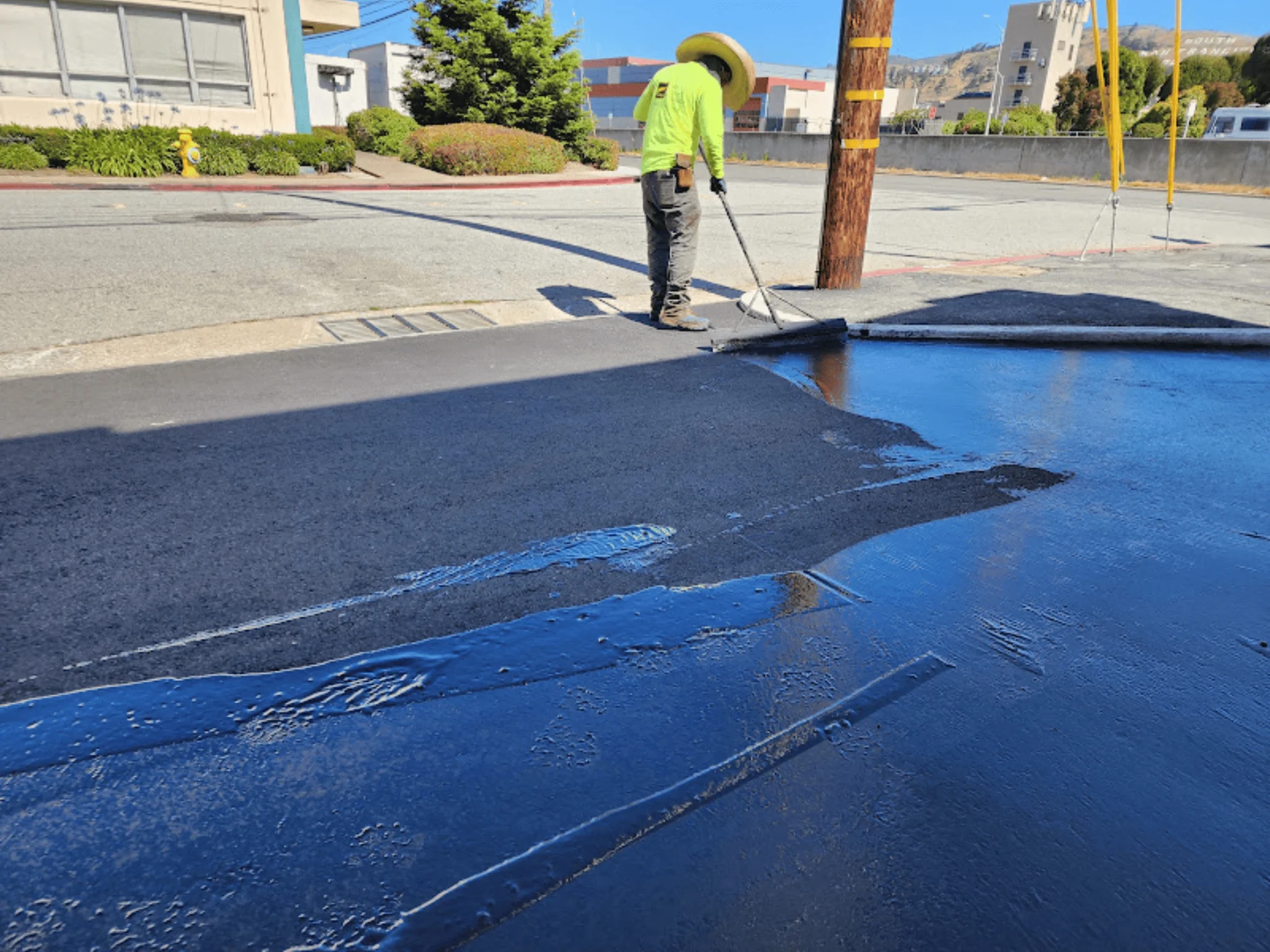
Coal tar sealer is a coal-processing byproduct refined into a liquid emulsion designed to coat asphalt pavements. Industrially produced during the conversion of coal into coke for steel manufacturing, coal tar contains a dense mix of aromatic hydrocarbons. When applied to asphalt, it forms a rigid surface barrier that resists gas, motor oil, and ultraviolet radiation. Because crude petroleum asphalt binders naturally break down when exposed to vehicular fluids, coal tar became the primary defense mechanism for heavy-traffic commercial lots, filling stations, and retail centers during the late 20th century.
Despite its historical popularity for deep black aesthetic appeal and chemical resistance, coal tar sealer presents significant physical limitations on pavement longevity. The cured film is inherently rigid and inflexible compared to the underlying flexible asphalt pavement. As commercial pavements undergo thermal expansion and contraction cycles particularly under variable northern California coastal fog and valley heat conditions the rigid coal tar coating struggles to move with the substrate. Over time, this mechanical incompatibility leads to micro-cracking, flaking, and premature delamination, requiring frequent reapplication cycles that continually build up toxic surface layers.
The Environmental and Health Risks of Coal Tar Sealcoat
Coal tar sealcoats contain extremely high concentrations of Polycyclic Aromatic Hydrocarbons (PAHs), a class of chemical compounds associated with environmental toxicity and human health hazards. Raw coal tar pitch typically comprises 50% or more PAHs by weight, containing known carcinogens such as benzo(a)pyrene. As vehicle tires drive over sealcoated parking lots, mechanical abrasion grinds the brittle surface layer into fine, toxic dust particles. Rainwater runoff, wind, and vehicular tracking transport this contaminated dust directly into nearby waterways, soil, and neighboring indoor environments.
The environmental trajectory of PAH-laden dust poses long-term contamination risks for commercial real estate properties. According to studies by the United States Geological Survey (USGS), urban watersheds adjacent to coal-tar-sealed parking lots show significantly elevated PAH concentrations in storm-basin sediments, harming aquatic ecosystems. Furthermore, dust tracked indoors on footwear settles into carpets and HVAC systems, creating elevated exposure risks for maintenance personnel, tenants, and visitors. These documented toxicological impacts have pushed environmental agencies to reclassify coal tar waste streams, imposing strict remediation burdens on commercial property owners.
California Regulations: Is Coal Tar Sealer Legal in California?
Coal tar sealer is illegal to sell, distribute, or apply in California under state environmental safety laws and municipal code ordinances restricting high-PAH pavement treatments. State regulatory bodies, including the California Environmental Protection Agency (CalEPA) and various regional water quality control boards, strictly enforce prohibitions against sealants exceeding minimal PAH thresholds (typically defined as above 0.1% or 1,000 ppm by weight). These legal bans were enacted to prevent storm drain runoff contamination and protect urban watersheds from carcinogenic accumulation.
Commercial property owners in Northern California must ensure their maintenance specifications align with state mandates to avoid severe liability. Applying non-compliant pavement coatings can result in municipal civil penalties, mandatory environmental remediation orders, and potential legal claims from surrounding communities. Working with licensed paving contractors ensures all sealcoating formulations strictly utilize compliant asphalt emulsion materials that adhere to Caltrans standards and local municipal regulations. Evaluating the full scope of commercial sealcoating in California guarantees that your commercial parking structures remain fully compliant while benefiting from maximum structural protection.
Coal Tar vs. Asphalt Emulsion: A Technical Performance Comparison
Modern asphalt emulsion sealers represent the technological successor to coal tar coatings, engineered from petroleum asphalt, water, emulsifying agents, and specialty polymers. Unlike coal tar, asphalt emulsion chemically matches the underlying pavement substrate, creating a cohesive molecular bond. Advanced polymer modifications allow modern emulsions to meet or exceed ASTM D5931 stability standards and ASTM D2939 protection criteria. The resulting protective film expands and contracts in harmony with seasonal ground temperature shifts, virtually eliminating thermal cracking and edge delamination.
| Technical Parameter | Coal Tar Sealer | Polymer-Modified Asphalt Emulsion |
|---|---|---|
| PAH Content | High (30,000 – 50,000+ ppm) | Extremely Low / Trace (< 100 ppm) |
| Legal Status (California) | Banned / Illegal | Fully Approved & Compliant |
| Flexibility & Elasticity | Low (Brittle, susceptible to cracking) | High (Expands/contracts with asphalt) |
| Odor & Volatiles | Strong chemical odor, irritating fumes | Low odor, non-irritating application |
| Substrate Adhesion | Surface-level mechanical grip | Chemical & molecular bonding |
When evaluating longevity, high-grade polymer-modified asphalt emulsions match coal tar durability without introducing toxic hazards. While untreated early-generation asphalt sealers lacked oil resistance, modern formulations integrated with synthetic latex and hardeners resist automotive fluid penetration effectively. Understanding these core differences highlights the broader physical benefits of sealcoating when high-performance emulsion formulas are selected for routine lot maintenance.
How Commercial Properties Can Safely Transition from Coal Tar to Asphalt Emulsion
Transitioning an older commercial pavement from a historical coal tar coating to a compliant asphalt emulsion requires specialized surface preparation to prevent bonding failure. Because asphalt emulsion and legacy coal tar have different surface chemistries and thermal expansion rates, applying emulsion directly over flaking coal tar will cause the new layer to peel away. The existing surface must undergo aggressive mechanical cleaning, including high-pressure power washing, rotary broom sweeping, and targeted oil-spot priming using specialized acrylic-based bonding coats designed to bridge incompatible layers.
In cases where legacy coal tar coatings are severely cracked or delaminating, complete mechanical scarification or surface milling may be required prior to applying a fresh coat. Professional paving crews evaluate the existing pavement condition using cross-hatch adhesion testing to determine whether an intermediate specialty primer is required. Choosing to hire a professional contractor ensures that surface preparation, ambient temperature monitoring during application, and mix design ratios adhere strictly to engineering specifications, guaranteeing a long-lasting, resilient finish.

Protecting your commercial asphalt infrastructure while maintaining full compliance with California environmental regulations requires an experienced, technical approach. The engineering team at We Love Paving brings over seven years of specialized experience managing commercial parking structures, industrial complexes, and retail centers throughout Northern California. If your property requires professional surface evaluation, compliance auditing, or high-durability polymer-modified sealcoating, contact our team today to schedule an expert site assessment and secure a tailored pavement management plan.