What is ADA housing? In practical property-management terms, it refers to housing environments where people with disabilities can access, use, and move through the property without unnecessary barriers. The legal answer can involve more than one law, including the Americans with Disabilities Act, the Fair Housing Act, state accessibility rules, local codes, and property-specific requirements.
That distinction matters. Property managers should not assume that one label solves the whole question. A multifamily property, senior housing community, student housing facility, public housing site, mixed-use building, or residential property with public-facing areas may face different responsibilities depending on ownership, funding, use, design, and local jurisdiction.
This article does not provide legal advice or certify compliance. It focuses on the exterior conditions property managers often control or coordinate: parking lots, walkways, curb ramps, striping, signage, pavement transitions, drainage, and surface maintenance. Those areas are easy to overlook because they sit outside the unit, but they often determine whether residents, guests, vendors, and visitors can move through the property predictably.

ADA Housing Starts With the Route People Actually Use
A property can look accessible on paper while still creating problems in daily use. The issue usually appears in the route between the parking area, sidewalk, entrance, leasing office, mail area, trash enclosure, amenity space, or common-use path.
A resident using a mobility device may not experience the property as separate features. They experience it as a sequence. They park, unload, cross pavement, move along a walkway, pass drainage areas, reach a ramp or entry, and continue toward the destination. If one part of that sequence is interrupted, the entire route may become difficult.
Property managers should walk the route instead of reviewing isolated features. A freshly striped accessible space does not help much if the path from the space to the entrance crosses broken asphalt. A ramp may look intentional, but if water collects at the bottom after rain, the route may feel unreliable. A sidewalk may technically exist, but lifted panels, rough transitions, or narrow usable areas can still create access concerns that may require professional evaluation.
That is why exterior access should be reviewed as a connected system, not a collection of separate fixes.
The Parking Lot Is Often Where ADA Housing Problems Become Visible
Parking areas are one of the first places accessibility issues appear because they combine pavement condition, striping, signage, slopes, pedestrian movement, and vehicle circulation.
For housing properties, this is especially important near leasing offices, residential entrances, visitor parking, mailrooms, laundry areas, clubhouses, healthcare-related amenities, and other common-use locations. The pavement does not need to be new, but it should be stable, legible, and reasonably predictable for users.
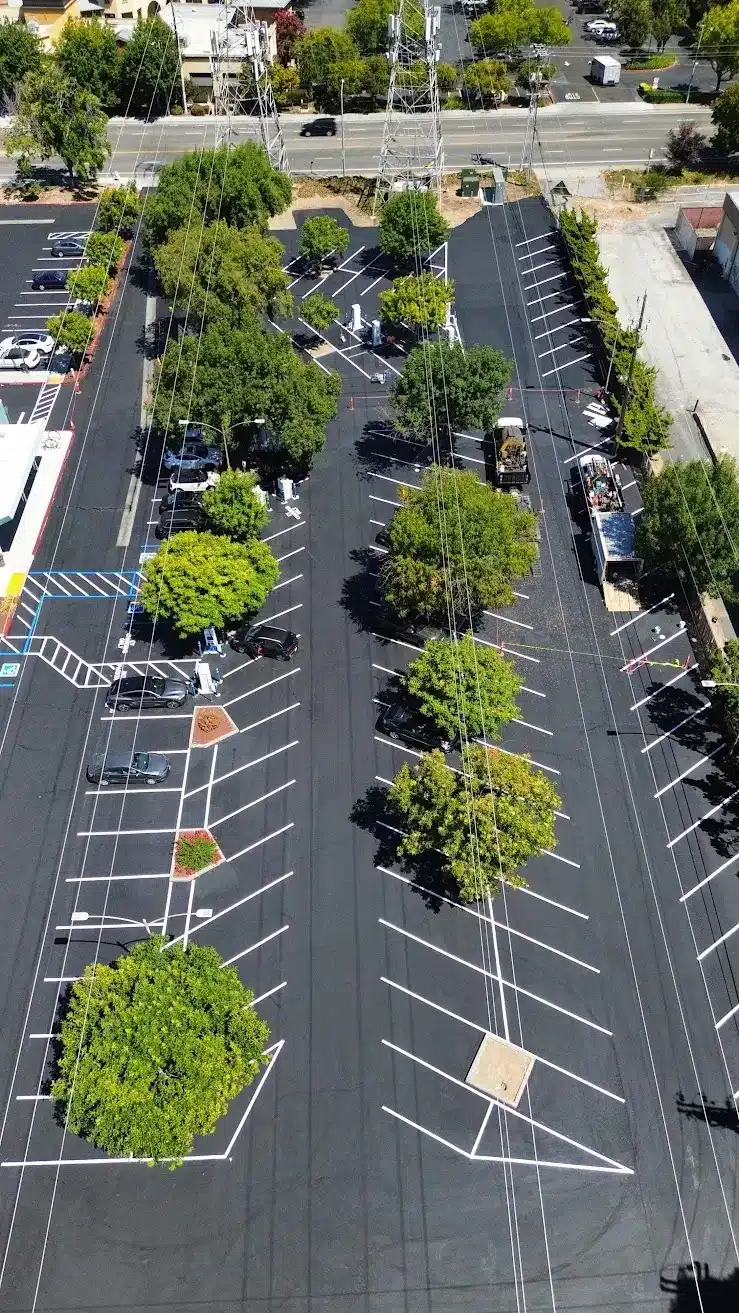
An ADA parking lot review should look beyond paint. Faded striping, missing signs, uneven pavement, ponding water, patched transitions, and worn pedestrian markings can all affect how the exterior route functions. Property managers should be cautious about assuming that repainting alone solves access concerns if the underlying surface or route layout still creates problems.
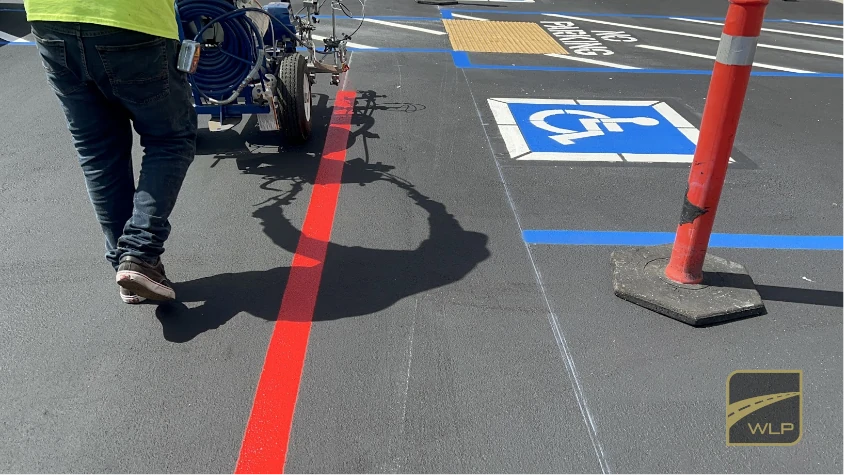
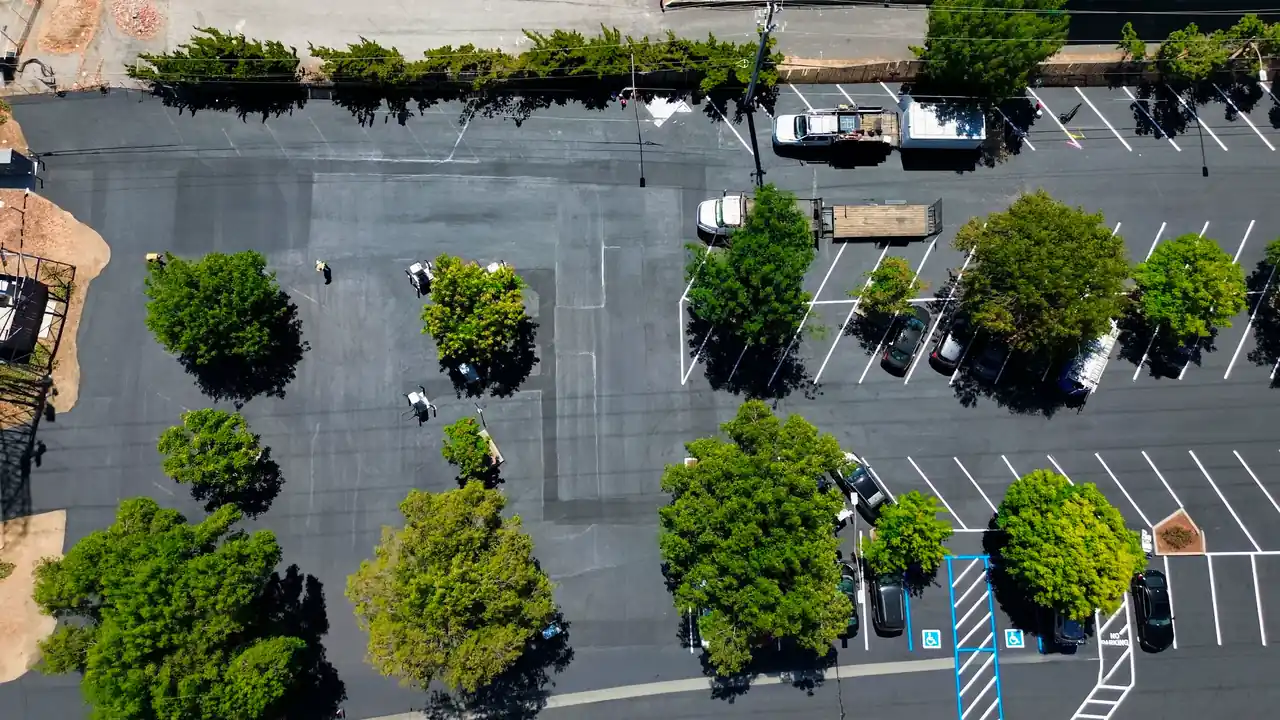
This is where professional parking lot striping may be part of a larger access plan. Striping helps organize stalls, routes, and visibility, but it should be coordinated with pavement condition, signage, walking paths, and any applicable accessibility review.
What Property Managers Usually Miss
The most common misses are not always dramatic. They are small exterior conditions that gradually become part of the property’s daily friction.
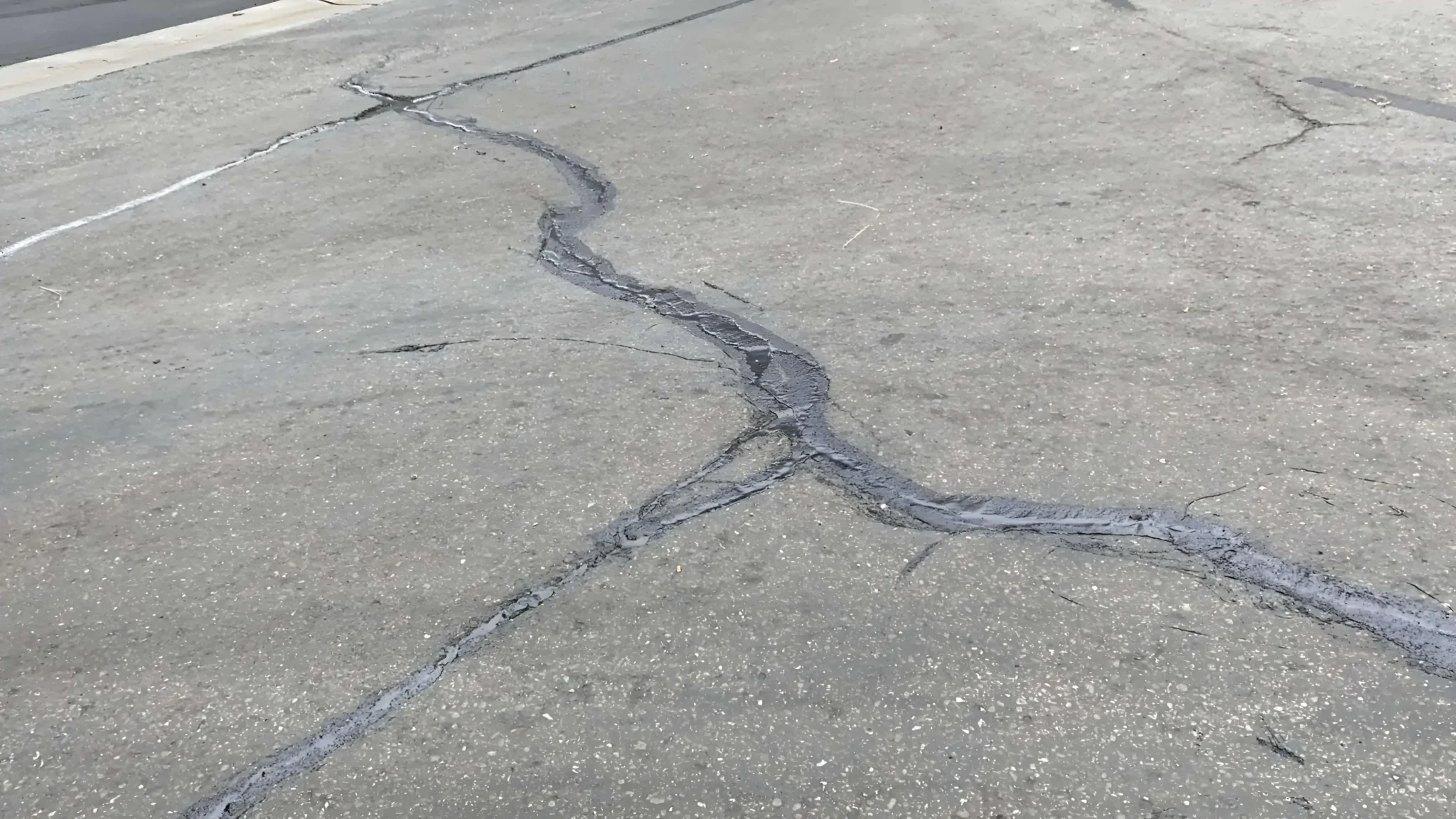
A low spot near an accessible stall may collect water after rain. A patch near a curb ramp may settle slightly and create a rough transition. A walkway edge may crack where landscaping, roots, or drainage are affecting the base. A painted access aisle may fade faster than the surrounding pavement because vehicles repeatedly cross it. A route from the parking lot to the entrance may technically exist but feel unclear to someone arriving for the first time.
These issues are easy to normalize because staff see them every day. Residents adjust their route. Vendors step around the problem. Visitors assume the property is aging. But from an accessibility perspective, those exterior details may deserve closer review.
| Exterior Condition | Why It Matters for Housing Access | What to Review |
|---|---|---|
| Uneven pavement near entrances | May interrupt movement before residents reach the door | Surface stability, drainage, patch condition |
| Faded accessible markings | May make parking and access routes harder to identify | Striping visibility, signage, repainting schedule |
| Water collecting near routes | May affect predictable use after rain | Drainage, low spots, surrounding pavement |
| Rough walkway transitions | May create difficulty between parking and entrances | Sidewalk edges, ramp transitions, surface changes |
| Broken edges near curbs | May reduce usable space or create tripping concerns | Edge support, vehicle impact, repair timing |
A cautious ADA checklist can help property teams document what they see, but checklist use should not be mistaken for legal certification. When accessibility, housing law, or compliance exposure is involved, qualified professionals may need to review the site.
Pavement Condition Can Affect More Than Appearance
Pavement is often treated as a cosmetic or maintenance issue. For ADA housing, that is too narrow.
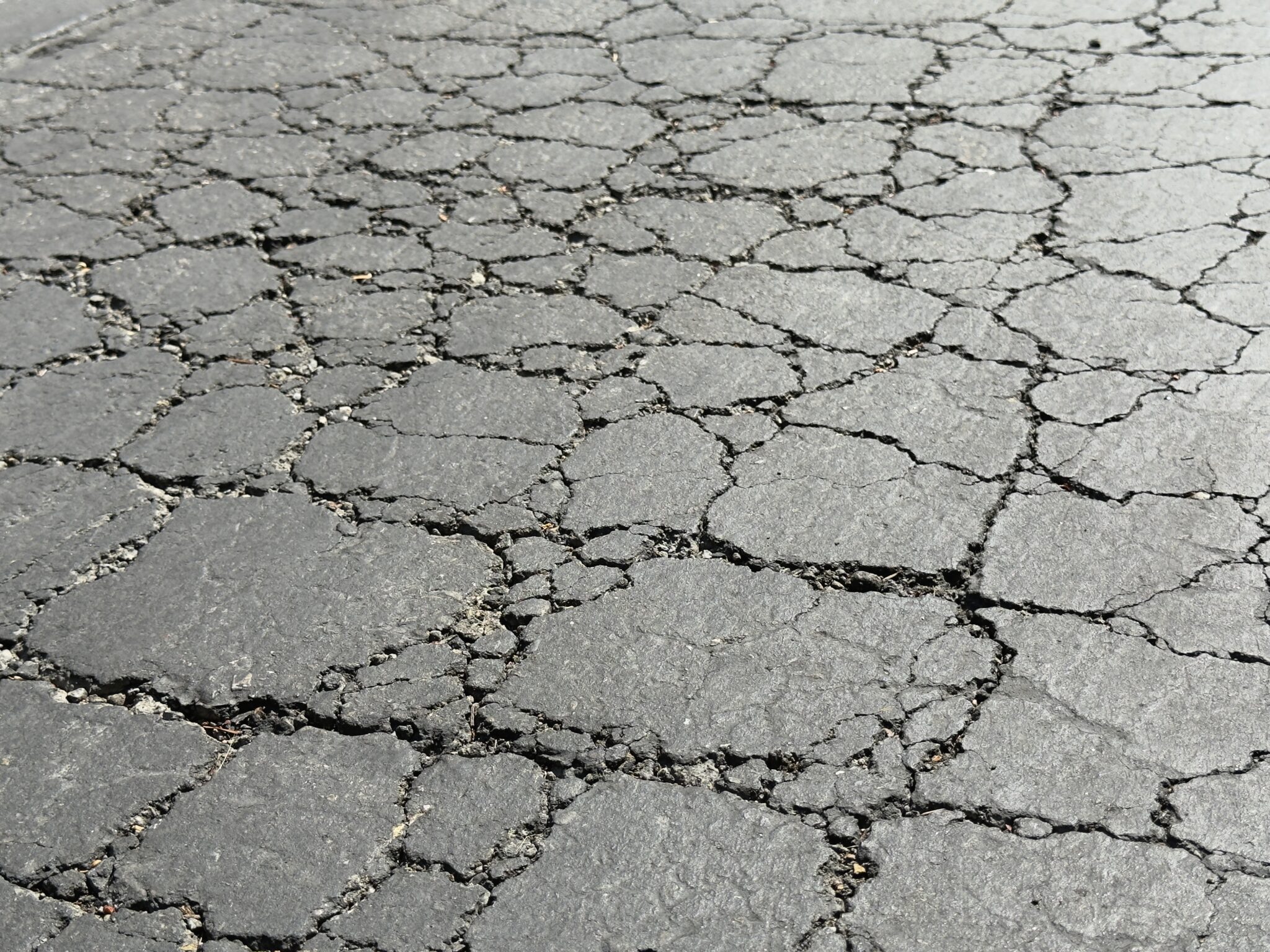
Cracks, potholes, surface raveling, uneven patches, and drainage problems can affect how people move from one part of the property to another. A rough section of asphalt near a leasing office may be more important than a larger crack in a remote maintenance area. A sidewalk lift near a mail kiosk may deserve faster attention than surface wear in an unused corner. A depression near a common entrance may affect more users than faded asphalt in overflow parking.
This is why sidewalk repair belongs in the accessibility conversation. Housing access does not stop at the parking stall. It continues across sidewalks, walkway joints, curb transitions, and common-use routes.
Property managers should also avoid the opposite error: treating every pavement flaw as an emergency. Some conditions may be monitored. Others may require maintenance. Some may need broader design or accessibility evaluation. The priority should be based on location, user impact, recurrence, and whether the condition affects the route people rely on.
ADA Housing Requires Coordination, Not Just Pavement Work
Exterior accessibility can involve paving contractors, property managers, designers, inspectors, legal advisors, ownership teams, and sometimes residents or tenant representatives. Pavement work may be one piece of the solution, but it is not the same as a legal ADA housing determination.
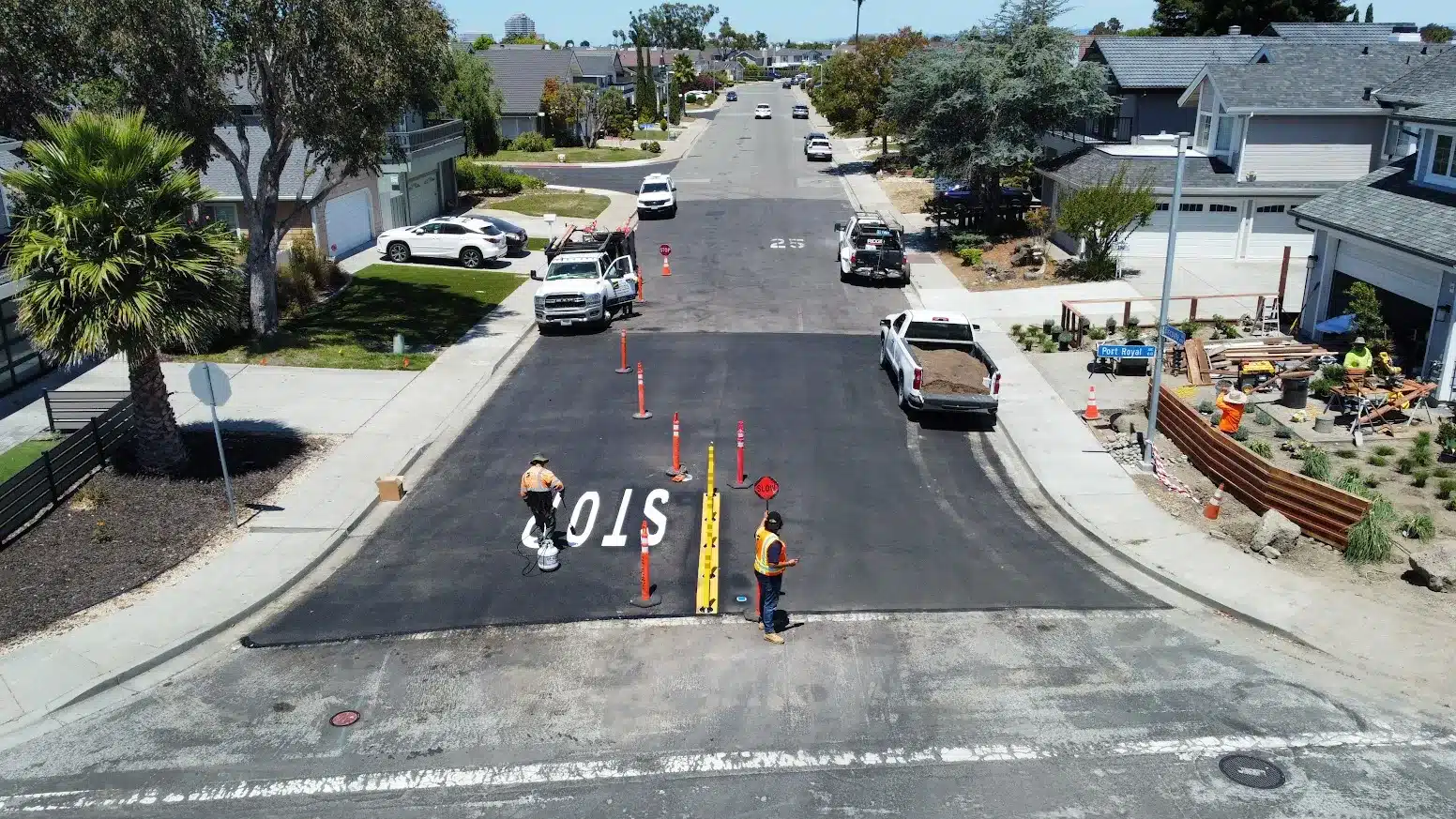
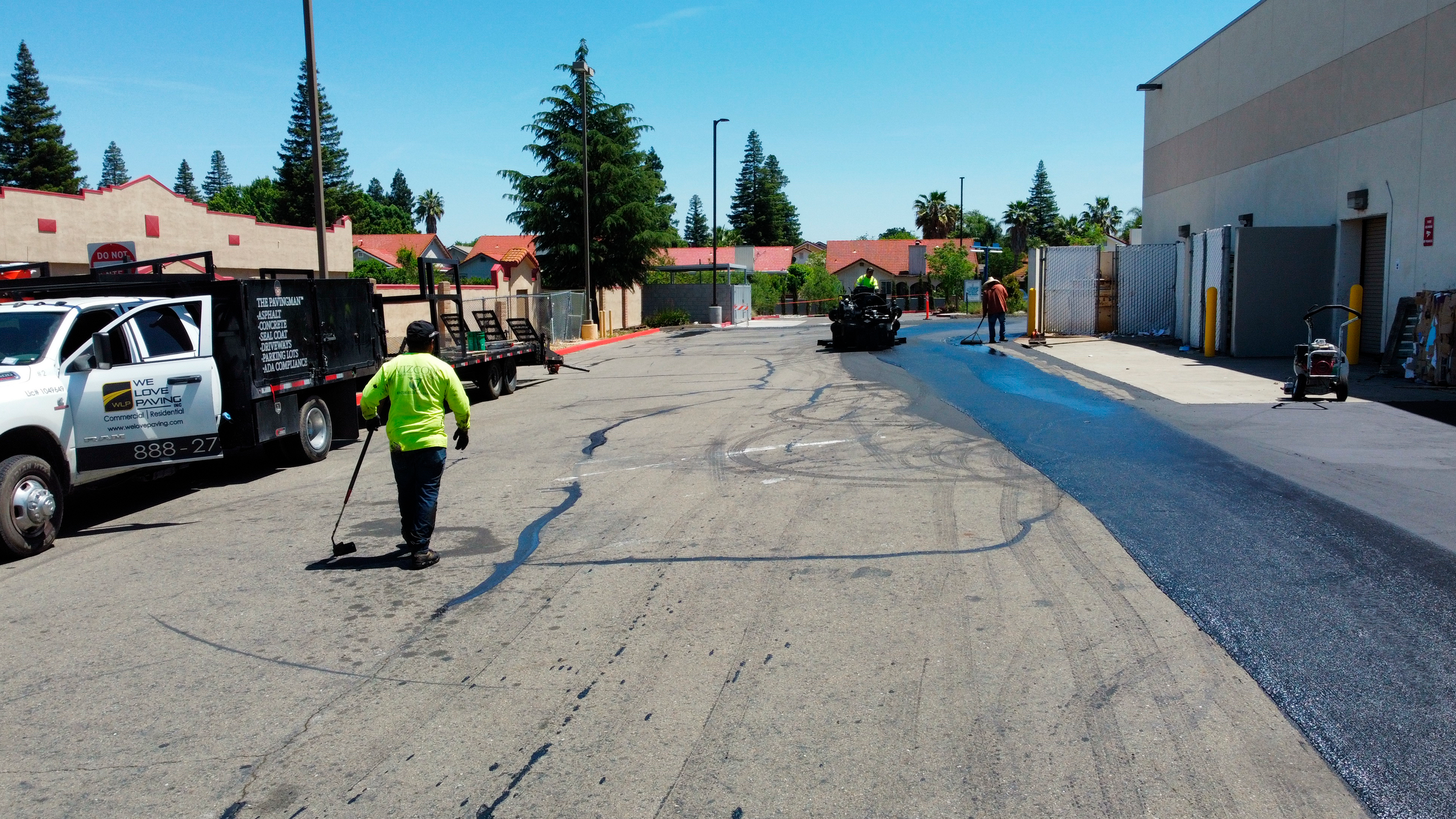
A pavement crew can help address physical site conditions such as surface deterioration, striping, ramps, walkway transitions, and parking lot layout work within its scope. But legal responsibility, Fair Housing Act accommodation requests, design obligations, local code interpretation, and formal compliance determinations may require other qualified professionals.
This is where ADA upgrades should be understood carefully. Physical upgrades can support accessibility goals, but property managers should avoid language that promises guaranteed compliance or eliminates liability. A safer approach is to treat upgrades as part of a documented access-improvement process.
The same applies to parking lot design. Circulation, stall location, pedestrian routes, drainage, signage, and pavement structure all influence exterior usability. If those pieces are planned separately, the property may fix one feature while leaving the route itself difficult to use.
A Better Way to Review ADA Housing Exterior Access
Property managers should review exterior access by walking the route like a resident, visitor, or vendor would use it.
Start at the parking area. Is the accessible parking easy to identify? Are markings visible? Is the surface stable? Does water collect where people unload? Then move from the parking area toward entrances and shared amenities. Watch for abrupt surface changes, broken pavement, lifted sidewalk edges, faded crossings, unclear routes, or patched areas that have settled.
Next, review high-use common areas: leasing offices, mail areas, trash enclosures, laundry rooms, clubhouses, community rooms, healthcare-related services, and resident amenity spaces. These locations often receive frequent use from people with different mobility needs.
The strongest review does not rely on memory. It documents what was observed, where it was observed, and whether the condition appears stable, recurring, or worsening. That documentation can support maintenance planning and help ownership understand why exterior access work should not be delayed until a complaint appears.
Keeping ADA Housing Access Practical and Cautious
What is ADA housing from a pavement and exterior-access perspective? It is not just a legal phrase. It is a property experience shaped by parking, routes, surfaces, markings, transitions, drainage, and maintenance timing.
The practical risk is assuming that accessibility lives only inside the building or only in written policies. For many residents and visitors, the first barrier is outside: a parking lot that is hard to read, a sidewalk that has shifted, a puddle at a curb ramp, a faded access aisle, or a rough patch between the stall and the entrance.
We Love Paving can support property managers by reviewing and improving exterior paved areas that affect access, visibility, and day-to-day movement. The right approach is measured: identify the route, document the conditions, coordinate with qualified professionals when legal or technical review is needed, and prioritize the physical improvements that make the property easier to use.