An ADA compliant checklist should not be treated like a quick yes-or-no legal verdict.
That is the first mistake property owners make.
A parking lot can look organized from the street and still have accessibility conditions that deserve review. The accessible stalls may be faded. The access aisle may be blocked. The route from parking to the entrance may be cracked, uneven, or confusing. Signs may be present but poorly positioned. A ramp may exist but connect awkwardly with the walking path. Drainage may leave water sitting where people need stable movement.
The goal of this article is not to certify your parking lot as compliant. A blog cannot do that. ADA-related requirements depend on federal standards, state or local rules, site layout, construction history, measurements, and professional evaluation. The U.S. Department of Justice explains that accessible parking must be provided when covered entities provide parking lots or garages, and the U.S. Access Board explains that ADA parking requirements apply to parking facilities on a site.
The practical value of this checklist is different: it helps property owners, managers, landlords, HOAs, and facility teams identify visible conditions that may justify a closer ADA review before small layout or pavement issues become larger property concerns.

Start With the Parking Space, but Do Not Stop There
Most property owners begin an ADA review by looking at the accessible parking stalls.
That is logical, but incomplete.
Accessible parking is not only about having blue paint on the pavement. The stall, access aisle, signage, pavement surface, route connection, and entrance path all have to work together. If one part is visible but another part fails in practice, the parking area may still create usability concerns.
A useful first pass should ask:
- Are accessible parking spaces easy to identify?
- Are access aisles clearly marked and kept open?
- Are markings still visible enough to guide drivers and pedestrians?
- Are signs present, upright, and readable?
- Is the pavement surface stable enough for movement?
- Does the accessible area connect logically to the building entrance?
- Is the route interrupted by curbs, cracks, slopes, ponding, or rough transitions?
This is where generic checklists become weak. They focus on whether a feature exists, not whether the feature functions.
A sign may exist, but if the stall striping is gone, drivers may park incorrectly. An access aisle may exist, but if it is faded or routinely blocked, it may not function as intended. A ramp may exist, but if the pavement leading to it is broken or uneven, the route still deserves attention.
When the concern involves the full parking layout rather than one isolated marking, parking lot ADA compliance belongs in the discussion as a site-condition review, not as a cosmetic repainting task.
Look for Route Breakdowns Between the Stall and the Entrance
The most overlooked part of an ADA compliant checklist is the path after the vehicle is parked.
Property owners often focus on the stall itself because it is easy to see. But the user still needs to move from the parking area to the entrance. That route may cross asphalt, concrete, ramps, curbs, drive aisles, access aisles, pedestrian markings, or transitions between surfaces.
This is where many parking lots quietly fail in practice.
A person may find an accessible space, unload from the vehicle, and then encounter a cracked path, unclear crossing, ponding water, uneven pavement, missing curb transition, or faded pedestrian route. The issue is not always one dramatic defect. It is often a chain of small interruptions.
That is why the checklist should not stop at the parking stall. Walk the route from the accessible space to the entrance and observe the experience as a sequence.
Does the route feel direct? Is it obvious? Is it stable? Is it interrupted? Does water collect where people need to move? Are vehicle paths and pedestrian areas visually separated? Are there surface changes that may need closer review?
The article on ADA parking lots covers broader parking lot accessibility concepts. This page has a narrower purpose: showing owners how to notice the visible route conditions that may indicate the need for a more careful assessment.
Faded Paint Can Create More Than a Visual Problem
Faded ADA markings are often treated as a low-priority appearance issue.
That is too shallow.
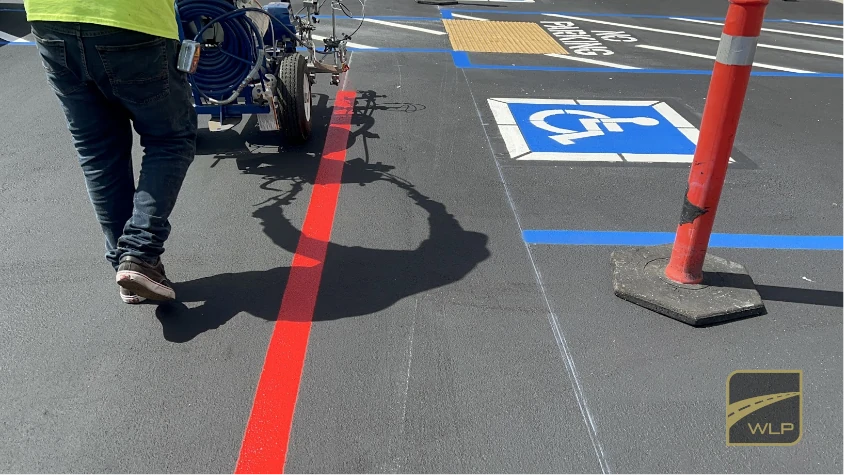
Parking lot markings tell people where to park, where not to park, where pedestrians may move, and where access aisles must remain open. When striping fades, the lot becomes less predictable. Drivers may unintentionally block access aisles. Pedestrian routes may become unclear. Accessible spaces may lose visibility. Fire lanes, loading zones, and directional markings may also become harder to interpret.
For ADA-related parking areas, visibility matters because layout depends on people recognizing the intended use of each space.
A property owner should pay close attention to:
- Accessible stall symbols that are hard to see
- Access aisles with faded diagonal markings
- Missing or worn curb paint
- Pedestrian crossings that no longer stand out
- Directional arrows that conflict with parking flow
- Old markings that create confusion with newer layouts
The weak assumption is that faded paint can always wait.
Maybe it can. Maybe it cannot. If faded markings are causing drivers to park in access aisles, miss pedestrian paths, or misunderstand the layout, the issue has moved beyond appearance.
Where the pavement layout is still sound but markings are no longer doing their job, parking lot striping may support clearer site organization. It should still be coordinated with the actual accessibility layout, not applied as a guess over an outdated plan.
Surface Conditions Can Undermine an Otherwise Correct Layout
A parking lot can have the right general layout and still create accessibility concerns because of surface condition.
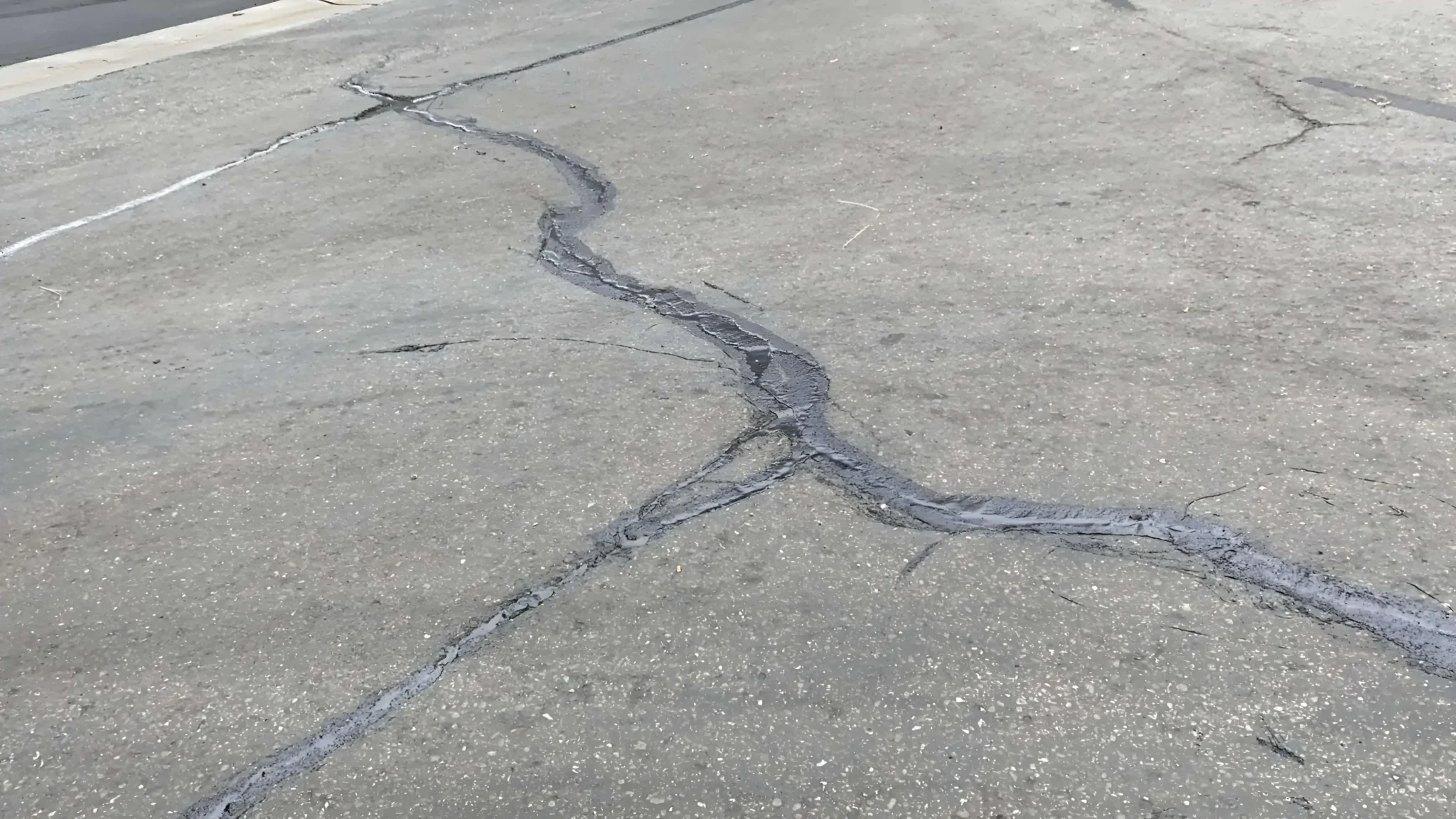
Cracked asphalt, potholes, raveling, uneven patches, ponding water, sunken transitions, loose gravel, or broken edges can affect how usable an accessible route feels. These conditions may not always appear in a simple count-based checklist, but they matter in the real property environment.
The question is not only “Do we have the required features?”
The stronger question is “Can those features be used without obvious pavement obstacles?”
That means looking at the accessible parking zone as a working area, not a diagram. Check the pavement where people unload. Check the access aisle. Check the crossing path. Check the area near ramps, walkways, and building entrances. Check whether water drains through or sits in the accessible path. Check whether repairs have created uneven transitions.
The U.S. Access Board’s parking guidance focuses on ADA Standards for parking, while ADA.gov provides public-facing guidance on accessible parking spaces. Those sources are useful because they reinforce that accessible parking is a technical requirement, not merely a design preference.
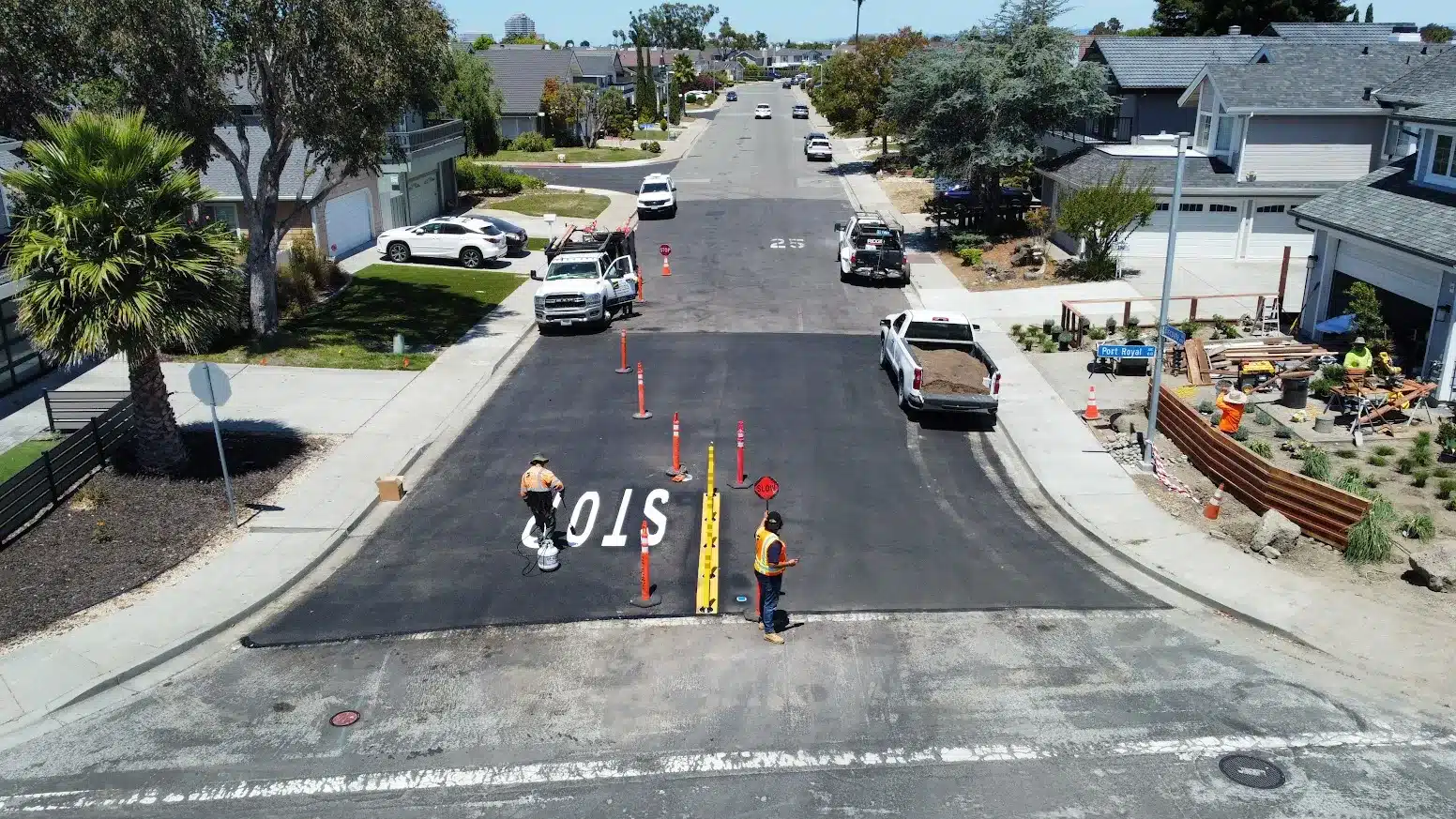
When the issue involves physical site changes rather than paint alone, ADA upgrades may become relevant as part of a broader correction plan. That should be based on measured conditions, not visual guesswork.
The Checklist Should Trigger Questions, Not False Confidence
The worst use of an ADA compliant checklist is to create false confidence.
A property owner walks the lot, sees a few signs, sees blue paint, and assumes the site is fine. That is not a serious review. ADA-related parking issues can involve quantities, dimensions, slopes, signage, access aisles, routes, surfaces, entrances, and state or local requirements. Some of those issues require measurement and professional evaluation.
A better checklist creates questions:
- Are the accessible stalls still visible and usable?
- Are access aisles protected from parking or storage?
- Does the accessible route connect cleanly to the entrance?
- Are signs present and readable from the right approach?
- Are pavement repairs creating uneven transitions?
- Is water collecting in accessible parking or route areas?
- Has the lot been restriped without confirming the layout?
- Have building changes altered how people move through the site?
- Are older markings conflicting with newer circulation patterns?
This is not a substitute for legal or technical review. It is a field-awareness tool.
The article on ADA compliance in paving explains why accessibility should be considered during paving work. This checklist is meant for the earlier stage: identifying visible conditions before a project scope is defined.
That distinction matters. A checklist should not tell an owner, “You are compliant.” It should help the owner decide, “This area needs closer review.”
Do Not Let Old Layouts Keep Making New Problems
Parking lots change over time.
Tenants change. Entrances move. Traffic patterns shift. Pavement gets patched. Striping is refreshed. Curbs are repaired. Ramps are added. Drainage is modified. A layout that once made sense may no longer match how people actually use the property.
This is one of the most common hidden risks in older parking lots: old accessibility assumptions remain in place while the site around them changes.
A landlord may add a new tenant entrance but leave the accessible route oriented toward the old circulation pattern. A retail center may restripe without reassessing access aisles. A medical office may patch pavement near the entrance and unintentionally create rough transitions. A property manager may add planters, bollards, signs, or storage areas that narrow movement paths.
None of those changes automatically means the lot is noncompliant. But they are reasons to stop relying on old assumptions.
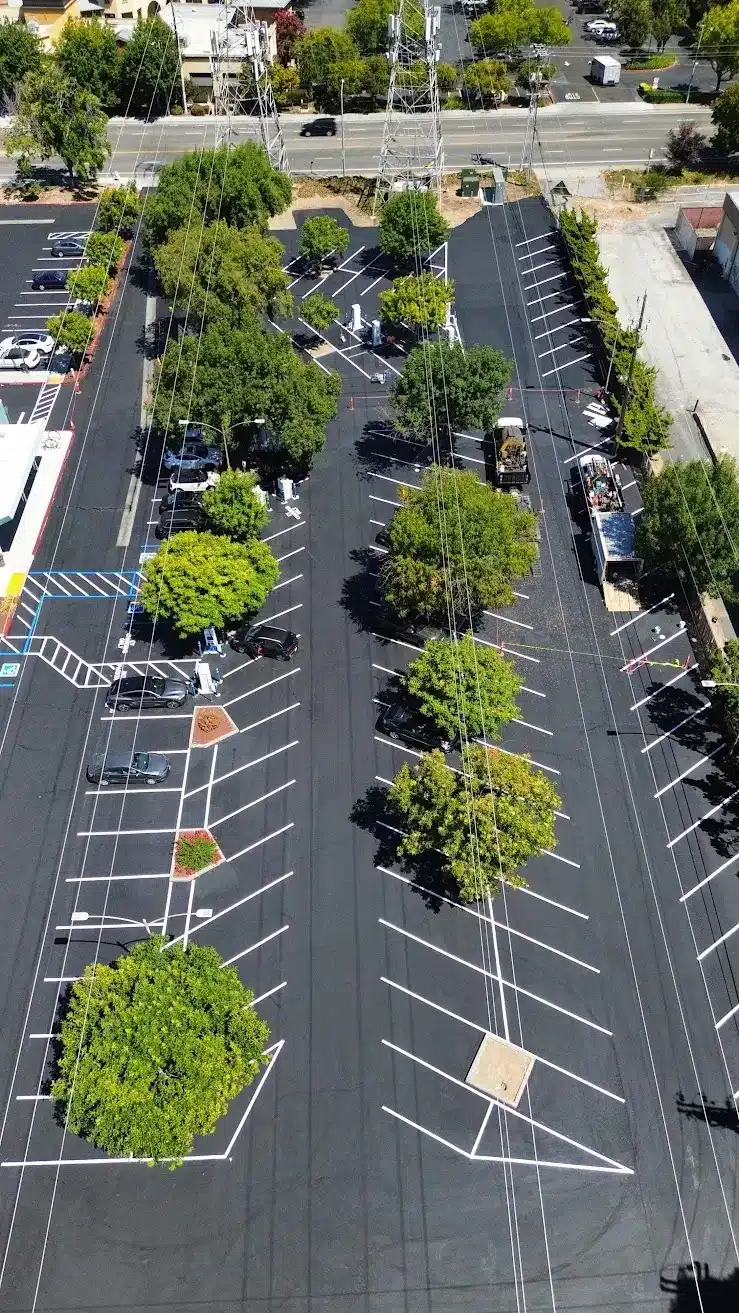
When parking layout, circulation, drainage, and accessibility overlap, parking lot design becomes part of the conversation. Accessibility is not just a paint layer placed on top of the lot. It is connected to how the property is organized.
A Practical ADA Parking Lot Walkthrough
Use this walkthrough as a field check, not as a legal certification.
Start at the public entrance or tenant entrance people actually use. Then walk backward toward the accessible parking area. This reverse path often reveals problems owners miss when they only stand in the parking lot and look toward the building.
Notice whether the entrance is easy to identify. Look at the path leading to it. Check whether pedestrians have a clear route that does not force them through confusing traffic movement. Observe whether curbs, ramps, crossings, pavement transitions, access aisles, and signs work together.
Then look at the accessible parking zone itself. Do not only count spaces. Look at whether the spaces are visible, whether the access aisles are open, whether markings are legible, and whether the surface is stable.
Finally, look at the edges of the system: drainage, nearby cracks, old striping, patched asphalt, signs that have shifted, wheel stops, bollards, planters, stored equipment, shopping carts, trash enclosures, or anything else that may interfere with the intended route.
This kind of walkthrough will not answer every technical question. It will expose the areas most likely to need deeper review.
Treat ADA Review as Property Maintenance, Not Panic
The title of this page asks whether your parking lot is breaking the law. That framing gets attention, but it can also push owners toward the wrong mindset.
Panic is not a maintenance strategy.
A better approach is disciplined review. Identify visible concerns. Avoid making legal conclusions from a quick walkthrough. Do not assume old layouts are still appropriate. Do not treat paint as a substitute for functional access. Do not promise tenants, customers, or stakeholders that a lot is compliant unless that conclusion is supported by qualified review.
An ADA compliant checklist should help property owners see what needs attention before the issue becomes harder to manage.
At We Love Paving, we look at ADA-related parking lot conditions through a practical site-function lens: how people move from parking to the entrance, whether markings and signs support that movement, whether pavement conditions interfere with usability, and whether a property may need closer technical review before small layout issues become larger concerns.