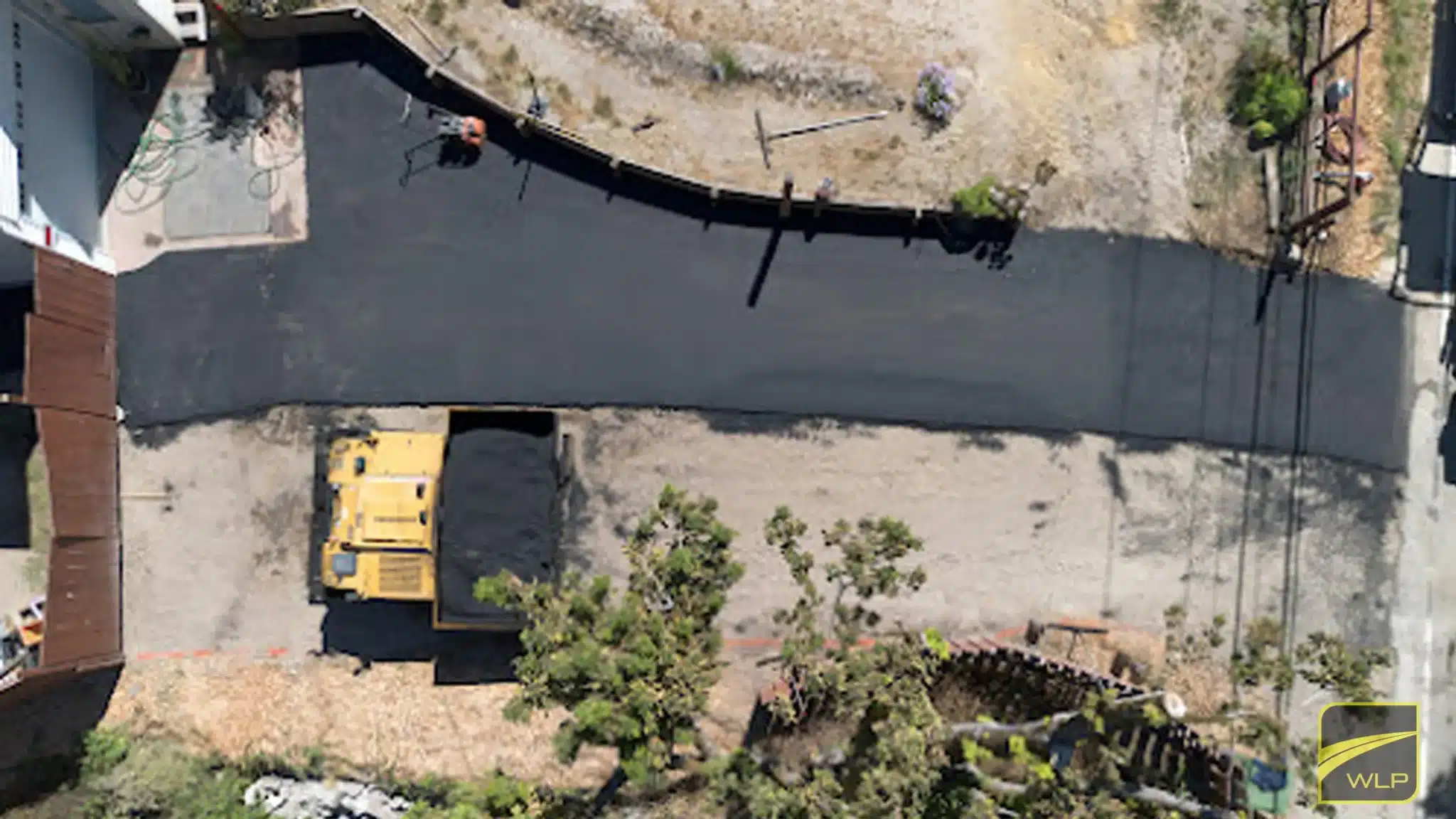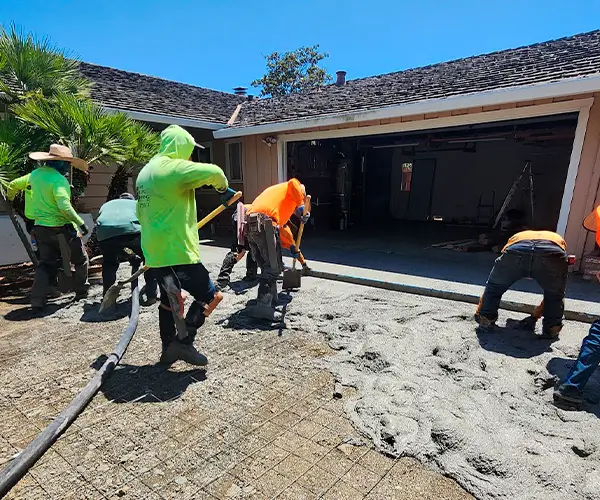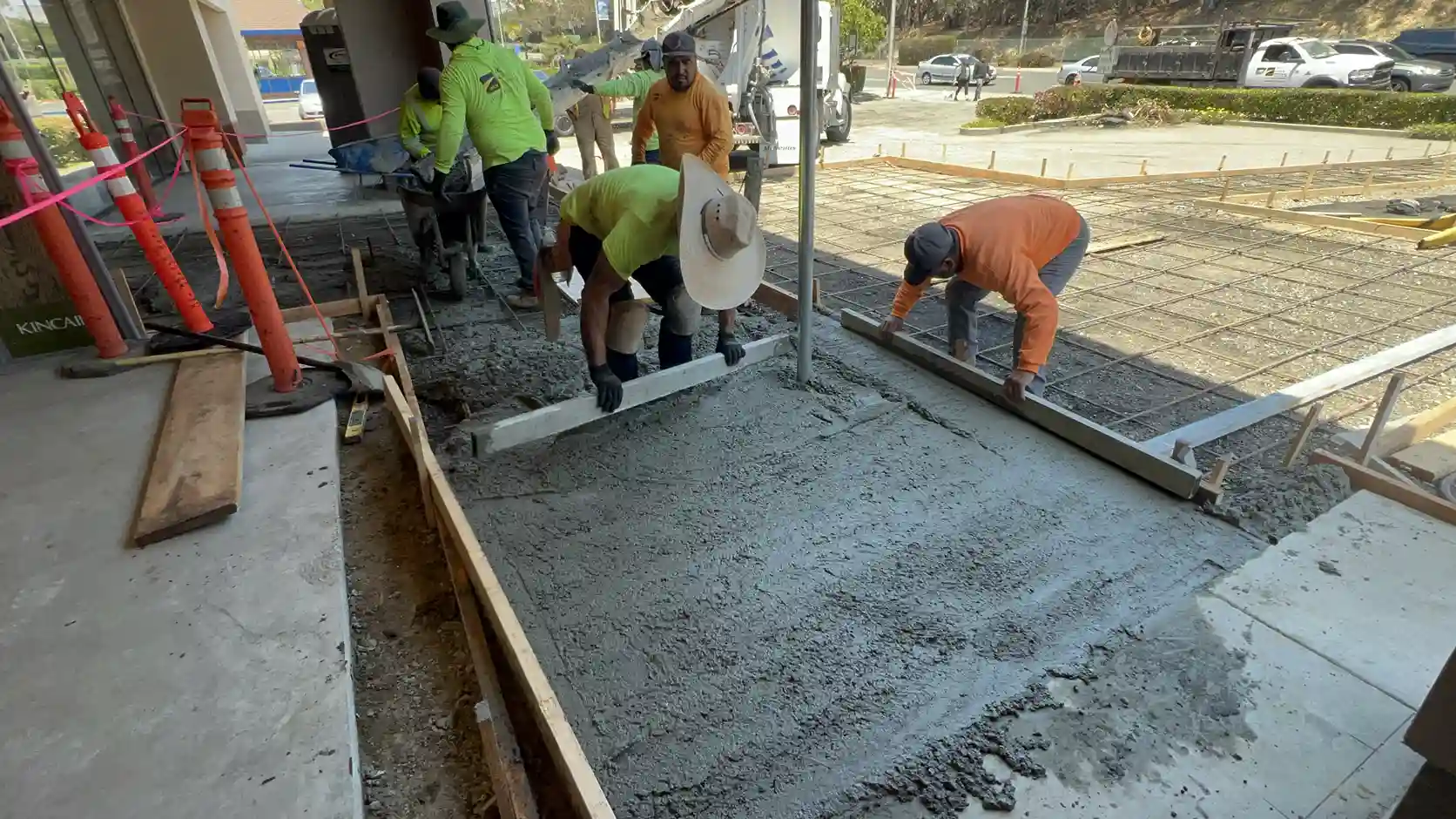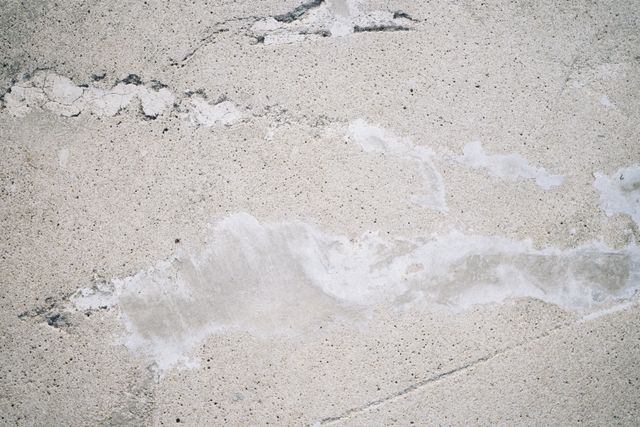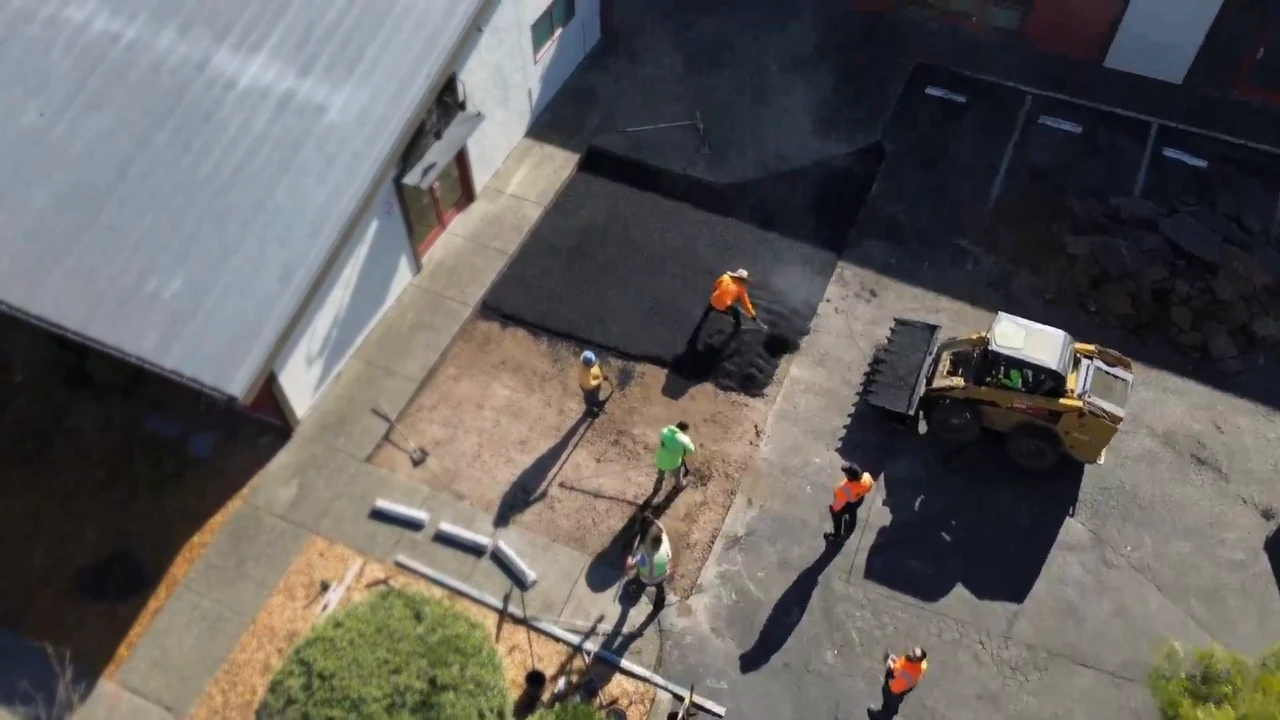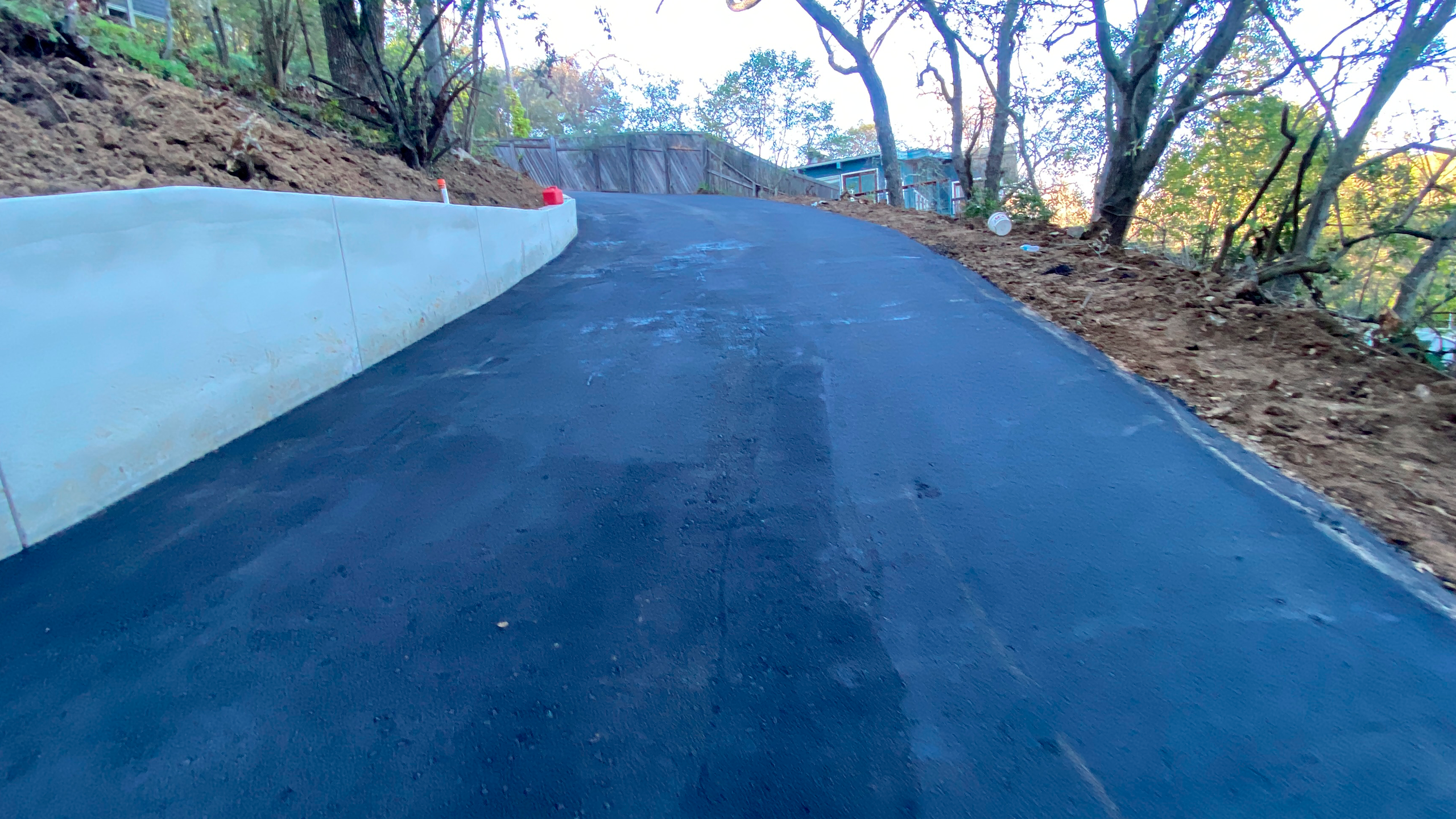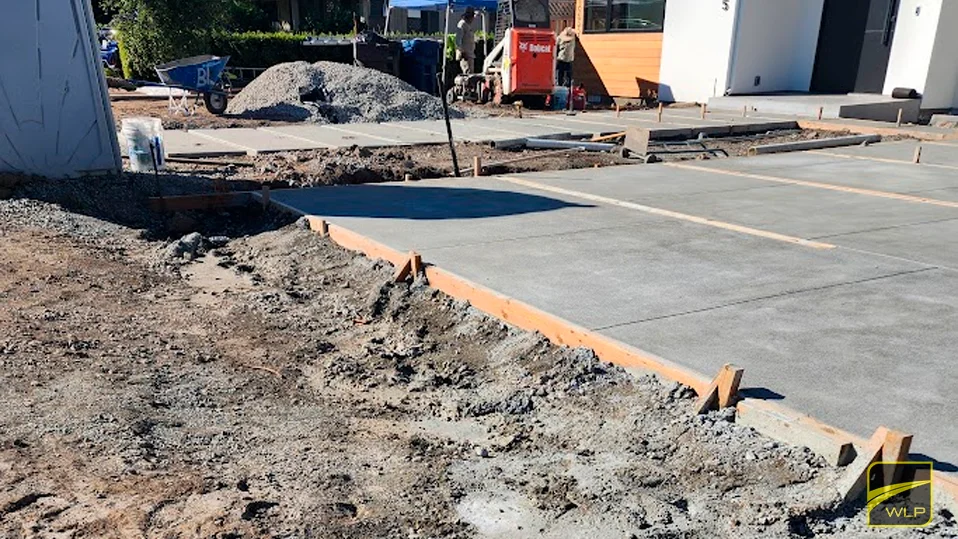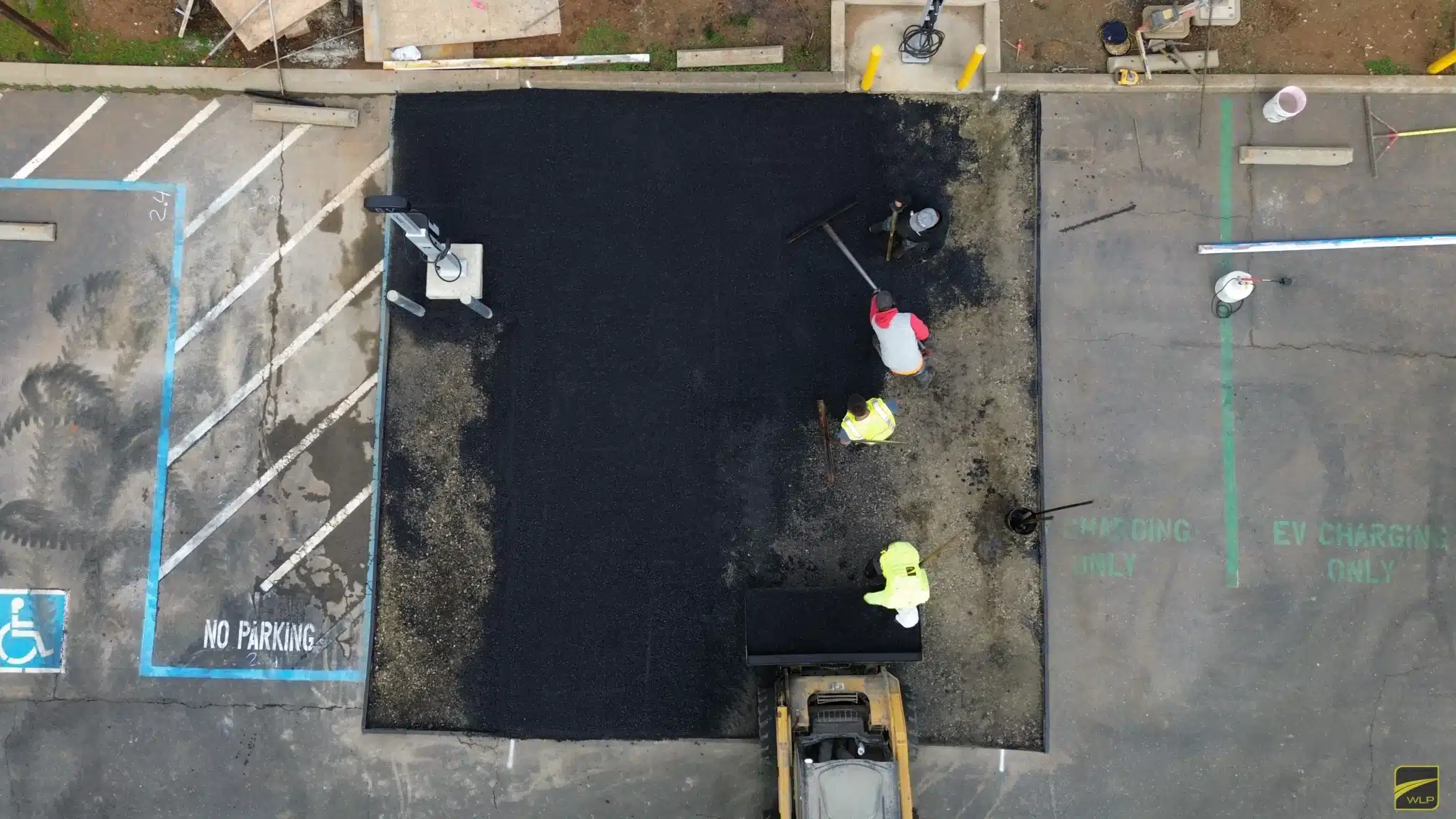
A parking lot does not always age from the center outward. Sometimes the first trouble shows up beside a drain, along a landscaped edge, behind a restaurant tenant, or across a utility trench that was cut years before the current owner took over.
That uneven pattern is the useful part. It gives the property manager a clue.
The phrase parking lot climate and soil impact california sounds broad, but the real issue is local and visible. Northern California parking lots sit through wet winters, dry heat, shaded moisture pockets, clay-influenced soils, older utility work, and repeated commercial traffic. Those forces do not touch every square foot the same way.
A cracked corner near a catch basin is not the same problem as a pale drive aisle baking in full sun. A depression near a trench line is not the same as raveling where delivery vans turn every morning. If those symptoms are grouped together as “asphalt damage,” the repair plan starts too vague.
Start With the Area That Changed First
The first damaged area deserves more attention than the largest damaged area. It often explains the site.
A drive aisle near a storefront may break sooner because every driver turns, brakes, and accelerates through that strip. A back row may stay quiet because it carries less pressure. A low edge beside landscaping may crack sooner because irrigation runoff keeps the base damp even when the weather is dry. A patched trench may settle because the soil below it was compacted differently from the original pavement section.
This is where paving maintenance has to be more than an annual visual check. A useful review asks why one location is aging faster than another.
In an East Bay retail lot after winter rain, the pattern may be obvious: silt marks along a low curb, tire scuffing at the entrance, and cracks widening near the catch basin while the far rows remain stable. Those clues point toward water movement and concentrated traffic, not uniform surface age.
If the first response is simply to patch what looks bad, the same location may return to the budget again.
Rain Makes the Hidden Pattern Easier to See
A dry parking lot can flatter itself. Rain is less polite.
After a storm, the weak parts become easier to separate. Water may sit near a low curb. Debris may collect around a drain. A patch seam may stay dark after the pavement around it dries. A shallow depression may show a ring of sediment that was invisible the day before.
That information should influence the repair conversation. Water near a main drive aisle carries more weight than water in a low-use corner. A damp edge beside an accessible route may need closer review than a wet spot in a remote stall row. A crack cluster fed by runoff is not behaving like ordinary surface wear.
| What appears on the lot | What climate or soil may be influencing | What to review before choosing a repair |
|---|---|---|
| Cracks widening near a catch basin after winter rain | Repeated water movement, soft base conditions, or drainage stress around the structure | Whether water is reaching the pavement edge or collecting below the surface |
| A patch settling along an old utility trench | Different compaction or soil support below the repaired area | Whether the trench line is moving separately from the surrounding pavement |
| Raveling in a sunny drive aisle | Oxidation, dry heat exposure, and repeated tire turning | Whether the surface is aged or losing aggregate under traffic stress |
| Damp shaded edges that dry slowly | Moisture retention from trees, buildings, slope, or poor airflow | Whether drainage or edge support should be corrected before surface work |
| Repeated cracking near landscaped borders | Irrigation runoff, root pressure, or weak pavement support along the edge | Whether water or root movement is undermining the pavement boundary |
The table is not a diagnosis by itself. It keeps the owner from treating every symptom as a paint-over, patch-over, or sealcoat-only problem.
Soil Trouble Usually Arrives Wearing an Asphalt Mask
Soil problems rarely look like soil problems from the surface. They show up as asphalt symptoms.
A dip forms where vehicles do not normally stop. A crack follows a utility cut instead of the traffic lane. A patch separates at the edge but the middle still looks tight. A curbside section keeps breaking while the parking stalls beside it stay in decent shape.
Those details matter because the asphalt may be responding to movement below it.
Moisture-sensitive soil can change after repeated wet and dry cycles. Poorly compacted fill can settle. Utility trenches can behave differently from the untouched pavement around them. Landscaped borders can send water toward unsupported edges. Tree roots may disturb pavement transitions and nearby walkways.
A property manager looking at asphalt over dirt will see the larger principle: pavement performance depends heavily on the support beneath it. Asphalt is not meant to compensate for weak base preparation, trapped moisture, or moving soil.
That is why recurring failure in the same spot should slow the decision. The issue may still call for surface repair, but the location and repeat history should be considered before choosing the scope.
Heat, Shade, and Traffic Create Different Surfaces on the Same Lot
One commercial lot can behave like several smaller pavement environments.
A fully exposed drive aisle may turn gray, dry, and brittle faster than shaded stalls near a building. A loading approach may ravel because vans and box trucks twist their tires in the same place every day. A shaded corner near trees may stay damp and collect organic debris after rain. A front row near a coffee shop may lose surface texture and striping faster because of short-stop customer turnover.
For North Coast paving, damp edges and slow-drying shaded areas may carry more weight in the maintenance plan. Inland or heat-exposed properties may show oxidation earlier, especially across open parking fields and drive aisles with all-day sun. Around East Bay paving sites, a single property may combine both conditions: wet-season runoff near low edges and summer surface brittleness across exposed sections.
A property manager does not need a technical report for every mark in the lot, but the same observations should be tracked consistently:
- where water remains after the rest of the pavement dries;
- which patch edges reopen after rain or heat;
- where turning vehicles grind the surface loose;
- whether cracks follow drains, trenches, curbs, or landscaped edges;
- which areas look worse each season despite small repairs.
That short record can change a budget meeting. It gives ownership something better than “the lot looks bad.” It shows which areas are changing, when they change, and what conditions may be feeding the damage.
Surface Renewal Works Best After the Cause Is Understood
An asphalt overlay can be a strong option when the existing pavement is stable enough to receive a new layer. It is a weaker choice when the lot is still settling, holding water, or breaking from below.
A new surface can cover old symptoms, but it will not make an unstable base behave. If water keeps reaching the same edge, a fresh layer may inherit the old weakness. If a trench line is still moving, the new pavement may eventually reflect that movement. If a loading area is failing because the pavement section is not suited to repeated truck turns, surface renewal alone may underperform.
The repair path should follow the cause.
If the issue is surface oxidation across a structurally steady lot, preservation or overlay may belong in the conversation. If cracks are tied to poor drainage, water control should move up the list. If depressions follow old utility work, the base support may need closer review. If raveling appears only where trucks turn, traffic loading and pavement section matter.
The cost of delaying maintenance becomes sharper when the same climate-driven defect returns. One repair can be routine. The same repair repeating after every wet season or heat cycle is evidence that the plan is chasing symptoms.
Better Timing Comes From Watching the Lot in Two Seasons
Northern California gives owners two useful inspection windows.
Wet months show water behavior: flow paths, ponding, damp seams, drainage stress, debris lines, and soft edges. Dry months show surface behavior: oxidation, raveling, faded texture, brittle areas, and high-sun wear. Neither season tells the whole story alone.
A parking lot reviewed only in summer may hide the water paths that damaged it in February. A lot reviewed only after rain may make every damp mark look urgent. The better read comes from comparing both.
We Love Paving helps commercial owners connect those seasonal observations to practical repair timing. For a retail, office, or mixed-use lot in Northern California, the strongest plan may not be one treatment across the entire property. It may be a targeted sequence: address drainage-fed areas, repair recurring weak spots, preserve stable pavement, and reserve overlay or larger reconstruction for sections that can actually support it.