The lowest paving proposal is usually easy to read because it is short.
One line for asphalt. One line for labor. A clean total at the bottom. No long notes. No uncomfortable exclusions. No explanation of what happens around drains, failed edges, soft areas, business access, or old utility cuts.
That simplicity can feel reassuring when three bids are sitting in front of a property owner. It should not.
The hidden costs of asphalt contractors usually appear in the spaces where the proposal is quiet. A low number may be real, but it may also be built on missing preparation, vague thickness, weak drainage assumptions, limited traffic control, no phased access plan, or a surface treatment placed over pavement that needed repair first.
For Northern California commercial lots, those omissions matter. Wet winters reveal drainage problems. Dry heat exposes brittle surfaces. Clay-influenced soils, utility trenches, and heavy delivery traffic can punish thin or poorly prepared work quickly. A cheap bid is not automatically dishonest. It is incomplete until the owner knows what the number includes and what it leaves for later.

The Proposal Should Explain the Lot, Not Just the Price
A useful asphalt proposal should reflect the property in front of it. A retail lot with front-row raveling should not read the same as an office park drive aisle with slow-draining edges. A small HOA guest lot should not be scoped like a truck-loaded service yard.
If the proposal does not mention the conditions that are visible on-site, the price may be solving a cleaner version of the job than the one the property actually has.
Look at the pavement before reading the bid. Is there cracking near catch basins? Are patch edges opening where old trench lines cross the lot? Is water holding along the curb after rain? Are delivery trucks grinding loose aggregate near the loading approach? Are the worst areas concentrated at entrances, turns, or trash enclosures?
Those details should affect the scope. If they do not appear in the proposal, the owner should ask why.
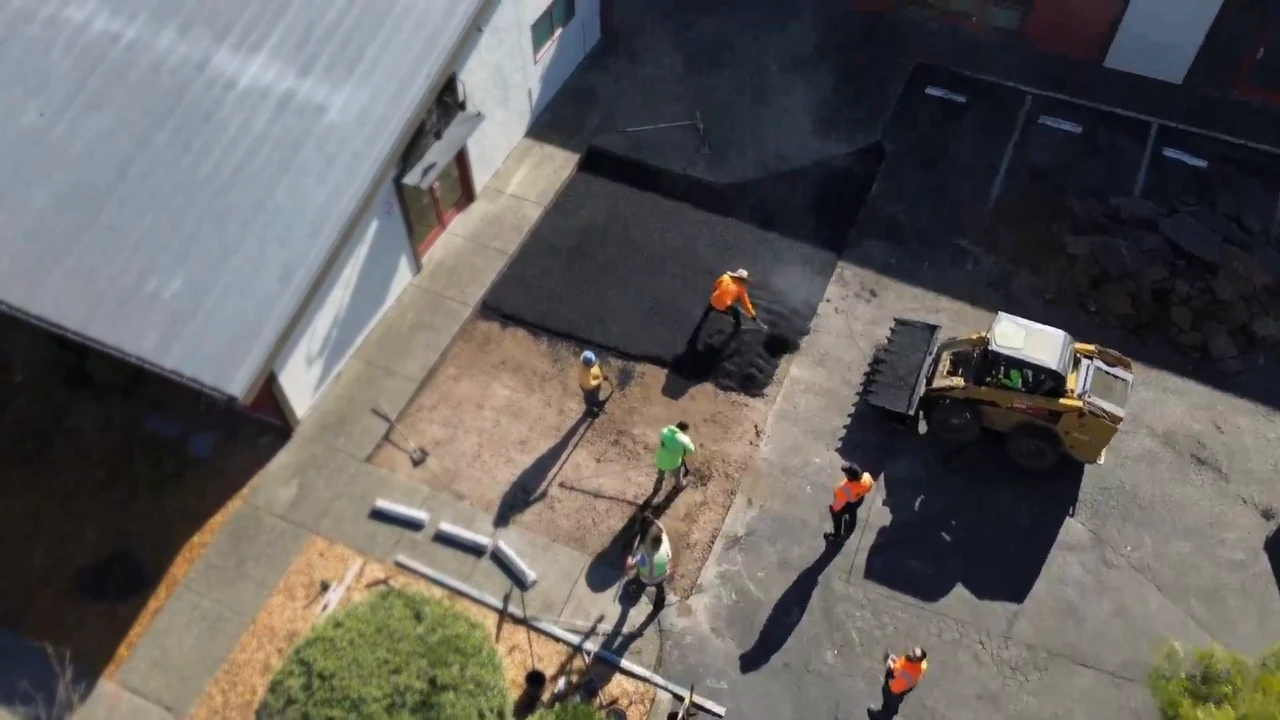
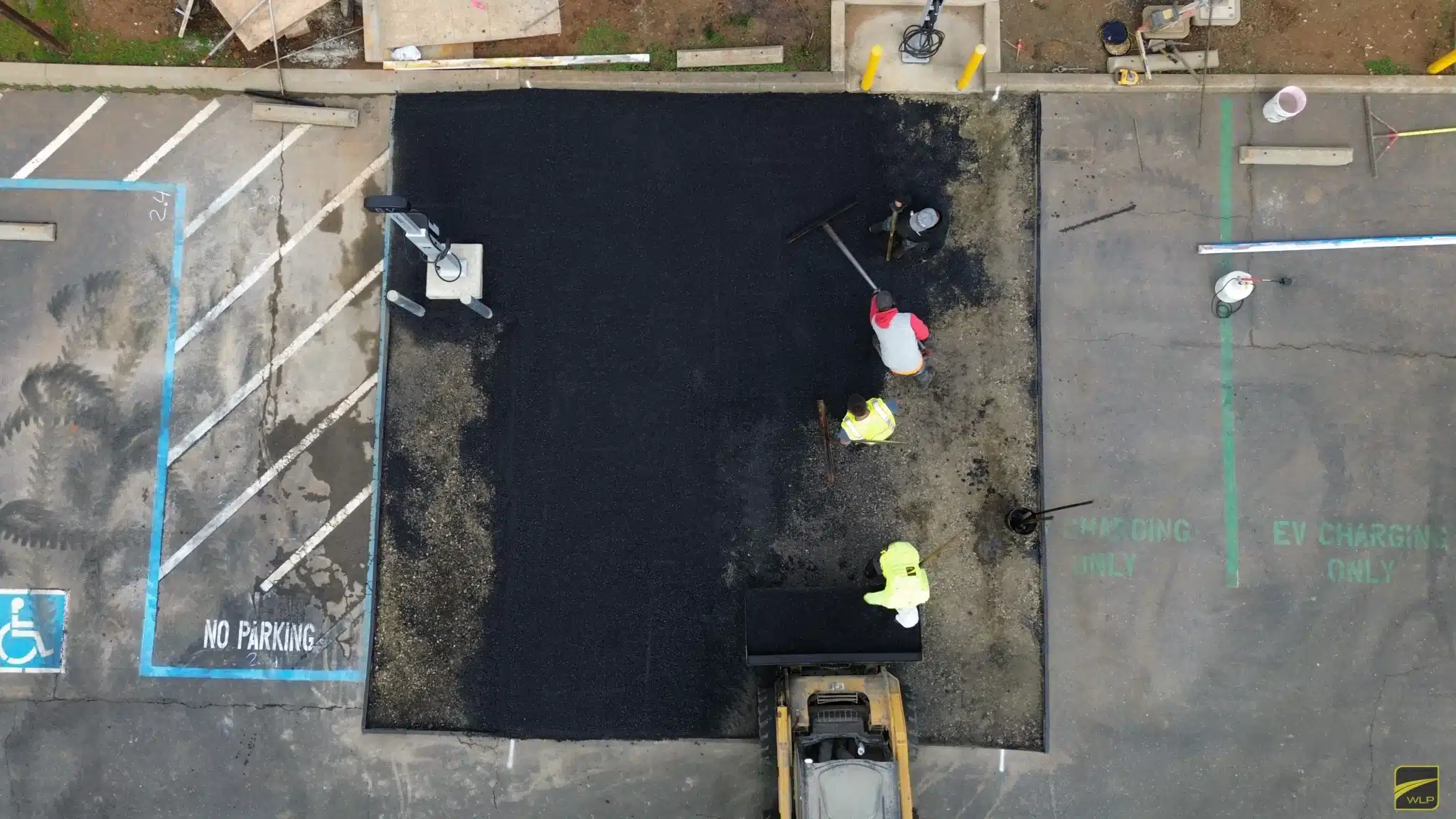
Professional asphalt paving depends on more than placing new material. The preparation, base condition, drainage behavior, edge support, traffic plan, and timing all influence whether the finished surface performs the way the owner expects.
Missing Scope Becomes Someone Else’s Problem
A low bid often wins by narrowing the job quietly. The contractor may not say, “We are excluding the weak base near the drain.” The proposal may simply say “overlay existing asphalt” and leave the owner to discover later that the existing asphalt was not ready for that treatment.
That is where cost shifts rather than disappears.
| Bid language to question | What may be missing | Cost that can appear later |
|---|---|---|
| “Overlay existing surface” | Base failure, alligator cracking, soft spots, drainage correction | Early reflection cracking or removal-and-replace work |
| “Patch damaged areas” | Clear limits, depth, edge cutting, compaction details | Patch separation, repeat potholes, change orders |
| “Sealcoat parking lot” | Crack sealing, oil spot treatment, failed pavement repair | Short-lived appearance improvement |
| “Restripe as existing” | Layout review, accessible stall visibility, traffic flow changes | Confusing circulation or repainting after corrections |
| “Includes labor and material” | Access phasing, tenant coordination, cleanup, haul-off | Disruption, after-hours charges, unfinished details |
A proposal can be short and still fair if the job is simple. But most commercial lots are not simple once traffic, water, base conditions, and business operations are considered.
For a property manager, the hidden cost is often not only the repair invoice. It is the meeting after the work fails, the tenant complaint after access was blocked, or the owner question about why the “approved” scope did not address the visible problem.
Cheap Work Often Starts Before the Crew Arrives
The first shortcut may happen during estimating.
A contractor who does not spend enough time on-site may miss the condition that changes the job. The lot may look passable from the drive aisle, but the edge near the dumpster could be breaking apart. The front stalls may look fine at noon, while early morning shadows reveal standing water near the entrance. A patch may look stable from above but move under repeated tire turning.
A stronger estimate notices the awkward areas.
The owner should expect the contractor to ask how the property operates. Where do delivery vehicles turn? Which entrance must stay open? Where do customers park first? Which areas have been repaired before? Did the same pothole come back after the last rainy season?
A few visible parking lot warning signs should change the conversation before pricing is finalized. If a proposal ignores recurring potholes, drainage marks, unstable patch edges, or heavy-turn zones, the bid may be pricing the surface while skipping the cause.
The Cheapest Bid May Be Expensive in Operations
Commercial paving does not happen in an empty world. Tenants need parking. Customers need access. Residents need notice. Deliveries still arrive. Trash pickup may need a route. Emergency access may need to remain predictable.
A low bid that does not address operations can create costs the owner did not plan for.
For a small retail center, a poorly scheduled paving day can block the same storefronts that depend on morning traffic. At an office property, unclear phasing can push employees into neighboring spaces or leave visitors guessing where to enter. At an HOA, insufficient notice can create complaints before the asphalt is even placed.
A complete proposal should make the disruption visible before the project starts. It does not need to overcomplicate the job, but it should explain the work areas, access expectations, curing or reopening limits, sequence, and responsibilities.
When those details are absent, the property may still pay for them through confusion, temporary signage, tenant credits, emergency rescheduling, or rushed communication.
Base and Drainage Assumptions Decide Whether the Price Is Honest
The cheapest proposal often looks attractive because it treats the asphalt surface as the whole job. The surface is rarely the whole job.
If the base is weak, new asphalt may crack sooner. If drainage pushes water into the same low edge, the repair may fail from below. If the contractor places material over unstable soil, the surface can look new while still carrying the old weakness.
The issue is not theoretical. Northern California lots often combine winter moisture, dry-season shrinkage, older utility cuts, and high-use drive aisles. A price that ignores those conditions may be cheaper because it is solving the wrong version of the project.
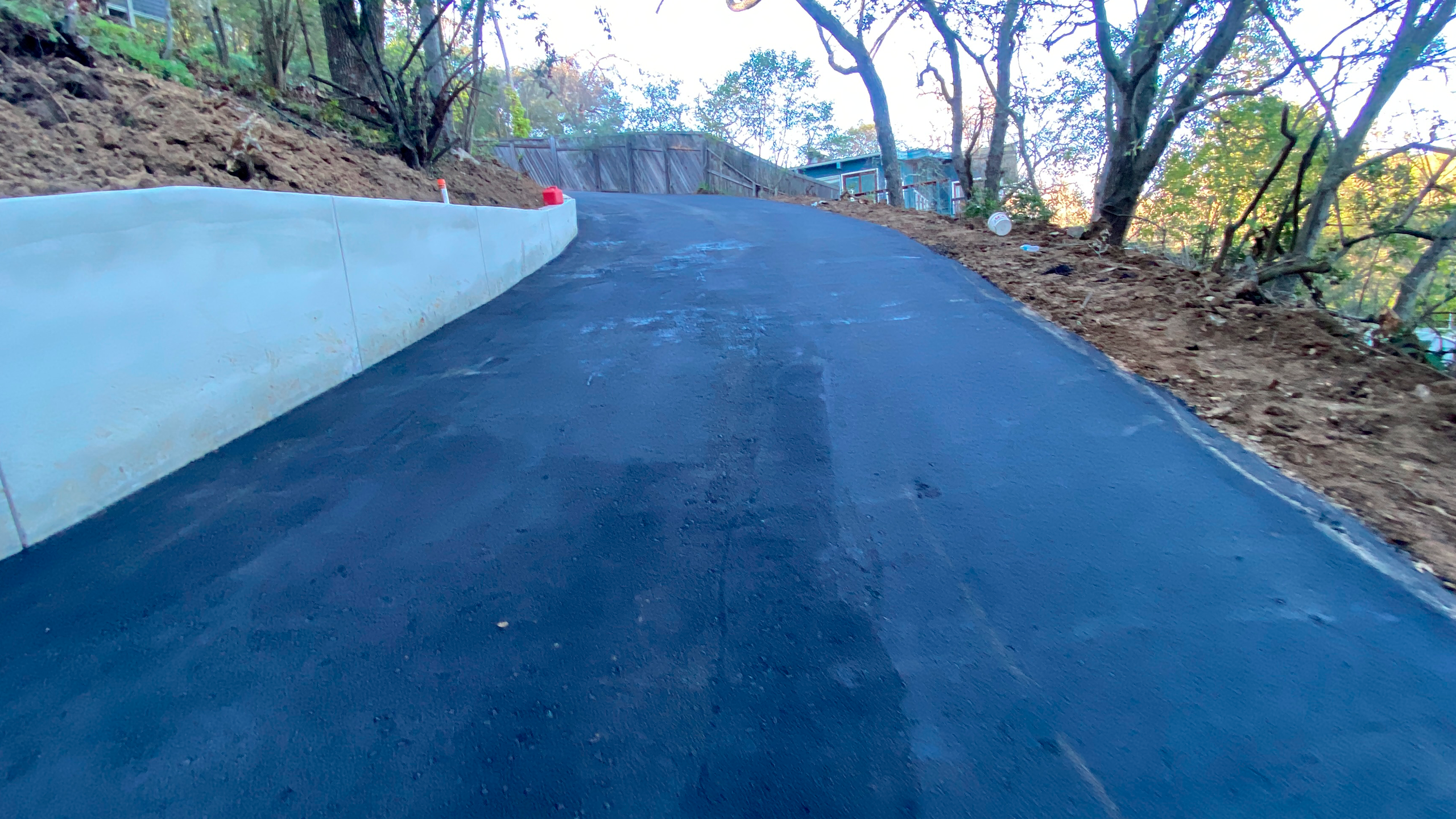
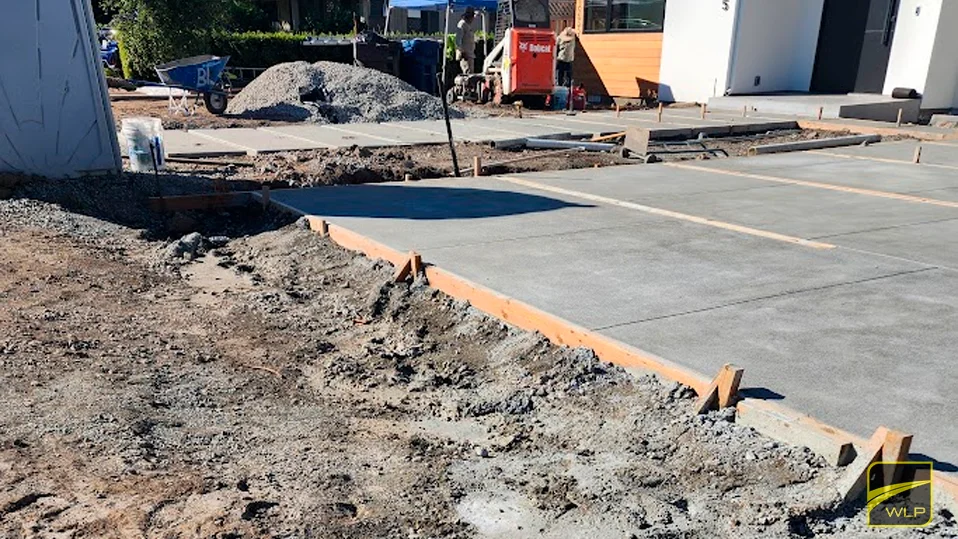
The article on asphalt over dirt points to a basic truth: the pavement depends on what supports it. Owners do not need to become engineers, but they should be suspicious when a contractor cannot explain how the base, grade, water, and traffic will affect the scope.
A short list of questions can expose whether the proposal has substance:
- What existing pavement areas are being removed rather than covered?
- How are soft spots, failed edges, or recurring potholes handled?
- What happens if water is collecting near a drain, curb, or trench line?
- How will traffic, tenants, or residents move during the work?
- What is excluded from the price?
The answer does not need to be fancy. It does need to be specific.
Some “Savings” Are Really Deferred Maintenance
A cheap paving job may not fail immediately. That is what makes it hard to judge.
The surface can look acceptable for a few months. The lot photographs well. The invoice is lower. Then the same weak corner starts cracking. A patch sinks along the old utility line. Water returns to the same edge. Striping wears unevenly because the surface underneath is already moving.
At that point, the owner is not only buying repair. They are buying interruption again.
Parking lot repair becomes more expensive when the same area has to be opened, patched, or corrected after a recent project. The previous low price does not help much when tenants remember that the lot was already under construction last year.
This is where warning signs matter. If a low bid ignores the same defects that were visible before the last repair, the owner is not comparing contractors. They are comparing one proposal that names the problem against another that avoids it.
The Better Bid Is Usually the One You Can Defend
A strong asphalt proposal does not have to be the most expensive. It has to be explainable.
The owner should be able to tell why the scope was chosen, what conditions it addresses, what it excludes, how the project will affect access, and what tradeoffs are being accepted. If a bid cannot be explained to an owner, board, tenant, or asset manager, the low number is doing too much of the persuasion.
The cost of delaying maintenance is often discussed after a pavement problem gets worse. The same logic applies to bid review. Delaying the hard questions until after work starts can turn an apparent savings into a sequence of corrections.
We Love Paving helps Northern California owners compare paving scopes by looking at the site condition, not only the total price. On commercial lots with wet-season drainage marks, patched trench lines, high-turn areas, or tenant access concerns, the responsible bid is the one that explains the work before the property commits to it.