No code in California sets an interval for parking lot restriping. The building code says what the lines must be, not how often to repaint them. In practice a restripe is triggered by one of four events: a sealcoat or overlay, crack sealing across the stalls, lines that fail a visibility check, or a layout change that alters the count.
Contractor guides quote an interval of a year or two, and that is fine as a reminder to go look, but it is not a schedule. A lot in a shaded Peninsula office park and a lot baking in Stockton wear their paint at very different rates, and the year the lot gets sealcoated, the schedule resets whether the calendar agrees or not.
Why Nobody Can Give You a Parking Lot Restriping Schedule
The interval depends on how much traffic crosses the lines and how much sun the paint takes. The code controls neither, and it says nothing about the third variable, what happens to the surface underneath. Waterborne traffic paint on asphalt wears where tires cross it and fades where the sun hits it. Neither happens on a timetable, which is why the honest answer to “how often” is “when one of four things happens”.
Those guide numbers come from averages across lots that have nothing in common. A drive aisle at a grocery store in Sacramento takes far more tire crossings than a back row at a medical office, and the same paint lasts a fraction of the time on the first one. Use the interval as a prompt to inspect, then decide from what the lot shows you.
The Four Events That Trigger a Restripe
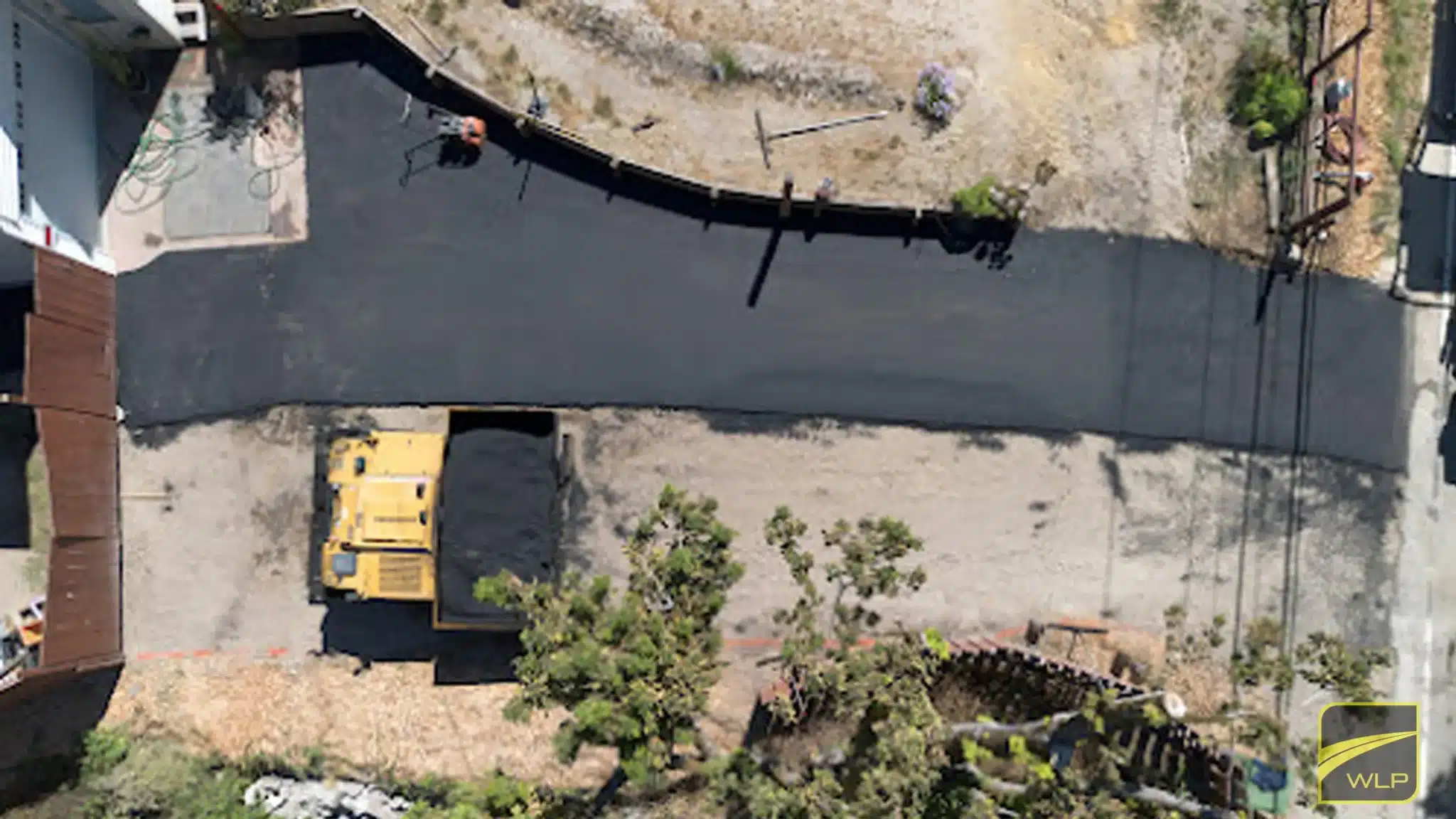
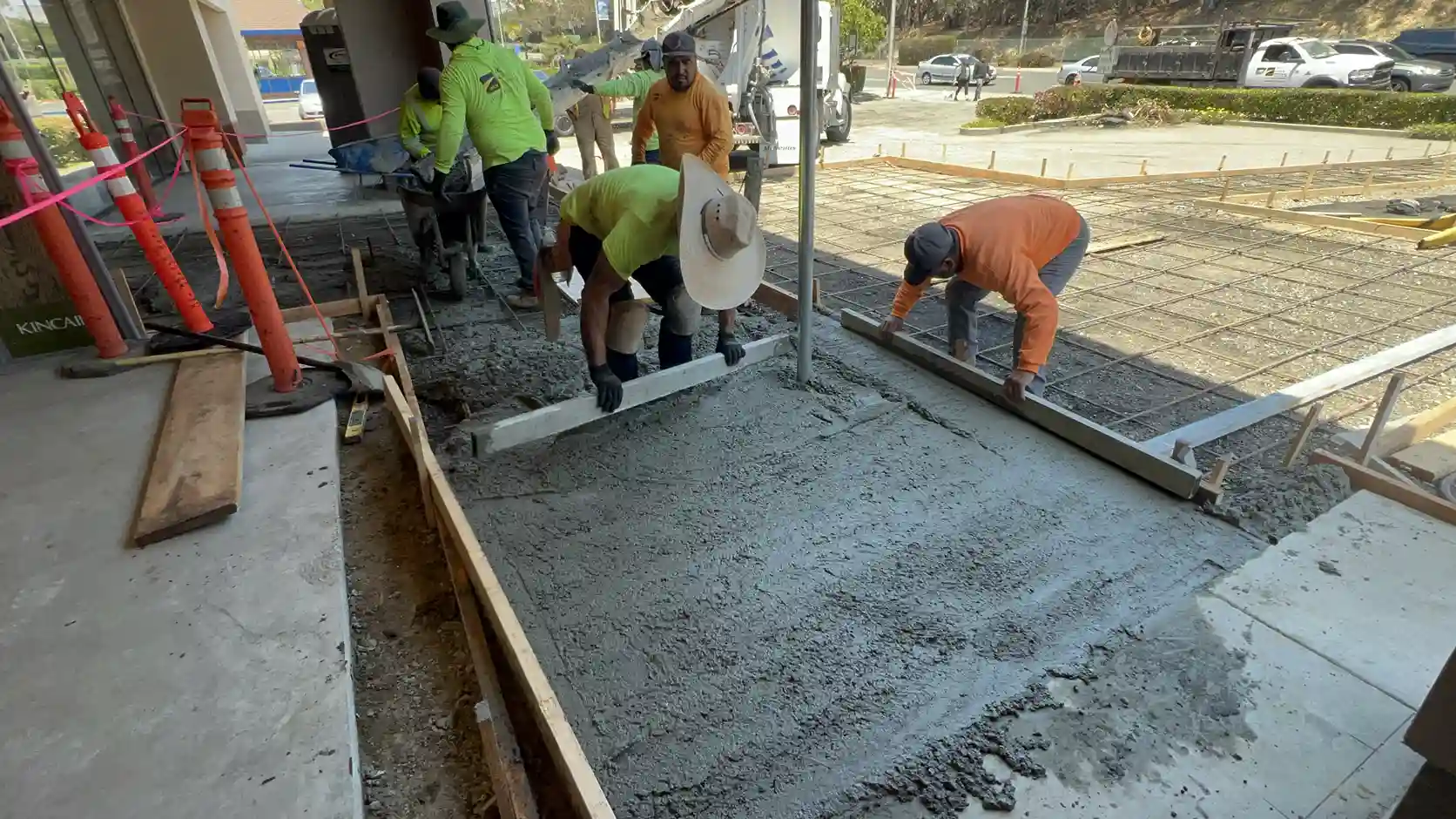
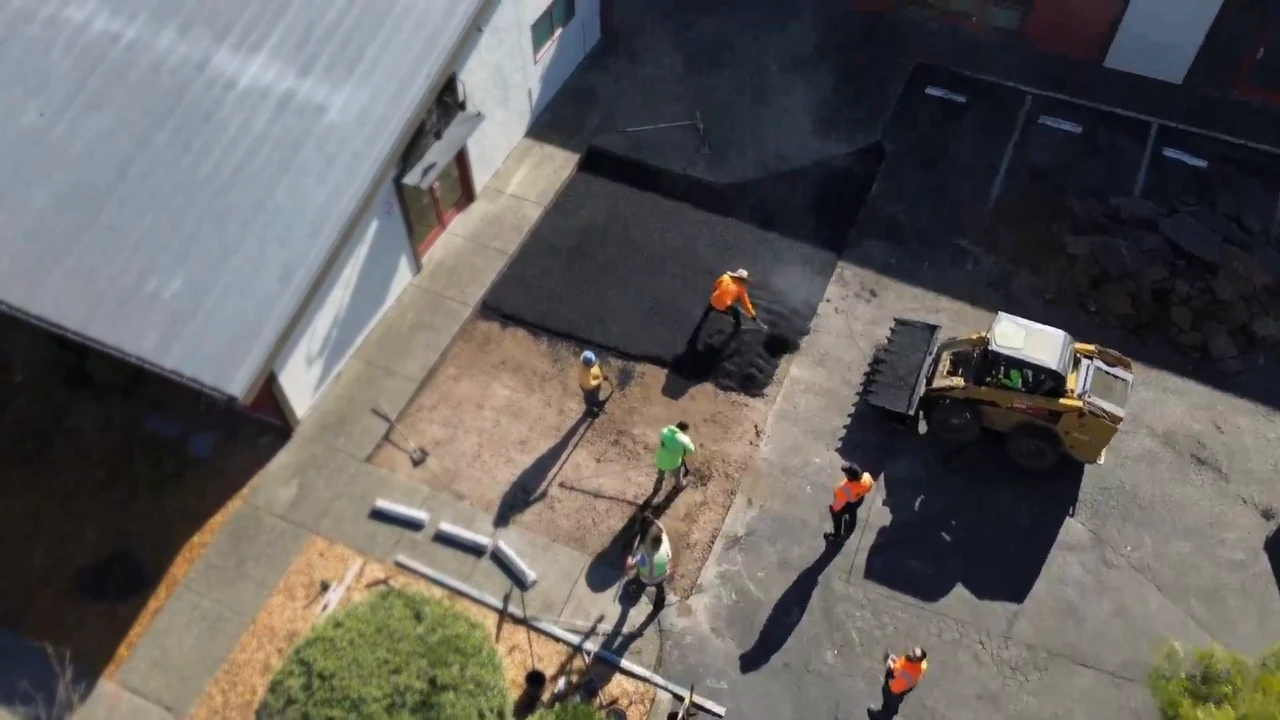
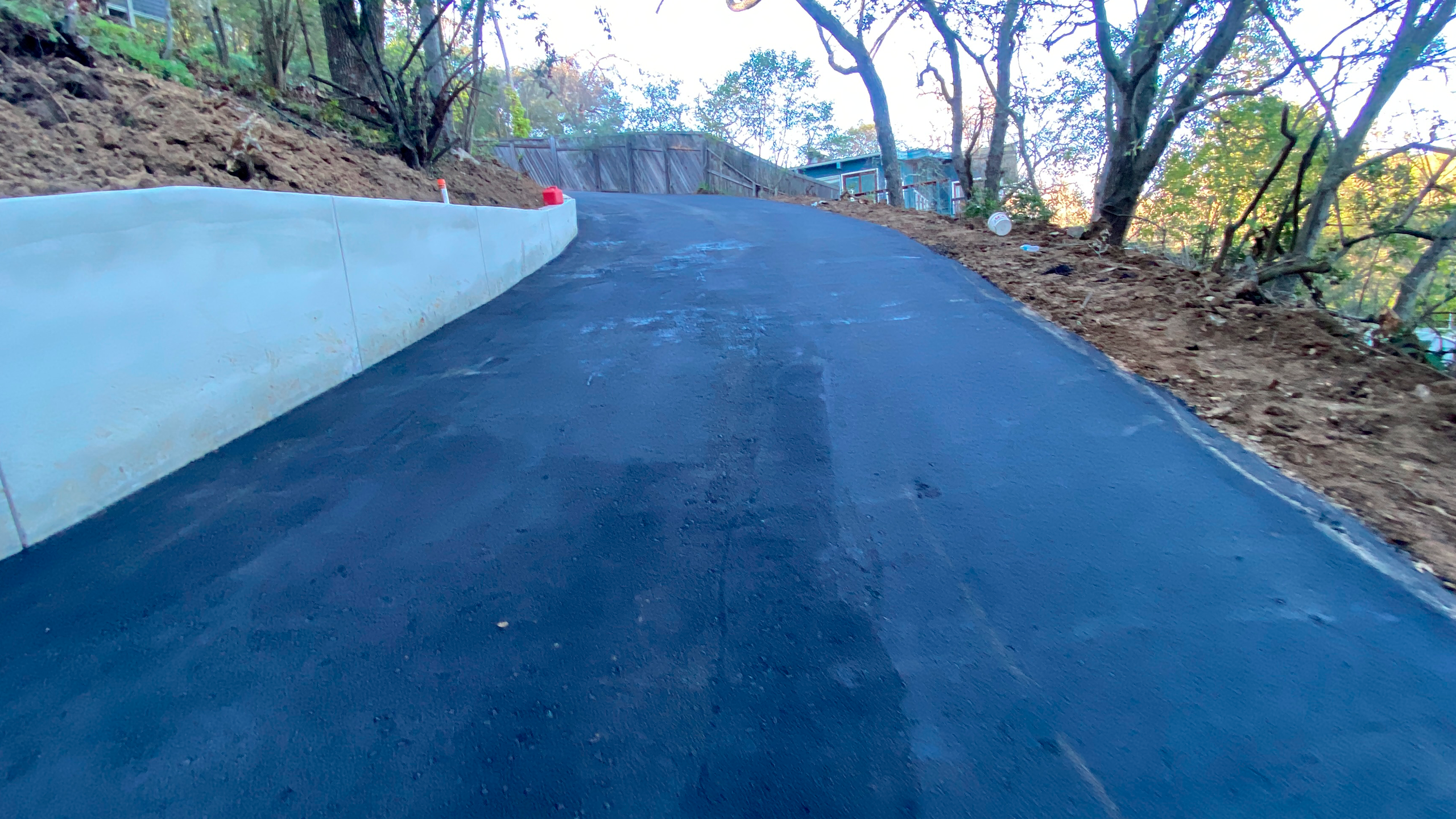
A sealcoat or an overlay is the first and the only automatic one. Sealcoat covers the lines completely; an overlay buries them under new asphalt. Both mean a full restripe, and both mean the striping crew comes last, after the surface has cured. Every lot that gets sealcoated on a regular cycle gets restriped on that same cycle, which for many commercial lots in Northern California means the fall, when the surface is dry and the nights are cool enough for sealer to cure before the first storms.
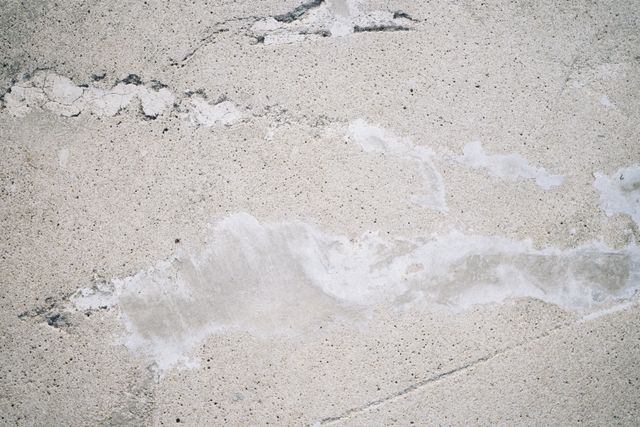
Crack sealing is the second. Hot-applied sealant runs wherever the cracks run, and on a lot with transverse cracks that means straight across the stalls. Black bands over white lines leave stalls that read as unmarked, and on a lot that is not getting sealcoated afterward, those stalls need their lines repainted over the sealant once it has cured.
The visibility check is the third. Stand at the entrance at dusk, or on a foggy morning on the coast, and look down the aisle. If the stall lines, the arrows and the stop bars do not read at driving speed, they have stopped doing their job. This is the check that catches a lot that got its sealcoat cycle skipped for a year.
A layout change is the fourth, and it is the one that turns a repaint into a design job. Adding stalls, converting a row to electric vehicle charging, or moving an entrance changes the total count, and the total count is what the building code uses to set how many accessible spaces the lot owes.
What the Lines Have to Meet in California
The California Building Code, chapter 11B, is stricter than the federal ADA Standards on the accessible stalls, and a restripe has to hit the California numbers. A car space is 216 inches long and 108 inches wide, against a 96 inch minimum under the federal standard. A van space is 144 inches wide. Each has an access aisle at least 60 inches wide running the full length of the space, and the aisle cannot overlap the drive aisle.
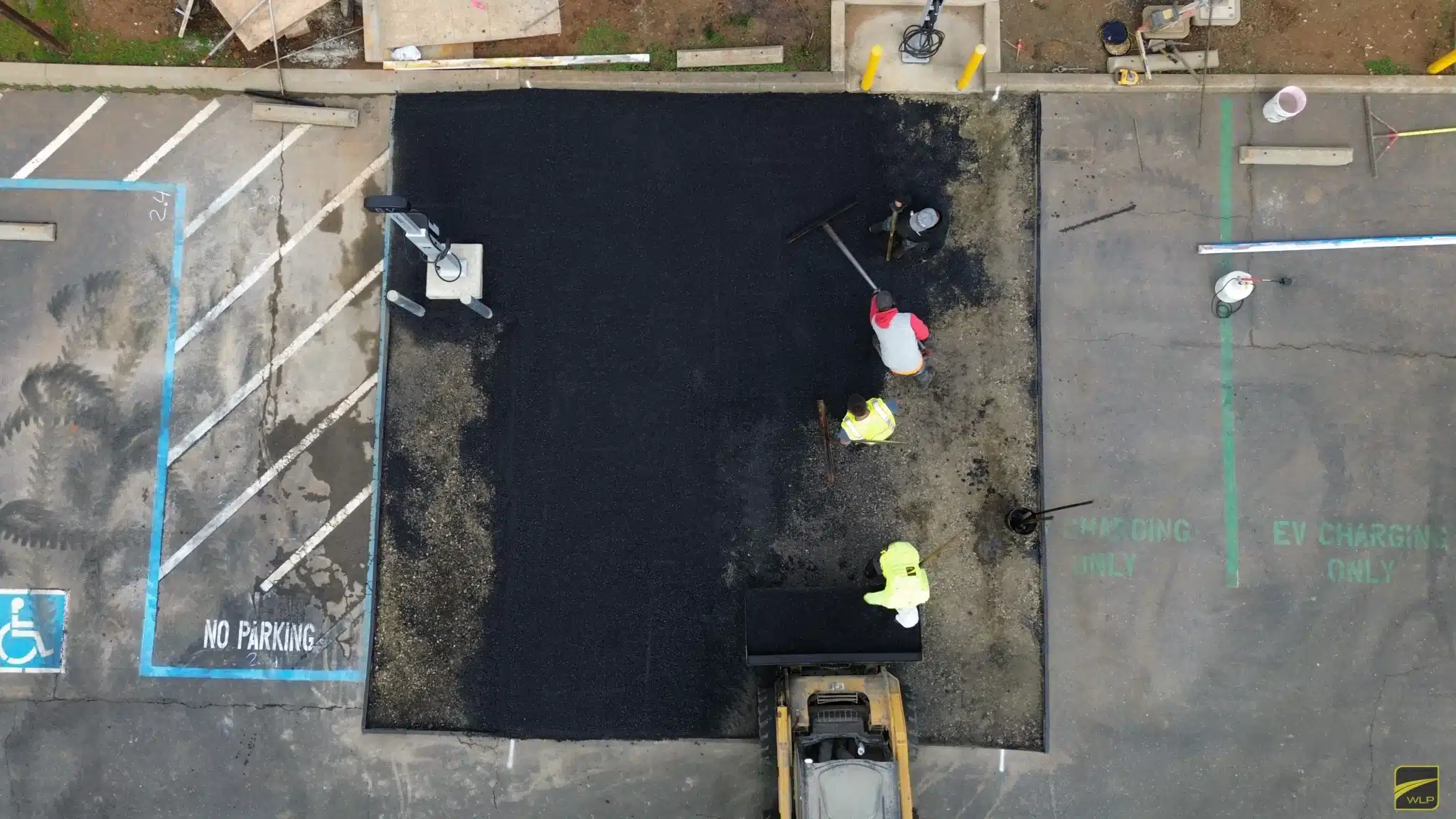
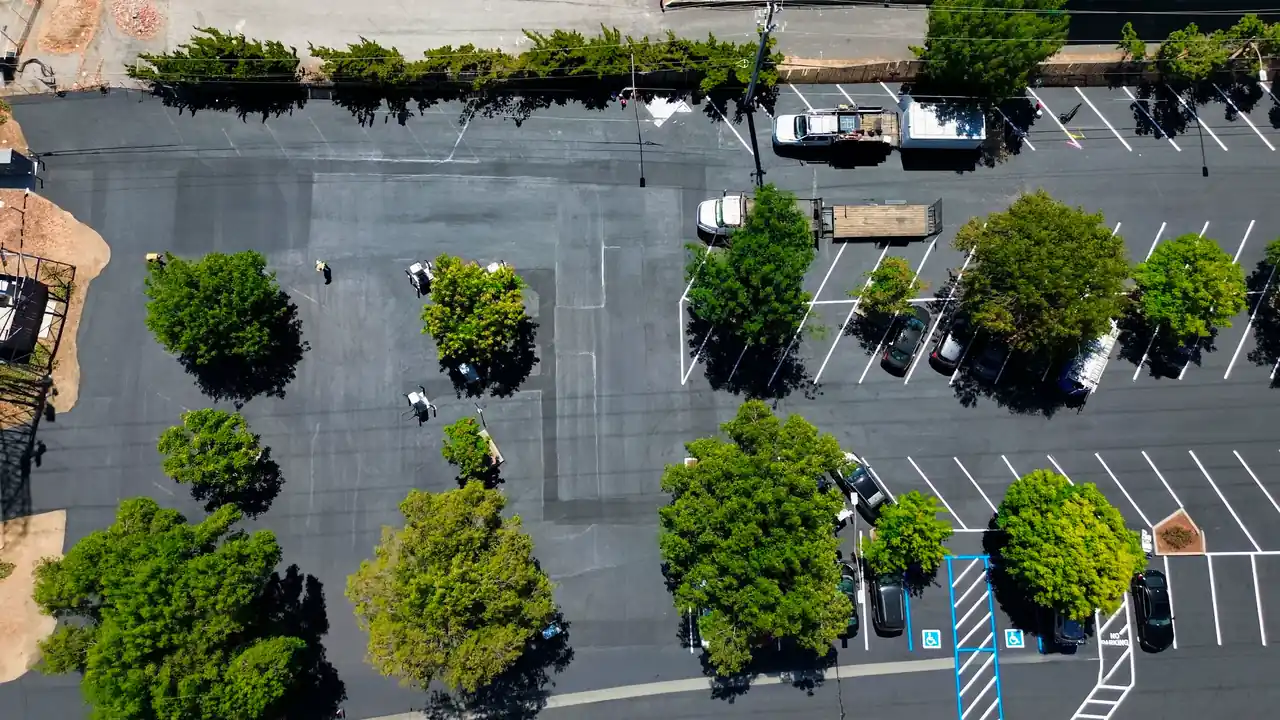
Section 11B-502.3.3 spells out the marking of that access aisle, and it is the part most restripes get wrong. The aisle gets a blue painted borderline around its perimeter and hatched lines inside it, no more than 36 inches on center in a contrasting color, blue or white preferred. The words “NO PARKING” go inside the aisle in white letters at least 12 inches high, placed so they can be read from the drive aisle. A plain white hatch with no border or no lettering is a common sight on older lots and a common finding on an inspection.
How many of those spaces the lot owes comes from table 11B-208.2. A lot with 1 to 25 spaces needs 1 accessible space; 26 to 50 needs 2; 51 to 75 needs 3; 76 to 100 needs 4; 101 to 150 needs 5; 151 to 200 needs 6; 201 to 300 needs 7; 301 to 400 needs 8; 401 to 500 needs 9. From 501 to 1,000 spaces the rule becomes 2 percent of the total. One of every six accessible spaces, or fraction of six, has to be a van space. Each accessible space also carries a sign with its bottom edge at least 60 inches above the ground, and the spaces sit on the shortest accessible route to the entrance.

Repaint or Relayout: What Each Trigger Changes
The table below sorts the four triggers by what they change on the ground and who has to sign off before paint goes down. The numbers come from the same code sections cited above.
| Trigger | What changed | Repaint or relayout | Who signs off |
|---|---|---|---|
| Sealcoat or overlay | Surface covered, lines gone | Repaint the existing layout, unless the count is wrong | Contractor, once the surface has cured |
| Crack sealing across stalls | Black bands over the lines | Repaint the affected stalls | Contractor, after the sealant cures |
| Failed visibility check | Paint worn or faded | Repaint the existing layout | Property manager, after the inspection |
| Layout change (stalls, EV, entrance) | Total count and accessible count | Relayout against table 11B-208.2 | Designer or contractor, with the building department if the scope requires |
When a Restripe Becomes a Relayout
A restripe that only repaints the existing lines is maintenance. A restripe that adds or removes stalls changes the total, and the total drives the accessible count, the van count, the aisle widths and where the spaces sit. Repainting the lines you have does not by itself open a path of travel review; redesigning the lot can.
The California Commission on Disability Access, with the Contractors State License Board, publishes an accessible parking toolkit, and it draws the line this way: alterations of an existing lot by resurfacing or restriping are limited to the actual scope of the work and are not required to comply with the path of travel section, 11B-202.4. The same page says to check with the local building department, which is the right call whenever the count moves.
Two details tend to get missed when a lot is relaid. Wheel stops move with the layout, and a stop left in the old position can sit inside a new access aisle. Electric vehicle charging spaces have their own marking section in the code, 11B-812, so a row converted to chargers is not just a paint color change. Both are cheaper to catch on the plan than after the paint has dried.
Paint and Timing on the Northern California Calendar
Striping goes on last. On a lot that is getting sealcoated, the order is crack seal, sealcoat, cure, stripe, and rushing the last step puts paint on a surface that has not finished releasing water, which shows up as lines that lift or smear within weeks. On the coast, fog and morning moisture stretch drying time; in the Central Valley the heat shortens it but the surface has to be cool enough for the sealer first. The striping crew wants a dry surface and a dry forecast.
Fall is the natural window for the same reason it is the sealcoat window. The lot is dry from the summer and the rains have not started. A lot that gets its sealcoat and stripes in October carries fresh lines through the wet season, when visibility matters most.
What to Ask Before the Striping Crew Shows Up
Five questions separate a striping crew that reads the code from one that copies the old lines. Ask them on the walk-through, before the quote, because the answers decide whether the job is a repaint or a relayout, and that decides the price. A contractor who hesitates on the count question has not opened table 11B-208.2 for your lot, and the lot will get the old count back, right or wrong.
- Is this a repaint of the existing layout, or does the stall count change anywhere?
- If the count changes, who is checking the accessible and van counts against table 11B-208.2?
- Will the access aisles get the blue border and the “NO PARKING” lettering the California code requires?
- How long after the sealcoat or the crack sealing will the crew wait before painting?
- Are the wheel stops and signs being moved with the new layout?
We Love Paving (CSLB Lic. #1049649) restripes commercial lots across Northern California and checks the count before the first stall goes down. Call (408) 418-2901 or ask for a free estimate that starts with the count.