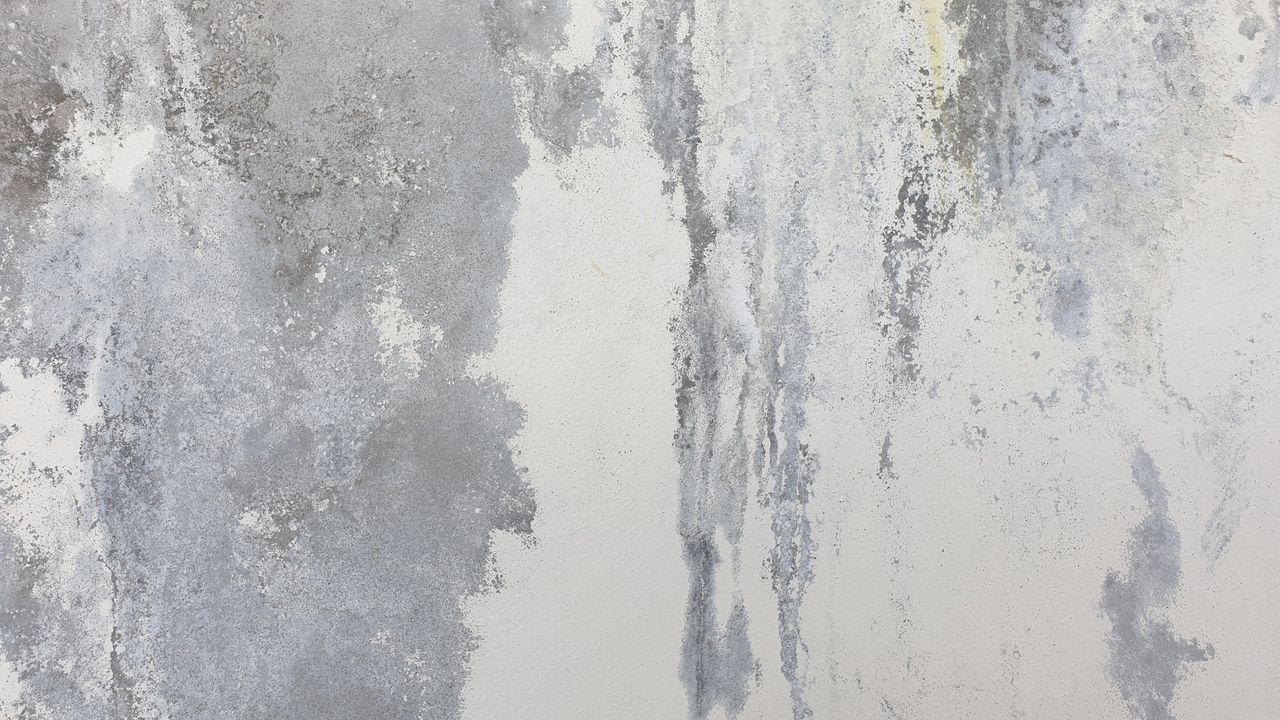
White powder or crystalline residue on concrete is often dismissed as a cosmetic issue, but the pattern can reveal more than the stain itself. Efflorescence forms when moisture moves through concrete, dissolves soluble salts, and leaves those salts behind as the water evaporates.
For commercial properties in California, the useful question is not simply how to remove the white residue. Property managers should also ask where the moisture is coming from, why it is moving through that part of the concrete, and whether the same condition is likely to return.
That distinction matters because cleaning can improve appearance without correcting the condition that produced the deposit. Looking at the surrounding slab, drainage, joints, cracks, irrigation, and adjacent pavement can provide a much clearer picture of what is happening.
What Is Concrete Efflorescence?
Concrete efflorescence is a white, powdery or crystalline deposit that forms when water dissolves soluble salts inside concrete, carries them toward the surface, and then evaporates. The water disappears, but the salts remain visible. On exterior slabs, sidewalks, curbs, loading areas, and parking-lot concrete, the deposit itself may be superficial, while its location and recurrence can provide useful clues about how moisture is moving through the concrete.
The process requires three things: soluble salts, moisture, and a path that allows that moisture to reach a surface where evaporation can occur.
That is why efflorescence often appears along joints, slab edges, cracks, walls, curbs, or other areas where moisture movement is concentrated. The white material is the visible result of the process, not necessarily the root problem.
A single light deposit and a recurring band of efflorescence should therefore not be interpreted in exactly the same way. The second condition gives a property manager more information because it shows that the same moisture route may still be active.
Why Does Efflorescence Form on Concrete?
Efflorescence forms because soluble salts need water to move through concrete and reach the surface. That moisture can come from the concrete mixture, rainfall, irrigation, adjacent soil, groundwater, drainage problems, or water entering through cracks and joints. Caltrans concrete guidance also recognizes that impurities in mixing water can contribute to efflorescence and staining, so the cause should not automatically be blamed on rain or external moisture alone.
This is particularly relevant when evaluating relatively new concrete. Moisture and soluble material may already be present within the slab, while exterior conditions determine where and how quickly that moisture escapes.
Older concrete can tell a different story. A new deposit appearing years after installation may justify looking for a change in the surrounding environment: an irrigation adjustment, a blocked drain, ponding water, damaged joint, new crack, landscaping modification, or another source that changed how moisture reaches the slab.
At a commercial property, the location of the residue can be as useful as the residue itself. A random isolated patch means something different from a repeated line along a joint or an area directly below a drainage path.
Why Does Efflorescence Keep Coming Back?
If efflorescence returns after cleaning, the visible deposit was removed but the moisture path likely remains. Repeated appearance on the same slab edge, joint, wall base, curb, or drainage zone is more informative than a one-time deposit. On Northern California commercial sites, recurring moisture can be associated with wet-season exposure, irrigation, drainage patterns, trapped water, or a crack or joint that repeatedly supplies moisture to the same location.
That is why repeated cleaning without observing the surrounding site can become an endless maintenance cycle.
WLP’s field operations perspective is to look at the pavement system around the stain, not only the stained surface. Where does water collect? Does runoff cross the slab? Is irrigation reaching the concrete? Does the deposit follow a joint? Is the adjacent asphalt or landscaping directing moisture toward that area?
Those observations often provide better diagnostic information than simply asking which cleaner removes the residue fastest.
Recurrence is therefore a signal to investigate the path before escalating the treatment.
Is Efflorescence Damaging the Concrete?
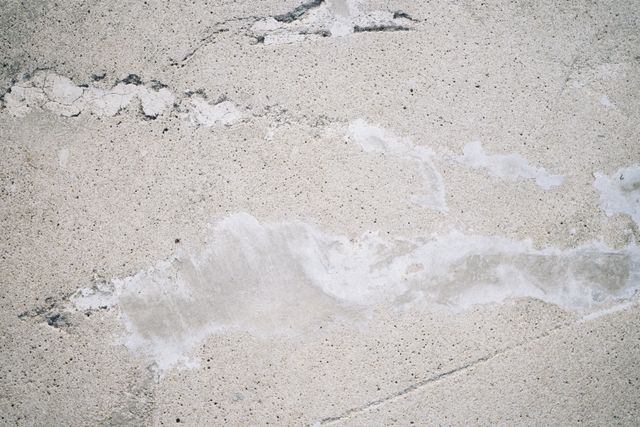
Efflorescence does not automatically mean the concrete is structurally failing. A light white deposit can remain primarily cosmetic when the surrounding surface is sound and there is no scaling, spalling, significant cracking, rust staining, or visible breakdown. The concern increases when the deposit is persistent and appears together with other deterioration. The condition should therefore be evaluated as part of a pattern rather than judged by color alone.
California transportation inspection guidance offers useful context. Caltrans identifies efflorescence and rust staining as observable concrete conditions and distinguishes relatively simple white surface deposits from heavier buildup associated with rust staining.
That inspection framework is not a parking-lot standard, and it should not be treated as one. Its value is diagnostic: a clean white deposit and a deposit accompanied by corrosion-related staining do not tell the same story.
Property managers should look for accompanying conditions such as cracking, scaling, spalling, exposed reinforcement, rusty discoloration, or changes in the surface texture.
If those signs are absent, the issue may remain primarily one of appearance and moisture movement. When several appear together, the concrete deserves a closer evaluation before the site is treated cosmetically.
How Should Efflorescence Be Removed?
Efflorescence removal should begin with the least aggressive method capable of removing the deposit without unnecessarily altering the concrete surface. Light deposits may respond to dry brushing, controlled rinsing, or basic surface cleaning, while harder deposits can require a more specialized treatment. Removal should never be confused with diagnosis: if moisture continues carrying salts to the surface, the white material can return even after the concrete initially looks clean.
This is also why aggressive cleaning should not be the automatic first response.
A method that changes surface texture, damages the cement paste, or leaves another chemical problem behind can create a larger maintenance issue than the original deposit.
Before escalating treatment, determine whether the material is actually efflorescence and observe whether the surrounding concrete is intact.
Then watch what happens after cleaning.
If the deposit does not return, the condition may have been temporary. If it begins forming again in the same location, the maintenance question changes from ‘How do we remove it?’ to ‘Where is the water coming from?’
That second question is usually more valuable.
How Can Efflorescence Be Prevented?
Preventing efflorescence means reducing the conditions that allow water to dissolve salts and carry them toward the concrete surface. On existing commercial sites, that usually requires looking beyond coatings and reviewing drainage, irrigation overspray, cracks, joints, slab edges, surrounding landscaping, and areas where water repeatedly ponds. For new concrete, materials, placement, curing, drainage design, and moisture management all influence how the finished slab behaves.
The goal is not to make concrete completely isolated from water. Exterior pavement operates in an environment where moisture is unavoidable.
The practical goal is to prevent unnecessary or concentrated water movement through the slab.
That can mean correcting a drainage pattern, addressing a damaged joint, changing irrigation exposure, evaluating recurring cracks, or identifying another condition that keeps feeding moisture into the same area.
Mixed-surface commercial properties also need different maintenance strategies for different materials. Efflorescence is a concrete moisture-and-salt issue, while asphalt protection addresses a different pavement system and different deterioration mechanisms.

When Is Cleaning Enough – and When Should the Concrete Be Evaluated?
Cleaning may be enough when the efflorescence is light, isolated, does not continue returning, and the surrounding concrete remains sound. Evaluation becomes more useful when the deposit repeatedly reappears, follows a crack or joint, develops beside standing water, or occurs with scaling, spalling, rust
staining, or other visible deterioration. For property managers, the decision should be based on the pattern and accompanying conditions – not simply on how white the surface looks.
A practical inspection begins by documenting the location before cleaning.
Then look at the same area after rainfall, irrigation, washing, or another moisture event. If the same strip or patch becomes active again, the site is providing evidence about the moisture route.
- Also inspect what surrounds the concrete.
- Parking-lot drainage
- adjacent asphalt
- curbs
- planting areas
- downspouts
- joints
All of these elements can influence where water collects and where it eventually moves.
This broader view is where contractor experience becomes more valuable than a cleaning-only approach. A pavement system should be read as a connected environment.
Removing the visible salts may be part of the solution, but the real maintenance decision comes from understanding why they appeared there in the first place.
Commercial Property Maintenance
Efflorescence is easier to manage when concrete and surrounding pavement are evaluated as parts of the same property instead of as isolated surfaces. If your commercial site combines concrete flatwork with asphalt parking areas, each material should have its own maintenance strategy. For asphalt sections that need a planned preservation approach, explore We Love Paving commercial sealcoating services for California properties.