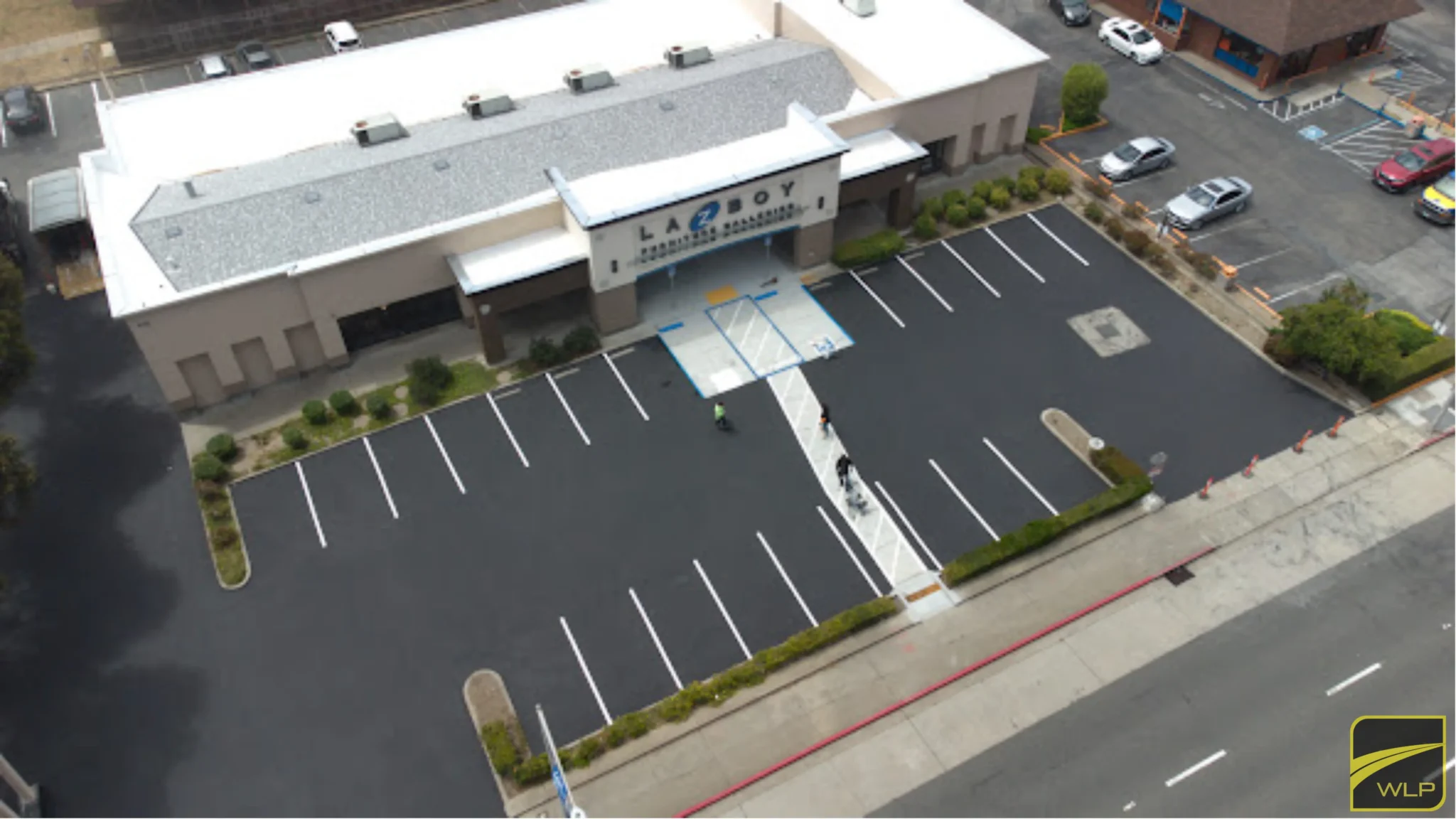
Commercial property owners across California face an evolving market where exterior accessibility dictates both operational safety and overall business value. The Americans with Disabilities Act (ADA) establishes mandatory standards for public accommodations, ensuring equal access to commercial parking lots, walkways, and building entrances. For property managers in Bay Area and Central Valley commercial centers, meeting these standards creates an inviting environment while aligning property management with responsible business practices.
Beyond ethical considerations, maintaining fully accessible exterior pathways directly strengthens commercial performance. Commercial facilities that address slope gradients, stall dimensions, and path-of-travel obstacles eliminate physical friction for visitors using mobility equipment. Upgrading exterior infrastructure establishes an operational standard that preserves physical assets and ensures every customer accesses the property safely.
The Ethical Imperative
ADA compliance isn’t merely a legal obligation; it embodies the ethical responsibility of businesses to uphold the civil rights of individuals with disabilities. Ensuring that your business is accessible to everyone, irrespective of their physical or cognitive abilities, reflects a commitment to inclusivity and respect for human dignity.
Legal Obligations and Financial Implications
Addressing accessibility barriers helps commercial property owners maintain usable parking areas and routes to building entrances. When problems remain unresolved, owners may face corrective work, legal expenses, and other consequences depending on the circumstances. Our guide to penalties and costs associated with ADA violations explains these risks in more detail.
Eligible businesses may also qualify for federal tax incentives for certain accessibility improvements. The Section 44 Disabled Access Credit and Section 190 barrier-removal deduction have specific eligibility and expense requirements. Property owners should confirm qualifying costs with a tax professional before including these incentives in a project budget.
| Planning Decision | What It Can Help With | What to Verify |
|---|---|---|
| Planning Decision Coordinate accessibility work with paving or striping | What It Can Help With Can reduce duplicate mobilizations and help avoid reopening recently completed areas. | What to Verify Actual savings depend on existing conditions, drainage, layout, sequencing, and project scope. |
| Planning Decision Potentially Eligible Accessibility Expenses | What It Can Help With Some project expenses may be eligible for federal tax benefits. | What to Verify Eligibility and allowable expenses vary. Review current IRS guidance with a tax professional before budgeting. |
| Planning Decision Accessible Parking, Access Aisles, and Routes | What It Can Help With Can make arrival and movement through the site easier for customers, employees, and visitors. | What to Verify This alone does not establish site compliance or guarantee more visits or revenue. |
| Planning Decision Routine Maintenance and Visual Checks | What It Can Help With Can reveal faded markings, ponding, cracks, or obstructions before they affect use. | What to Verify Maintenance is not a CASp evaluation, a code determination, or legal advice. |
Expanding Market Reach and the Curb Cut Effect
The “Curb Cut Effect” describes how accessibility improvements can benefit people beyond their original intended users. Curb ramps and clear, accessible routes may help wheelchair users, older visitors, people pushing strollers, and workers moving delivery carts. For retail plazas and office properties, reducing physical barriers can improve the arrival experience and make the site easier to navigate. These benefits support usability, but they do not establish a guaranteed increase in customers or revenue.
Enhanced Reputation and Customer Loyalty
ADA compliance goes beyond regulatory requirements; it cultivates goodwill and strengthens brand reputation. Businesses that prioritize accessibility signal their commitment to diversity and inclusivity, resonating with consumers who value social responsibility. Moreover, individuals with disabilities and their networks are more likely to patronize businesses that prioritize their needs, fostering long-term relationships and positive word-of-mouth marketing.
Business Efficiency and Innovation
ADA compliance isn’t just about meeting minimum standards; it drives innovation and operational efficiency. Implementing accessible features such as automatic doors, wider aisles, and inclusive restroom facilities not only benefits individuals with disabilities but also enhance the overall customer experience. Businesses that prioritize accessibility foster innovation, as they seek creative solutions to accommodate diverse needs and preferences.
California Title 24 Technical Specifications
Connecting Accessibility Benefits to Site Requirements
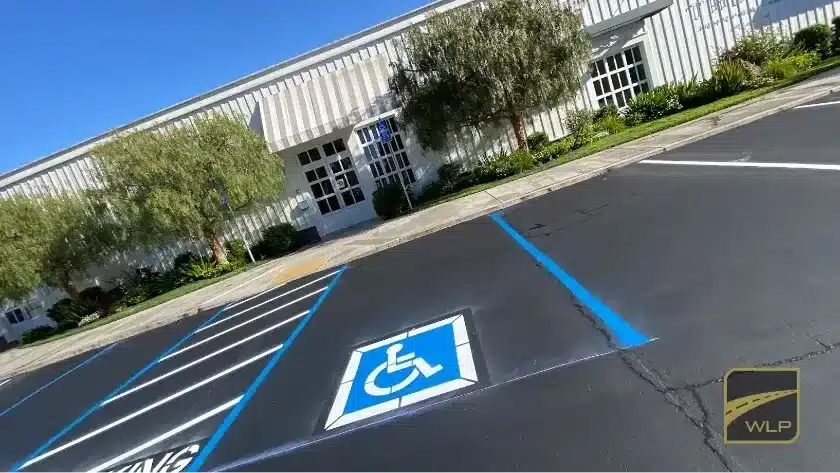
The benefits of accessible parking depend on how the entire route functions, from the parking space and access aisle to the building entrance. California Building Code Chapter 11B addresses dimensions, slopes, surfaces, signage, and other accessibility features. Requirements must be evaluated for the applicable project and site conditions before work begins.
Maximizing Return on Accessibility Investment
Planning accessibility improvements alongside scheduled paving, drainage repairs, and striping can help property owners coordinate work and avoid correcting the same area twice. Maintaining accessible exterior routes also supports the property’s long-term usability. The financial return depends on project costs, existing conditions, and business needs; accessibility improvements should not be presented as a guarantee of higher property value or reduced pavement deterioration.
Protect Your Business Today
Planning improvements to your commercial parking lot? We Love Paving can help coordinate paving, striping, and exterior accessibility upgrades based on your project’s requirements.