In California, accessibility isn’t just a legal requirement it’s a core value. The state is known for its progressive approach to inclusivity, and this extends to paving projects for homes, businesses, and public spaces. Whether you’re installing a new driveway, updating a parking lot, or constructing a walkway, ensuring ADA compliance is essential. At We Love Paving, we specialize in creating paving solutions that meet California’s stringent accessibility standards while enhancing the beauty and functionality of your property. Here’s everything you need to know about ADA compliance for paving in California.
What is ADA Compliance and Why Does It Matter in California?
The Americans with Disabilities Act (ADA) is a federal law that prohibits discrimination against individuals with disabilities. It sets specific standards for accessible design, including requirements for paved surfaces like sidewalks, parking lots, ramps, and pathways. These standards ensure that people with disabilities can navigate spaces safely and independently.
CBC Chapter 11B and CASp Legal Protection
In California, compliance extends far beyond federal statutes; it is governed by Chapter 11B of the California Building Code (CBC), which imposes significantly stricter accessibility standards. To mitigate legal vulnerabilities, property owners rely on a CASp (Certified Access Specialist). An assessment report issued by a CASp inspector reviews the premises and grants a “good faith” legal status, providing vital statutory protection against accessibility lawsuits under the state’s Unruh Civil Rights Act. Partnering with a paving contractor that fully understands this regulatory framework is essential to safeguarding your commercial property investment.
Key ADA Requirements for Paving Projects in California
Here are the essential ADA requirements to keep in mind for your paving projects in California:
1. Accessible Pathways
- Width: Pathways must be at least 36 inches wide to accommodate wheelchairs and mobility devices. In high-traffic areas, a width of 48 inches is recommended.
- Slope: The maximum slope for pathways is 1:20 (5%). For ramps, the slope must not exceed 1:12 (8.33%).
- Surface: Paved surfaces must be stable, firm, and slip-resistant. Materials like textured concrete or asphalt are ideal for meeting these requirements.
Technical Slope Tolerances and Surface Drainage
Grading precision is critical because the CBC code enforces strict field construction tolerances. The maximum allowable cross-slope for any accessible route is 2% ($1:50$); exceeding this threshold immediately invalidates project compliance. Furthermore, paved surfaces must maintain a smooth, uniform finish with zero tolerance for water ponding. Persistent puddles indicate localized ground subsidence or grading failures that obstruct the safe transit of wheelchairs, which immediately classifies the asphalt or concrete infrastructure as non-compliant during an accessibility inspection.
2. Parking Lot Accessibility
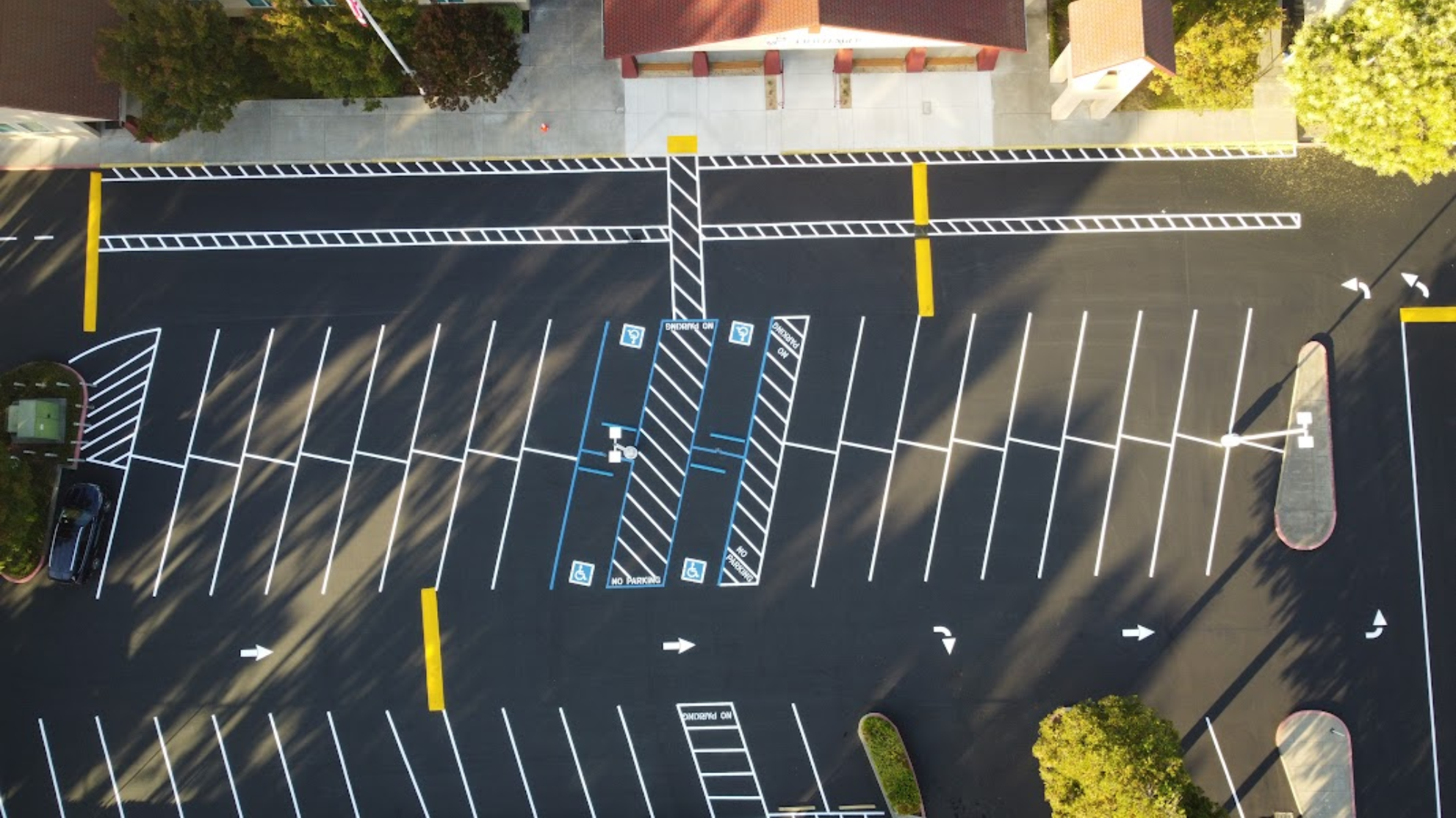
- Accessible Parking Spaces: California requires at least one accessible parking space for every 25 spaces in a parking lot. These spaces must be at least 8 feet wide with an adjacent 5-foot access aisle.
- Van-Accessible Spaces: For every six accessible spaces, one must be van-accessible, with an 8-foot-wide space and an 8-foot-wide access aisle. Van-accessible parking stalls require a strict geometric and visual configuration in California. The adjacent loading aisle must measure at least 8 feet in width and, per CBC mandates, must be positioned on the passenger (right) side of the vehicle for single spaces. The entire area must be delineated with regulatory blue paint and the “VAN ACCESSIBLE” designation. Regarding upright signage, each stall must feature a reflective International Symbol of Accessibility sign mounted at a minimum height of 80 inches to ensure clear, unobstructed visibility over parked vehicles.
- Signage: Accessible spaces must be marked with the International Symbol of Accessibility and located close to building entrances.
3. Curb Ramps
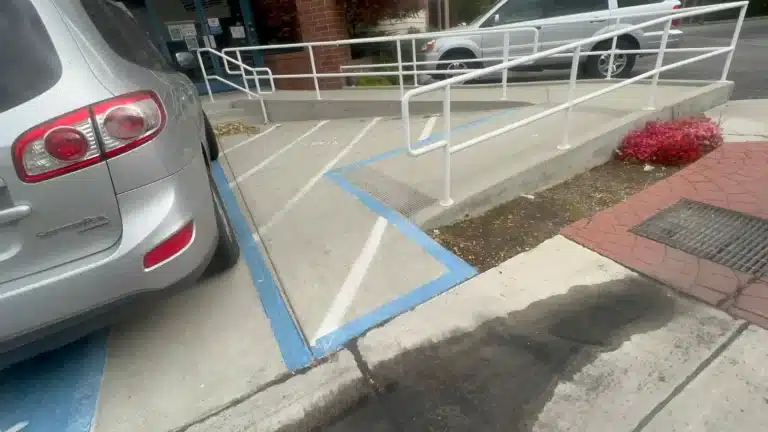
- Location: Curb ramps must be installed wherever a sidewalk crosses a curb.
- Width: Ramps should be at least 36 inches wide.
- Detectable Warnings: California requires truncated dome surfaces at curb ramps to alert visually impaired individuals of potential hazards.
4. Crosswalks and Pedestrian Pathways
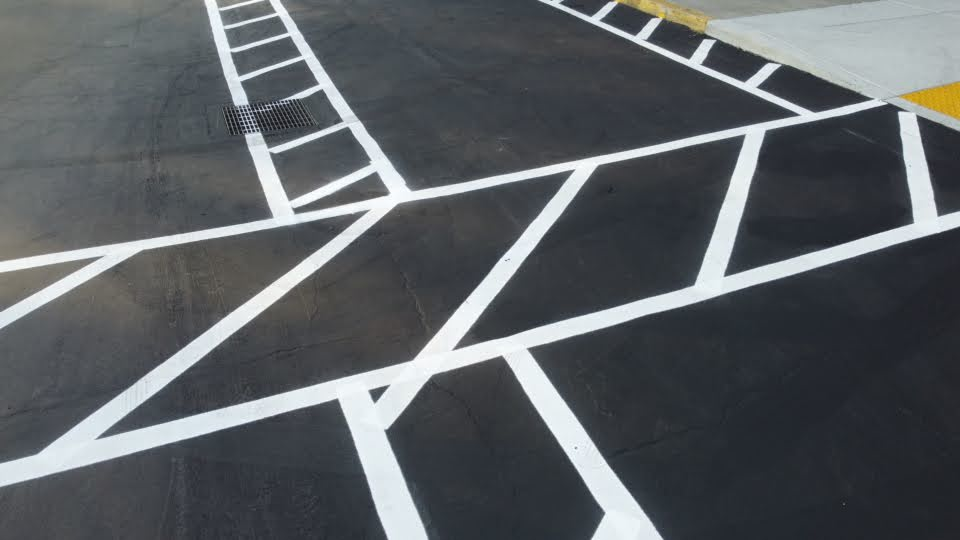
- Contrasting Colors: Crosswalks and pedestrian pathways must use contrasting colors or textures to help visually impaired individuals identify safe walking areas.
- Smooth Transitions: Ensure there are no abrupt changes in elevation, as these can create tripping hazards.
5. Maintenance and Repairs
- Even minor issues like cracks, potholes, or uneven surfaces can create barriers for individuals with disabilities. Regular maintenance is critical to maintaining compliance and ensuring safety.
Why ADA Compliance is Especially Important in California
California is a leader in accessibility and inclusivity, and the state’s laws reflect this commitment. For businesses, ADA-compliant paving is not just about avoiding legal issues it’s about creating a welcoming environment for all customers. For homeowners, it ensures that your property is accessible to family members, friends, and visitors with disabilities.
In addition to state and federal laws, many California cities have their own accessibility requirements. For example, San Francisco, Los Angeles, and San Diego have specific guidelines for public and private properties. Working with a paving company that understands these local regulations is essential.
How We Love Paving Ensures ADA Compliance in California
At We Love Paving, we’re passionate about creating accessible, durable, and beautiful paved surfaces. Here’s how we help our clients in California achieve ADA compliance:
- Expert Consultation: We assess your property and provide tailored recommendations to meet ADA and California Building Code requirements.
- Custom Design: Whether you need an accessible driveway, parking lot, or walkway, we design solutions that blend functionality with aesthetic appeal.
- Quality Materials: We use high-quality, slip-resistant materials that meet California’s rigorous standards for durability and safety.
- Local Expertise: Our team is familiar with California’s accessibility laws, including city-specific requirements, ensuring your project is fully compliant.
- Ongoing Maintenance: We offer maintenance services to keep your paved surfaces in top condition and prevent compliance issues.
Let’s Build a More Accessible California Together
In California, staying on top of ADA guidelines and CBC mandates is about much more than dodging fines or legal headaches it is our shared opportunity to build spaces where everyone feels welcome, safe, and included. Whether you manage a commercial hub in Silicon Valley or are upgrading the walkways of your San Ramon property, investing in accessible paving directly boosts your property value and shows genuine care for your community.
At We Love Paving, we are passionate about combining strict engineering precision with durable, beautiful finishes. We know exactly how to translate complex code requirements into flawless asphalt and concrete solutions. Ready to secure your property with the experts? Reach out to us today for a free technical consultation, and let’s build a paving solution that exceeds your expectations.