ADA Compliance for Paving: A Northern California Business Owner’s Guide to Accessibility

We Love Paving services in Berkeley. Professional paving contractor serving Berkeley and Bay Area areas.
Estimation Tools

Calculate costs in seconds

Fast, accurate estimates that help you close more jobs. Less guesswork, more profit.

As a business owner in Northern California, creating an inclusive and accessible environment is not just a legal requirement—it’s a smart business decision. With some of the most stringent accessibility laws in the country, Northern California demands that businesses go above and beyond to ensure their properties are welcoming to everyone, including individuals with disabilities. At We Love Paving, we specialize in helping business owners like you achieve ADA compliance through expert paving solutions. Here’s everything you need to know about ADA compliance for paving and how it can benefit your business.


Why ADA Compliance is Critical for Northern California Businesses

Northern California is a hub of diversity and inclusivity, and its accessibility laws reflect this commitment. The Americans with Disabilities Act (ADA) sets federal standards, but cities like San Francisco, Sacramento, and San Jose have additional local regulations that often exceed federal requirements. Non-compliance can result in costly lawsuits, fines, and damage to your business’s reputation. More importantly, ensuring your property is accessible demonstrates your commitment to serving all customers, which can enhance customer loyalty and attract a broader audience.


Key ADA Requirements for Business Paving Projects

Here are the essential ADA requirements for paving projects that every Northern California business owner should know:

1. Accessible Pathways

  • Width: Pathways must be at least 36 inches wide, with 48 inches recommended in high-traffic areas.

  • Slope: The maximum slope for pathways is 1:20 (5%). For ramps, the slope must not exceed 1:12 (8.33%).

  • Surface: Paved surfaces must be stable, firm, and slip-resistant. Textured concrete or asphalt is ideal for meeting these requirements.

2. Parking Lot Accessibility

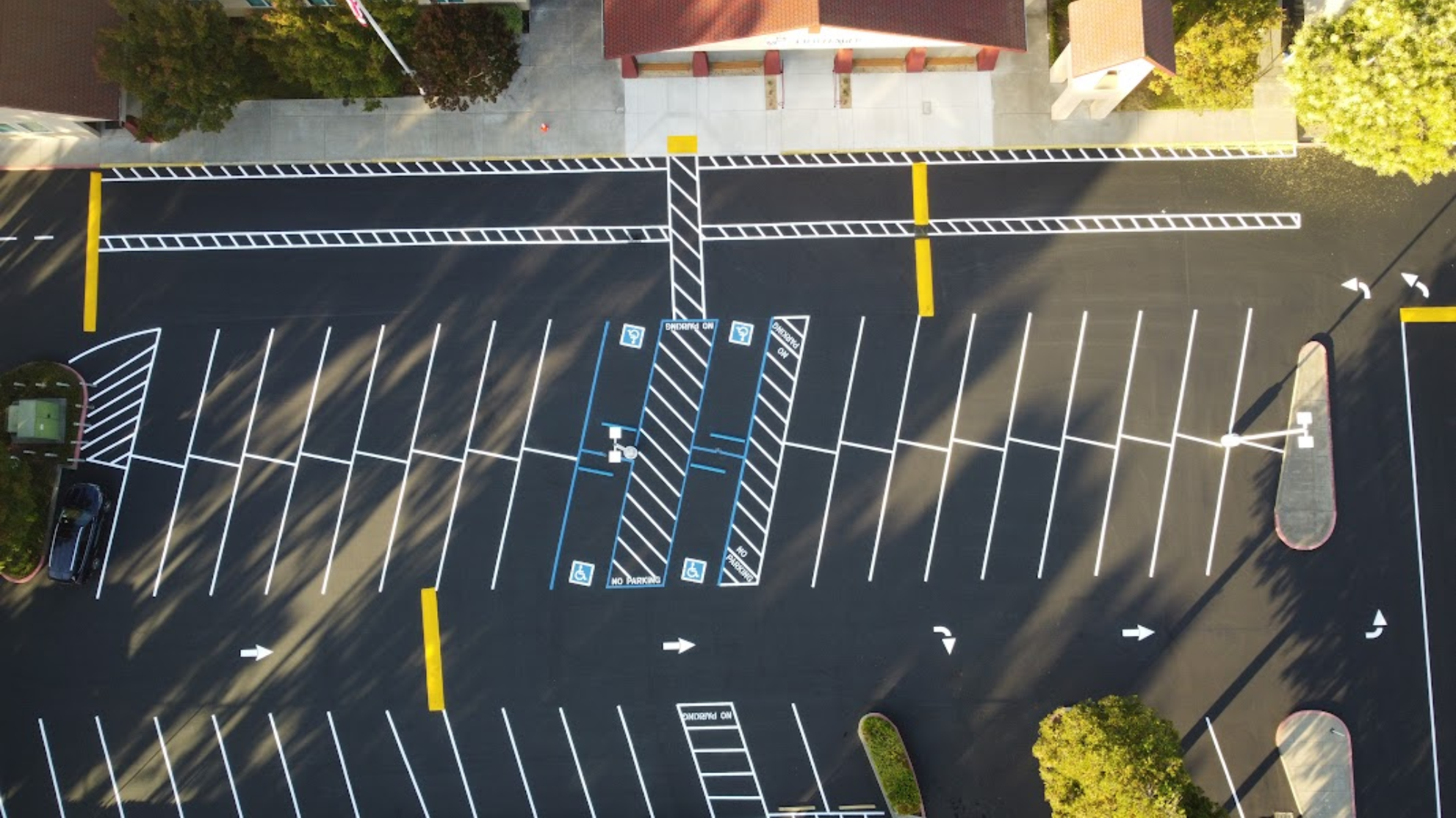
  • Accessible Spaces: Northern California requires at least one accessible parking space for every 25 spaces. These spaces must be at least 8 feet wide with a 5-foot access aisle.

  • Van-Accessible Spaces: For every six accessible spaces, one must be van-accessible, with an 8-foot-wide space and an 8-foot-wide access aisle.

  • Signage: Accessible spaces must be marked with the International Symbol of Accessibility and located close to building entrances.

3. Curb Ramps

  • Location: Curb ramps must be installed wherever a sidewalk crosses a curb.

  • Width: Ramps should be at least 36 inches wide.

  • Detectable Warnings: Northern California requires truncated dome surfaces at curb ramps to alert visually impaired individuals of potential hazards.

4. Crosswalks and Pedestrian Pathways

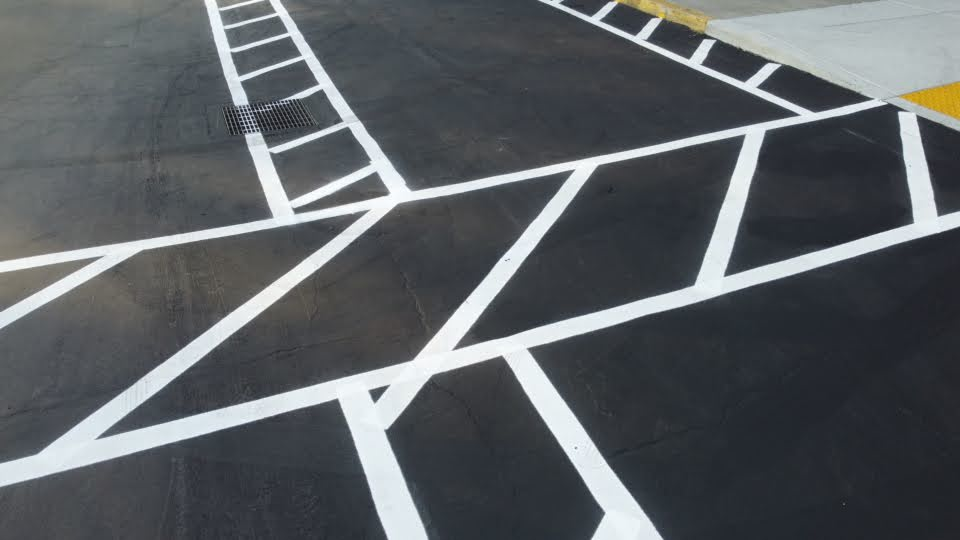
  • Contrasting Colors: Crosswalks and pedestrian pathways must use contrasting colors or textures to help visually impaired individuals identify safe walking areas.

  • Smooth Transitions: Ensure there are no abrupt changes in elevation, as these can create tripping hazards.

5. Maintenance and Repairs

  • Even minor issues like cracks, potholes, or uneven surfaces can create barriers for individuals with disabilities. Regular maintenance is critical to maintaining compliance and ensuring safety.


The Business Benefits of ADA-Compliant Paving

Investing in ADA-compliant paving isn’t just about avoiding legal issues—it’s about creating a positive experience for your customers and enhancing your business’s reputation. Here’s how ADA-compliant paving can benefit your business:

  1. Increased Customer Base: Accessible spaces attract customers with disabilities, as well as their families and friends, expanding your potential customer base.

  2. Improved Customer Satisfaction: A well-designed, accessible property shows that you care about all your customers, fostering loyalty and positive word-of-mouth.

  3. Enhanced Property Value: ADA-compliant paving improves your property’s functionality and curb appeal, increasing its overall value.

  4. Legal Protection: Compliance reduces the risk of lawsuits and fines, giving you peace of mind.


How We Love Paving Helps Northern California Businesses

At We Love Paving, we understand the unique challenges and opportunities that Northern California businesses face. Here’s how we can help you achieve ADA compliance:

  1. Expert Consultation: We assess your property and provide tailored recommendations to meet ADA and local accessibility requirements.

  2. Custom Design: Whether you need an accessible parking lot, walkway, or ramp, we design solutions that blend functionality with aesthetic appeal.

  3. Quality Materials: We use high-quality, slip-resistant materials that meet Northern California’s rigorous standards for durability and safety.

  4. Local Expertise: Our team is familiar with Northern California’s accessibility laws, including city-specific requirements in San Francisco, Sacramento, and beyond.

  5. Ongoing Maintenance: We offer maintenance services to keep your paved surfaces in top condition and prevent compliance issues.


Conclusion

For Northern California business owners, ADA compliance is more than just a legal obligation—it’s an opportunity to create a welcoming and inclusive environment for all customers. By investing in ADA-compliant paving, you can enhance your property’s functionality, improve customer satisfaction, and protect your business from legal risks.

At We Love Paving, we’re proud to help Northern California businesses achieve ADA compliance with paving solutions that combine functionality, durability, and beauty. Ready to make your property more accessible? Contact us today for a free consultation and let us help you create a paving solution that meets your needs and exceeds your expectations.

Need Immediate Help?

Let's Talk About Your Project

Don't wait until minor damage turns into major expenses. Our team of experts is ready to provide you with guaranteed solutions. Contact us now for direct advice from a professional.

Frequently Asked Questions (FAQ)

Got Questions? Find Your Answers Here!!

What are the specific ADA slope requirements for ramps and walkways in California?

The maximum allowable slope for access ramps in California is 1:12 (8.33%), while standard pedestrian pathways must not exceed a 1:20 (5%) grade. These technical specifications require stable, slip-resistant surfaces—typically textured concrete or asphalt—to ensure safe mobility and avoid the stringent legal penalties associated with non-compliant California accessibility gradients.

How many accessible parking spaces does a Northern California business require?

Northern California regulations mandate at least one accessible parking space for every 25 total stalls provided. Furthermore, for every six accessible spaces, one must be van-accessible, featuring an 8-foot-wide stall paired with an 8-foot-wide access aisle and marked clearly with the International Symbol of Accessibility to meet state-specific commercial requirements.

What are the minimum width requirements for ADA-compliant pathways in the Bay Area?

Accessible pathways must maintain a minimum width of 36 inches, though 48 inches is the recommended industry standard for high-traffic areas in cities like San Francisco. Surfaces must be firm and stable, with no abrupt elevation changes exceeding 1/4 inch, to prevent tripping hazards and ensure unobstructed transit for wheelchair users.

Why are truncated domes mandatory for curb ramps on Northern California properties?

Truncated domes serve as essential detectable warning surfaces that alert visually impaired pedestrians to hazardous transitions between sidewalks and vehicular traffic. California law strictly requires these textured, slip-resistant patterns at every curb ramp and hazardous vehicular area to provide the tactile contrast necessary for public safety and full ADA regulatory compliance.

How does asphalt pavement maintenance impact a business’s ADA legal standing?

Neglecting asphalt repairs—such as cracks, potholes, or uneven sinking—directly invalidates ADA compliance by creating physical barriers for individuals with disabilities. Regular maintenance is a critical legal safeguard in Northern California, as even minor surface deviations can trigger costly lawsuits, fines, and reputational damage for commercial property owners.

Professional customer review project by We Love Paving in Northern California, California. Verified local construction quality.

Fred / Founder

Fred, Founder and Regional Operations Manager at We Love Paving, comes from a family that values hard work and discipline. Growing up watching his parents work long hours with integrity and dedication, Fred learned early on that quality paving isn’t just about asphalt, it’s about consistency, accountability, and doing the job right.

Share

Posts That Might Interest You

What is Driveway Resurfacing? Expert Technical Guide to Asphalt Overlay and When to Use It

What is Driveway Resurfacing? Expert Technical Guide to Asphalt Overlay and When to Use It

April 15, 2026

THE BENEFITS OF RESURFACING In the world of driveway maintenance and improvement, asphalt resurfacing has emerged as a popular and effective solution. As time passes, even the most durable asphalt driveways can succumb to wear and tear, displaying cracks, potholes, and a worn-out appearance. However, instead of tearing up the entire driveway and starting from

Paving Technical Audit: Cost of Driveway Analysis

Paving Technical Audit: Cost of Driveway Analysis

April 14, 2026

A COMPREHENSIVE GUIDE FOR HOMEOWNERS Paving a driveway is a substantial undertaking for any homeowner. Beyond just enhancing curb appeal, it adds value and utility to the property. However, before diving into such a project, it’s crucial to grasp the diverse factors influencing the overall cost. This guide explores these elements, offering insights to empower

Why is Asphalt So Expensive? A 2026 Audit of Paving Costs and Market Dynamics

Why is Asphalt So Expensive? A 2026 Audit of Paving Costs and Market Dynamics

April 2, 2026

Paving costs have experienced a significant upward trend in recent years, leaving property owners questioning the reasons behind this surge. In this detailed exploration, we delve into the multifaceted factors contributing to the escalating costs of paving in 2026 and beyond. Material Costs and Market Dynamics The cornerstone of any paving project lies in its

What is the Square Foot Price for Asphalt?

What is the Square Foot Price for Asphalt?

April 2, 2026

Asphalt is a popular paving material used for driveways, parking lots, and roads due to its durability, affordability, and ease of installation. However, the cost of asphalt can vary significantly depending on several factors. In this blog post, we will explore the factors that influence the square foot price of asphalt, typical price ranges, and

Next

Estimation Tools

Calculate costs in seconds

Fast, accurate estimates that help you close more jobs. Less guesswork, more profit.