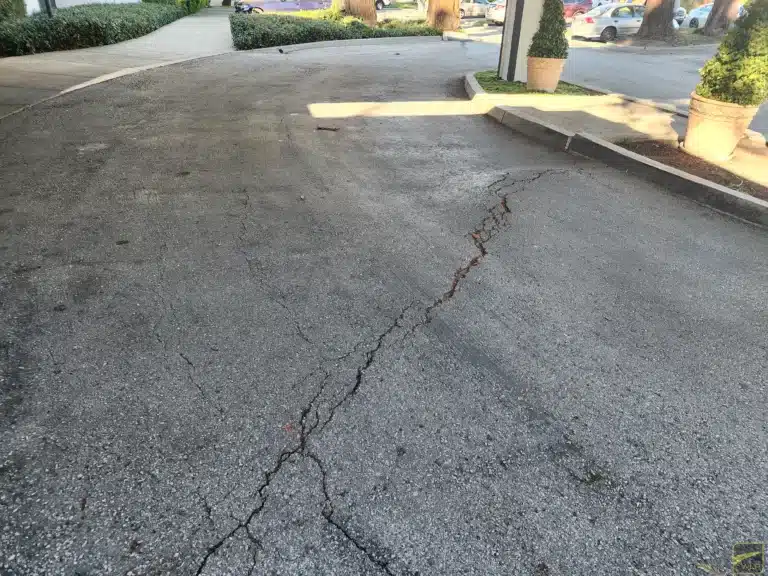
A homeowner often notices a large driveway crack after a rainy week, when water lingers in the opening or when the edges begin to look rough instead of clean. In many cases, the crack has been developing for months. What changed is that the pavement finally reached a point where the damage became impossible to ignore.
Not every large crack means a driveway needs replacement. Some can be repaired effectively, while others indicate deeper movement beneath the asphalt. Understanding the difference helps homeowners make better maintenance decisions and avoid spending money on short-term fixes that may not last.
This guide focuses on driveway crack repair for larger asphalt cracks and the signs that help determine whether filling, patching, or more extensive work may be appropriate.
Start With What the Crack Is Telling You
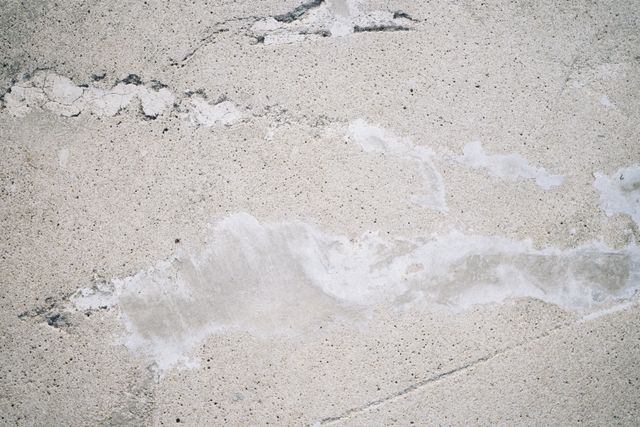
Large cracks often reveal more than a simple surface problem. Their location, shape, and surrounding pavement condition can provide clues about what is happening underneath.
For example, a crack running across the driveway near the garage entrance may develop where vehicles repeatedly stop and turn. A widening crack near the edge of the pavement can indicate a lack of support along the shoulder. Long interconnected cracks forming rectangular patterns may suggest that the base beneath the asphalt is beginning to weaken.
When evaluating a crack, homeowners should look beyond the opening itself. Nearby signs frequently provide additional context:
- Crumbling edges around the crack
- Water remaining in the crack after rain
- Small pieces of loose aggregate around the damaged area
- Depressions or low spots forming nearby
These conditions often influence how successful a repair will be and whether additional investigation is needed.
A Repair Timing Framework for Large Cracks
One of the most useful ways to approach driveway crack repair is by evaluating where the pavement falls within its deterioration cycle.
This is similar to many of the pavement warning signs found on larger properties, where visible surface defects often indicate changes occurring below the pavement structure.
| What You See | Likely Condition | Repair Consideration |
|---|---|---|
| Single crack with stable edges | Early-stage separation | Crack filling may be effective |
| Crack with minor edge breakdown | Moderate deterioration | Filling plus localized repair may help |
| Multiple connected cracks | Structural weakening may be developing | Further evaluation recommended |
| Cracks with sinking or movement | Base issues may be present | Surface repair alone may not last |
Timing matters because asphalt repairs generally perform better when the surrounding pavement remains stable. Once movement begins beneath the surface, repairs may have a shorter service life regardless of the material used.
When Filling a Large Crack May Not Be Enough
Homeowners often assume that a larger quantity of filler solves a larger crack. In reality, crack width is only one factor.
A crack that remains consistent in width and shows no vertical displacement may respond well to repair. However, certain field conditions can limit the effectiveness of filling alone.
One common example occurs when one side of the crack sits slightly higher than the other. Another occurs when a crack continues reopening shortly after previous repairs. Both situations may indicate pavement movement rather than simple separation.
Contractors also frequently observe deterioration where water repeatedly enters the crack and softens the base material beneath. In those cases, the visible opening becomes only part of the problem.
Driveways that experience concentrated turning movements often show this pattern near garage aprons. The surface may appear repairable, but repeated vehicle stress can continue widening the damaged area if underlying support has already weakened.
Looking Beyond the Crack Itself
Large cracks rarely develop in isolation. Evaluating nearby pavement features often leads to better repair decisions.
For example, homeowners should examine adjacent concrete sections, drainage patterns, and transitions between different surfaces. If a driveway crack aligns with a shifting walkway, related movement may be occurring nearby. Situations involving neighboring pavement features sometimes overlap with broader property concerns such as sidewalk repair needs.
Water management is another important factor. Cracks located along drainage paths tend to deteriorate differently than cracks in consistently dry areas. After a storm, observe where water travels across the driveway. If runoff repeatedly enters the same opening, future repairs may face additional stress.
Properties that undergo changing vehicle use patterns can also experience accelerated pavement wear. Similar pavement demands can be seen in higher-traffic environments where long-term driveway maintenance planning becomes part of preserving access routes.
Matching the Repair Strategy to the Pavement Condition
The most effective driveway crack repair strategy depends on the condition of the surrounding asphalt, not simply the crack itself.
When pavement remains structurally sound, crack sealing or filling can help reduce water intrusion and slow deterioration. When localized areas around the crack have begun breaking apart, patching may provide a more durable solution.
In some cases, homeowners use a repair project as an opportunity to evaluate other pavement improvements occurring on the property. Larger pavement upgrades sometimes combine repair work with future-use planning, especially when driveways are being modified to support new features or changing access requirements.
Preventive maintenance also plays a role after repairs are completed. A repaired crack remains part of the pavement system, and ongoing surface preservation efforts can help protect the surrounding asphalt from additional weathering.
Making a Practical Long-Term Decision
The best driveway crack repair decision is not always the cheapest immediate fix. It is the option that aligns with the actual condition of the pavement and the expected lifespan of the driveway.
A stable crack repaired early may remain manageable for years. A crack associated with base movement, water infiltration, or widespread deterioration may require a broader maintenance strategy.
As neighborhoods evolve and vehicle usage changes, the same principles behind commercial pavement demands often appear at the residential level as well.
For homeowners, the most valuable step is often taking time to evaluate surrounding conditions rather than focusing exclusively on the visible opening. Understanding why the crack formed provides a much better foundation for choosing the right repair approach.
We Love Paving regularly evaluates pavement conditions where the visible crack is only one part of the story. Whether a driveway is showing isolated damage or signs of broader deterioration, a condition-based approach helps property owners prioritize repairs, protect pavement life, and make more informed maintenance decisions.