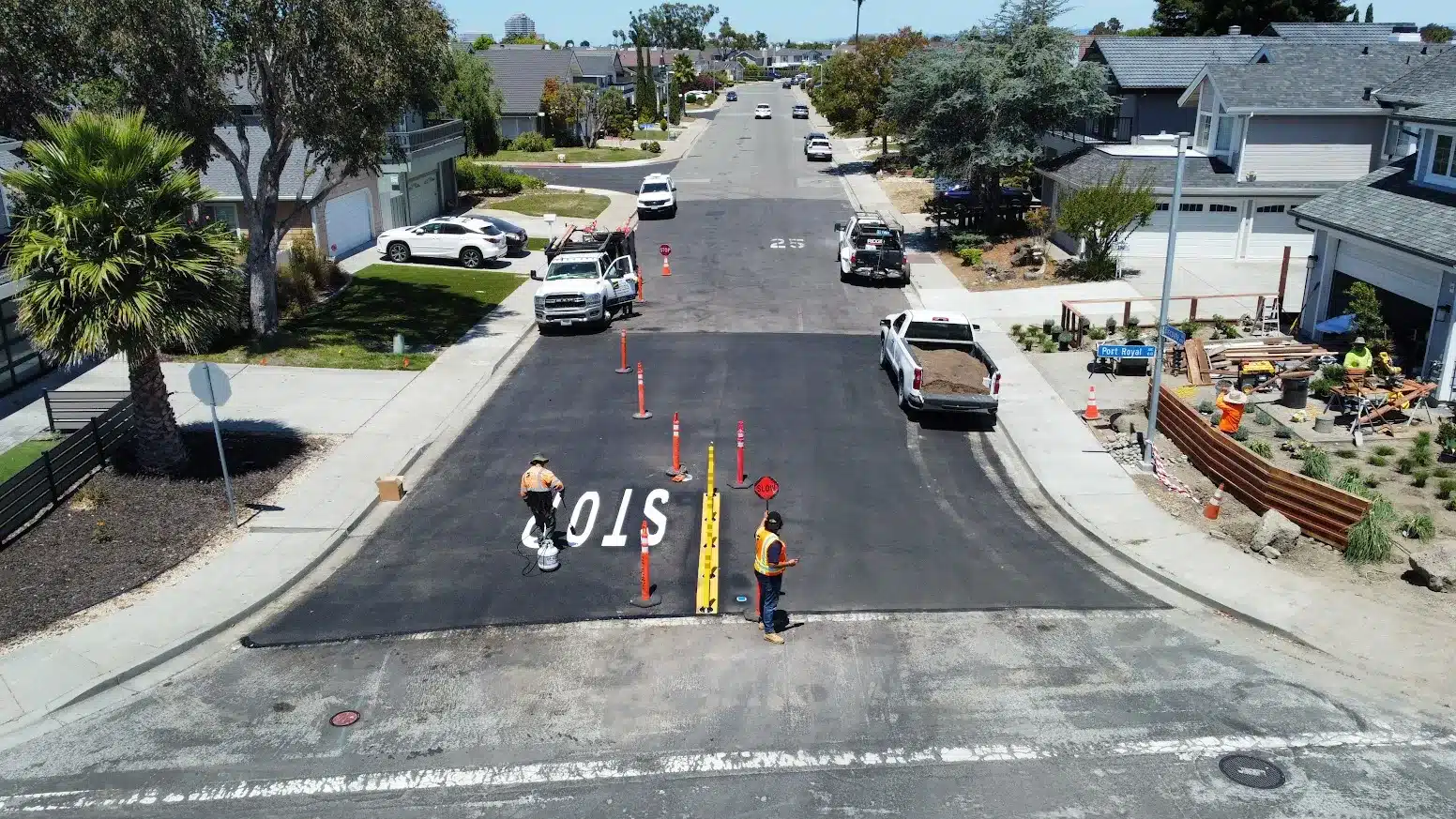
A pavement budget usually fails before the first proposal is requested. The failure starts when every paved area is treated as one line item.
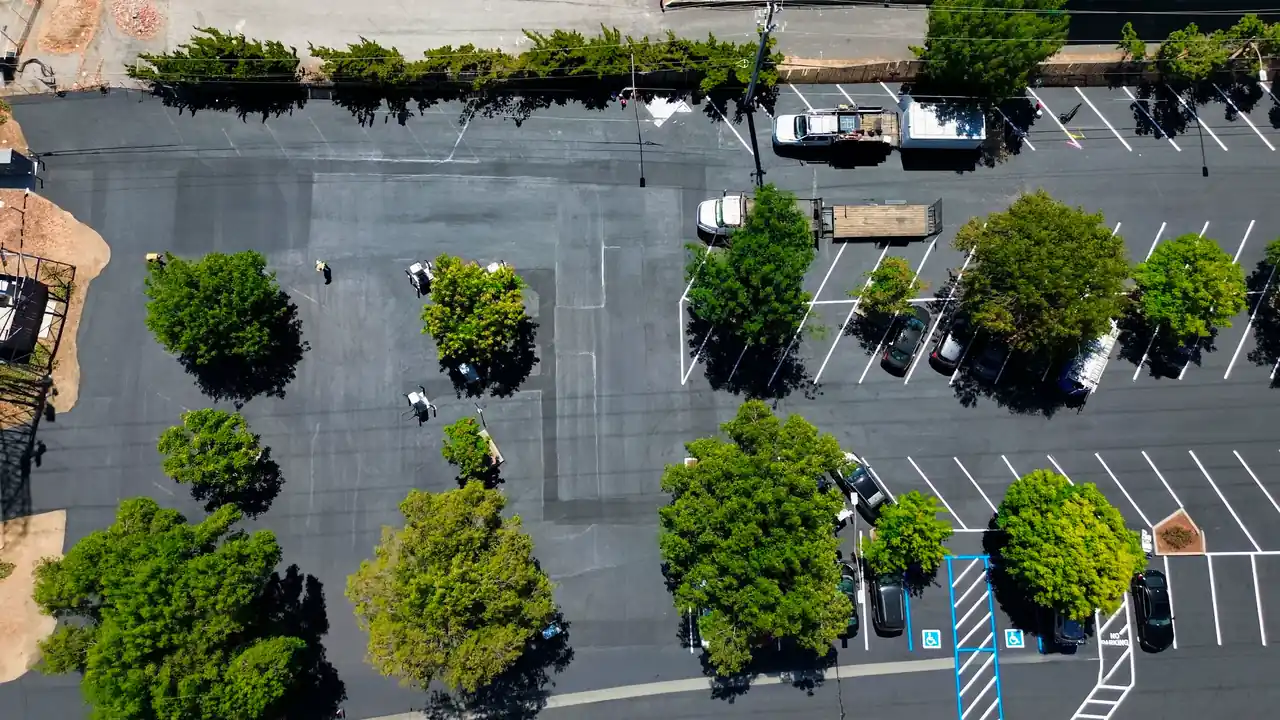
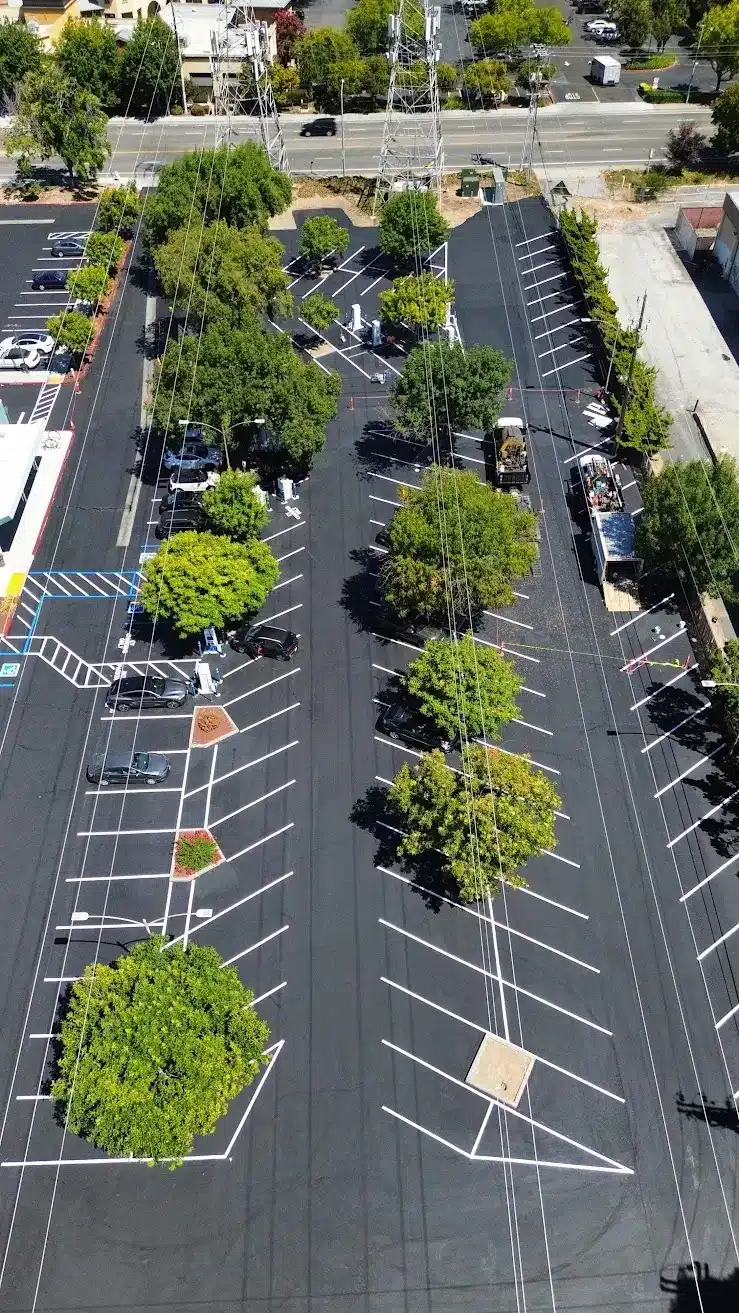
An HOA may have private roads, guest parking, walking paths, mailbox pull-offs, and clubhouse access. A commercial property may have drive aisles, loading zones, storefront parking, dumpster pads, accessible routes, and employee lots. Those surfaces do not wear the same way, do not affect users the same way, and should not compete for money as if they carry equal risk.
Budget paving is not about buying the cheapest repair. That is a weak interpretation. A useful paving budget separates urgent defects, maintenance work, preservation timing, resurfacing needs, and future capital projects so the owner can spend in the right order.
For HOA boards, property managers, and commercial owners, the central problem is not just “How much will paving cost?” It is “Which pavement cost should be handled first, which can be phased, and which will become more expensive if ignored?”
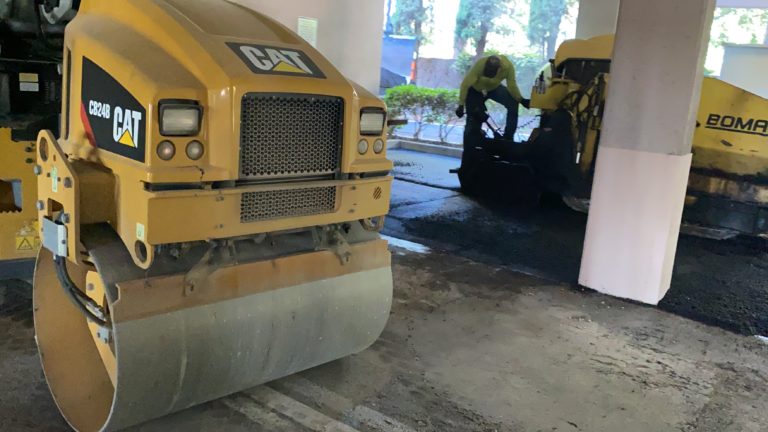
Start by Dividing the Property Into Budget Zones
The first mistake is budgeting by total paved area alone. Square footage matters, but it does not explain consequence.
A crack in a remote overflow stall does not carry the same priority as edge failure near the main entrance. Surface wear on a low-speed walking path is not the same budget issue as rutting in a delivery lane. Standing water near a clubhouse entry may create more daily complaints than oxidation in a back parking row.
A better paving budget starts by dividing the property into zones:
| Budget Zone | Common Examples | Why It Should Be Budgeted Separately |
|---|---|---|
| High-use access | Entrances, drive aisles, front parking rows | Failure disrupts daily movement quickly |
| Heavy-load areas | Loading zones, trash enclosures, service drives | Repeated weight and turning can accelerate damage |
| Pedestrian surfaces | Walkways, clubhouse paths, campus-style paths | Smaller defects may affect usability more directly |
| Low-use pavement | Overflow parking, back rows, storage areas | Work may often be phased if condition is stable |
| Drainage-sensitive areas | Low curbs, catch basins, shaded edges | Water can turn small defects into larger repairs |
| Future project areas | EV zones, tenant improvements, redesign areas | Recent paving may be wasted if later cut or modified |
This structure helps owners avoid two bad outcomes: spending too much on low-risk areas or waiting too long on surfaces that affect daily access.
For example, pedestrian-heavy surfaces such as campus walkway maintenance need a different budgeting mindset than vehicle drive lanes. The same logic applies to lower-speed paved areas such as park trail asphalt, where surface condition, user type, and repair timing differ from a commercial parking field.
Separate Maintenance Money From Capital Money
A serious budget should not place crack filling, sealcoating, patching, resurfacing, and reconstruction in the same mental bucket.
They serve different roles.
Early maintenance protects pavement that is still fundamentally serviceable. Capital work addresses pavement that has moved beyond ordinary preservation. When those categories are blurred, owners make confused decisions. They either try to maintain pavement that needs larger work or replace pavement that could have been preserved with better timing.
A practical budget should include at least three categories:
Routine maintenance: cleaning, small crack treatment, minor patching, marking refreshes, and surface monitoring.
Planned repair: localized failures, drainage-sensitive repairs, edge correction, and recurring problem areas.
Capital paving: resurfacing, major rehabilitation, reconstruction, or full parking lot improvements.
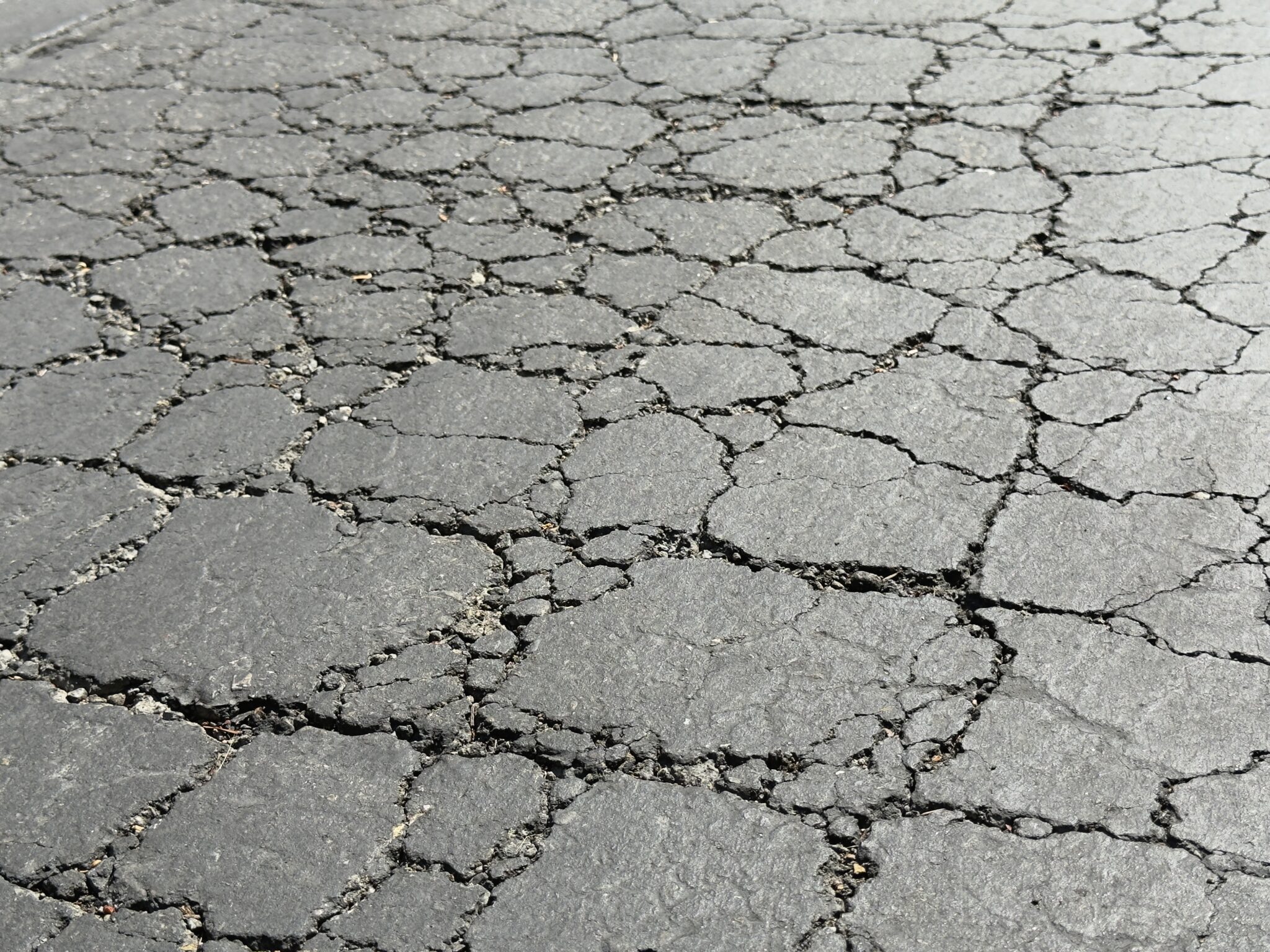
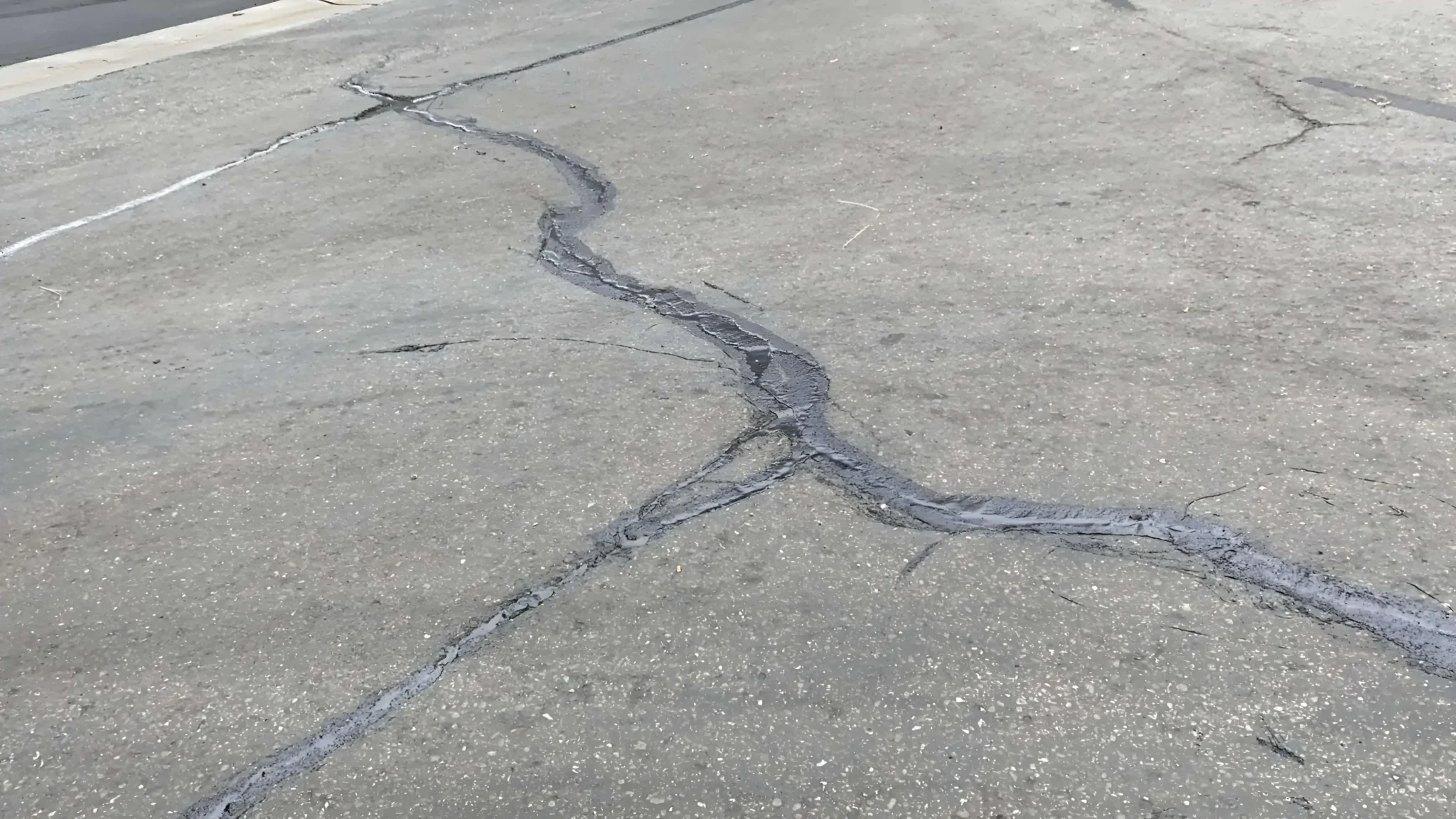
Small cracks are a useful example. If they are addressed while the surrounding pavement is stable, crack filling may help slow water intrusion and support a lower-cost maintenance plan. If the same area already shows alligator cracking, settlement, or repeated patch failure, crack treatment alone may only dress up a larger problem.
Budget paving works when the treatment matches the pavement stage. It fails when every line item is chosen only because it fits the current year’s available funds.
Use Field Conditions to Rank the Spending
A budget built from invoices alone is blind. The pavement itself should decide priorities.
During a site walk, look for condition patterns that affect cost timing:
- cracks spreading outward from old patches;
- water sitting near curbs, catch basins, or shaded edges;
- loose aggregate where vehicles turn tightly;
- surface wear near trash enclosures or delivery areas;
- depressions where tires repeatedly stop or pivot;
- broken edges where pavement lacks support;
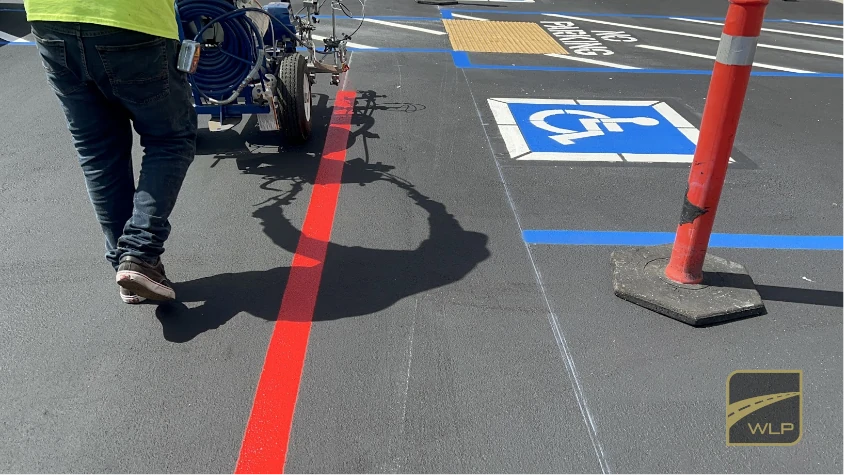
- faded markings that make circulation less predictable.
These observations help separate visible aging from budget-sensitive deterioration.
A faded surface may look unattractive but still be stable enough for planned preservation. A small depression near a drain may look less dramatic but deserve earlier review because moisture and movement can compound. A pothole in a low-use corner may be annoying. A smaller defect at a main entrance may create more operational pressure.
For commercial properties, a broader commercial parking lot paving plan may become necessary when repeated repairs no longer match the condition of the lot. That decision should come from site evidence, not from panic after years of deferred work.
Do Not Build the Budget Around the Cheapest Bid
The word “budget” often gets abused in paving. It becomes code for “find the lowest number.”
That is not budgeting. That is procurement without analysis.
A cheap paving option may be appropriate for limited work, temporary stabilization, or low-risk areas. The problem comes when a low-cost scope is used on pavement that needs preparation, drainage correction, deeper repair, or phased capital planning.
Owners should ask every contractor the same hard questions:
- What condition is this scope meant to solve?
- What is excluded?
- Is this a temporary repair or a longer-term improvement?
- What could cause this repair to fail early?
- Does this area need maintenance, repair, resurfacing, or replacement?
- How will traffic, residents, tenants, or visitors be affected?
- Will future property work disturb this pavement?
A comparison of affordable paving options can help owners think about lower-cost choices, but the lowest option is only responsible when the limitation is understood. Cheap work is most dangerous when it is sold as complete work.
Create a Three-Year Pavement Budget Instead of a One-Year Guess
One-year paving budgets encourage short-term thinking. They make every repair compete against the current operating budget, even when the better decision is to phase work over several cycles.
A three-year budget gives owners more control.
Year one can focus on urgent defects, drainage-sensitive areas, and low-cost maintenance that prevents avoidable deterioration. Year two can handle larger localized repairs, surface preservation, or sections that showed measurable decline. Year three can reserve money for resurfacing, redesign, or larger capital paving.
This does not need to be complicated. The point is to avoid being surprised by predictable pavement aging.
A useful three-year plan should include:
Immediate repairs: defects affecting access, recurring complaints, or fast-spreading deterioration.
Scheduled maintenance: crack treatment, sealcoating candidates, striping refreshes, and monitoring.
Capital reserves: resurfacing, reconstruction, drainage corrections, or larger parking lot work.
Budgeting this way also helps HOA boards and commercial ownership groups communicate better. Instead of asking members or stakeholders to approve a sudden large expense, the board can show how the pavement has been monitored and why the next phase is being recommended.
A separate breakdown of asphalt maintenance costs can support that discussion, but pricing should still be tied to actual property conditions.
Match the Budget to How the Property Operates
Paving affects operations, not just surfaces.
An HOA has resident access, guest parking, trash pickup, mail delivery, pedestrian movement, and board approval cycles. A retail property has customers, tenants, deliveries, peak shopping hours, and storefront access. A medical or office property may have patient movement, employee parking, visitor circulation, and limited closure windows.
The budget should account for those realities.
A lower-cost project that blocks the main entrance at the wrong time may create more friction than a better-phased project with a higher upfront cost. A repair plan that ignores trash pickup routes may fail faster under heavy turning. A clubhouse parking lot may need work scheduled around events, not just contractor availability.
This is where budget paving becomes a planning exercise. The question is not only what work is needed, but when the property can absorb the disruption.
Avoid Paying Twice for Poor Sequencing
One of the quietest budget killers is doing good work in the wrong order.
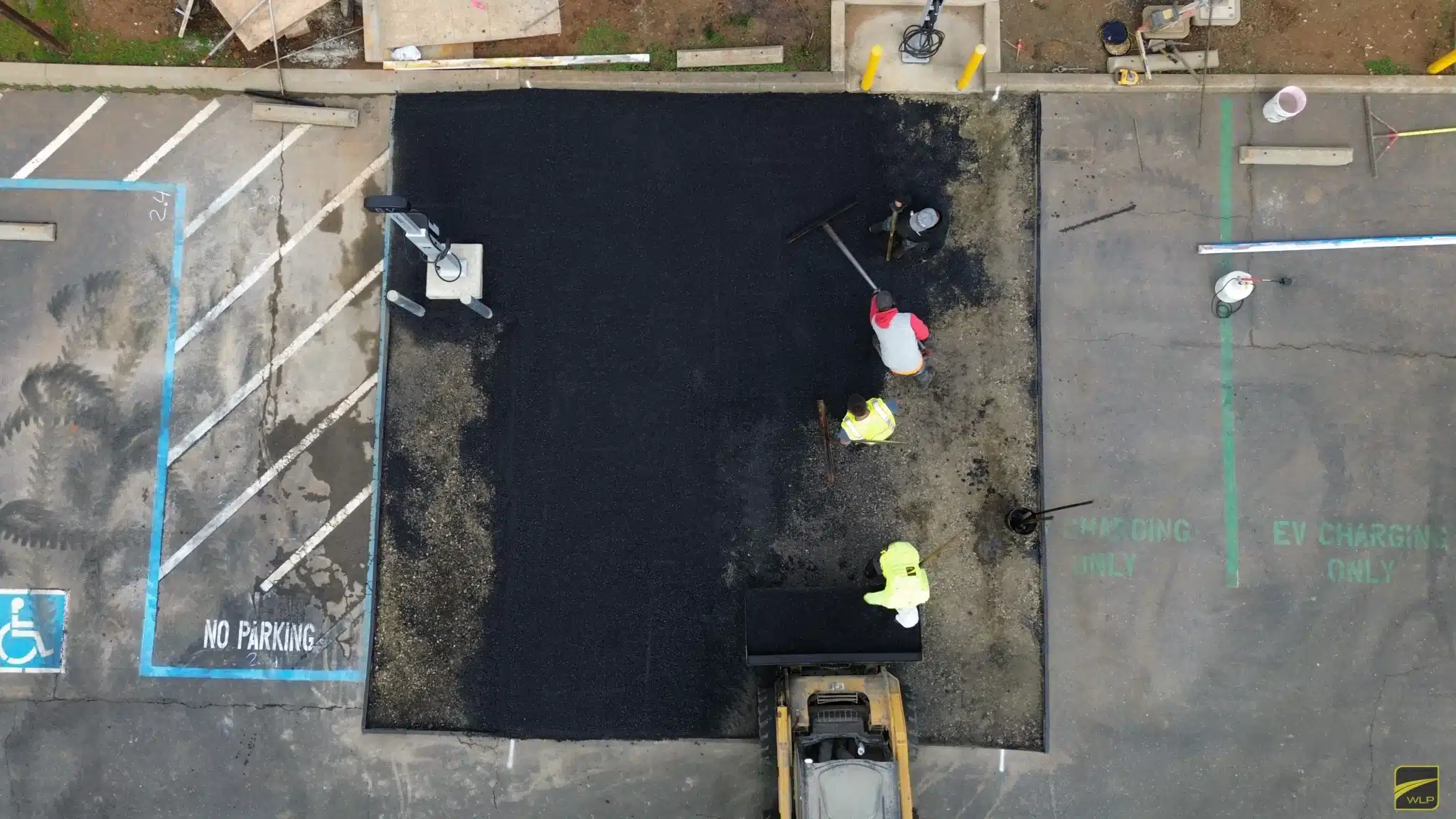
An owner may resurface an area before solving drainage. An HOA may sealcoat roads shortly before trenching for utility work. A commercial property may repair pavement before a tenant improvement changes traffic flow. A parking field may be striped before layout changes are finalized.
None of those decisions looks reckless in isolation. Together, they waste money.
Before approving paving work, ask whether any of these are likely within the next one to three years:
- utility trenching;
- drainage corrections;
- EV charging installation;
- tenant buildouts;
- parking layout changes;
- accessible route adjustments;
- landscaping or irrigation changes;
- dumpster enclosure relocation;
- curb or sidewalk work.
If another project will cut, disturb, or redesign the pavement, the paving budget should reflect that. Sometimes the best budget decision is not to delay maintenance completely, but to limit the scope now and reserve larger work until the site plan is stable.
Building a Smarter Pavement Budget With We Love Paving
Budget paving should give owners more control, not push them toward the cheapest visible repair. A strong budget identifies which surfaces are stable, which areas are deteriorating, which repairs can be phased, and which future projects could change the paving plan.
We Love Paving helps HOA boards, commercial property owners, and managers connect pavement condition to practical spending decisions. That means looking at the property by zone, ranking work by consequence, separating maintenance from capital paving, and avoiding repairs that only postpone the same failure.
The smartest paving budget is not the smallest number. It is the one that spends money in the right sequence.