
Professional Asphalt Crack Filling Services in California
Preventing structural deterioration by professionally sealing cracks with high-quality materials and precise application.
Phased execution to keep access open
Color-coded sitemaps with clear scope
Video briefing + proposal walkthrough

🛡️ 15yr Pothole-Free Guarantee*
written warranty, terms apply
Calls may be monitored or recorded for quality assurance and training purposes.


Asphalt Crack Sealing Specialists
We Love Paving
Serving commercial and industrial properties across California, our team precisely executes asphalt crack filling projects backed by CSLB License #1049649. Our work begins before any sealant is applied as we personally assess each crack’s width, activity, and moisture level to determine whether hot-applied polymer sealing or structural patching is the optimal intervention.
Trusted By Property Managers & National Brands





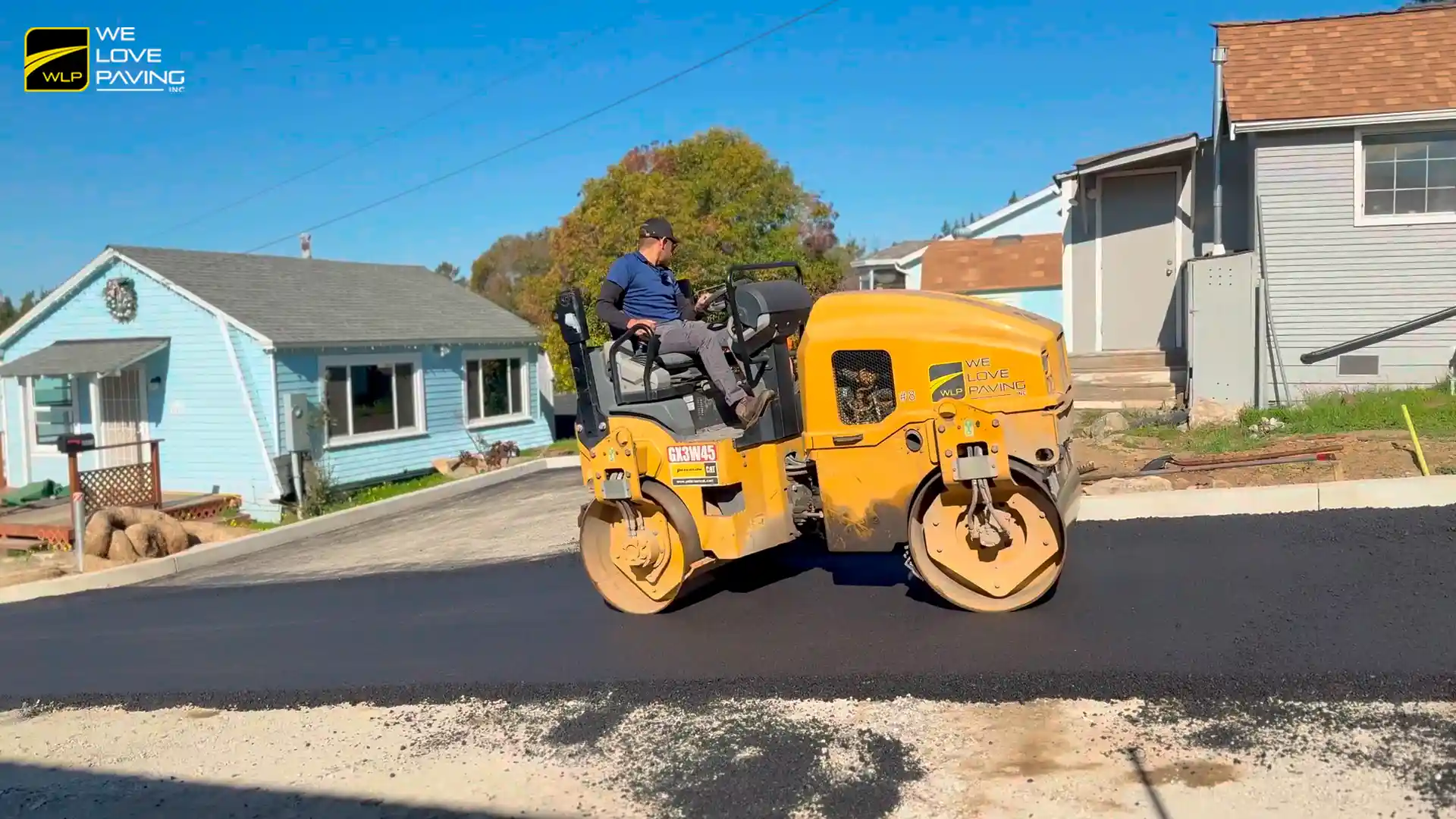
The Science Behind Professional Asphalt Crack Filling
Preventive maintenance is more than a cosmetic fix; it is a structural intervention. Cracks are the primary gateway for moisture to enter the pavement base. When water penetrates, it compromises the soil’s load-bearing capacity, accelerating potholes and fatigue failures. Our approach utilizes hot-applied elastomeric sealants that expand and contract with thermal variations, ensuring a permanent airtight barrier.
Every Month You Wait, Cracks Get Wider and Repairs Get Costlier
Timely sealing reduces long-term rehabilitation costs by up to 80%.
Get My Free Crack Assessment
Diagnostic and Classification of Surface Failures
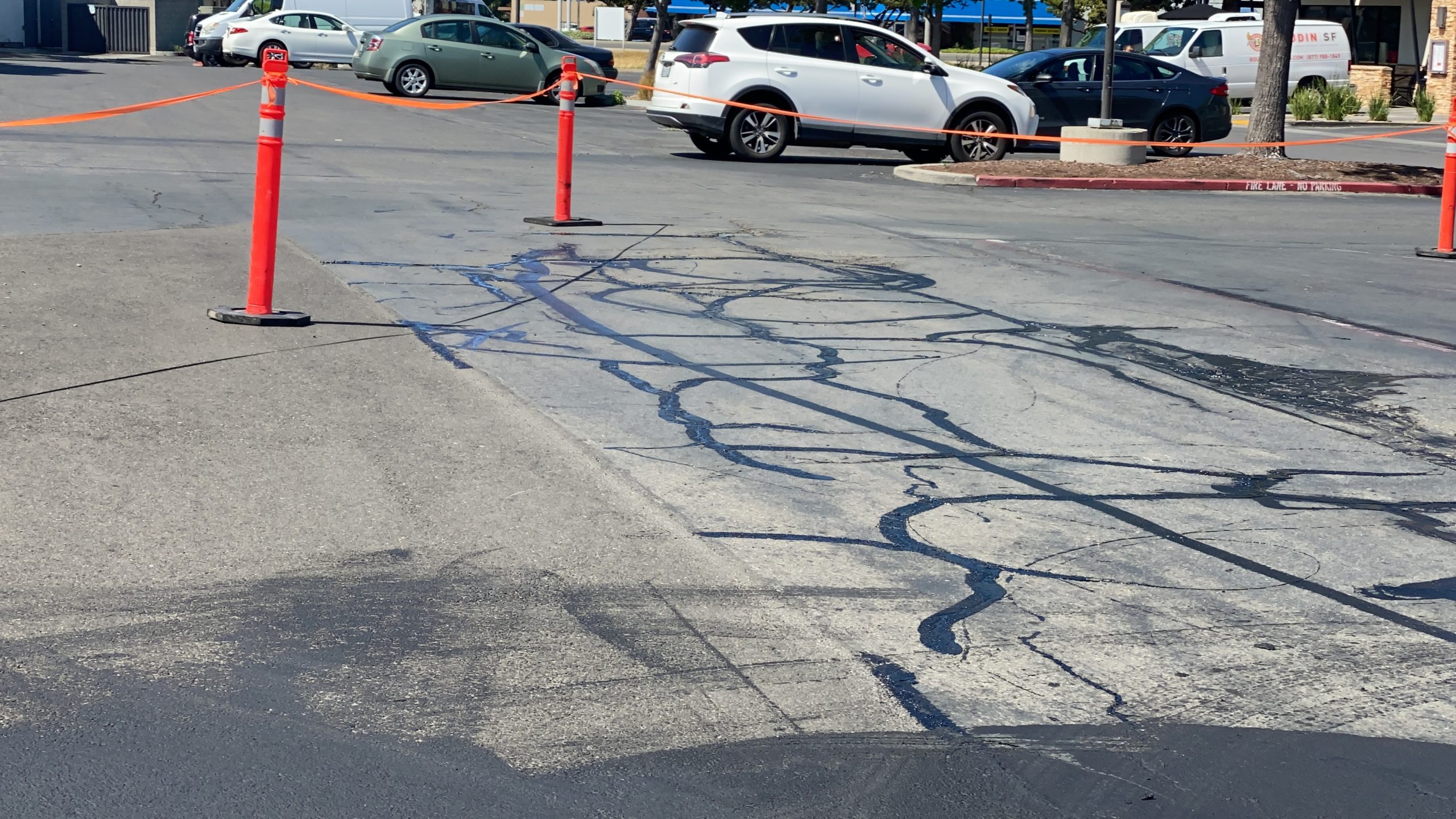
Identifying whether fissures are longitudinal, transverse, or block cracks determines the correct sealant formulation and application method, ensuring the treatment addresses the root cause, not just the surface symptom.
Experienced Team
Safety First
No Work Stoppage
Guaranteed Results
Engineering Processes in Asphalt Crack Filling
Operational excellence defines our workflow. We execute a rigorous protocol to ensure maximum polymer adhesion:
- Mechanical Cleaning: Removal of vegetation and debris using high-pressure compressed air.
- Thermal Drying: Use of heat lances to eliminate residual moisture in the cavity.
- Sealant Configuration: Controlled heating of the material to maintain elastic properties.
- Precision Application: Direct pouring with “overband” technique for marginal sealing.
- Safety Finish: Application of fine sand or anti-blocking agents if necessary for immediate traffic.
This Is What Our Clients Say About Our Work

Repair Methodologies for Critical Fissures
When damage exceeds the standard width of a maintenance crack, the technical process must evolve. In these cases, determining how to fix cracks of large size requires deep cleaning and specific structural fillers that prevent the sealant material from sinking.

The Role of Preservation in Asset Management
By integrating crack filling into a proactive maintenance schedule, property owners and asset managers protect the structural integrity of their pavement investment, reducing lifecycle costs and delaying the need for full-depth reclamation.
Why is Crack Filling The Most Critical Step in Pavement Longevity?
| Variable | Technical Specification | Performance Impact | Field Data |
|---|---|---|---|
| Material Type | ASTM D6690 Hot-Applied Polymer | Thermal expansion resilience | Elastic Recovery > 60% |
| Surface Prep | High-pressure air & Heat Lance | Maximizes molecular bonding | 100% Moisture Removal |
| Application Temp | 380°F to 400°F (Controlled) | Prevents material oxidation | Optimal Viscosity |
| Expected Seal Life | Annual inspection + reapplication cycle | Prevents sub-base moisture intrusion | 3–5 Year Longevity |

The We Love Paving Commitment to Excellence
At We Love Paving, we don’t just repair asphalt; we protect your investment. Every project is backed by The Panda Pledge, our guarantee of technical integrity and superior satisfaction. Review our warranty and support terms to understand why we are the trusted standard in California.
Frequently Asked Questions (FAQ)
Got Questions? Find Your Answers Here!!
Asphalt crack filling is most effective when fissures measure between ¼ and 1½ inches wide and ambient temperatures range between 50°F and 85°F, conditions that allow hot-applied sealants to bond properly and accommodate thermal movement. In California’s climate, late spring and early fall represent the optimal maintenance windows. Scheduling crack filling before alligator or fatigue patterns develop prevents moisture from reaching the granular base, protecting the structural foundation of your pavement for 3 to 5 additional years.
Asphalt crack filling uses rigid or semi-rigid materials to block water infiltration in stable, non-moving fissures , making it the correct technical solution for cracks in older or low-traffic surfaces where movement is minimal. Crack sealing, by contrast, employs flexible hot-applied polymers engineered for working cracks that actively expand and contract with temperature cycles. At We Love Paving, our diagnostic process determines which method , or combination of both , delivers the longest protection cycle for your specific pavement condition, ensuring no material is misapplied
Traffic can typically resume 30 to 60 minutes after asphalt crack filling, as hot-applied sealants cure rapidly upon cooling. In high-temperature conditions above 90°F, curing time may extend to 90 minutes and a detackifier or fine sand top coat is applied to prevent tires from displacing the fresh sealant.
Routing is necessary for active working cracks, fissures that visibly expand and contract with seasonal temperature changes. By cutting a uniform reservoir (typically ½ inch wide by ½ inch deep), the routing process creates the optimal shape factor: a width-to-depth ratio that allows the hot-applied sealant to flex repeatedly without debonding from the asphalt sidewalls. For dormant or stable cracks in low-movement surfaces, routing is not required, thorough mechanical cleaning and thermal drying achieve adequate adhesion. Our field inspectors determine routing necessity during the initial diagnostic, preventing unnecessary material or labor costs
No, crack filling is ineffective for alligator cracking, which indicates a structural failure of the sub-base that requires full-depth patching or reclamation. Attempting to fill interconnected fatigue cracks is a temporary aesthetic measure that cannot address the underlying load-bearing failure, as no sealant material can bridge the differential movement of broken pavement sections. If your surface shows alligator patterns covering more than 25% of the affected area, We Love Paving’s diagnostic team will evaluate whether full-depth patching, base stabilization, or overlay is the most cost-efficient rehabilitation path for your property.
Contact
Start Your Free Proposal
Start your free proposal today. Speak with a paving advisor and find out if your asphalt, concrete, or ADA compliance project qualifies for The Panda Pledge™ long-term protection.
Reply by Next Business Day