A cheap paving bid often wins attention because it gives the owner a clean answer before the property has been fully understood. The number is simple. The pavement is not.
Two contractors can look at the same parking lot and quote very different prices. That does not automatically mean one is honest and the other is inflated. It may mean they are pricing different assumptions: how much preparation is included, whether failed areas are being removed or covered, how traffic will be handled, whether drainage matters, and how long the finished surface is expected to perform.
The real differences between professional and budget paving show up in the bid logic. A budget contractor may price what is visible. A professional paving partner should explain what the pavement is showing, what the proposed work will solve, and what risks remain outside the scope.

The Lowest Bid Usually Starts With the Narrowest Question
Budget paving often begins with a narrow question: “What is the cheapest way to make this look better?”
That question is not always wrong. If a property needs a short-term improvement before redevelopment, or if a small low-traffic area has isolated wear, a limited repair may be reasonable. The problem starts when the cheapest surface improvement is presented as if it were a long-term pavement solution.
A professional contractor asks a broader question: “What condition is causing the visible problem, and what level of work matches that condition?”
That difference changes the entire estimate.
A pothole near the rear of a lightly used stall may only need localized repair. A pothole near a delivery turn, where truck tires twist in the same spot every day, may point to deeper stress. Cracking near the edge of an old patch may mean the original repair never addressed movement around the perimeter. Depressions near a drain may indicate water is weakening the surrounding pavement.
Those details matter before choosing a method. Professional asphalt paving should account for surface condition, base support, drainage behavior, compaction needs, and traffic load. A bid that ignores those factors may be cheaper because it is not actually pricing the same job.
Budget Paving Can Be Legitimate, but Under-Scoping Is the Danger
There is a lazy assumption in many paving decisions: expensive equals professional, cheap equals bad. That is too crude.
A lower-cost option can be legitimate when the scope is honest. A contractor may recommend a temporary patch because the property owner is waiting for a larger capital project. A small private road may not need the same phasing plan as a busy retail center. A low-use area may justify a lighter repair than a main entrance lane.
The failure is not affordability. The failure is pretending that a limited repair is more complete than it really is.
Owners should separate “budget-conscious” from “under-scoped.”
| What the Bid Says | What the Owner Should Ask | Why It Matters |
|---|---|---|
| Patch damaged areas | Which areas, how deep, and why those spots? | Vague patching can miss repeated failure zones |
| Overlay existing pavement | Is the existing pavement stable enough? | New asphalt over unstable pavement may reflect old problems |
| Improve appearance | Does the work solve use, drainage, or surface failure? | Cosmetic improvement may not improve performance |
| Complete in one day | What access, cure time, or phasing is assumed? | Fast scheduling can create disruption or early traffic damage |
| Lowest price | What has been excluded? | Exclusions often explain the price gap |
A serious review of affordable paving options should not push the owner toward the cheapest possible job. It should clarify which lower-cost options are reasonable for the pavement’s actual condition.
A Professional Bid Explains What Happens Before the New Surface
Preparation is where many paving bids separate themselves. It is also where weak bids hide.
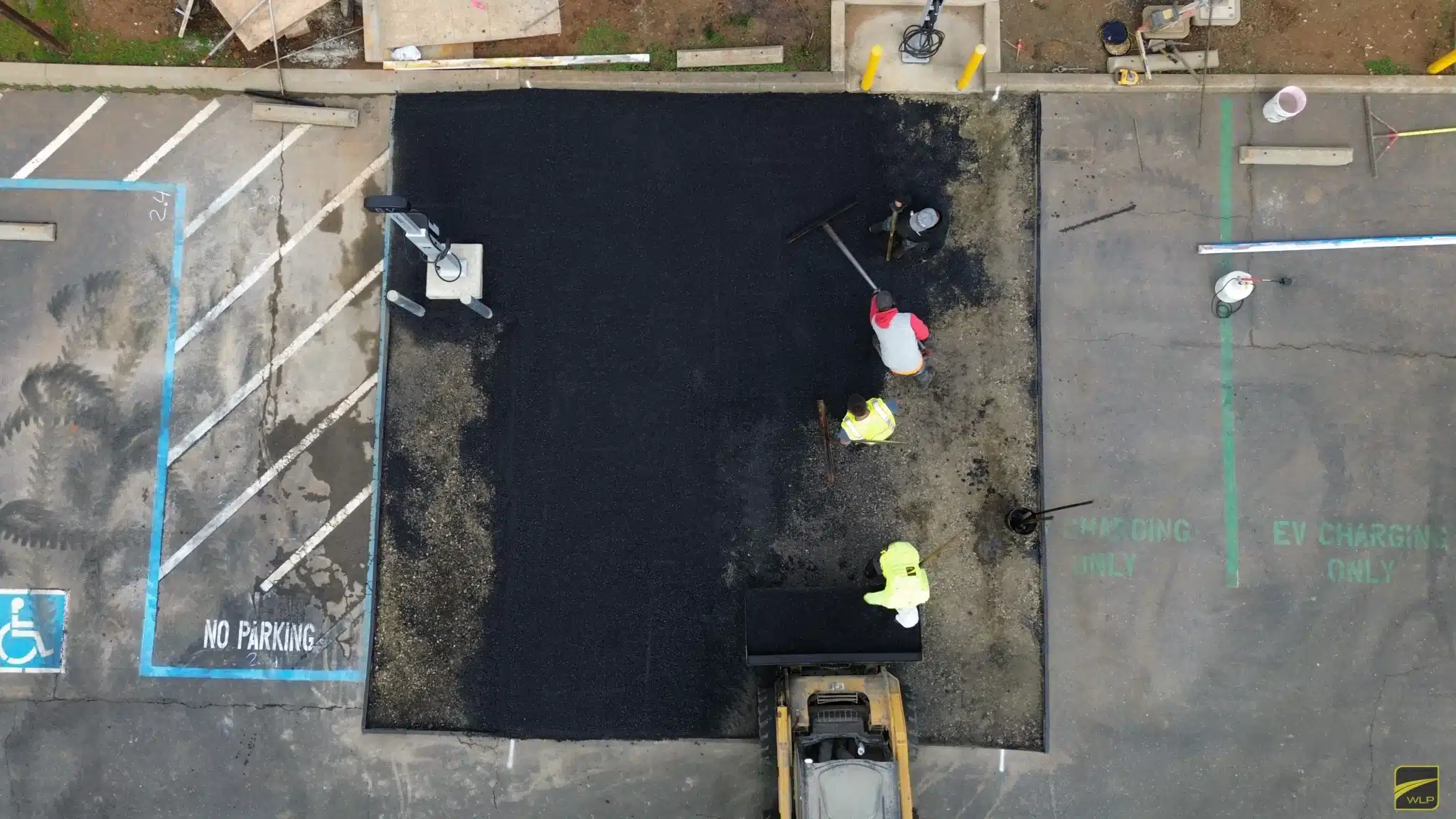
A finished paved surface can look clean on the day it opens, even if the preparation was thin. The owner sees black asphalt, fresh edges, or a smoother drive lane. They may not see whether loose material was removed, soft areas were addressed, drainage was considered, edges were supported, or the surface was prepared to receive new material.
That is why a professional proposal should explain the work before the visible finish.
Look for whether the bid addresses:
- cleaning and debris removal before placement;
- failed areas that need removal rather than coverage;
- edge tie-ins near curbs, sidewalks, ramps, and entrances;
- grade transitions where water may collect;
- compaction assumptions;
- traffic control and reopening timing;
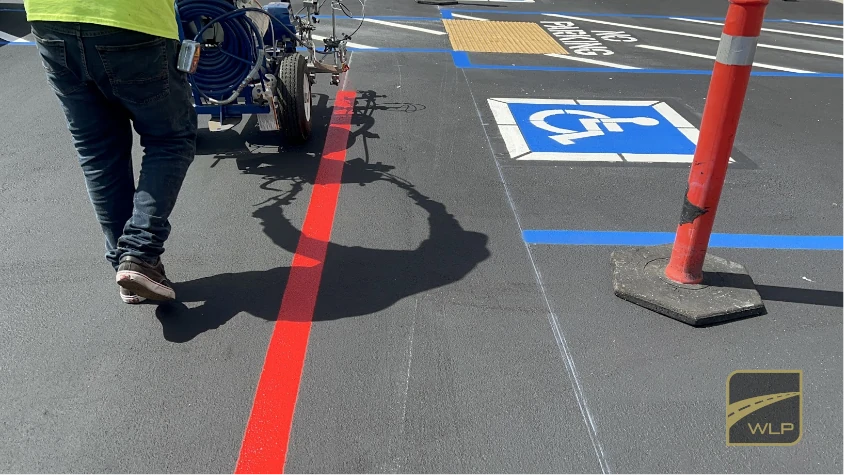
- striping, layout restoration, or markings if relevant.
Field conditions often expose weak preparation. Raveling near tight turns may continue if the surface is only covered. Cracks around patched areas may return if the surrounding movement is ignored. Low spots near catch basins may keep holding water after a surface improvement. Unsupported pavement edges may break again when vehicles keep crossing them.
A budget bid may skip these details because every detail adds time, labor, equipment, or accountability.
The Right Contractor Compares Use, Not Just Square Footage
Square footage matters, but it is not enough to judge paving work.
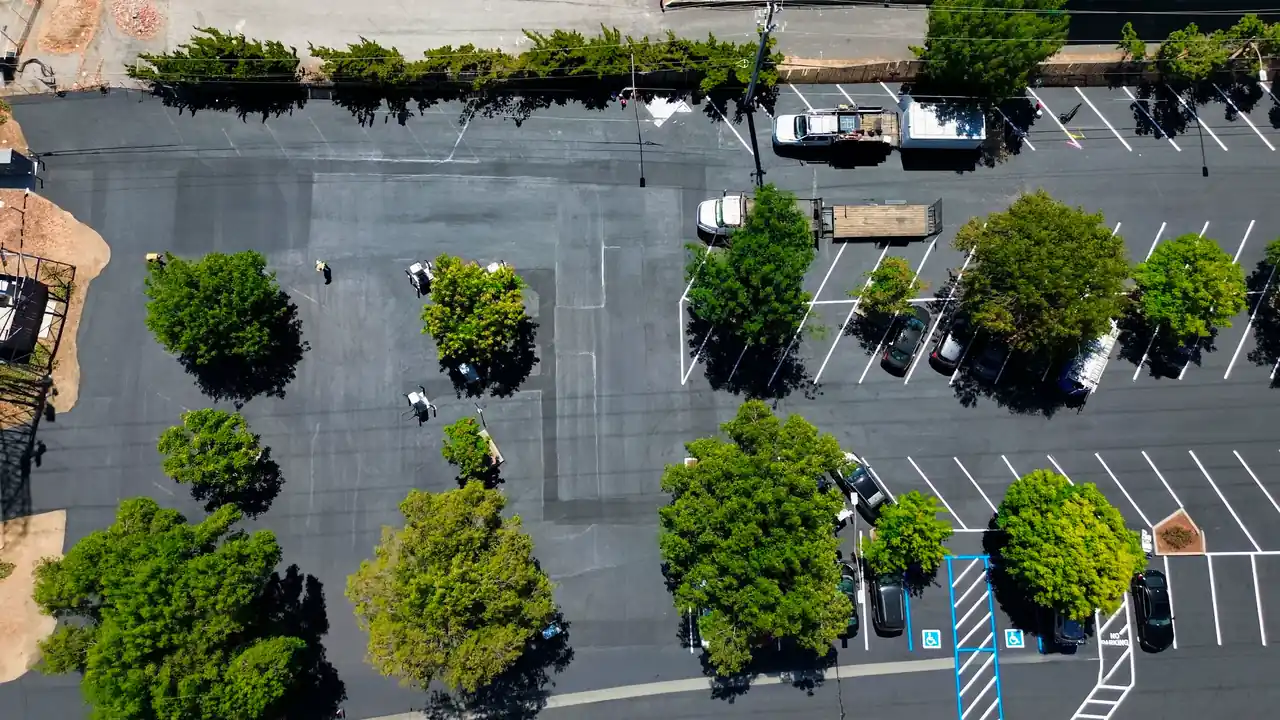
A 20,000 square foot parking lot at a quiet office building does not behave like a 20,000-square-foot restaurant lot with delivery traffic, oil exposure, constant turning, and tight parking circulation. The same area can have different stress, different failure patterns, and different scheduling needs.
Tools such as an asphalt calculator can help owners frame project size, but a calculator cannot tell whether the pavement is structurally ready for a certain scope. It cannot see water sitting along a curb. It cannot know that the shaded back row stays damp all morning. It cannot judge whether trucks are damaging the same turning area every week.
Professional paving decisions account for use:
A medical office needs predictable access for patients. A warehouse needs pavement that can tolerate truck movement. A multifamily property needs resident parking coordination. A hospitality property may need resort driveway maintenance planned around guest movement and first impressions. A retail lot may need phasing that keeps storefronts reachable.
Budget paving often treats the property as a surface. Professional paving treats it as an operating site.
Material Choice Should Match the Pavement’s Job
Another difference appears when the contractor discusses materials and pavement use.
Some surfaces need asphalt because flexibility, speed of installation, cost, and traffic pattern make it practical. Other zones may involve concrete because repeated loads, turning stress, dumpster pads, walkways, or entry transitions demand a different surface strategy. The material discussion should not be vague or automatic.
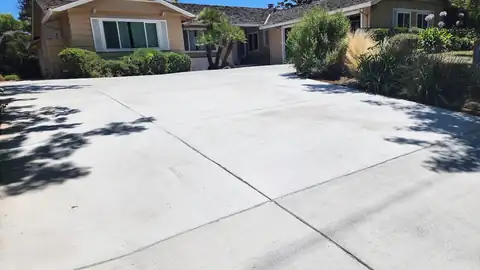
Professional concrete paving may make sense in areas where durability, edge definition, loading, or pedestrian movement require a harder surface. Asphalt may remain the better choice for larger drive lanes, parking fields, and surfaces where flexible pavement is appropriate.
A budget contractor may not raise the distinction if the goal is only to quote the fastest familiar method. That can leave owners with the wrong surface in the wrong place.
For example, a trash enclosure approach may keep failing because heavy vehicles brake, turn, and load near the same edge. A cheap asphalt patch may improve the appearance briefly, but the repeated stress may return. A professional review would at least question whether the material, thickness, base, drainage, or layout should change.
The owner does not need excessive technical detail. They need a clear explanation of why the proposed material fits the way that part of the property is used.
Operational Planning Is Part of Professional Paving
A low bid can become expensive without a single pavement failure if the project disrupts the property badly enough.
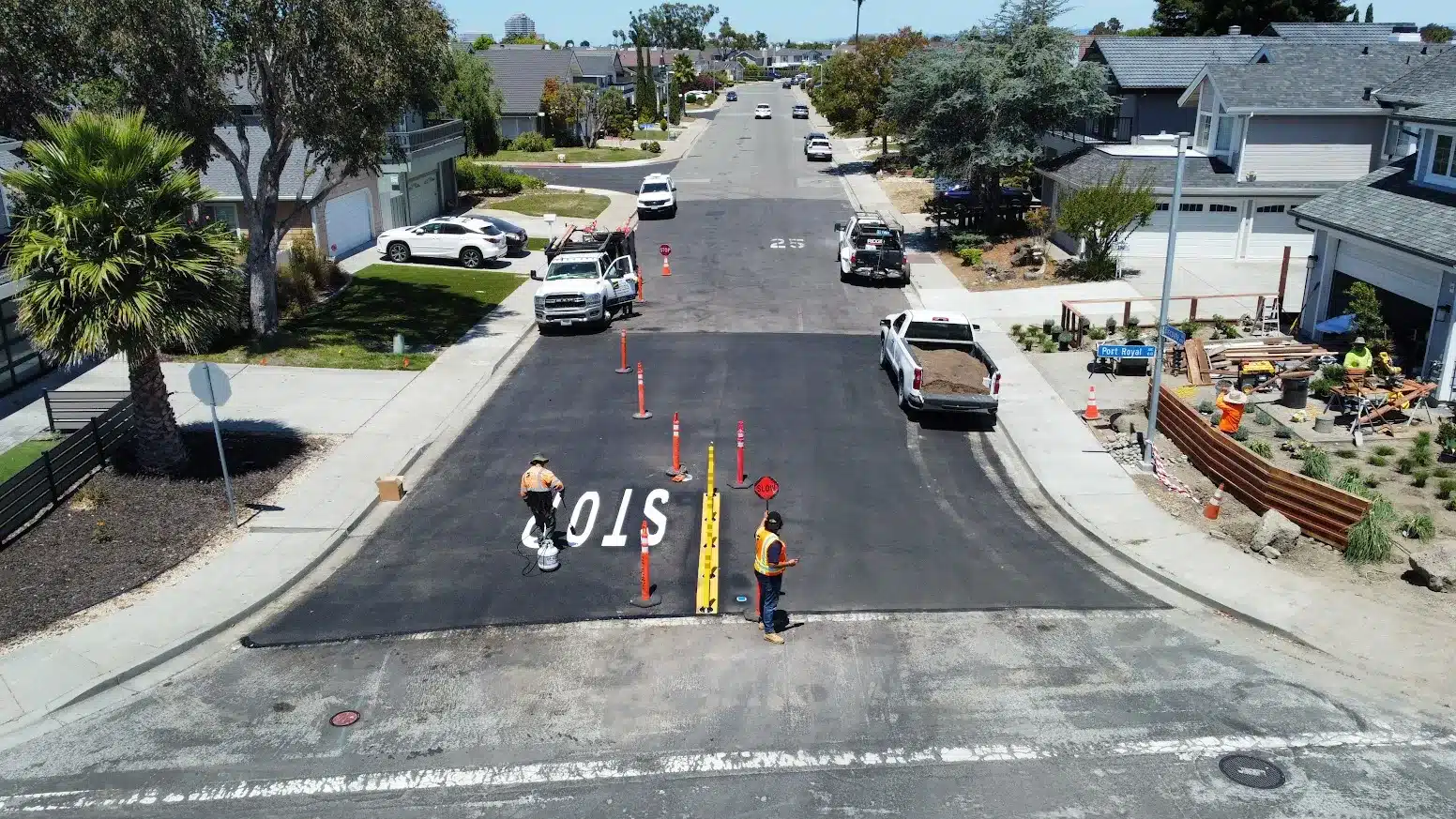
Commercial paving affects access. It can block tenants, redirect customers, interrupt deliveries, frustrate residents, or create confusion around entrances. A contractor who prices only the pavement may ignore the cost of poor coordination.
This matters on properties such as office parks, where access points, employee parking, visitor circulation, and tenant expectations all intersect. Office park resurfacing often requires phased work, advance notices, temporary routing, and careful scheduling so the property remains usable.
A professional paving partner should discuss:
- which areas must remain open;
- when work can happen with the least disruption;
- how tenants, residents, or customers should be notified;
- where crews and equipment will stage;
- when traffic can safely return;
- whether striping or markings are part of the same sequence;
- how weather changes will be handled.
A budget contractor may be able to place asphalt. That is not the same as managing a commercial paving project.
The Bid Should Make Risk Visible
The strongest paving proposal is not the one that promises everything. It is the one that makes tradeoffs clear.
If an owner chooses a lower-cost repair, the contractor should explain what the repair is expected to accomplish and what it will not solve. If drainage is excluded, say so. If the work is temporary, say so. If the pavement may continue cracking because the deeper condition is not being corrected, say so.
This is where professional paving becomes valuable. It gives the owner a defensible decision.
A useful bid should clarify:
- the observed pavement condition;
- the recommended scope;
- the reason that scope fits;
- exclusions or assumptions;
- expected access impacts;
- preparation requirements;
- conditions that may require a larger repair later.
Budget bids often look clean because they remove uncertainty from the page. Professional bids may look more complex because they expose the real decision.
That complexity is not a flaw. It is often the evidence that the contractor actually evaluated the property.
When a Budget Bid Should Make You Pause
A low price deserves extra scrutiny when the property shows signs that the pavement issue is not isolated.
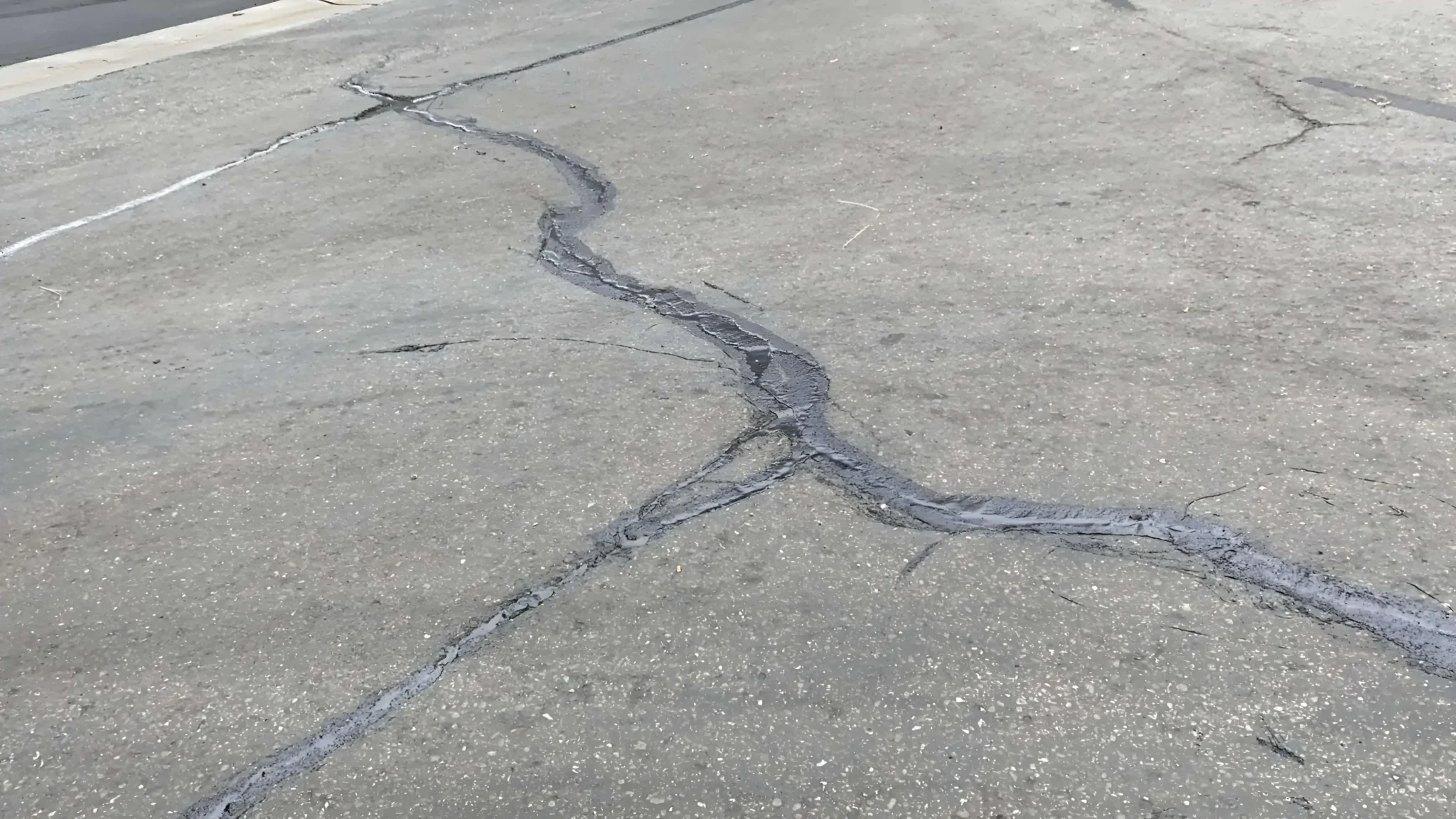
Be careful when cracks are spreading in a pattern rather than appearing randomly. Watch for patch edges that reopen after prior work. Look for depressions where tires turn repeatedly. Pay attention to water that sits in the same place after every storm or irrigation cycle. Notice pavement that breaks near unsupported edges, dumpster pads, loading doors, or high-use entrances.
Those conditions do not automatically require the largest possible project. But they do mean the owner should challenge any bid that treats the problem as simple surface work.
The right question is not, “Why is the professional contractor more expensive?”
The sharper question is, “What is the cheap bid leaving unexamined?”
How We Love Paving Frames the Contractor Comparison
The difference between professional and budget paving is not a morality story. It is a scope story.
A cheap contractor may be suitable for a narrow, temporary, or low-risk job. A professional paving partner becomes more important when the property has repeated failures, heavy use, drainage concerns, access constraints, tenant coordination, or long-term ownership value at stake.
We Love Paving approaches these decisions by tying the proposal back to the site: how the pavement is used, where it is failing, what the owner expects from the work, and what tradeoffs should be understood before the project starts.
The best bid is not always the highest or the lowest. It is the one that matches the pavement condition, explains the assumptions, and gives the owner fewer surprises after the crew leaves.