Most GCs think asphalt problems start the day paving begins.
They don’t.
They start weeks or months earlier, quietly stacking up unnoticed issues from other trades—issues that explode right when the schedule is tightest, budgets are stressed, and owners want the job turned over.
And here’s the real cost:
One overlooked mistake before paving can cost a GC $50K–$100K in rework, delays, and emergency mobilizations.
This is the blog that explains why it happens… and how elite GCs prevent it.
The $100K Mistake is NOT Bad Paving. It’s Bad Preparation.
Most “paving failures” aren’t caused by asphalt crews.
They’re caused by:
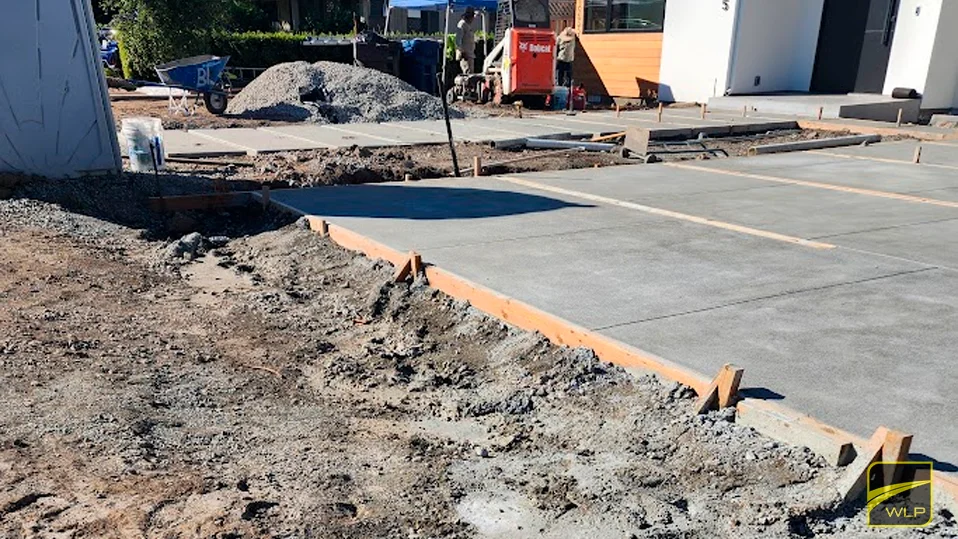
- incorrect grade left by concrete
- trench backfills not compacted by utilities
- uneven base from demo crews
- ADA slopes that don’t match plans
- unaligned forms
- subs working without coordination
- unfinished drainage corrections
By the time the asphalt sub shows up, the job is already compromised.
Think of us as the last trade standing on top of everyone’s mistakes.
That’s the real $100K mistake.
How a Project Spirals BEFORE Paving Even Begins
Here’s the silent chain reaction GCs rarely see until it’s too late:
Wrong Grade Left by Concrete →
Asphalt thickness off → trip hazards → ADA fails → entire section must be torn out.
Cost: $25K–$40K.
Utility Trenches Poorly Compacted →
Asphalt sinks → water ponds → owner complains → rework.
Cost: $15K–$30K.
Lines, Forms, or Layout off by 1–2 Inches →
Cross-slopes become noncompliant.
Cost: $10K–$50K under inspection.
Drainage not Corrected Before Paving →
Water flow wrong → puddles → premature failure.
Cost: $20K–$60K in accelerated deterioration.
This is how a “simple paving day” becomes a budget massacre.
Why GCs Underestimate this Problem
GCs assume subs will “adjust on site.”
Most asphalt crews can’t.
And the cheap ones won’t.
Surface prep, fine grading, and ADA corrections require:
- laser-level accuracy
- trained crews
- heavy equipment
- calibration knowledge
- slope math
- accountability
You can’t “wing” a compliant slope.
You can’t “fix” bad compaction with asphalt.
You can’t “adjust” a failed grade with a rake.
But subs with low bids pretend you can.
The WLP Difference: We audit the job BEFORE the Job
This is where WLP flips the script completely.
Most asphalt subs show up on paving day.
We don’t.
WLP Step #1 — Pre-Paving Inspection (On Our Dime)
We walk the entire site days before mobilizing.
We check:
- grades
- cross-slopes
- ADA ramps
- drain flow
- utility trench compaction
- concrete transitions
- high/low points
- base uniformity
- impact of other trades
This is where we catch the disasters before they cost $100K.
WLP Step #2 — Risk Report with Photos
We don’t just point out problems.
We send a clean, structured report your PM can hand to ownership or architects.
WLP Step #3 — Corrections Before Mobilization
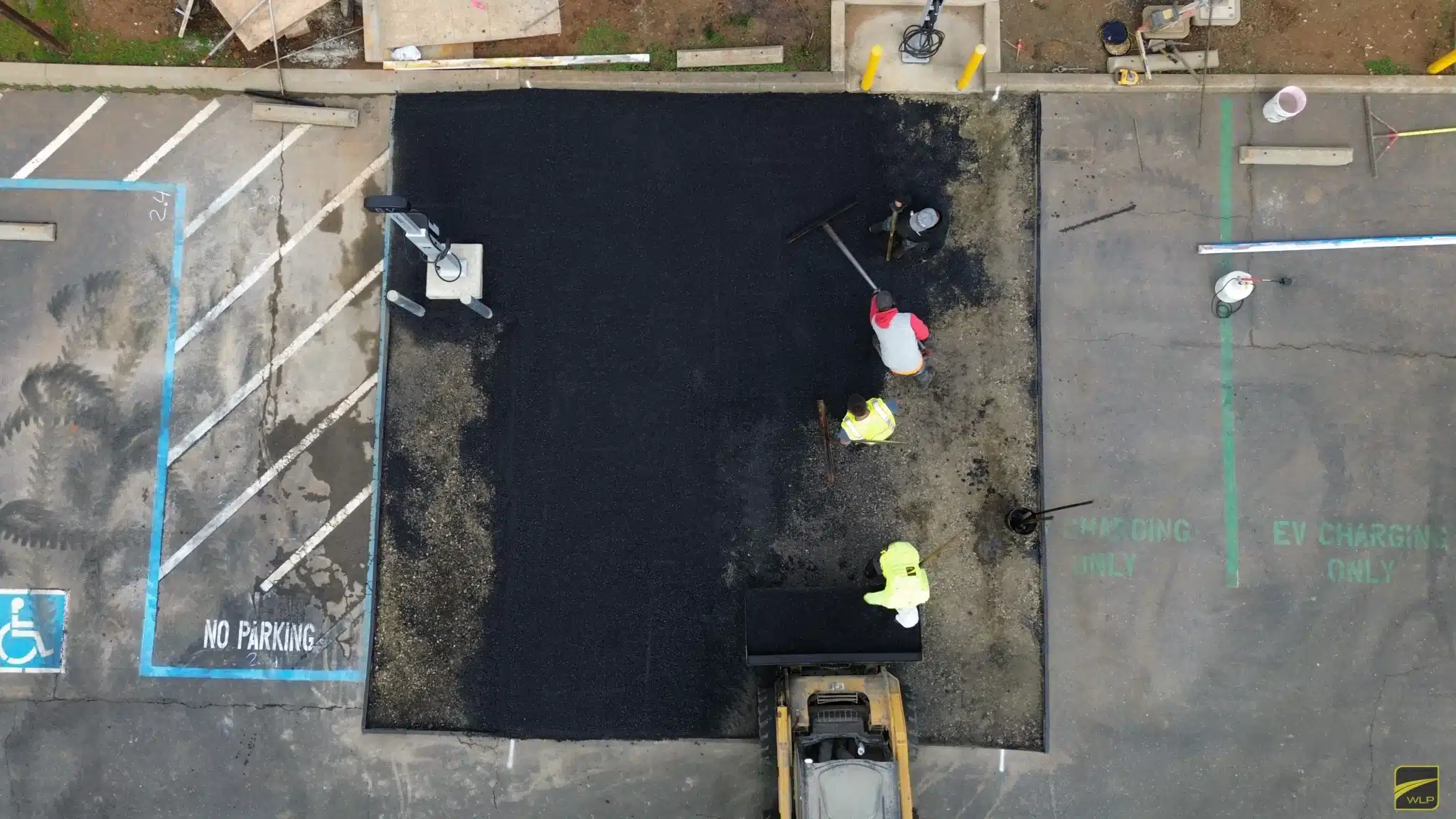
We fix what other trades left behind:
- regrading
- milling high spots
- filling low areas
- compacting trenches
- ADA slope corrections
- drainage adjustments
This saves GCs from:
- punch list nightmares
- ADA lawsuits
- failed inspections
- angry owners
- emergency rework
- scheduling chaos
This is why elite GCs love us.
The Math Doesn’t lie — This is why we Save GCs Money
Before WLP process:
GC saves $5K hiring cheap sub →
Project fails →
Rework $40K–$100K →
Owner angry →
Delay penalties →
Profit gone.
After WLP process:
GC invests in the right sub →
Zero rework →
Zero ADA issues →
Zero emergency mobilization →
Owner happy →
Project delivered smoothly.
It’s not magic.
It’s discipline + process + accountability.
The Harsh Truth: Cheap Asphalt Subs are the Most Expensive Mistakes a GC can Make
If your sub:
- doesn’t walk the site before
- doesn’t talk slopes
- doesn’t check grades
- doesn’t understand ADA
- doesn’t ask about drainage
- doesn’t document anything
…they’re not a partner. They’re a liability.
In 2026, with tighter inspection standards in California, a bad asphalt sub can destroy the entire project’s profitability.
How to Avoid the $100K Mistake (GC Checklist)
Before awarding an asphalt scope, ask the sub:
✔️ Do you inspect the job before mobilizing?
✔️ Do you correct grades left by other trades?
✔️ Do you verify ADA?
✔️ Will you send a pre-paving report?
✔️ Can you handle drainage corrections?
✔️ Do you do multi-phase paving?
✔️ Do you have dedicated QC for paving day?
If any answer is “no,” the GC should walk away.
Final Word: Your Asphalt sub can Make or Break your Project
The $100K mistake isn’t optional.
It happens automatically when no one checks the site before paving.
The GCs who protect their budgets in 2026 are the ones who:
- demand pre-paving inspections
- only work with ADA-literate subs
- choose predictable partners
- eliminate rework before it happens
WLP was built for exactly this.
If you’re a GC who wants zero rework, zero ADA surprises, and perfect paving days
WLP can inspect your site before you mobilize a single truck.
👉 Request your Pre-Paving Risk Assessment (2026)
(We’ll tell you what every other sub missed.)