Imagine this: You’re running your business, everything is going great, and then bam! An ADA lawsuit appears like an unsolicited email from a prince offering you millions. But this time, it’s not spam it’s real, and it’s going to cost you. So, how do you keep your business safe from these sneaky lawsuits? Grab a coffee (or something stronger), and let’s dive in!
Step 1: Know the Enemy (Spoiler: It’s You… Kind Of)
ADA lawsuits aren’t just random attacks from the lawsuit fairy. They happen because businesses unknowingly violate accessibility laws. Common culprits include:
- Parking lots that look like a Jackson Pollock painting instead of having clear markings.
- Ramps that are more like extreme sports courses.
- Restrooms so tiny that even a cat would feel claustrophobic.
- Websites that say, “Accessibility? Never heard of it.”
If you’re nodding along to any of these, congratulations! You’re officially a target.
Step 2: Stop Ignoring Your Parking Lot (Seriously)
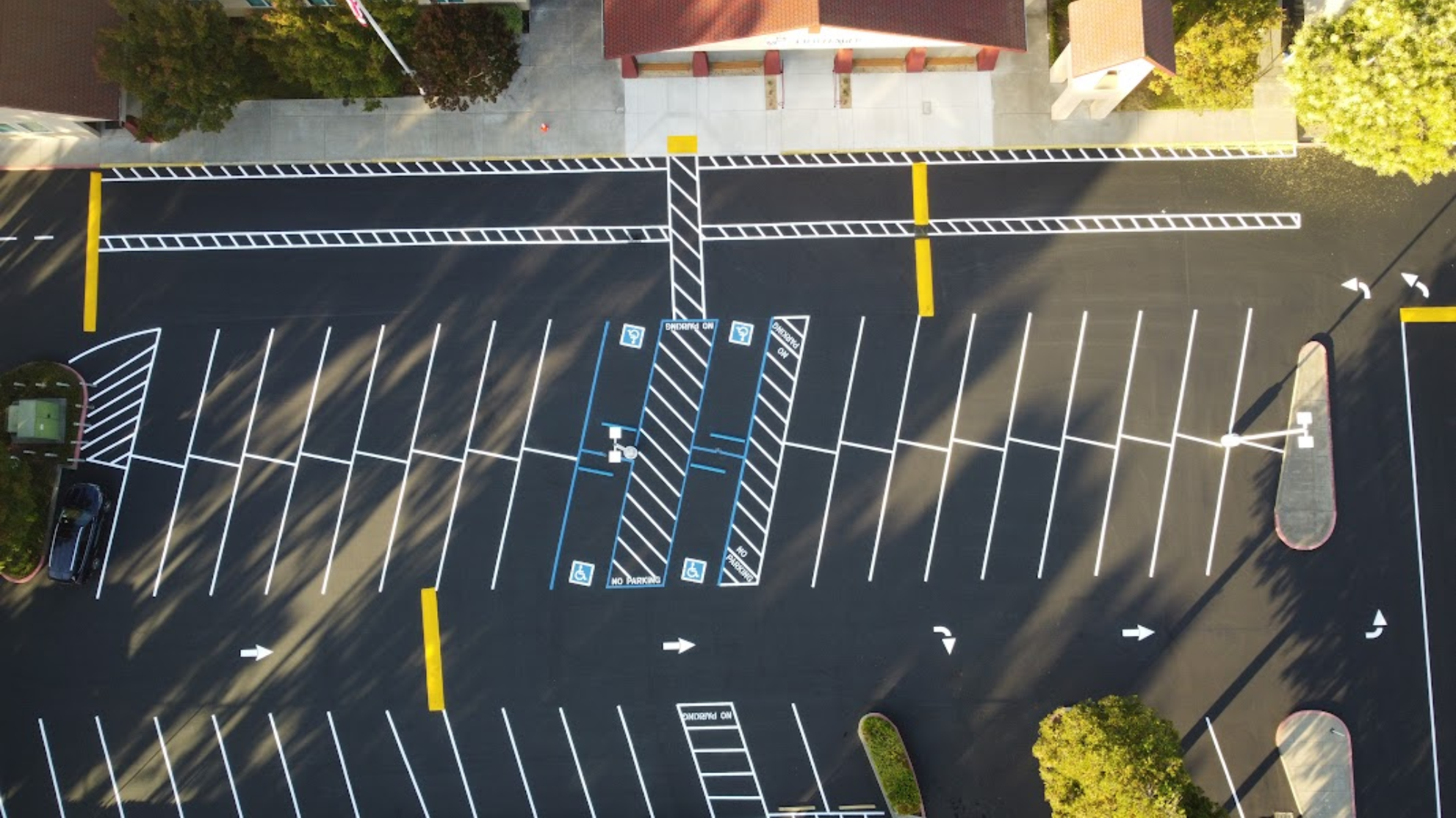
Your parking lot is the first thing customers see, and if it’s not compliant, it’s like waving a neon sign that says, “Sue me, please!”
- Step 1: Make sure you’ve got clearly marked wheelchair-accessible spots. (No, “close enough” doesn’t count.)
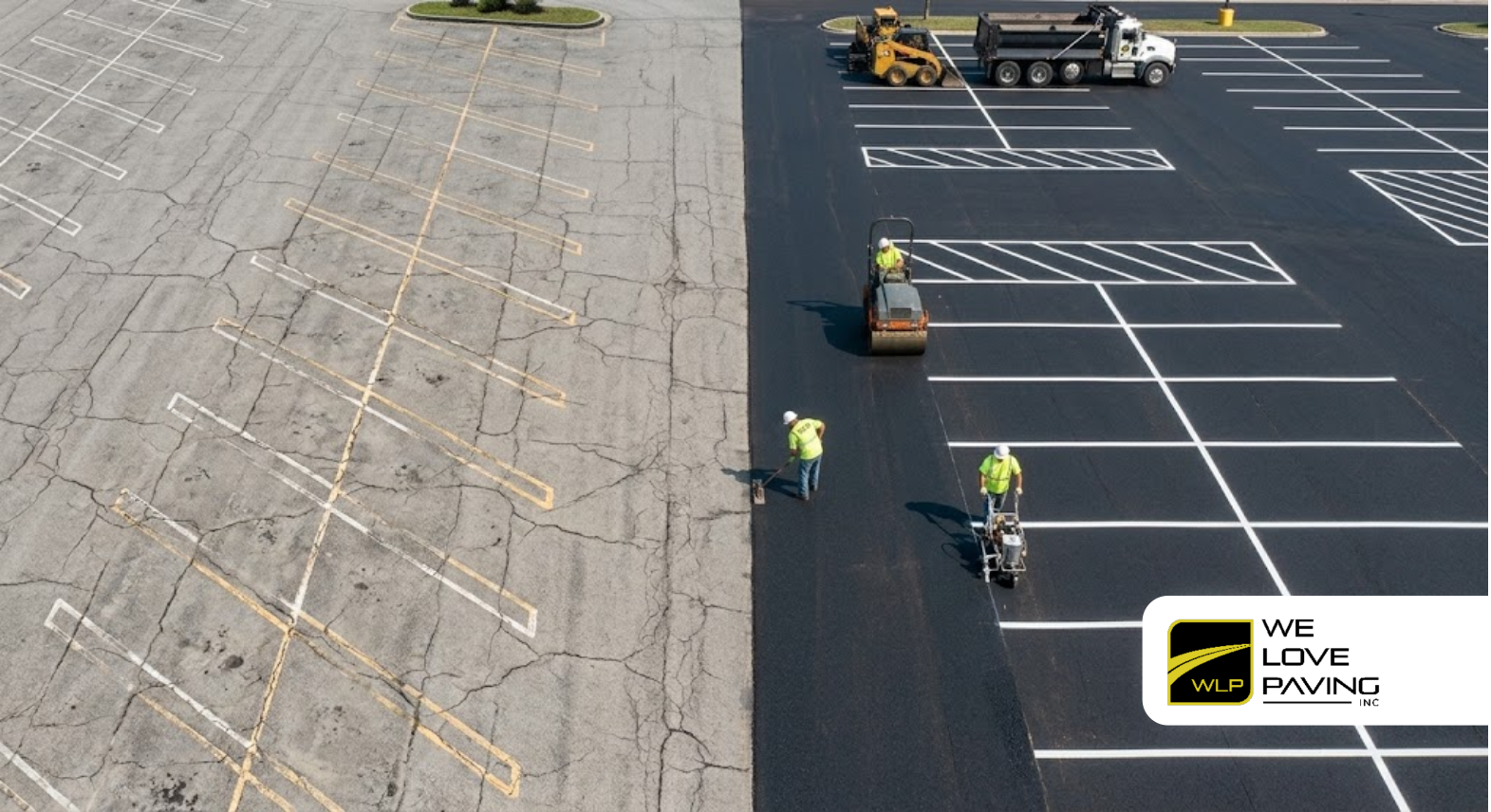
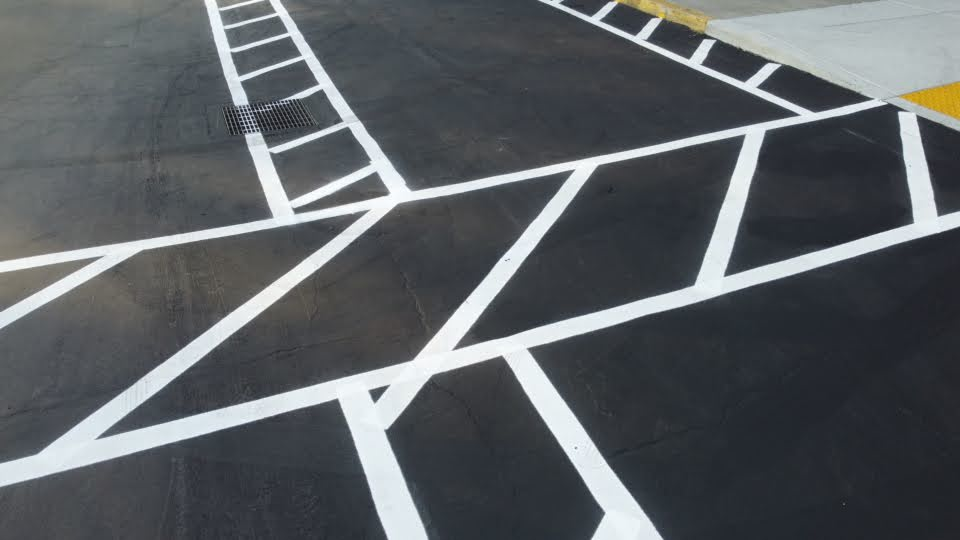
- Step 2: Check the paint. If it looks like it’s been through a war zone, it’s time to re-stripe.
- Step 3: Add proper signage. Missing signs = easy lawsuit.
Think of it as giving your parking lot a makeover. Everyone loves a good glow-up!
ADA Technical Infrastructure Glossary
To ensure the authority of your infrastructure, it is vital to master the technical terminology prioritized by inspectors and search algorithms:
- Cross Slope: The slope perpendicular to the direction of travel. Per ADA standards, it must not exceed 2% (1:50) on accessible routes to prevent wheelchair instability.
- Access Aisle: The striped area adjacent to accessible parking spaces (minimum 60″ wide for cars and 96″ for vans) that allows for ramp deployment.
- Detectable Warnings (Truncated Domes): Tactile surfaces with raised domes in a contrasting color located at curb ramps to alert visually impaired individuals of the transition to vehicular traffic.
- Running Slope: The maximum allowable ratio is 1:12. Any steeper incline is considered a safety hazard and a direct code violation.
Step 3: Make Your Business a Welcome Mat (Not a Welcome Trap)
Accessibility isn’t just about avoiding lawsuits it’s about being a decent human being. Here’s how to make your business more inviting:
- Ramps, Not Stairs: If someone with a wheelchair can’t get in, you’ve got a problem.
- Bathroom Bliss: Make sure your restrooms are accessible. Bonus points if they’re not terrifyingly tiny.
- Signs That Speak: Good signage isn’t just helpful it’s the law.
Step 4: Websites Need Love Too
Did you know your website could get you sued? Yep, even in the digital world, compliance matters. Make sure your site:
- Works with screen readers.
- Has alt text for images. (Hint: “Image123” is not a good description.)
- Doesn’t have autoplay videos that scare the living daylights out of users.
Think of your website as your online storefront. Would you want people tripping over invisible barriers there? No? Fix it!
Step 5: Don’t Wait for Trouble to Come Knocking
Here’s the deal: Fixing issues after a lawsuit is like trying to patch a sinking ship with duct tape. Be proactive:
- Audit Everything: Get a professional to check your compliance.
- Train Your Team: Educate your staff on accessibility (and maybe tell them to smile more while you’re at it).
- Stay Updated: Laws change, so don’t assume you’re in the clear forever.
The CASp (Certified Access Specialist) Advantage
If your business operates in California, a CASp (Certified Access Specialist) inspection is your best legal defense. Under SB 1608, obtaining a CASp inspection grants business owners “Inspected Property” status. This provides critical procedural benefits in the event of an accessibility lawsuit, including the ability to request a stay of proceedings and an early evaluation conference. It’s not just about compliance; it’s about bulletproof legal protection that demonstrates your proactive commitment to both state and federal accessibility standards.
Barrier Removal: The “Readily Achievable” Standard
The ADA requires businesses to remove architectural barriers in existing facilities when it is “readily achievable,” meaning without much difficulty or expense.
- Priority 1: Access from sidewalks, parking, or public transit (e.g., re-striping spaces).
- Priority 2: Access to areas where goods and services are offered (e.g., widening doors).
- Priority 3: Access to restrooms (e.g., installing grab bars).
- Priority 4: Any other necessary measures (e.g., Braille signage). This approach allows small businesses to mitigate legal risks through gradual but documented improvements.

Lock Down Your Lot and Kick Lawsuits to the Curb!
Look, ADA compliance doesn’t have to be a nightmare that keeps you up at night. Think of it as your chance to make your business more welcoming, more inclusive, and best of all way less likely to get slapped with a shaky lawsuit. Plus, once your pavement is dialed in and your ramps are on point, you can proudly say, “Not today, lawsuit fairy!” At the end of the day, an accessible business is a business that thrives.
Ready to protect your hard work and finally get some decent sleep? Head over to We Love Paving and let’s tackle this project together. We’ve got your back!