Driveway materials have evolved from simple dirt tracks into engineered paving systems built to withstand heavy traffic and severe weather. While property owners in Northern California can choose from various surfaces, asphalt consistently outperforms other options in long-term resilience and value. The technical team at We Love Paving continuously evaluates these performance factors to determine why hot-mix asphalt remains the preferred standard for regional properties.
The History and Evolution of Driveway Materials
Driveways began as simple compacted dirt paths designed for horse-drawn carriages. As automotive weight increased during the early 20th century, loose gravel became popular across agricultural regions like the Central Valley for its low initial cost. However, unpaved gravel frequently rutted during rainy winter seasons and required constant regrading.
By the mid-20th century, the expansion of municipal road infrastructure popularized hot-mix asphalt and concrete. Early asphalt formulations relied on basic petroleum binders, but ongoing chemical engineering introduced polymer-modified asphalt binders designed to handle higher axle weights and thermal expansion. Today, choosing the right driveway material requires evaluating not just the top surface layer, but also the aggregate base beneath it.
Comparing Modern Driveway Materials
Choosing a surface requires balancing installation cost, maintenance requirements, and weather performance:
| Driveway Material | Initial Cost Level | Average Lifespan | Maintenance Level | Best Climate Suitability |
|---|---|---|---|---|
| Gravel | Very Low | 5–10 Years | High (Regrading, weed control) | Rural areas; prone to washouts |
| Hot-Mix Asphalt | Moderate | 15–25 Years | Low–Moderate (Sealcoating every 3–5 yrs) | Soil movement & freeze cycles |
| Poured Concrete | High | 25–30+ Years | Low (Joint sealing) | Stable soils; prone to cracking |
| Tar and Chip | Low–Moderate | 8–12 Years | Low (Minimal maintenance) | Rural drives; moderate traffic |
| Interlocking Pavers | Very High | 30+ Years | Moderate (Re-sanding, weed control) | Handles ground movement well |
Why Asphalt Remains the Standard Choice
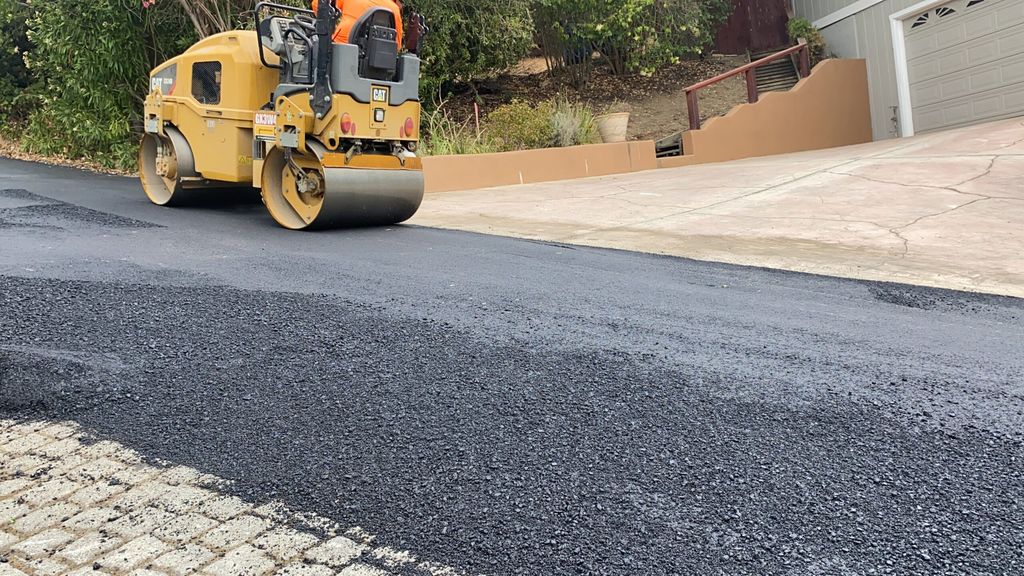
Asphalt maintains its leading market position due to structural flexibility, speed of installation, and manageable life-cycle maintenance. Unlike rigid concrete, flexible asphalt absorbs ground movement without shattering. Proper structural design relies on a Class 2 aggregate base beneath 2 to 3 inches of compacted hot-mix asphalt.
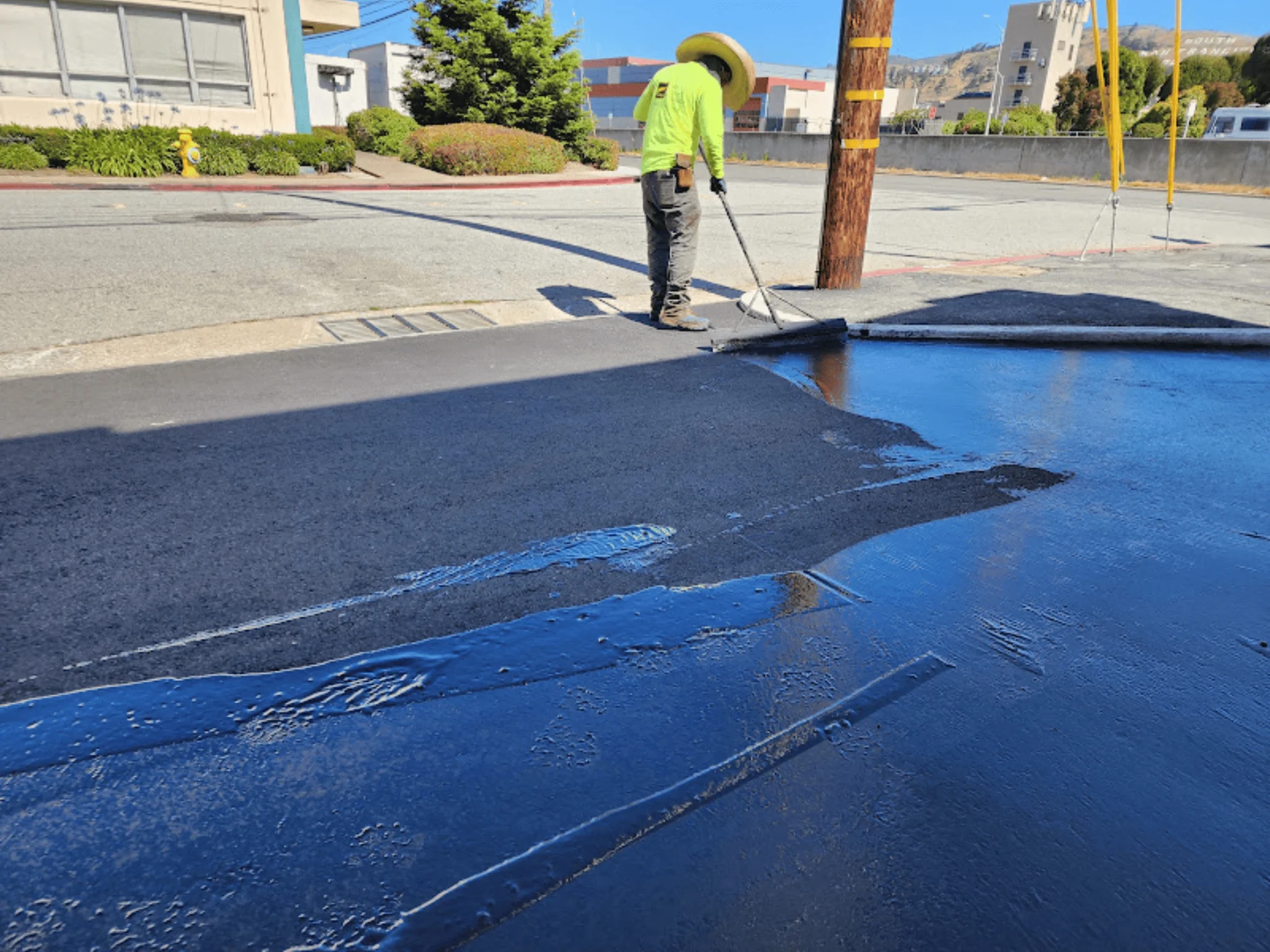
Vehicles can drive onto a newly paved asphalt surface within 24 to 48 hours after installation, minimizing disruption. Maintaining asphalt performance over two decades requires basic proactive care. Applying a protective surface coat shields the bitumen from oxidation caused by intense California solar radiation. Choosing eco-friendly asphalt emulsions over traditional coal-tar sealer formulas protects surrounding soil while keeping the surface dark and pliable.
Temperature management remains essential during colder months. Knowing how to safely pave driveway winter conditions requires monitoring ambient air and ground temperatures to guarantee proper compaction before the mix cools down.
Emerging Trends in Driveway Materials
While asphalt remains a top choice, innovations in driveway materials are emerging. These include sustainable options like rubberized asphalt and solar-integrated surfaces. However, even with these advancements, asphalt continues to lead the market due to its proven reliability and value.
Northern California Climate and Regional Paving Standards
Pavement performance in Northern California depends directly on how well the surface copes with seasonal dry spells followed by intense atmospheric river storms. Clay-rich soils across regions like Alameda and Contra Costa counties expand when wet and contract during dry summers, exerting hydrostatic pressure under residential driveways.
The paving specialists at We Love Paving engineer driveways specifically for these regional soil and weather dynamics. By ensuring proper grading slope (minimum 1% to 2% grade for runoff) and compacting sub-grade soils according to local engineering codes, we prevent standing water and sub-base saturation.

Choosing the Right Driveway Material for Your Property
The continuous evolution of paving materials highlights hot-mix asphalt as the most practical balance of long-term durability, structural flexibility, and overall value. While rigid concrete or decorative pavers offer distinct aesthetic choices, asphalt consistently handles northern California’s seasonal soil shifts and thermal expansion with minimal maintenance requirements. Proper installation over a solid aggregate base ensures a reliable surface built to last for decades.
Planning a new driveway installation or resurfacing project requires evaluating local soil conditions, site drainage, and heavy load needs. The paving team at We Love Paving provides clear technical evaluations and tailored paving solutions designed to protect your investment.