The Cost of Asphalt Cutting Per Linear Foot: What to Expect

We Love Paving services in Santa Clara County. Professional paving contractor serving Santa Clara County and Tech Corridor areas.
Estimation Tools

Calculate costs in seconds

Fast, accurate estimates that help you close more jobs. Less guesswork, more profit.

When it comes to construction and repair projects, asphalt cutting is often a necessary task, whether for roadworks, driveways, or other paved surfaces. Understanding the cost involved in asphalt cutting per linear foot can help you budget more accurately for your project. This article will break down the factors affecting these costs and provide a general overview of what you can expect to pay.

Factors Influencing the Cost of Asphalt Cutting

Depth of Cut

The depth to which the asphalt needs to be cut is a significant cost driver. Deeper cuts require more powerful equipment and longer operational times, increasing the overall expense.

Thickness of Asphalt

Thicker asphalt layers take more time and effort to cut through. If the asphalt is laid on top of a concrete base, this can further complicate the cutting process.

Type of Equipment Used

The machinery and tools required for the job also influence the cost. Handheld saws, walk-behind saws, and ride-on saws each have different operating costs. More sophisticated and powerful machines usually cost more to operate.

Accessibility of the Site

Sites that are difficult to access or have restricted space can increase labor costs due to the additional effort required to maneuver equipment.

Labor Costs

Labor costs vary depending on the region and the skill level required for the job. More complex projects requiring highly skilled operators will be more expensive.

Disposal of Cut Asphalt

The cost of removing and disposing of the cut asphalt can add to the overall expense. Some contractors include this in their pricing, while others may charge extra.

Project Size

Larger projects often benefit from economies of scale, potentially reducing the cost per linear foot compared to smaller jobs.

Average Cost Per Linear Foot

While the cost of asphalt cutting can vary widely depending on the factors mentioned above, here are some general estimates:

  • Shallow Cuts (up to 2 inches deep): $1 to $3 per linear foot
  • Moderate Cuts (2 to 4 inches deep): $2 to $5 per linear foot
  • Deep Cuts (over 4 inches deep): $4 to $10 per linear foot

These are rough estimates and can fluctuate based on your specific location, the contractor you hire, and the current market conditions.

Tips to Reduce Asphalt Cutting Costs

Get Multiple Quotes

Obtain quotes from several contractors to ensure you’re getting a competitive rate. Make sure each quote includes a breakdown of costs for better comparison.

Plan Efficiently

Plan the project to minimize the amount of cutting required. Efficient project design can significantly reduce the length of cuts needed.

Combine Projects

If you have multiple projects requiring asphalt cutting, try to schedule them together. Bulk work can often lead to discounts.

Check for Permits

Ensure all necessary permits are in place before starting the project to avoid any legal issues or delays that could increase costs.

Conclusion

Understanding the cost of asphalt cutting per linear foot is crucial for budgeting and planning your construction or repair project. By considering the various factors that influence these costs and seeking competitive quotes, you can manage your expenses effectively. Whether it’s a small driveway repair or a large roadwork project, having a clear idea of what to expect will help you navigate the process smoothly.

Need Immediate Help?

Let's Talk About Your Project

Don't wait until minor damage turns into major expenses. Our team of experts is ready to provide you with guaranteed solutions. Contact us now for direct advice from a professional.

Frequently Asked Questions (FAQ)

Got Questions? Find Your Answers Here!!

What is the average cost of asphalt cutting per linear foot?

The average cost of asphalt cutting per linear foot typically ranges between two and five dollars, depending on the pavement thickness. Factors like project size and regional labor rates influence final pricing. Most contractors require a minimum mobilization fee of five hundred dollars for small residential or commercial repair jobs.

How does pavement depth affect the price of asphalt saw cutting?

Pavement depth affects the price of asphalt saw cutting because thicker surfaces require heavy-duty diamond blades and more time to penetrate. Cutting a standard three-inch residential driveway is significantly cheaper than a six-inch industrial slab. Expect costs to increase by thirty percent for every additional two inches of asphalt.

Why is professional asphalt saw cutting necessary for pavement repairs?

Professional asphalt saw cutting is necessary for pavement repairs because it creates clean, vertical edges that ensure proper bonding with new hot-mix asphalt. This technical precision prevents the sixty percent of patch failures caused by irregular joints. Clean cuts allow for effective tack coat application, maintaining the structural integrity.

What equipment is used for high-precision asphalt cutting projects?

High-precision asphalt cutting projects utilize walk-behind saws equipped with industrial diamond blades and water-cooling systems to manage dust. For large-scale utility trenches, contractors often use high-horsepower diesel saws. These specialized tools ensure straight lines and consistent depths, reducing the risk of accidental damage to underground utilities by eighty percent.

What factors can increase the total cost of asphalt cutting services?

Factors that can increase the total cost of asphalt cutting services include difficult site access, concrete reinforcement within the asphalt, and high mobilization fees for small areas. Additionally, hand-sawing around tight corners or obstacles typically doubles the standard linear foot rate due to increased manual labor and time.

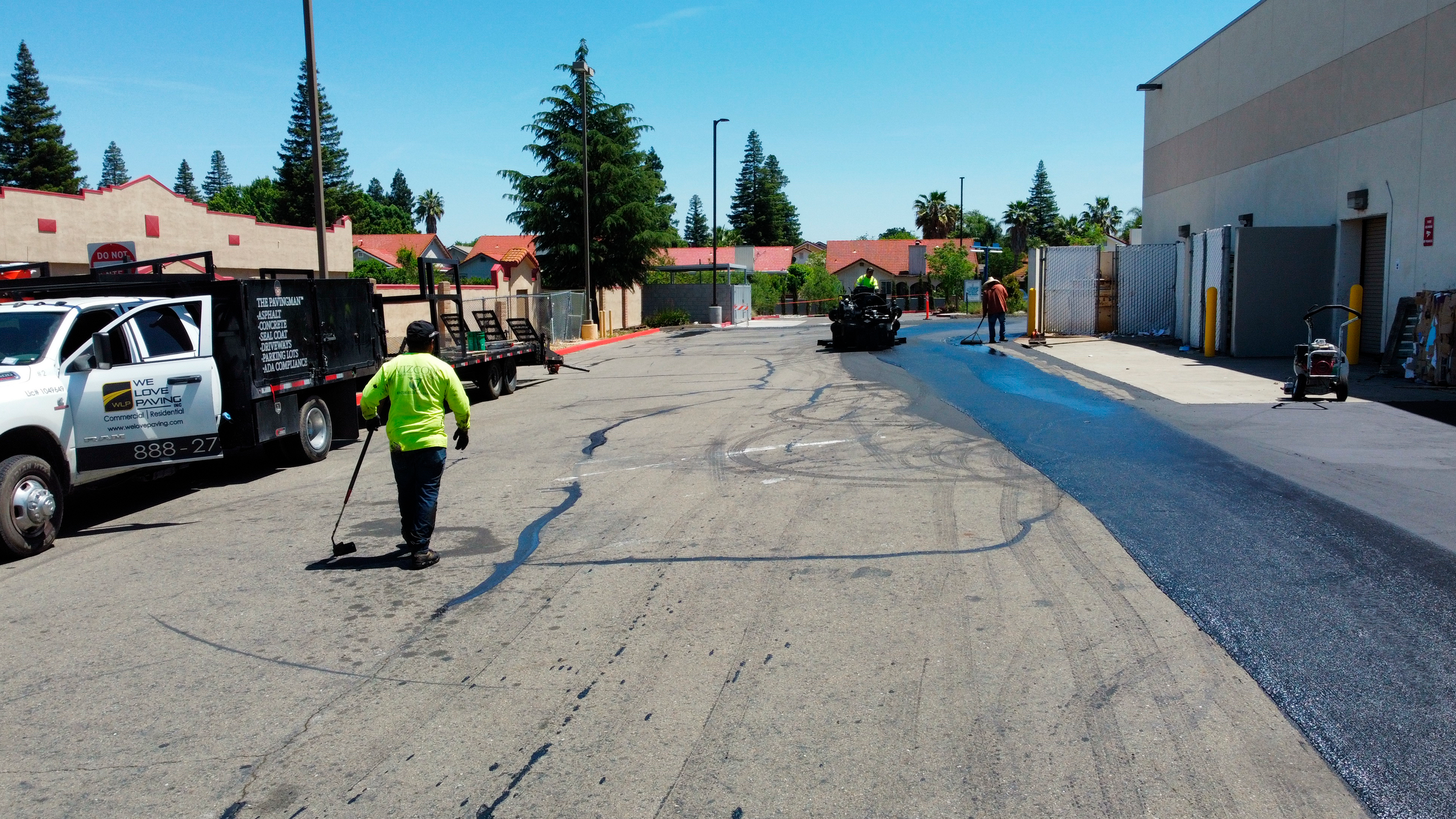
Professional asphalt paving project by We Love Paving in Northern California, California. Verified local construction quality.

We Love Paving Experts

Published by We Love Paving's field operations team CSLB Licensed #1049649, C12 Earthwork and Paving. Our articles reflect firsthand experience from 1,000+ commercial projects across Northern California.

Share

Posts That Might Interest You

Understanding Coal Tar Sealer and Its Historical Commercial Use

Understanding Coal Tar Sealer and Its Historical Commercial Use

July 27, 2026

Coal tar sealer is a coal-processing byproduct refined into a liquid emulsion designed to coat asphalt pavements. Industrially produced during the conversion of coal into coke for steel manufacturing, coal tar contains a dense mix of aromatic hydrocarbons. When applied to asphalt, it forms a rigid surface barrier that resists gas, motor oil, and ultraviolet

The Complete Cement Process: From Raw Materials to Commercial Paving Performance

The Complete Cement Process: From Raw Materials to Commercial Paving Performance

July 24, 2026

The cement process is an advanced sequence of chemical transformations and mechanical steps that converts raw earth minerals into the hydraulic binder powering modern infrastructure. From quarry extraction and high-temperature pyroprocessing in rotary kilns to fine finish grinding, every stage dictates the structural integrity of the final mixture. This guide breaks down how high-grade cement

Can You Pave a Driveway in Winter?

Can You Pave a Driveway in Winter?

July 23, 2026

Paving a driveway in the winter is technically possible under specific conditions, but it carries substantial risks if temperatures drop below safety thresholds. For hot mix asphalt to form a durable, watertight surface, both ambient air and ground temperatures must remain consistently at or above 50°F (10°C). When temperatures fall below this point, asphalt cools

Commercial Parking Lot Posts: A Complete Guide to Types, Installation, and Safety

July 22, 2026

A parking lot post serves as a critical barrier between moving vehicles and structural property elements. Commercial property managers across Northern California rely on these heavy-duty vertical columns to direct traffic flow, safeguard pedestrian walkways, and protect storefronts from vehicle impacts. Drawing from We Love Paving’s experience across more than 1,000 commercial paving projects in

Next

Estimation Tools

Calculate costs in seconds

Fast, accurate estimates that help you close more jobs. Less guesswork, more profit.