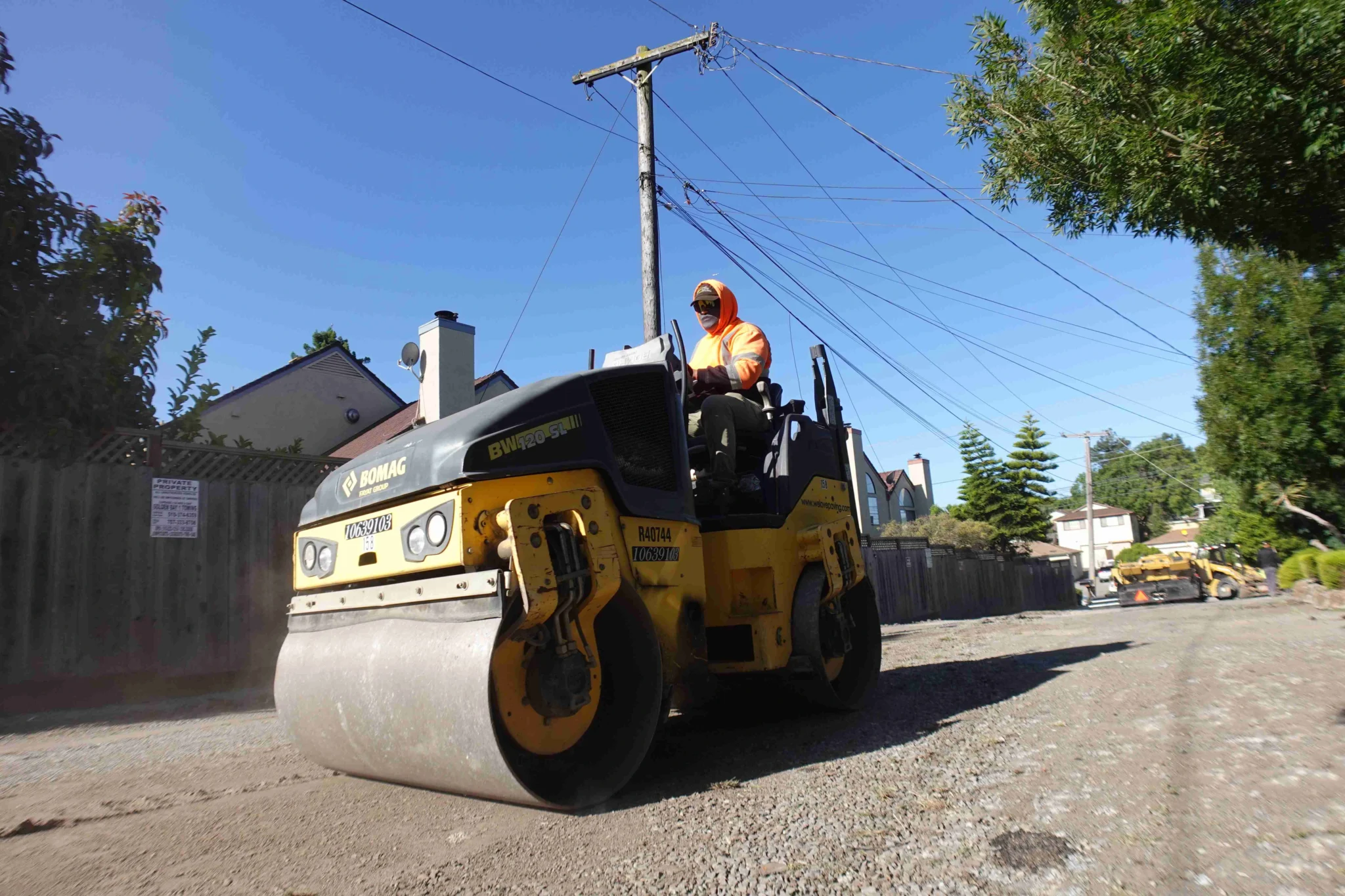
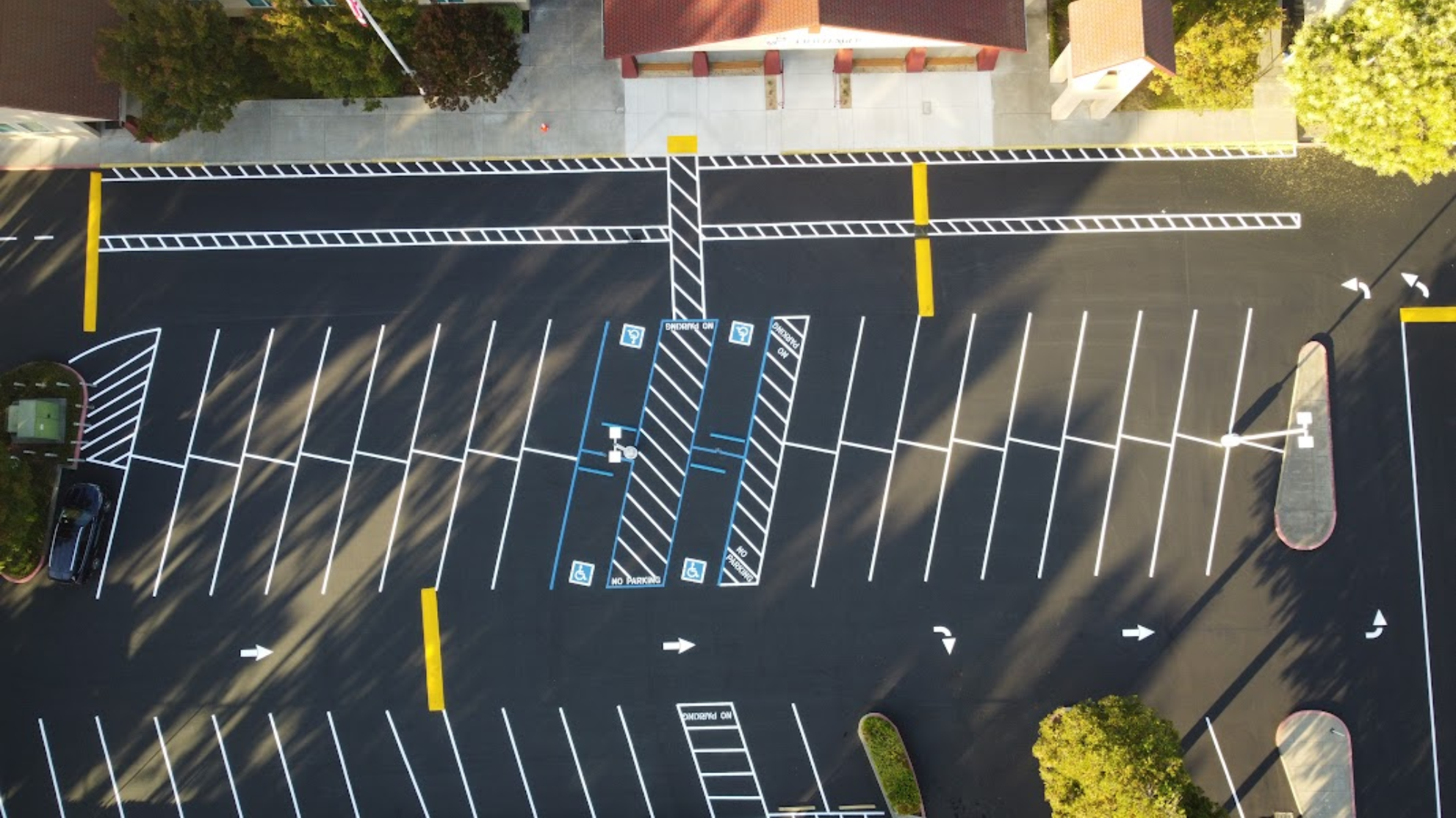
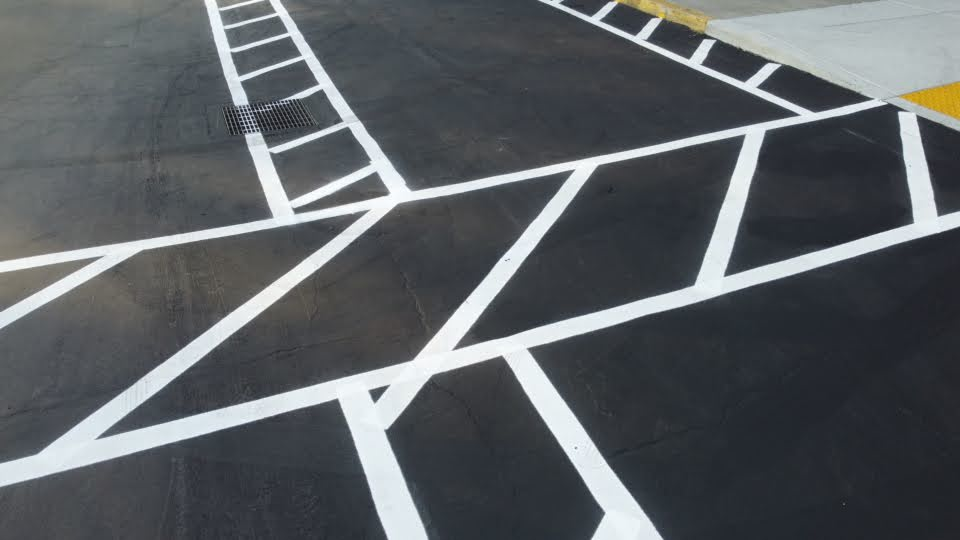
Imagine you’re out on a sunny day, soaking up the rays, thinking you’re invincible. But after a few hours, you’re feeling the burn—red, irritated, and regretting not applying sunscreen. Now, picture that same sun beating down on your driveway or parking lot. Without sealcoating, your asphalt is going to feel that same burn. Just like your skin, asphalt can suffer from UV damage, cracking, and wear, all because it didn’t get the protection it needs.
Why Sealcoating is Asphalt’s Sunscreen:
1. Protection from UV Rays
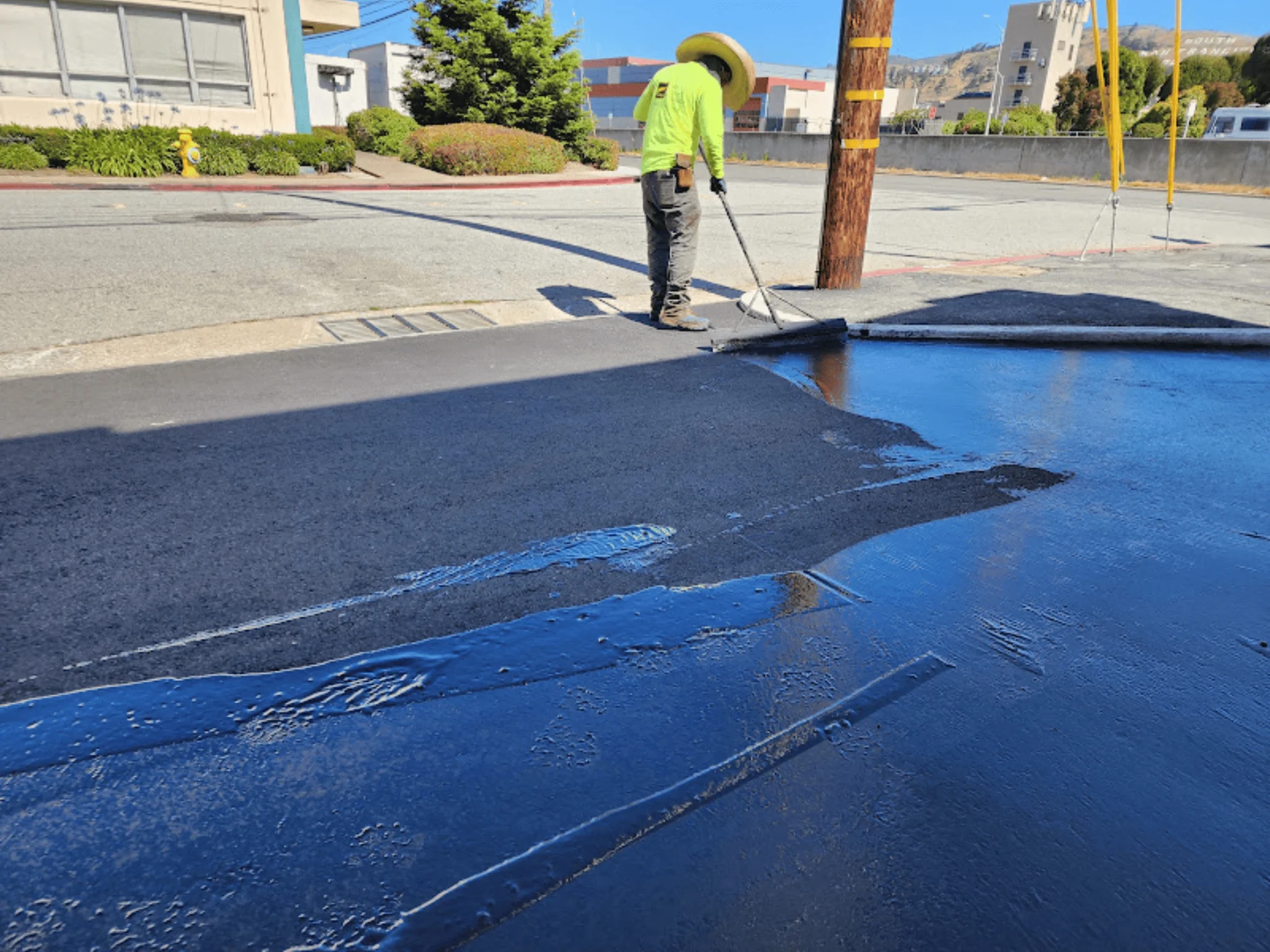
Asphalt, like human skin, is vulnerable to the sun’s UV rays. Over time, constant exposure to the sun can break down the surface of your asphalt, causing it to become brittle, cracked, and faded. When you apply sunscreen to your skin, it forms a protective barrier that absorbs or reflects the UV rays, preventing damage. Similarly, when you apply sealcoating to asphalt, it creates a layer that helps deflect UV radiation, keeping the surface intact and preventing it from deteriorating.
2. Shielding from Moisture and Elements
Another way sunscreen works is by preventing moisture loss from your skin, keeping it hydrated. Asphalt can also be damaged by moisture. Rain, snow, and even dew can seep into the pores of the asphalt. When water gets into cracks or holes, it expands when it freezes (especially in cold weather), causing the cracks to widen. Sealcoating acts as a barrier that repels water, ensuring that it doesn’t seep in and cause those cracks to form or grow larger. Just like you wouldn’t leave your skin exposed to the elements, your asphalt needs protection to stay intact.
3. Prevention of Wear and Tear
Just like sunscreen can prevent your skin from aging prematurely by blocking harmful rays, sealcoating prevents the surface of your asphalt from aging too quickly. When asphalt is left untreated, it gets “weathered” over time—meaning it starts showing signs of wear and tear much earlier than it should. Sealcoating helps to extend the lifespan of the surface by providing a protective shield that reduces the effects of weather, traffic, and daily use. It slows down the process of oxidation and general degradation.
4. Maintaining Aesthetic Appeal
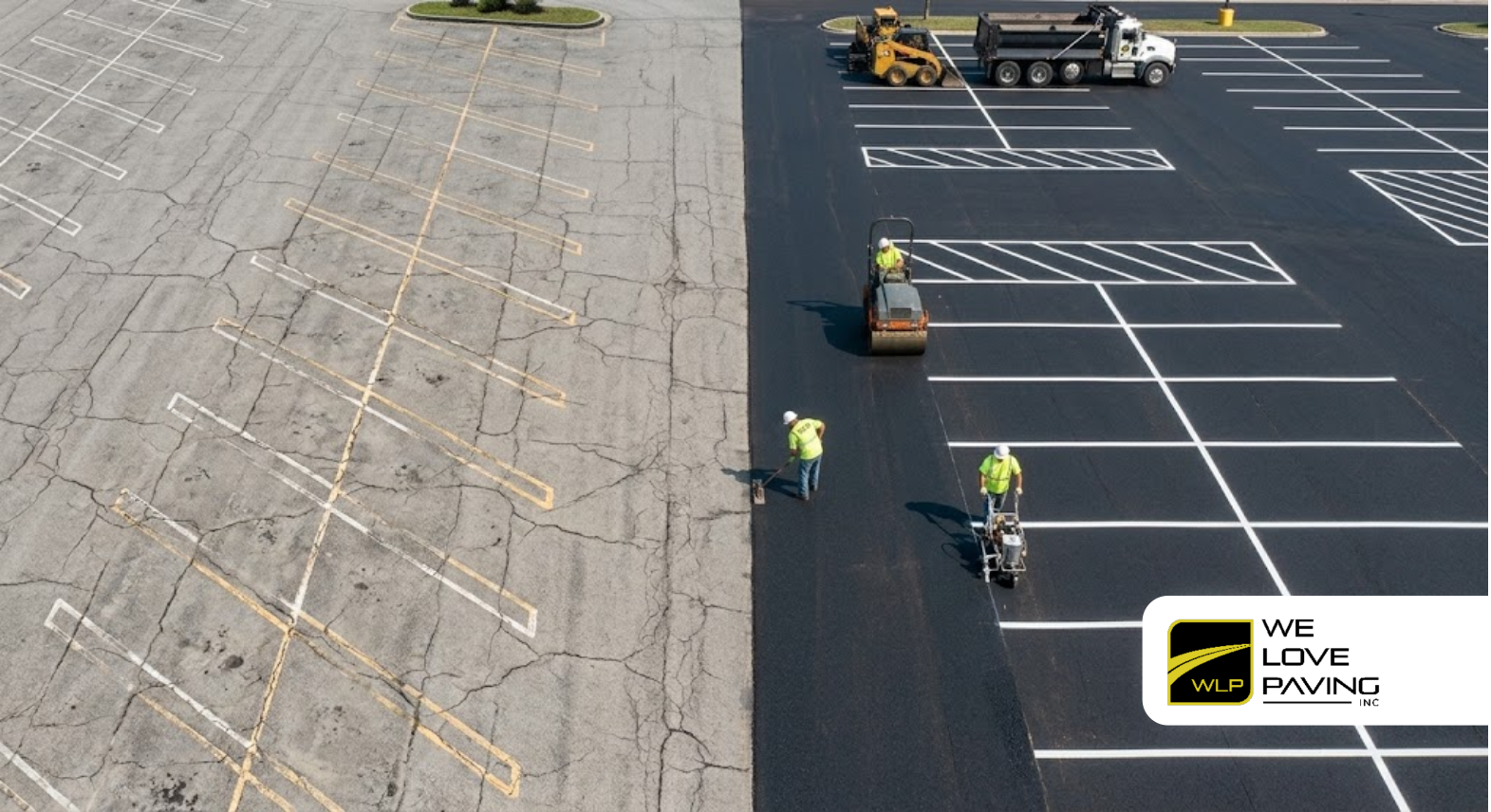
Sunscreen doesn’t just protect your skin it also keeps it looking youthful and vibrant. Likewise, sealcoating helps maintain the rich, black color of your asphalt. Asphalt that is left exposed to the sun can fade and become grey or discolored. A fresh layer of sealcoating helps restore the dark, clean look of the asphalt, keeping it aesthetically appealing and welcoming. It’s like applying that sunscreen and looking great while doing it!
The Science Behind the Shield: Materials, Prep, and Process
To truly understand what sealcoating does, we have to look beneath the surface. Not all sealers are created equal, and proper application requires technical precision.
- Types of Sealers: In the commercial industry, we primarily use two types of binders: Asphalt Emulsion (eco-friendly and low in VOCs) and Coal Tar (highly resistant to chemicals and oil spills, though regulated in certain areas). Furthermore, a professional mix always includes silica sand or friction aggregates. This ensures the surface maintains proper traction and doesn’t become a slip hazard for vehicles.
- The Preparation Process (The Most Critical Step): Applying sealcoat over dirty or cracked asphalt is like applying sunscreen over a wound. Before sealing, the pavement must be mechanically swept and cleared of debris. More importantly, any existing structural damage must be addressed beforehand through hot crack filling and asphalt repair. Sealcoating protects the surface, but it does not fill active cracks.
- Technical Specs for Success: For the sealer to properly adhere and cure, ground and air temperatures must be at least 50°F (10°C) and rising, with no rain in the forecast for the next 24 to 48 hours. Once applied, it requires a strict 24 to 48-hour curing time before vehicular traffic is allowed. If you are unsure about the current condition of your pavement, check out our comprehensive asphalt maintenance services.
5. Cost-Effective Long-Term Care
Now, let’s talk about cost. Applying sunscreen every time you go out may seem like a hassle, but it’s worth it to avoid painful sunburns and long-term damage. Similarly, sealcoating your asphalt might seem like an extra expense, but it’s a small investment compared to the potential cost of replacing cracked or broken asphalt. Sealcoating can extend the life of your asphalt by several years, saving you the headache and expense of frequent repairs or full replacements.
6. When to Apply (and Reapply)
Just like you need to reapply sunscreen when you’re spending a lot of time in the sun, your asphalt will benefit from periodic reapplication of sealcoating. Typically, every 2-3 years is a good rule of thumb, depending on the level of traffic and exposure to the elements. If you notice cracks or fading before that time, it could be a sign that your “sunscreen” is wearing off and it’s time to renew the sealcoating.
Practical Advice:
- How Often Should You Apply Sunscreen… Err, Sealcoat? Just like sunscreen needs reapplication every couple of hours, asphalt needs to be sealcoated every few years. A typical range is 2-3 years, depending on weather and usage.
- Don’t Skip It, Protect It! Think of sealcoating as your asphalt’s best friend—don’t leave it unprotected like that guy who insists they don’t need sunscreen. In the long run, you’ll thank yourself.
In conclusion, if you wouldn’t leave the house without sunscreen on a hot day, why would you let your asphalt go without sealcoating? Keep it protected, keep it looking fresh, and make sure your roads, driveways, and parking lots live long and strong. Because just like your skin, asphalt needs a little TLC to survive the sun! 🌞🚗