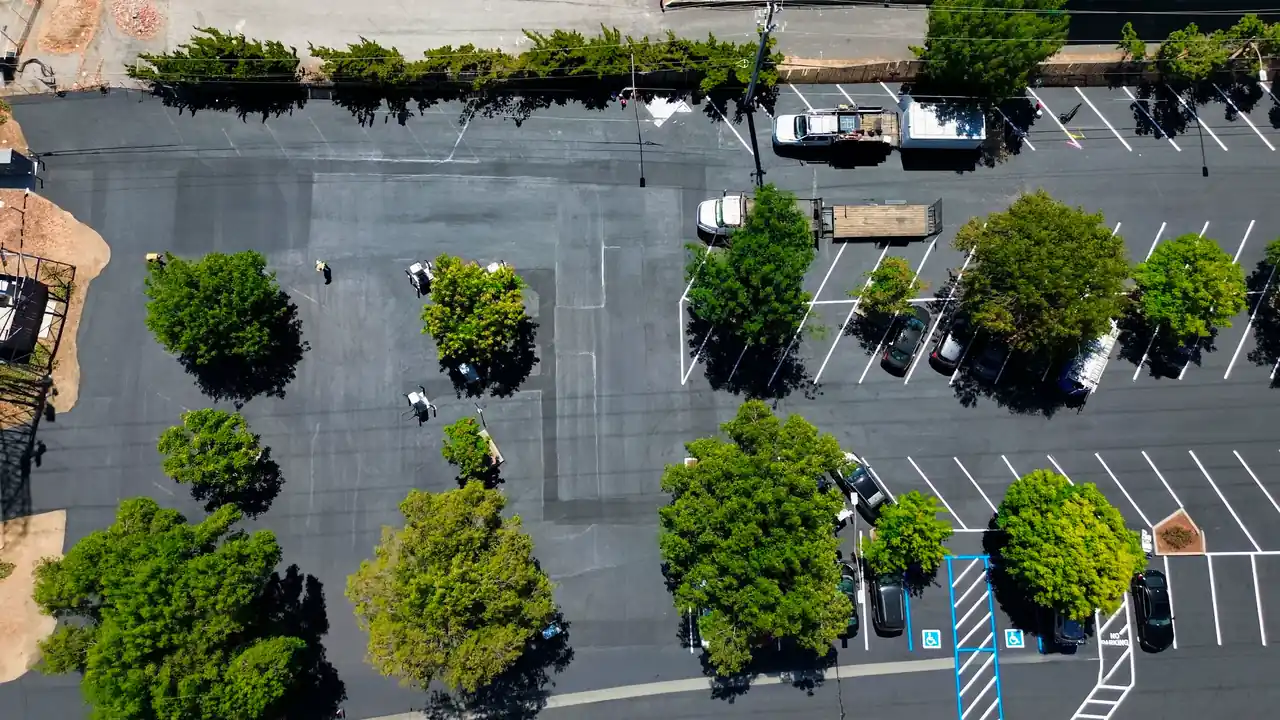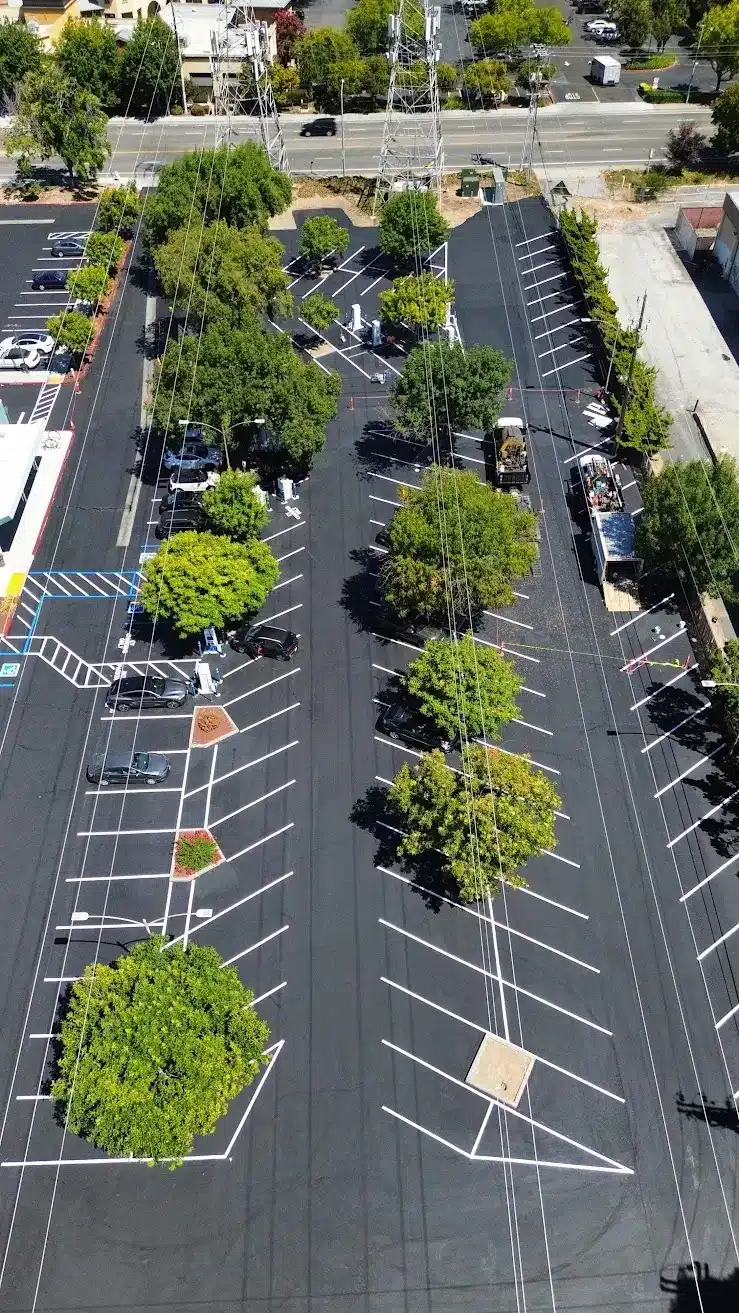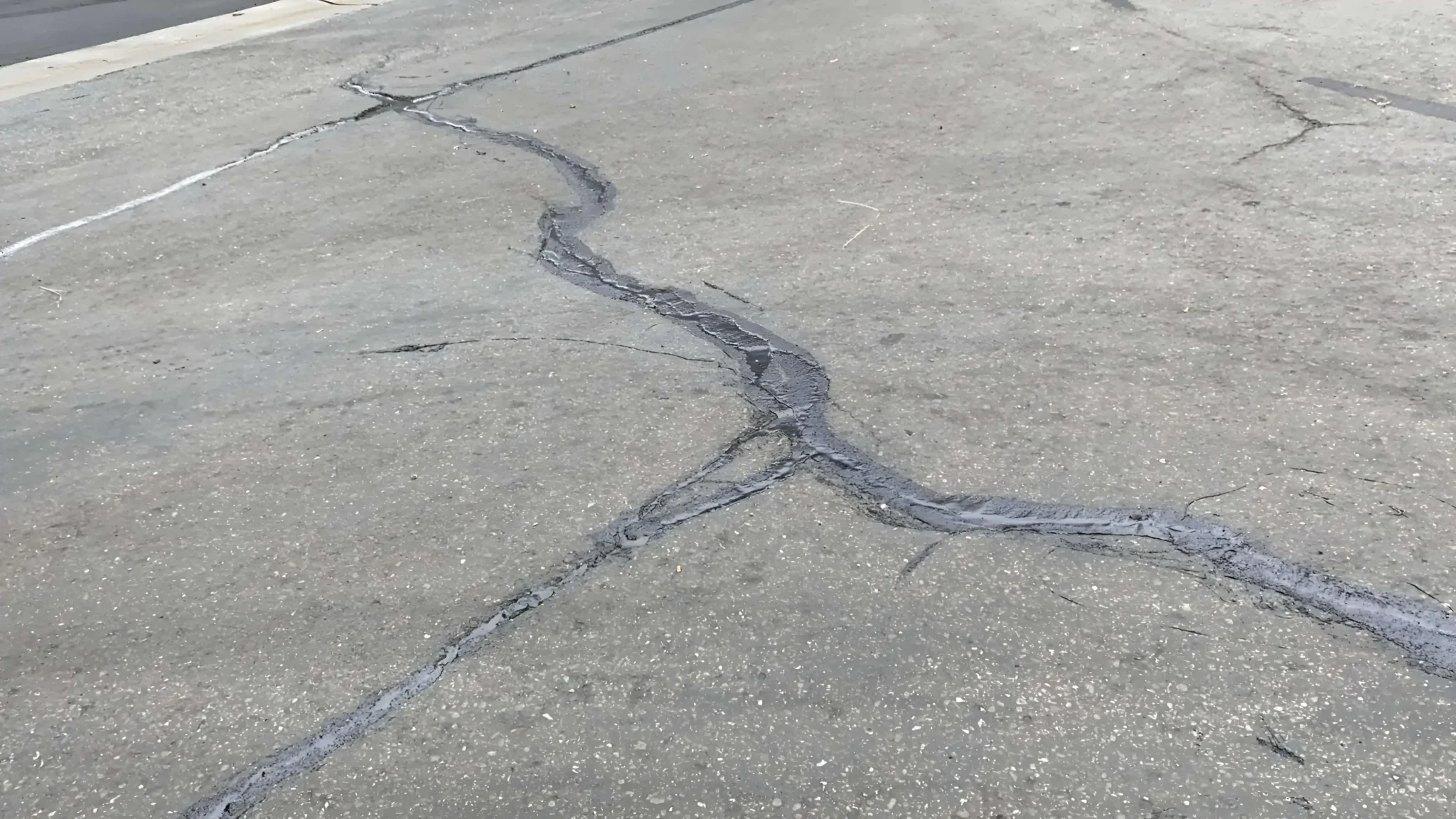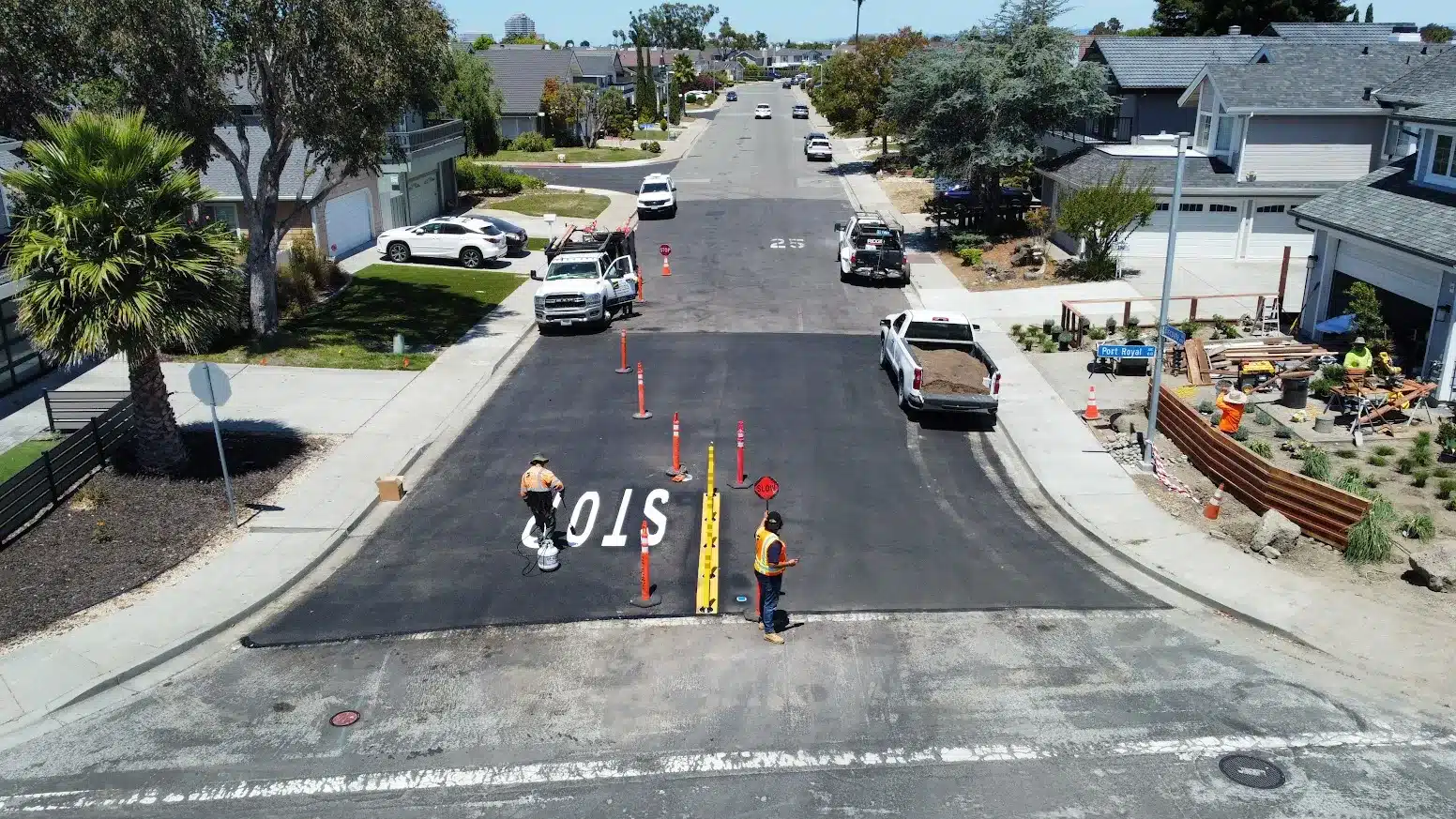
A commercial property can look open for business and still create access problems before anyone files a complaint or schedules a formal review. The first warning signs are often ordinary: blue striping fading into gray pavement, an access aisle partly blocked by a curb stop, water collecting where people unload mobility devices, or a route from the parking stall to the entrance interrupted by uneven pavement.
Commercial ADA requirements should not be treated as a one time striping task. They affect how people move from parking areas to entrances, how surfaces perform under daily use, and how property teams maintain access as pavement ages. Federal ADA guidance states that accessible parking must be provided when covered entities offer parking lots or garages, and California also has its own accessibility framework for public accommodations and commercial buildings.
This article is not legal advice, code certification, or a substitute for review by a qualified accessibility professional. Its purpose is narrower and more practical: to help commercial property owners, facility teams, HOAs, and managers recognize where ADA related pavement issues commonly appear and why they should be handled as part of long-term property maintenance.
Start With Movement, Not Paint
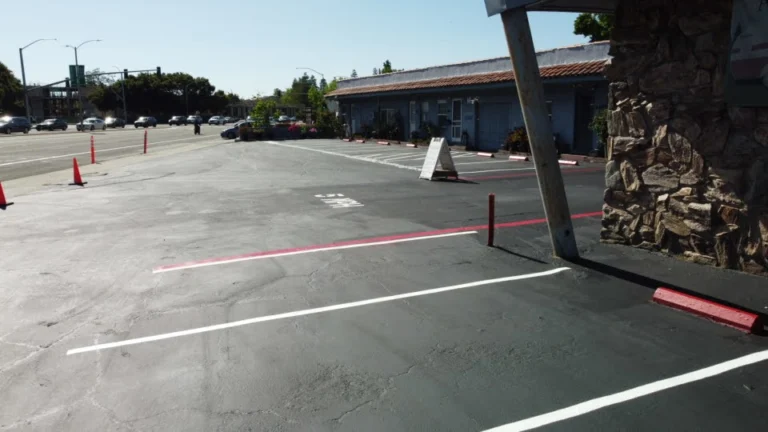
Accessible parking is visible because of paint and signs, but the functional issue is movement. A person needs to park, unload, move through an access aisle, reach an accessible route, and continue toward the entrance without avoidable obstacles or unstable surface conditions.
That is where many commercial properties develop problems. The stall may still have a wheelchair symbol, but the pavement around it may have changed. Asphalt can settle near drainage points. Old overlays can create uneven transitions. Access aisles can become unclear after years of traffic wear. A nearby curb ramp may still exist, but the path to it may be interrupted by ponding, raveling, or a surface lip.
ADA.gov identifies accessible parking features such as access aisles, signs, stable surfaces, van-accessible spaces, and limits on slope in accessible spaces and aisles. The U.S. Access Board also notes that accessible spaces should connect to an accessible route serving the accessible entrance.
For a commercial property team, the practical question during a site walk is simple: can someone use the space and route predictably, or has normal pavement wear started to interfere?
The Parking Lot Conditions That Deserve Closer Review
Commercial ADA requirements often become relevant during resurfacing, restriping, parking lot redesign, tenant improvements, or repair planning. They also matter when existing conditions begin to make accessible areas harder to identify or use.
The most common pavement-related warning signs include:
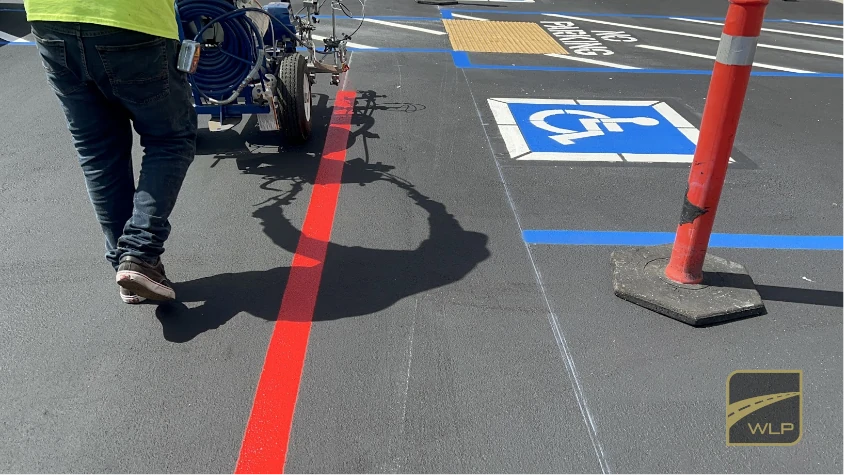
- Faded blue markings or access aisle striping that drivers no longer respect
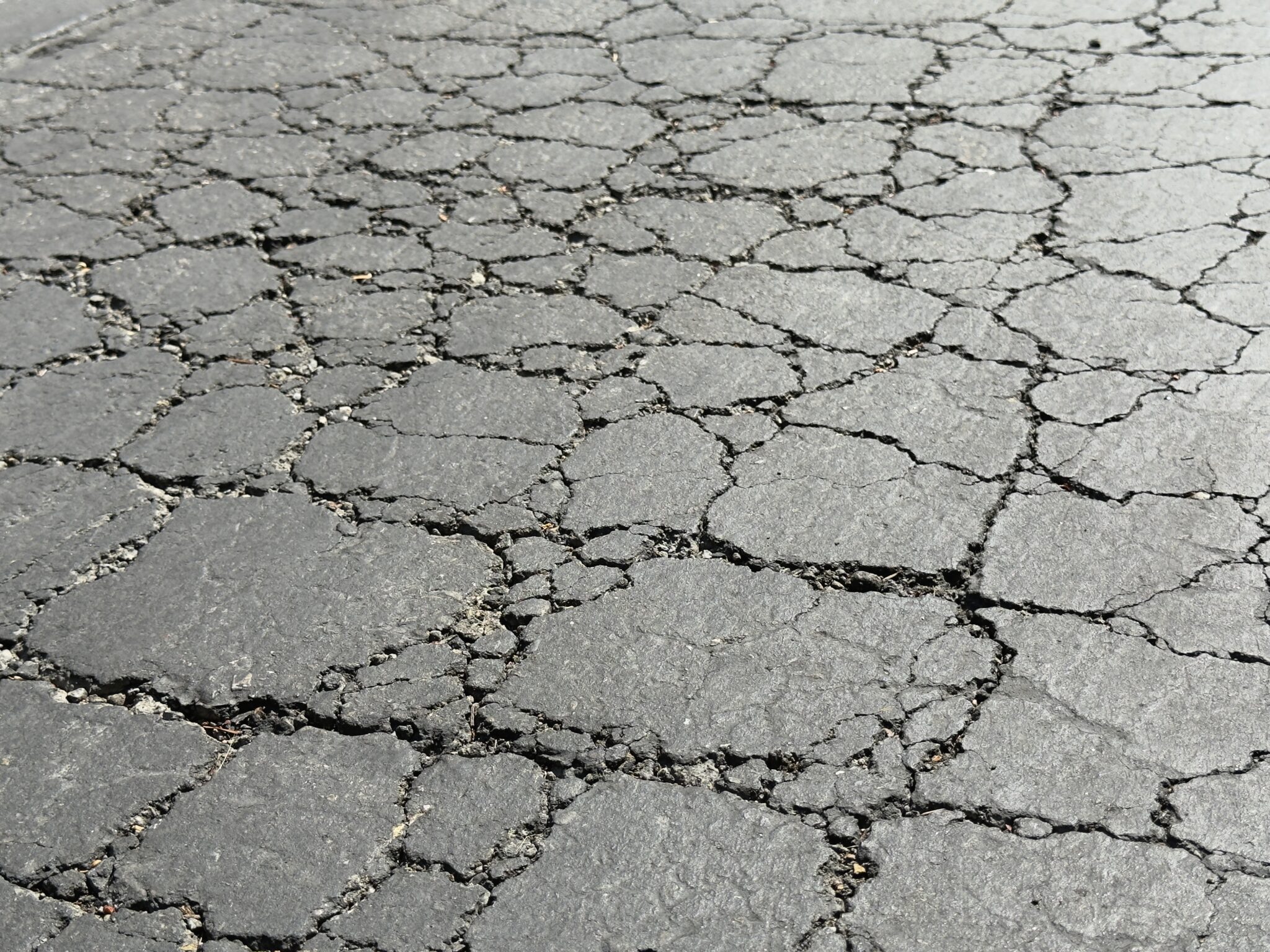
- Cracked or raveled pavement inside accessible stalls
- Standing water in access aisles after storms or irrigation runoff
- Uneven transitions between parking areas, sidewalks, and curb ramps
- Signage that no longer clearly corresponds with the marked accessible stall
- Pavement patches that have settled near the accessible route
- Wheel stops, poles, planters, or stored items narrowing movement areas
A small surface defect can carry more importance in an accessible zone than it would in a remote corner of the lot. A depression near a standard stall may be a maintenance issue. A depression where a mobility device unloads or turns may affect usability more directly. Faded markings in a low-traffic row may be mostly cosmetic. Faded markings in an access aisle can change driver behavior and make the space less dependable.
When accessible stalls, aisles, and markings are difficult to read, professional parking lot striping may be part of the solution. But restriping alone is not enough if the underlying layout, pavement condition, slope, signage, or route connection also needs evaluation.
California Properties Need a More Careful Maintenance Mindset
California commercial properties sit at the intersection of federal ADA obligations and state accessibility requirements. The California Commission on Disability Access explains that its accessible parking guide was developed to promote compliance with accessibility requirements in public parking lot construction, including California Building Code Chapter 11B.
That matters because a property owner should not assume that an old layout, inherited striping plan, or previous resurfacing project is still adequate. Parking lots change. Tenants change. Entrances change. Pavement settles. Signs get replaced incorrectly. A layout that seemed organized years ago may no longer match how the property is actually used.
The risk is not only technical. It is operational. If the accessible stalls are located near a busy loading zone, users may have to navigate delivery traffic. If a curb ramp sits beyond a puddled low spot, the route may be less usable during wet weather. If patched pavement creates rough texture near the entrance path, visitors may notice the problem before management does.
A commercial property manager should treat ADA-related pavement review as a recurring responsibility, not a panic response after a complaint. Site photos, maintenance notes, repair history, and restriping dates all help build a clearer record of what changed and when.
Do Not Confuse “Recently Paved” With “Access Reviewed”
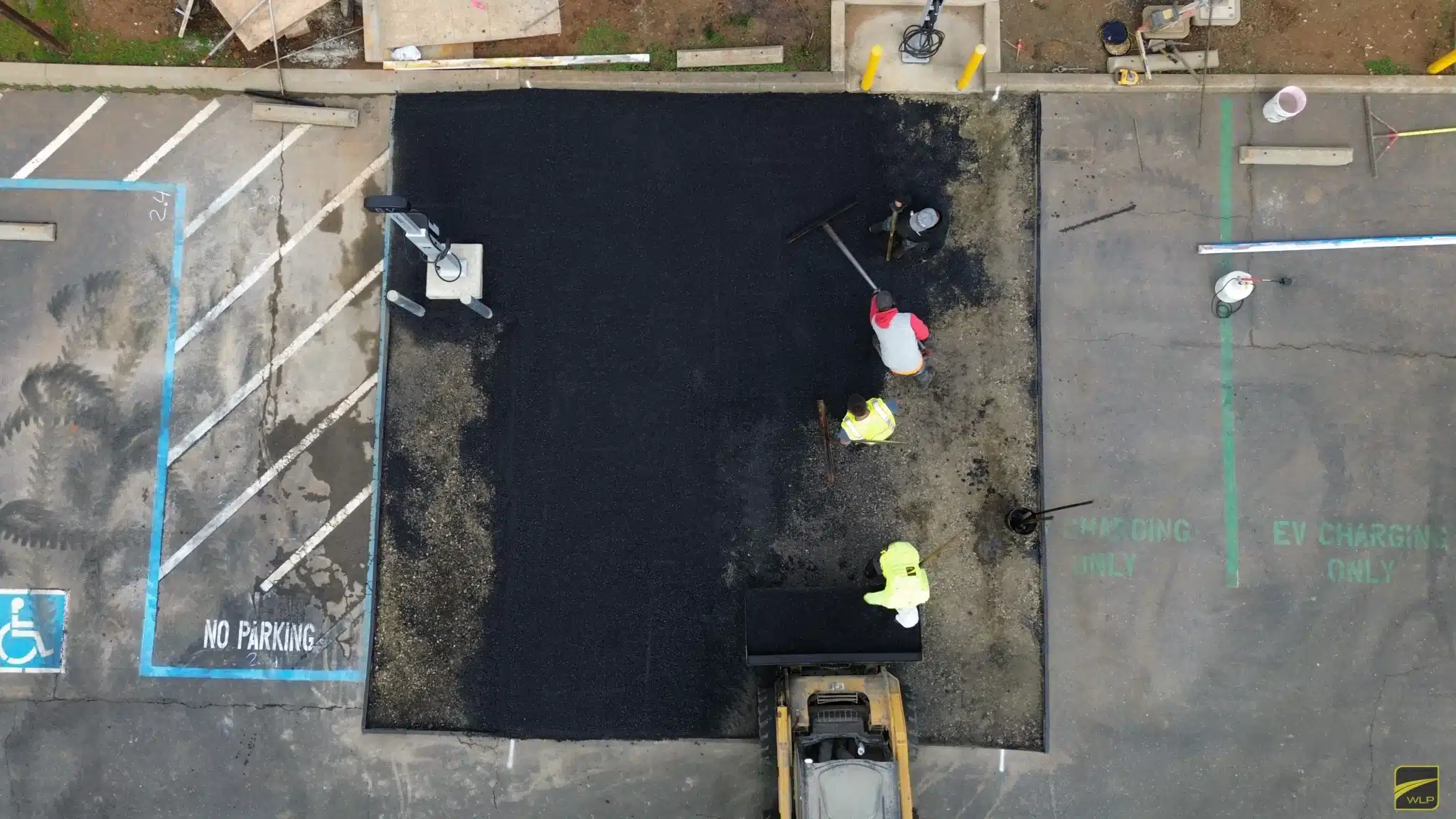
Fresh asphalt can make a property look cleaner while still leaving access issues unresolved. That is a serious mistake in planning.
A resurfaced parking lot may still have incorrect stall placement. A newly striped access aisle may still collect water. A repaired route may still have a transition that deserves closer review. New paint can also hide the fact that the old layout was simply copied without asking whether the current route, entrance, or user flow still makes sense.
Commercial ADA requirements should be considered before work begins, not after the paving crew leaves. That allows the property team to review layout, surface condition, access routes, signage, and phasing before money is spent in the wrong sequence.
For parking-specific accessibility concerns, an ADA parking lot review can help owners understand where visible conditions and layout decisions may overlap. For physical corrections, ADA upgrades may be needed when markings, surfaces, routes, or parking features no longer support practical access.
Maintenance Failures Can Undermine Accessibility Over Time
Accessible areas are not static. They are exposed to the same traffic, weather, UV exposure, drainage problems, and repair decisions as the rest of the property. In some cases, they are more sensitive because small changes can affect how people move through the site.
Consider a few ordinary examples:
A catch basin near accessible stalls begins to settle. Water collects in the aisle after rain. Vehicles still park there, so the issue is easy to ignore, but the route is less predictable for someone unloading from a van.
A patch near the curb ramp starts cracking at the edge. The surface is not failing across the entire lot, but that specific transition now deserves closer attention because it sits along the path of travel.
A high-traffic retail center restripes the main parking field but postpones accessible stall review. The lot looks brighter, yet the access aisles remain confusing because old markings still show through in the wrong places.
The longer these issues sit, the fewer good options the property may have. Deferred work can turn a targeted correction into a larger paving, drainage, or layout project. A broader discussion of delayed maintenance is especially relevant when surface wear starts affecting entrances, pedestrian paths, or parking areas that users depend on every day.
A Practical ADA-Oriented Site Walk
A useful site walk does not need to begin with assumptions about fines or worst-case scenarios. It should begin with observable conditions.
| Review Area | What to Look For | Why It Matters |
|---|---|---|
| Accessible stalls | Clear markings, readable layout, stable surface | Users need predictable parking and unloading space |
| Access aisles | Faded paint, blocked areas, standing water | Aisles are part of how people enter and exit vehicles |
| Route to entrance | Uneven pavement, abrupt transitions, obstacles | Parking access depends on the route, not only the stall |
| Signage | Missing, damaged, unclear, or mismatched signs | Drivers need to identify and respect accessible spaces |
| Drainage | Ponding near stalls, ramps, or walkways | Water can make access less reliable and accelerate pavement wear |
| Repair history | Repeated patching or cracking in the same area | Recurring failure may signal a deeper surface or base issue |
This kind of review does not certify compliance. It gives the property team a disciplined way to identify where closer professional evaluation may be appropriate.
Building Safer, More Usable Properties With We Love Paving
Commercial ADA requirements are not just a code topic; they are part of how a property functions. Parking, striping, drainage, pavement condition, curb transitions, signage, and route usability all shape the experience of tenants, customers, residents, patients, vendors, and visitors.
We Love Paving helps California property teams connect pavement maintenance with practical access planning. The work starts by looking at real site conditions: where people park, where water sits, where markings fade, where surfaces shift, and where a small pavement issue may affect daily movement through the property.
The strongest accessibility planning is not rushed after a complaint. It is built into maintenance, resurfacing, restriping, and repair decisions before small conditions become harder to correct.