At We Love Paving, our engineering team frequently guides property owners across Northern California through the critical choice between surface maintenance and structural restoration. Understanding the technical line between these two services saves thousands in premature capital expenditures.
Understanding Asphalt Sealcoating
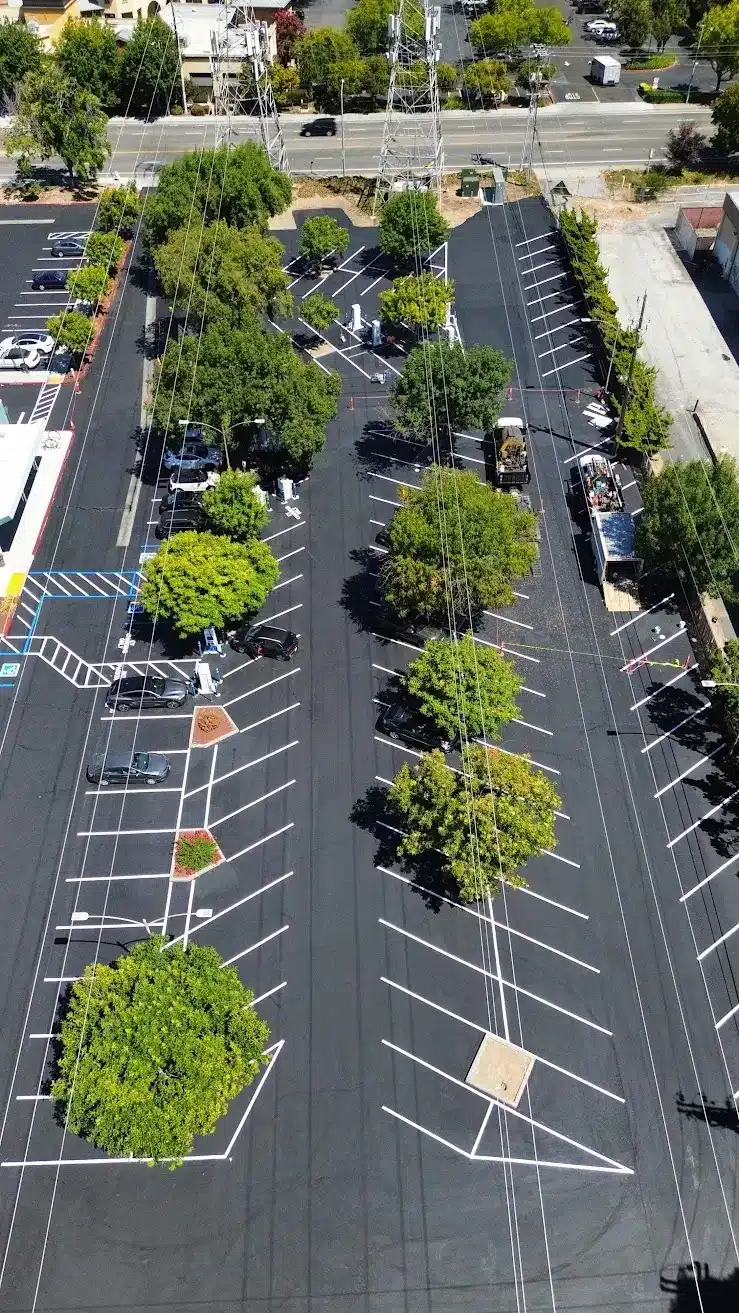
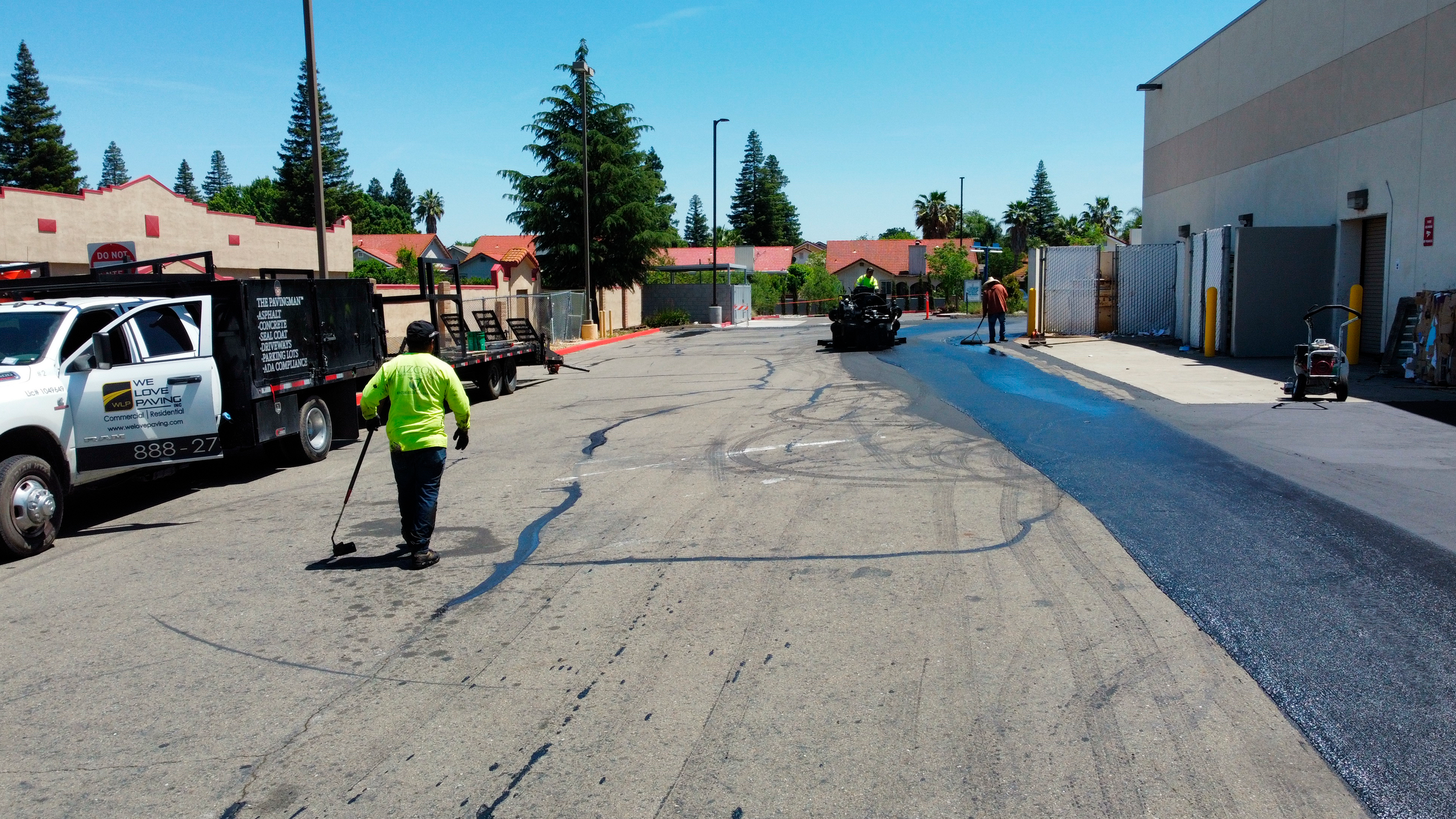
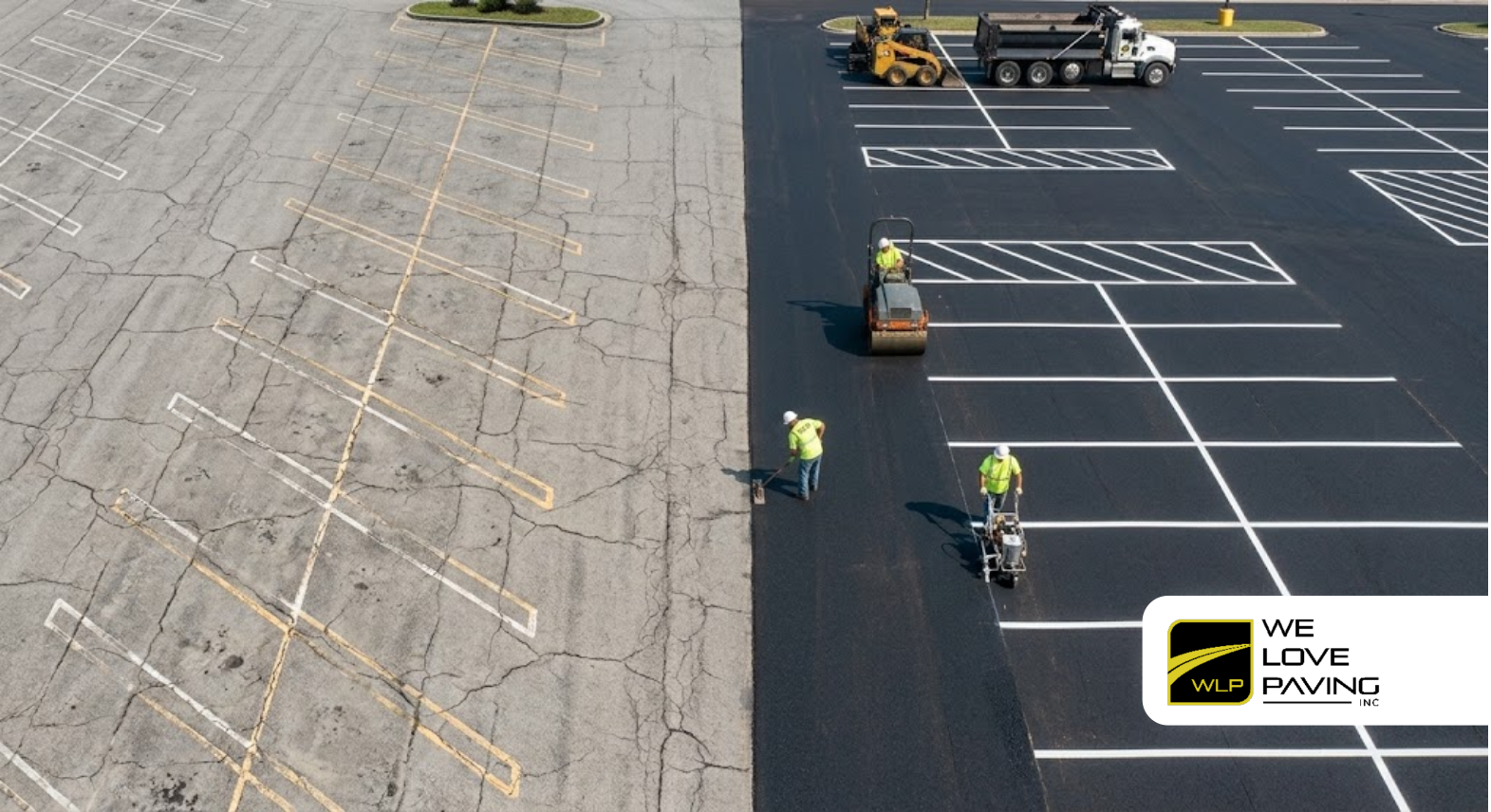
Sealcoating acts as a protective barrier engineered to shield the pavement binder. In high-UV regions like California, prolonged solar radiation accelerates asphalt oxidation, rendering the surface brittle. Applying a professional emulsion formulation restricts water infiltration and counters oil damage. Key technical parameters of sealcoating:
- Serves as a preventative asphalt maintenance strategy rather than a structural repair. This topical application does not resolve subbase failures. Our crews apply these treatments every two to three years on structurally sound parking structures and driveways.
- Restores the essential chemical flexibility and deep black aesthetic finish.
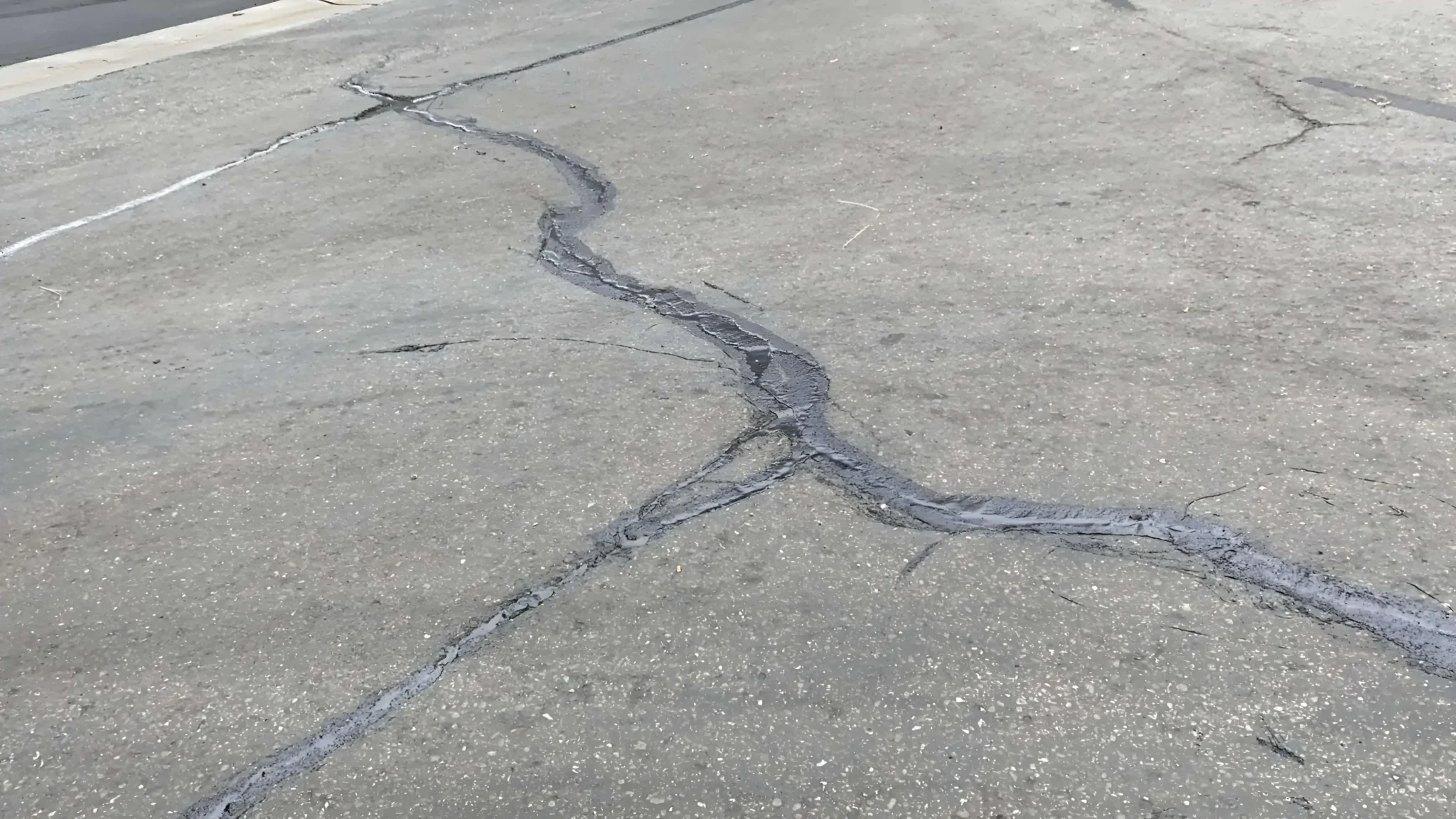
- Isolates minor surface fissures when combined with professional crack filling.
- Protects the structural base layer by preventing early oxidation and moisture intrusion.
- Prolongs the functional life of stable pavements by an additional three to five years.
This protective barrier is exceptionally vital across California’s interior valleys, such as the Central Valley, where summer ambient temperatures consistently breach 100°F. Under these extreme thermal conditions, unshielded asphalt surfaces experience severe thermal distress. The intense solar radiation accelerates the volatilization of essential light-weight oils and aromatic compounds embedded within the liquid asphalt binder. As these binding oils evaporate, the pavement lose its structural elasticity, initiating a process of premature brittleness and surface raveling. Without a sacrificial sealcoat layer to reflect radiation and lock in these vital binding polymers, the arid California climate forces accelerated cracking, transforming a flexible pavement matrix into a fragile, high-maintenance surface within a few seasons.
When Is Asphalt Repaving Necessary?
Repaving constitutes a structural intervention. It encompasses either an asphalt overlay where a new wear course is installed over prepared, milled asphalt or full reconstruction, which demands removing the damaged sections down to the aggregate subbase. According to Caltrans pavement preservation principles, structural intervention becomes mandatory when subgrade shifting occurs.
Indicators requiring immediate structural intervention:
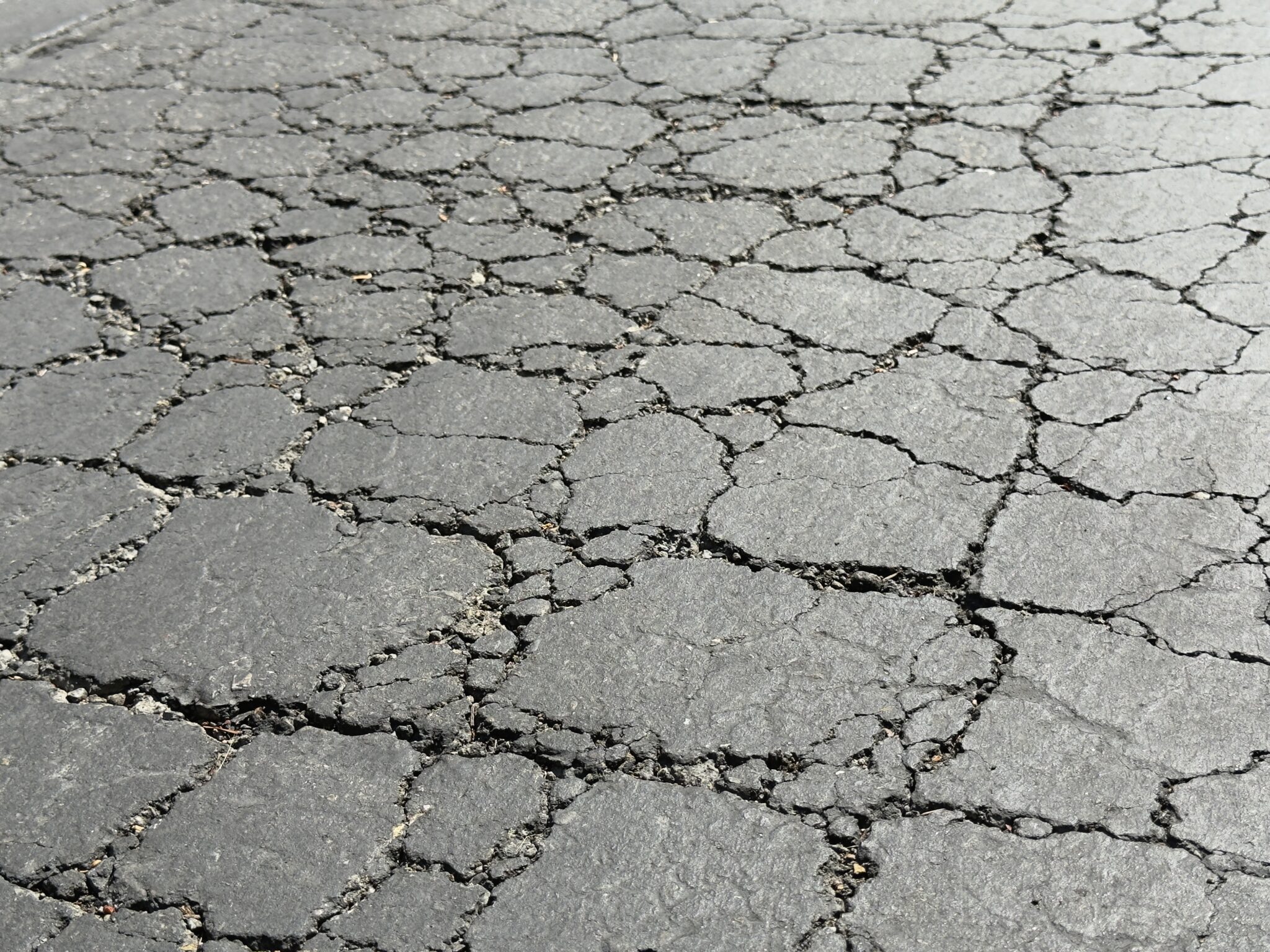
- Widespread fatigue cracking, commonly designated as alligator cracking, indicating subbase failure.
- Depressions, ruts, or severe drainage anomalies exceeding acceptable slope tolerances.
- Recurrent potholing and severe aggregate raveling that compromises vehicle safety.
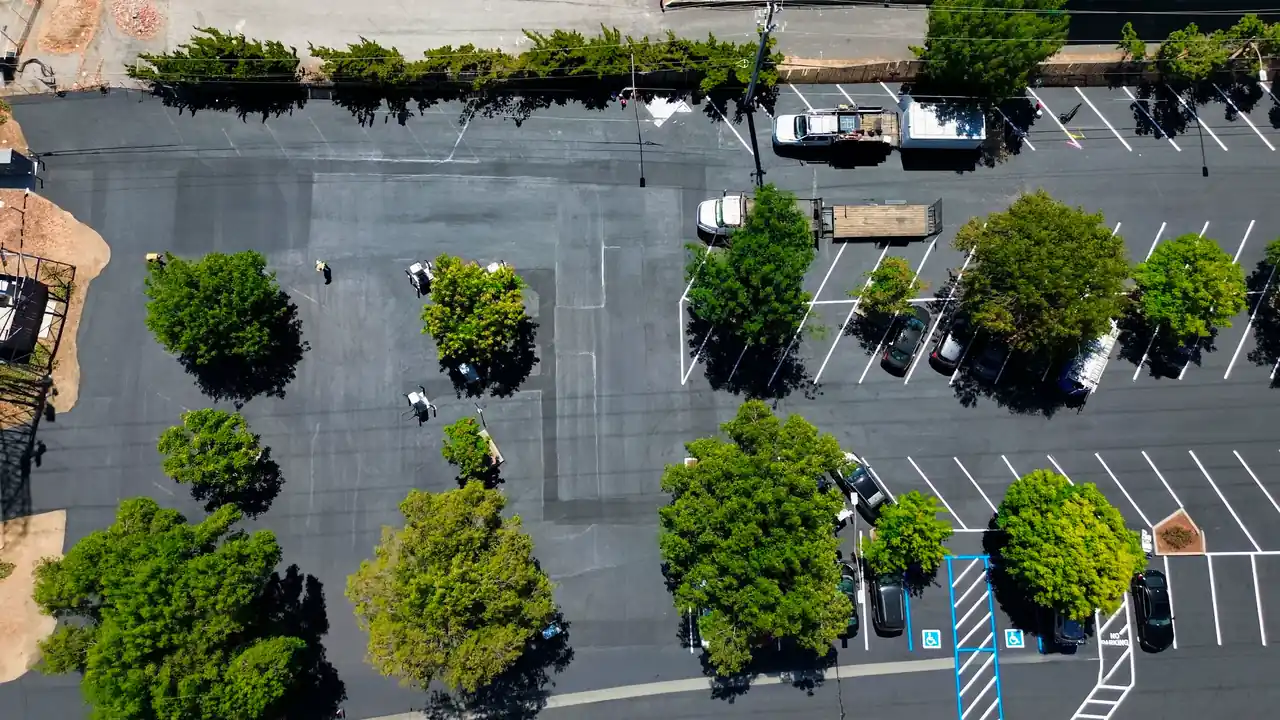
- Subgrade shifting causing deep structural failures across more than 25% of the total lot area. For expansive commercial properties undergoing substantial stress, opting for a targeted commercial sealcoating California program is ideal for sound areas, whereas deteriorated zones demand deep milling and replacement to restore structural integrity.
Comparison: Sealcoat vs Repave Criteria
The structural health of the asphalt matrix dictates the appropriate operational response. The following technical criteria serve as a baseline guide for property managers:
| Surface Condition | Recommended Technical Intervention |
|---|---|
| Superficial oxidation, dry look, loss of color | Surface Sealcoating |
| Minor, non-structural cracks (width under 1/4 inch) | Crack Routing + Rubberized Fill + Sealcoating |
| Potholes, extensive alligator cracking, deep ruts | Structural Milling & Repaving |
| Base instability, severe grade or drainage failure | Full-Depth Subbase Reconstruction |
Property owners often weigh execution logistics before selecting a solution. Evaluating whether to seal coat my driveway myself versus employing specialized paving machinery depends heavily on the project scale, safety protocols, and compliance with local municipal codes.
Protect Your Investment With the Right Solution
Whether you’re managing a commercial lot, private driveway, or municipal road, choosing between sealcoating and repaving can make a huge difference in performance, cost, and appearance.
Let We Love Paving help you make the right call with honesty, precision, and proven expertise.
Schedule your FREE site evaluation today
Get a custom maintenance or resurfacing plan tailored to your property. Contact We Love Paving serving California with pride and precision.