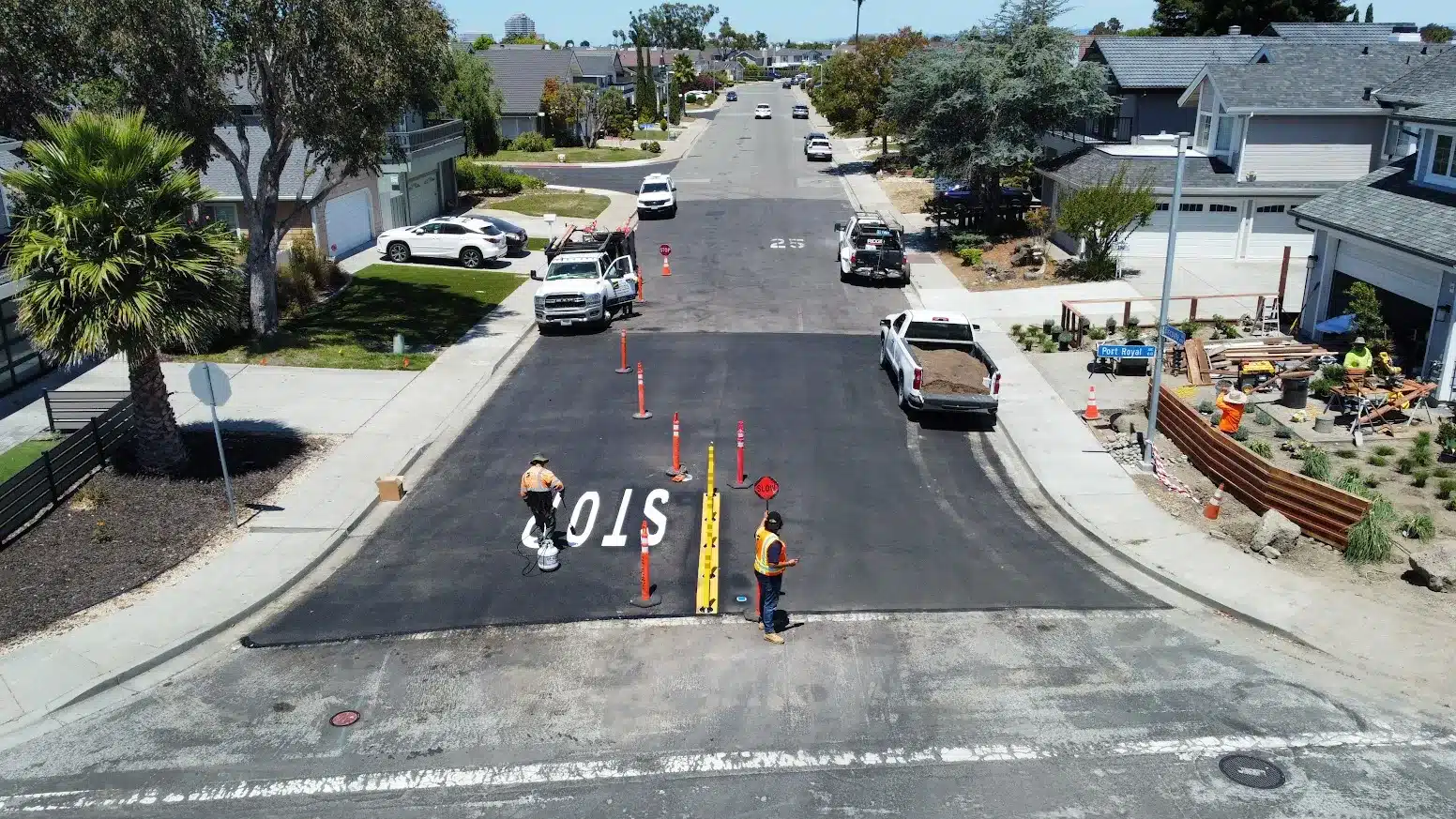
Preventive pavement maintenance is often judged too late. Owners ask whether the work was “worth it” after cracks have already spread, patches have failed, or a parking lot has moved from surface aging into structural repair territory.
That is backwards.
Pavement preventive maintenance ROI should be measured before the lot reaches the expensive stage. The return comes from preserving options: keeping small cracks from becoming water paths, maintaining surface protection before oxidation accelerates, repairing isolated defects before they spread, and avoiding the kind of reactive work that disrupts tenants, customers, residents, or operations.
The ROI is not a magic percentage that applies to every property. A shaded coastal lot, a hot inland retail center, a truck-heavy service yard, and an HOA parking area will not produce the same numbers. The smarter question is whether timely maintenance reduces future repair scope, delays capital work, and keeps the pavement usable with fewer surprises.
ROI Starts With the Cost of Waiting
Preventive maintenance has value because asphalt deterioration compounds.
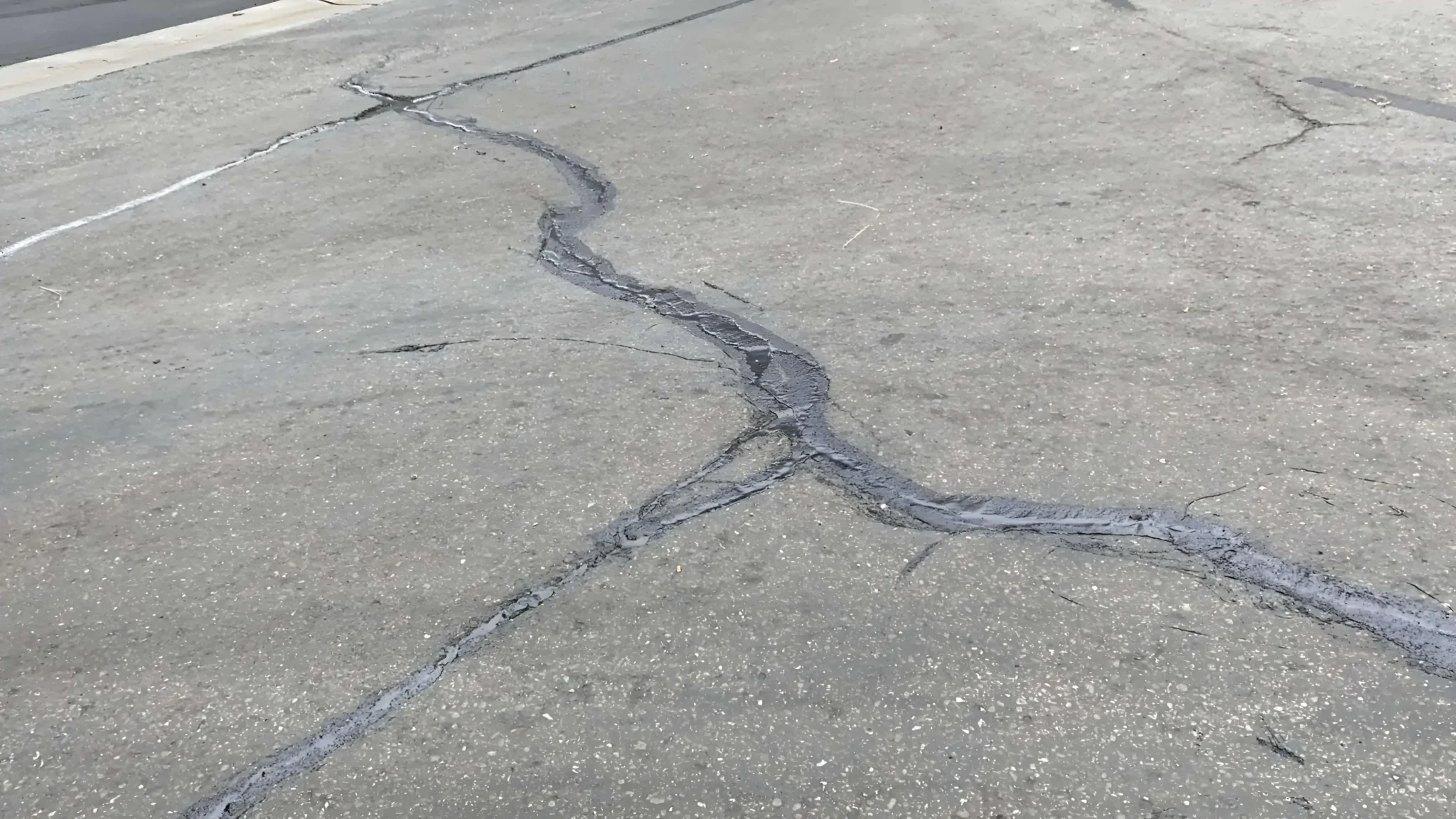
A small crack may look harmless when the surface is still dark and mostly intact. If water enters that crack, reaches the base, and returns through traffic stress, the repair category can change. What started as a maintenance item may become patching, resurfacing, or reconstruction planning.
The financial risk is not just the larger repair invoice. Waiting can also create secondary costs: rushed scheduling, tenant complaints, access interruptions, temporary traffic control, re-striping after emergency repairs, and repeated patching in the same location.
A useful ROI review compares two paths:
| Pavement Decision | Short-Term Cost | Long-Term Cost Risk |
|---|---|---|
| Early crack treatment | Lower | Helps limit water intrusion while pavement is still stable |
| Timely sealcoating | Moderate | May slow oxidation and surface wear when applied at the right stage |
| Annual inspections | Low to moderate | Helps identify defects before they become capital issues |
| Reactive patching only | Lower at first | Can become repetitive if the cause is not addressed |
| Delayed resurfacing | Avoids cost temporarily | May reduce options if pavement becomes too deteriorated |
This does not mean every pavement defect deserves immediate work. It means the cost of waiting should be visible before the owner chooses to defer.
Preventive Maintenance Works Best Before the Pavement Looks Bad
The hardest part of pavement maintenance budgeting is that the best time to act is often before the lot looks urgent.
Preventive work has the strongest financial logic when the surface is still serviceable. That is when treatments can protect remaining pavement life rather than trying to rescue pavement that has already failed.
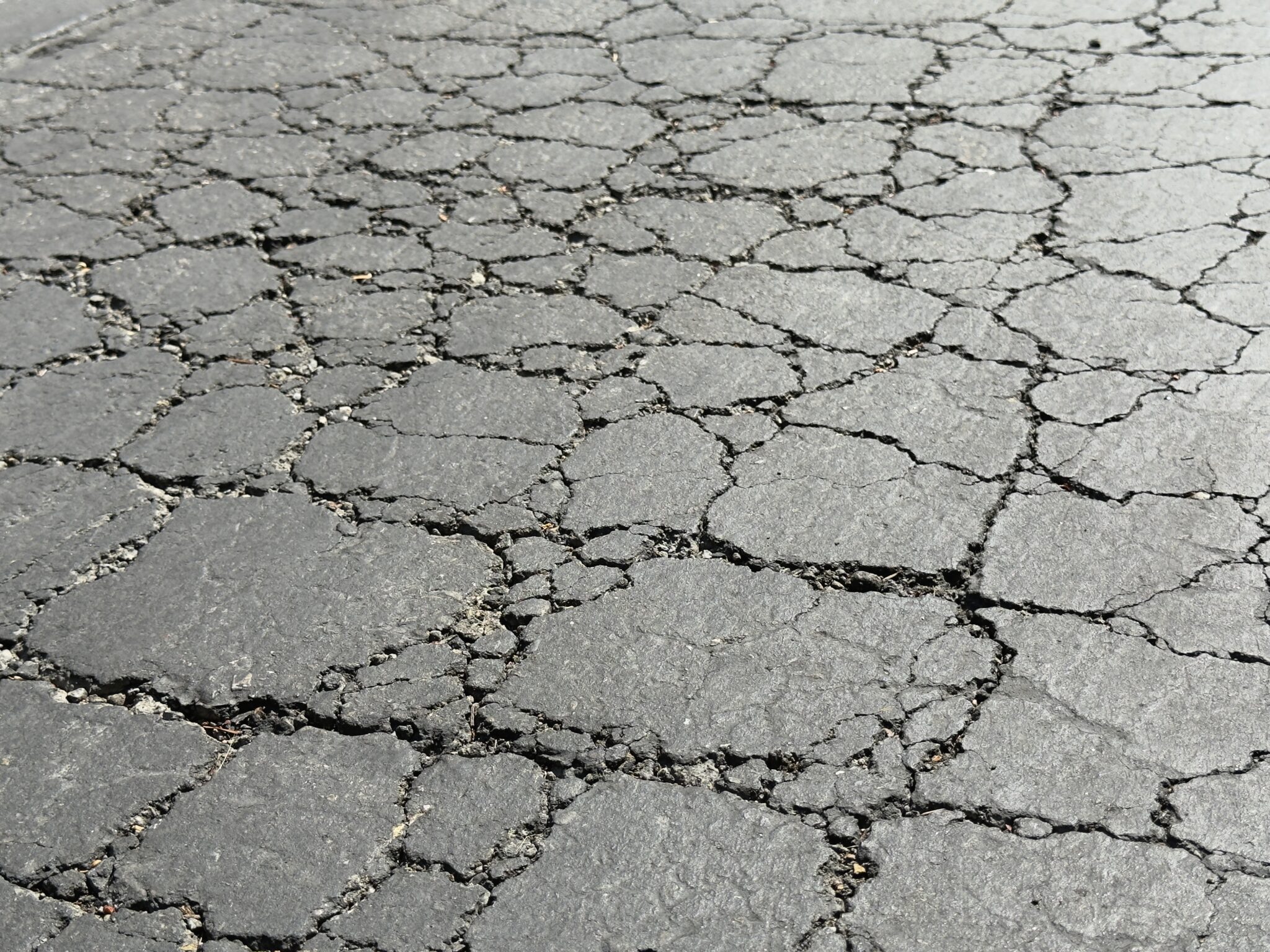
A lot that shows early oxidation, small linear cracks, light raveling, or fading surface color may still be a good candidate for preservation. A lot with widespread alligator cracking, deep potholes, pumping, base movement, or repeated patch failure may already need a different conversation.
This distinction matters for ROI. Spending too early on the wrong treatment wastes money. Waiting too long can eliminate lower-cost options.
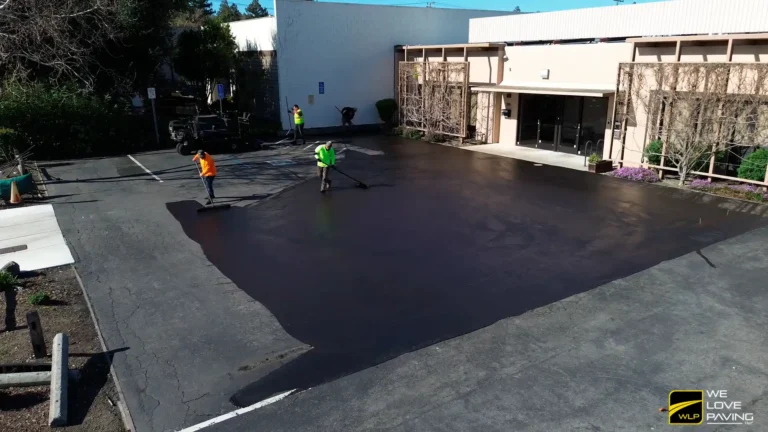
For example, commercial sealcoating can make financial sense when asphalt is still sound enough to benefit from surface protection. It is a weak investment if the owner expects sealer to correct structural cracking, settlement, or drainage-related failure.
The same principle applies to project timing. A preservation-focused job such as the Newark sealcoating project makes sense only when the pavement condition supports that type of treatment. Sealcoating is not a substitute for deeper repair; it is a tool for protecting asphalt that still has useful life to preserve.
The ROI Is Different by Pavement Zone
A parking lot should not be evaluated as one flat asset. ROI changes by location.
Preventive spending near the main entrance may have more value than the same spending in a low-use back row. Maintenance in a delivery lane may protect against recurring heavy-load damage. Work near drainage structures may prevent water-related deterioration from spreading. A small defect near an accessible route or pedestrian crossing may carry more operational importance than a larger defect in overflow parking.
Property owners should divide pavement into budget zones:
Main entrances and drive aisles deserve attention because they carry daily traffic and shape first impressions. Loading areas need a separate review because weight and turning stress can accelerate failure. Drainage-sensitive edges should be watched because water can quietly convert surface wear into deeper deterioration. Remote stalls can often be phased if the surface is stable and low consequence.
This is where pavement preventive maintenance ROI becomes more precise. The question is not “Should we maintain the whole lot?” The better question is “Which parts of the property produce the highest return when maintained early?”
A recurring annual review can help make that distinction. Annual pavement maintenance gives owners a structure for checking the same zones repeatedly instead of reacting only to the newest complaint.
Reactive Repairs Often Look Cheaper Than They Are
Reactive repairs can be necessary. A pothole near an entrance cannot be ignored just because the owner prefers preventive maintenance. The problem appears when reactive work becomes the entire strategy.
Reactive-only spending often hides repeat costs. A patch is placed. The area fails again. Another patch follows. The owner pays multiple times while the underlying cause remains active.
Field signs that should challenge a reactive-only approach include cracks returning around patch edges, depressions where tires turn repeatedly, loose aggregate in the same drive lane, water sitting near a low curb after every storm, and potholes forming near old repairs.
When those patterns appear, parking lot repair should not be treated as simple damage cleanup. The repair should ask why the area is failing and whether traffic load, drainage, base weakness, edge support, or prior repair limits are involved.
That is the financial difference between corrective work and recurring expense. One addresses the condition. The other keeps buying time without changing the pattern.
Preventive vs Corrective Maintenance Is a Timing Decision
Preventive maintenance and corrective maintenance are not enemies. They are different tools for different pavement stages.
Preventive maintenance protects pavement that is still performing. Corrective maintenance responds to defects that have already developed. A strong pavement budget usually needs both, but not in the same proportions every year.
A newer or recently resurfaced lot may justify more preventive spending: crack monitoring, sealcoating at appropriate intervals, drainage checks, and striping upkeep. A mid-life lot may need a balanced mix of preservation and localized repair. A late-stage lot may need fewer cosmetic treatments and more serious evaluation for resurfacing or reconstruction.
That is why a comparison of preventive vs corrective maintenance matters. ROI depends on matching the treatment to the pavement stage. Preventive maintenance applied too late becomes cosmetic. Corrective maintenance used too often becomes a sign that the owner is avoiding a larger capital decision.
The best return often comes from reducing the number of emergencies, not eliminating repairs entirely.
Maintenance ROI Should Include Disruption Cost
A narrow ROI calculation only compares invoices. That is incomplete for commercial properties and HOAs.
Pavement work affects use. If maintenance is planned, the property can often schedule around traffic, tenants, residents, deliveries, events, or seasonal conditions. If work is reactive, the property may lose flexibility.
A pothole repair during peak retail hours creates a different cost than a planned maintenance window. A repair near a medical entrance affects users differently than a back-row patch. An HOA road closure with poor notice can create resident complaints even when the repair itself is small.
Preventive planning can reduce disruption by grouping work, phasing sections, communicating earlier, and avoiding emergency scheduling. Those savings may not appear as a line item on a paving invoice, but they matter to the property owner.
The Sunnyvale sealcoating project is a useful internal example of why surface preservation should be considered alongside timing, access, and project sequencing. A maintenance project delivers more value when the property can control when and how the work happens.
How to Estimate Preventive Maintenance ROI Without Guesswork
Owners do not need a complicated formula to make better pavement decisions. They need a repeatable comparison.
Start with current condition. Is the pavement stable, aging, cracked, raveling, patched, or structurally failing?
Then identify the next likely cost if nothing is done. Will the owner face more cracking, potholes, standing water, complaints, access disruption, or larger repair zones?
Next, compare the cost of action now against the cost of the likely next stage. A sealcoat may not be worthwhile on failing pavement, but it may be worthwhile on stable asphalt exposed to UV, traffic, and surface wear. Crack treatment may be minor compared with the cost of water-related base damage. Annual inspection may be inexpensive compared with discovering widespread failure after the rainy season.
Finally, include timing. A planned project is usually easier to budget and coordinate than an emergency repair.
A practical ROI review should answer four questions:
- What condition are we trying to slow or prevent?
- What will likely happen if we wait?
- Does the proposed treatment match the pavement stage?
- Will this work reduce future repair scope, disruption, or repeat spending?
If the answer to those questions is unclear, the ROI claim is probably weak.
Building Preventive Maintenance ROI With We Love Paving
Pavement preventive maintenance ROI is not about claiming that every dollar spent today produces a guaranteed return. That framing is too simplistic. The real value comes from timing the right maintenance before pavement conditions remove lower-cost options.
We Love Paving helps property owners, HOAs, and commercial managers review pavement by condition, zone, traffic use, drainage exposure, and future repair risk. That creates a clearer maintenance plan: preserve surfaces that still have life, repair defects before they spread, monitor areas that are stable, and avoid paying repeatedly for the same failure.
A good preventive maintenance plan does not make asphalt permanent. It helps the owner spend before deterioration controls the budget.