how Poor Water Runoff Creates Structural Stress

We Love Paving services in Mountain View. Professional paving contractor serving Mountain View and Peninsula areas.
Estimation Tools

Calculate costs in seconds

Fast, accurate estimates that help you close more jobs. Less guesswork, more profit.

Water runoff is often thought of as a surface-level concern.

As long as water eventually leaves the parking lot, it may seem like runoff is working as intended. In reality, how water moves across and away from pavement plays a critical role in long-term structural performance.

Poor water runoff does not just cause surface issues — it introduces structural stress that weakens the pavement system from the inside out.


Runoff Controls Where Stress Accumulates

Parking lots are designed to distribute loads evenly across the pavement structure.

When runoff is poor, water concentrates in specific areas instead of dispersing evenly. This concentration causes:

  • Localized base saturation

  • Uneven support beneath the pavement

  • Differential settlement

As traffic moves over these weakened zones, stress becomes uneven, accelerating deterioration.


Saturated Base Layers Lose Load-Bearing Capacity

The most damaging effect of poor runoff occurs below the surface.

When water repeatedly infiltrates the pavement system:

  • The base layer absorbs moisture

  • Load-bearing strength is reduced

  • Pavement begins to flex under traffic

This flexing introduces internal stress that asphalt is not designed to withstand long-term.

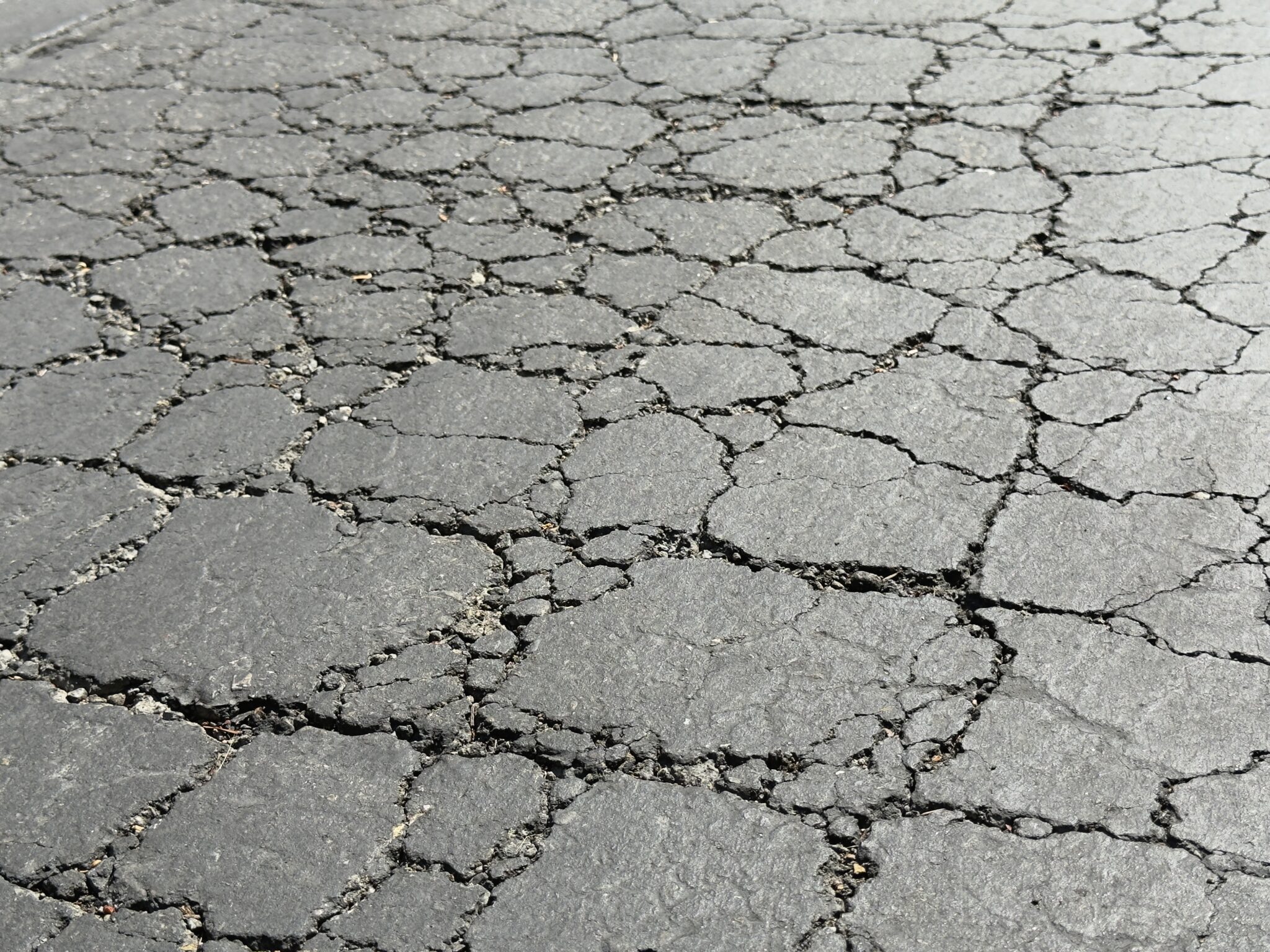
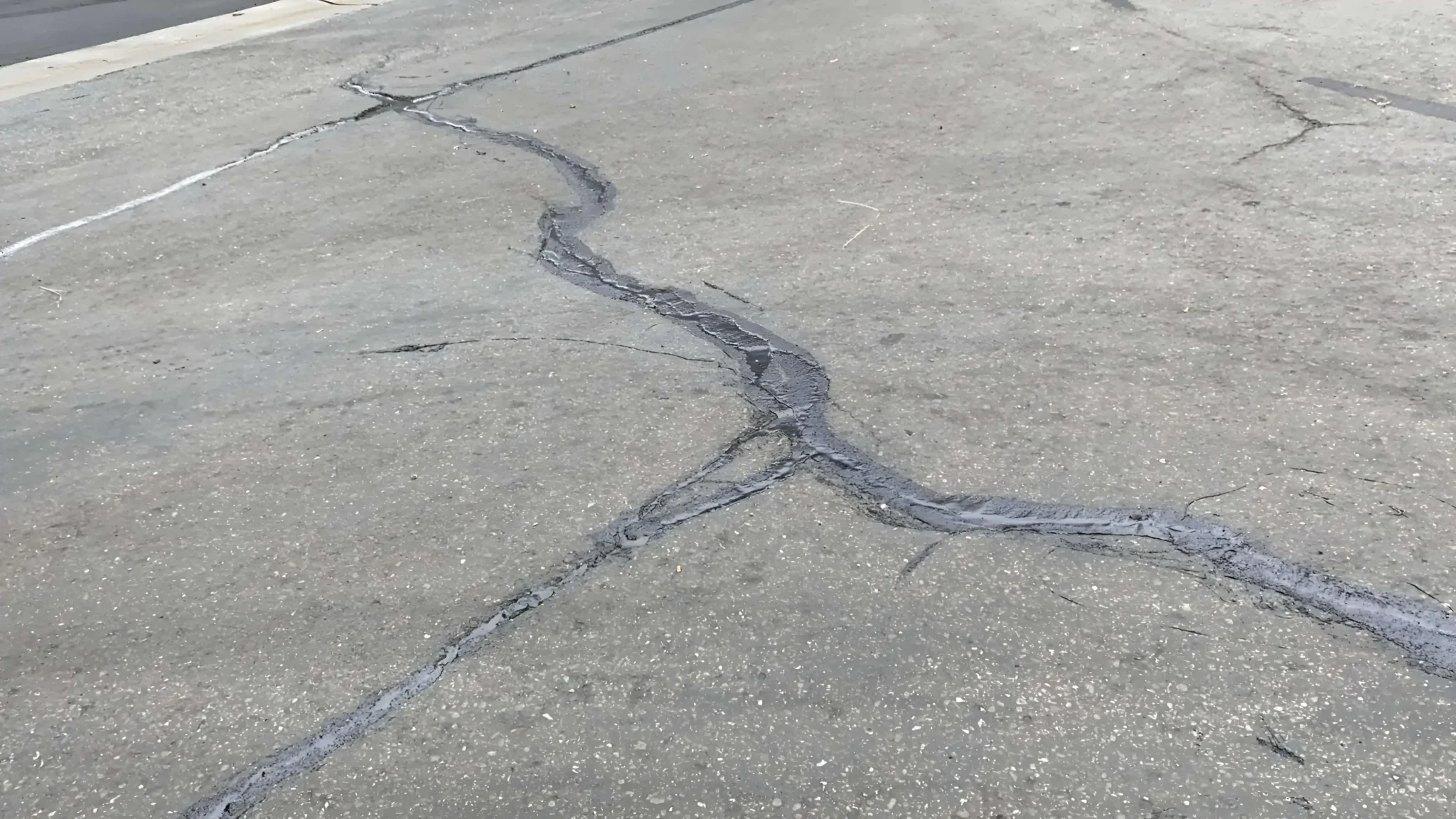
Over time, cracks form as the pavement attempts to accommodate movement below.


Uneven Support Leads to Structural Movement

Pavement relies on consistent support from below.

Poor runoff creates conditions where:

  • Some areas remain dry and stable

  • Other areas stay saturated and weak

This imbalance causes the pavement to move unevenly under load. The result is:

  • Cracking along stress lines

  • Depressions and low spots

  • Progressive surface deformation

Structural stress builds gradually, often without immediate visual warning.


Repeated Traffic Amplifies Water-Related Stress

Every vehicle passing over saturated areas increases stress.

Traffic loading:

  • Forces water deeper into the pavement system

  • Enlarges weakened zones

  • Accelerates base erosion

High-traffic areas such as drive lanes, loading zones, and fire lanes are especially vulnerable when runoff is poor.


Poor Runoff Creates a Self-Reinforcing Cycle

Once poor runoff introduces structural stress, the damage compounds.

Cracks allow more water in.
More water weakens the base further.
Weakened support increases pavement movement.

This cycle continues until visible failure appears — often requiring far more extensive repairs than originally anticipated.


Structural Stress Often Appears Before Surface Failure

One of the challenges with runoff-related damage is timing.

Structural stress builds long before:

  • Potholes form

  • Large cracks appear

  • Surface failure becomes obvious

By the time surface damage is visible, the pavement system has usually been under stress for years.


Early Runoff Correction Reduces Long-Term Damage

Correcting runoff issues early can significantly reduce structural stress.

Early intervention may involve:

  • Improving surface slopes

  • Addressing localized low spots

  • Enhancing drainage pathways

  • Preventing repeated water exposure

These corrections help preserve base integrity and extend pavement life.


The We Love Paving Perspective

At We Love Paving, water runoff is evaluated as a structural issue — not just a drainage detail.

Understanding how runoff affects pavement support allows property owners to:

  • Reduce internal pavement stress

  • Prevent premature deterioration

  • Protect long-term performance

  • Avoid reactive, costly repairs

Parking lots rarely fail because of traffic alone.
They fail when traffic is combined with unmanaged water.

Need Immediate Help?

Let's Talk About Your Project

Don't wait until minor damage turns into major expenses. Our team of experts is ready to provide you with guaranteed solutions. Contact us now for direct advice from a professional.

Frequently Asked Questions (FAQ)

Got Questions? Find Your Answers Here!!

How does poor water runoff create structural stress in pavement?

Poor runoff concentrates water in specific areas instead of distributing it evenly, causing localized base saturation and uneven support. This condition creates internal stresses that asphalt cannot handle long-term, accelerating cracking, deformation, and progressive structural failure.

Why does uneven water distribution weaken pavement structure?

Uneven water distribution creates zones with different load-bearing capacity: some remain stable while others become saturated. This imbalance leads to differential settlement and structural movement under traffic, producing stress cracks and expanding deformation over time.

How does water affect the structural support of the base?

Water reduces internal friction in the base and lowers its load-bearing capacity, causing pavement flexing under traffic. This ongoing structural fatigue results in cracking, depressions, and gradual loss of stability throughout the pavement system.

Why does traffic amplify runoff-related structural stress?

Traffic amplifies the issue because each vehicle forces water deeper into the pavement system and enlarges weakened zones. This repeated loading increases deformation, accelerates base erosion, and intensifies structural stress in high-use areas.

Why is runoff-related structural stress hard to detect early?

Runoff-related stress develops below the surface before visible damage appears. For long periods, the pavement may look functional while the base weakens, delaying intervention until structural damage becomes severe and costly to repair.

Professional customer review project by We Love Paving in Northern California, California. Verified local construction quality.

Fred / Founder

Fred, Founder and Regional Operations Manager at We Love Paving, comes from a family that values hard work and discipline. Growing up watching his parents work long hours with integrity and dedication, Fred learned early on that quality paving isn’t just about asphalt, it’s about consistency, accountability, and doing the job right.

Share

Posts That Might Interest You

Sacramento Paving Solutions: Can You Put Asphalt Over Dirt?

Sacramento Paving Solutions: Can You Put Asphalt Over Dirt?

May 21, 2026

In Sacramento, California, where the weather is mostly warm and the urban landscape is continually evolving, maintaining durable and attractive driveways, pathways, and parking areas is essential. One common question that homeowners and property managers often ask is whether it’s possible to put asphalt directly over dirt. This comprehensive guide will explore the feasibility, benefits,

Is Asphalt Hard to Maintain?

Is Asphalt Hard to Maintain?

May 20, 2026

Asphalt is a popular material for driveways, parking lots, and roadways due to its durability, cost-effectiveness, and ease of installation. However, like any material, it requires maintenance to ensure longevity and optimal performance. In this blog post, we will explore the challenges and best practices of asphalt maintenance to determine whether it is indeed hard

Signs Your Parking Lot Needs Maintenance Before Small Problems Spread

Signs Your Parking Lot Needs Maintenance Before Small Problems Spread

May 18, 2026

The signs your parking Lot needs maintenance rarely appear all at once. A parking lot usually warns you in stages. First, the striping fades. Then small cracks appear. Water starts sitting in the same low area after rain. A pothole forms near the entrance. The surface looks dry, gray, and brittle. Tenants, customers, residents, or

Pavement vs Concrete: Which Is Better for Your Commercial Property?

Pavement vs Concrete: Which Is Better for Your Commercial Property?

May 18, 2026

“Pavement vs concrete” is a common comparison, but it starts with a technical problem. Concrete is pavement too. A commercial parking lot, driveway, loading area, or access road can be paved with asphalt, concrete, pavers, or other hard-surface materials. So the real question is not pavement vs concrete. The useful question is asphalt pavement vs

Next

Estimation Tools

Calculate costs in seconds

Fast, accurate estimates that help you close more jobs. Less guesswork, more profit.