Determining the correct asphalt paving depth is critical to building a long-lasting residential driveway in California. Standard vehicle loads and Central Valley weather require a structured pavement design that balances subgrade compaction with adequate asphalt thickness. Understanding the process of asphalt paving helps home and property owners ensure their installation withstands daily use without premature cracking.
Asphalt Paving Depth
Local Regulations and Standards
Municipal standards across California typically mandate specific structural section minimums for residential encroachments and driveways. Standard municipal codes often require a minimum sub-base layer alongside a 2 to 3-inch compacted hot mix asphalt layer. In HOA-governed communities, guidelines may also regulate drainage slope standards to prevent water pooling into public rights-of-way.
Climate Considerations
California experiences summer ambient temperatures regularly exceeding 100°F, driving surface pavement temperatures past 140°F. High thermal exposure softens the asphalt binder, making shallow asphalt layers prone to rutting under heavy stationary loads. A compacted asphalt thickness of 2.5 to 3 inches over a stable base dissipates surface heat stress and minimizes oxidative hardening caused by intense solar radiation.
Soil Stability
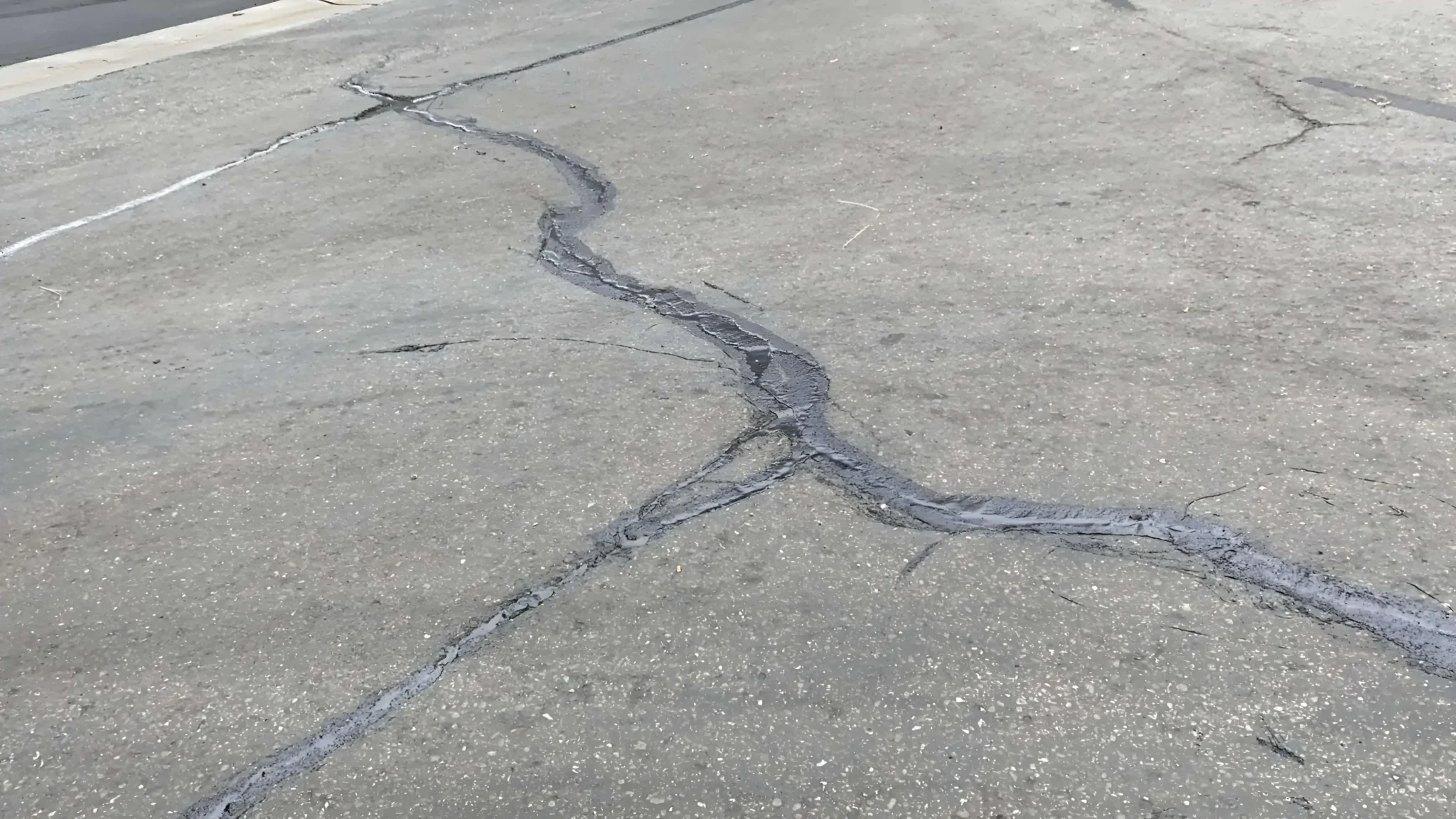
Native soils across Northern California frequently contain expansive clay, which expands during wet winter months and contracts in dry summers. Installing asphalt directly onto unprepared native soil leads to premature cracking regardless of surface thickness. Proper subgrade compaction and placing 4 to 6 inches of Class 2 aggregate base provide essential structural support. When repairing localized base failures, evaluating different types of asphalt patching can determine whether sub-base excavation or full-depth restoration is required.
Uncompacted vs. Compacted Asphalt Thickness
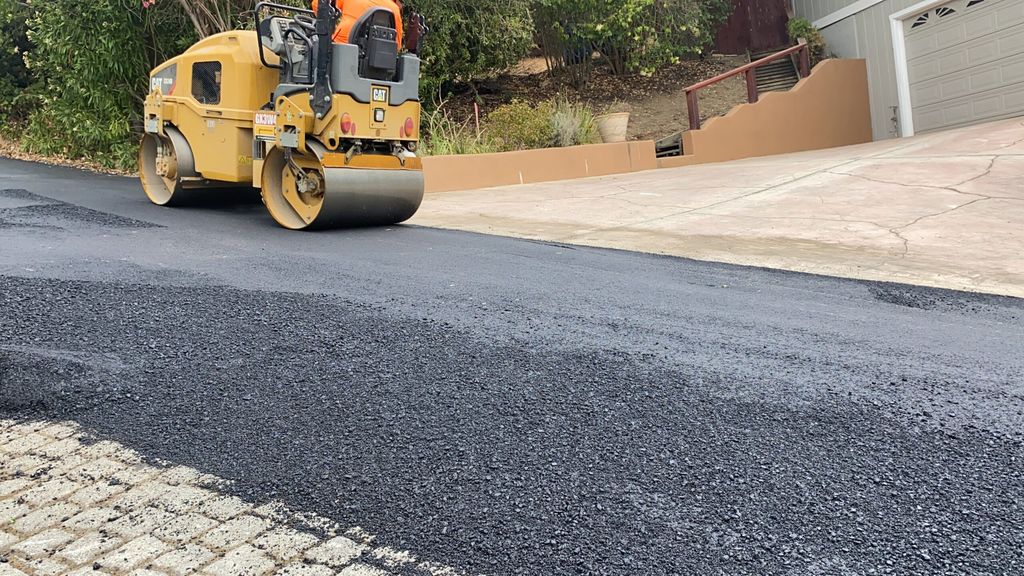
A common point of confusion for property owners during installation is the difference between loose and compacted asphalt depth. Asphalt mix reduces in volume by approximately 20% to 25% when rolled and compacted using heavy vibratory equipment.
If a contract specifies a 2-inch finished asphalt depth, the paving crew must lay down roughly 2.5 inches of uncompacted hot mix before rolling. Understanding this distinction ensures property owners can verify that the final, compacted pavement meets structural design specifications rather than measuring loose aggregate at the edges prior to rolling.
Traffic Load
Vehicle weight distribution directly determines the required structural thickness. Standard passenger vehicles require 2 inches of compacted hot mix asphalt over a 4-inch aggregate base. However, driveways intended for recreational vehicles (RVs), delivery trucks, or boat trailers require a minimum of 3 inches of compacted asphalt over a 6-inch base. Using formulations engineered for heavy loads ensures long-term performance, unlike lighter mixes often discussed when comparing road asphalt and driveway asphalt.
Residential Asphalt Depth Specifications
| Driveway Application | Compacted Asphalt Layer | Aggregate Sub-Base (Class 2) | Total Structural Section |
|---|---|---|---|
| Standard Passenger Vehicles | 2.0 Inches | 4.0 Inches | 6.0 Inches ¹ |
| Heavy Residential / Dual Usage | 2.5 Inches | 6.0 Inches | 8.5 Inches ¹ |
| Heavy Vehicles (RVs & Boats) | 3.0 Inches | 6.0 to 8.0 Inches | 9.0 – 11.0 Inches ¹ |
| Asphalt Overlay | 1.5 to 2.0 Inches | N/A (Existing Base) | 1.5 – 2.0 Inches ² |
¹ Standard compacted thicknesses based on Caltrans flexible pavement design standards and Asphalt Institute MS-4 specifications.
² Requires a structurally stable, crack-pretreated existing base course prior to installation.
Paving Striping Depth
Regulatory Requirements
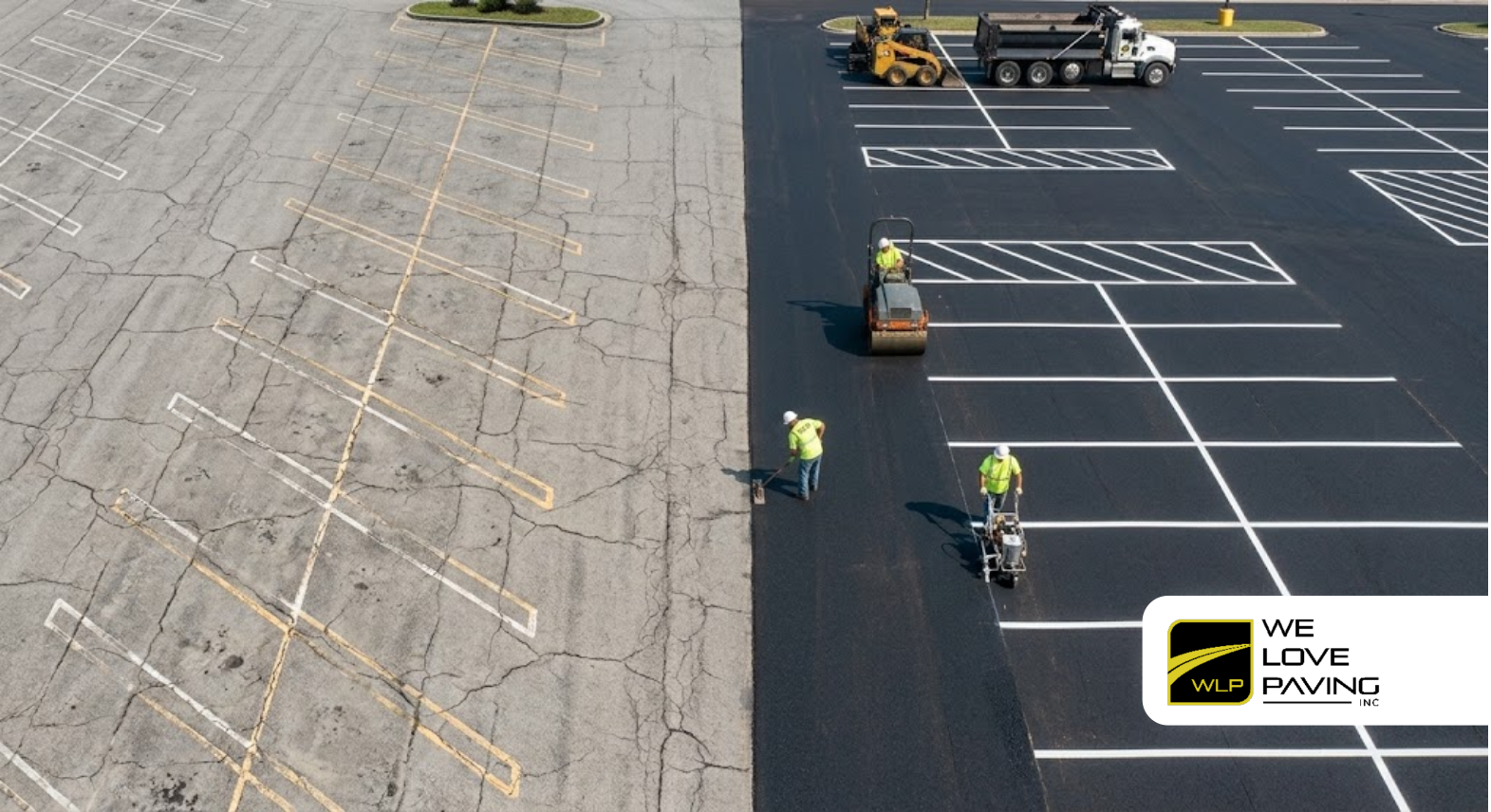
Paving striping, including parking lines and markings, must adhere to local regulations and standards. These guidelines often dictate the dimensions, colors, and placement of markings for safety and compliance purposes.
Visibility and Durability
The depth of paving striping depends on factors such as visibility and durability. In high-traffic areas or where frequent re-striping is impractical, thermoplastic or epoxy-based striping materials may be preferred for their longevity and visibility.
Surface Preparation
Proper surface preparation is crucial for durable striping. The pavement surface must be clean, dry, and free of debris or contaminants to ensure proper adhesion of the striping materials.
Building a Long-Lasting Asphalt Driveway
Getting the asphalt depth and sub-base preparation right from day one is the single best way to protect your pavement against severe summer heat and shifting clay soils. Investing in proper structural thickness eliminates premature cracking, prevents rutting under vehicle weight, and delivers a surface built to perform for decades.