Most asphalt driveways begin showing some level of surface cracking long before the pavement reaches the end of its usable life. In many cases, small cracks appear within the first several years, while a properly installed and maintained asphalt driveway may continue functioning for 15 to 25 years before major reconstruction becomes necessary.
The important distinction is not whether cracking appears, but what kind of cracking develops, how quickly it spreads, and what those cracks reveal about the condition underneath the surface.
Some cracking is part of normal asphalt aging. Other cracking patterns can indicate drainage problems, weak base preparation, excessive vehicle loading, poor maintenance timing, or long-term oxidation from weather exposure.
For property owners and facility managers, understanding the difference helps avoid two common mistakes:
- ignoring early deterioration until repairs become expensive;
- overreacting to cosmetic surface wear that may still be manageable through maintenance.
Small Cracks Do Not Always Mean the Driveway Is Failing
Asphalt is a flexible pavement material. Over time, sunlight, moisture, temperature swings, and vehicle traffic gradually dry out the surface binders that keep asphalt flexible.
That aging process often appears first as narrow surface cracks.
A driveway may still have years of service life remaining even after light cracking begins, especially when:
- cracks are isolated rather than widespread;
- the pavement remains level;
- drainage still functions properly;
- edges are stable;
- water is not penetrating deeply into the base.
The bigger concern is usually how quickly cracks expand after they first appear.
When water repeatedly enters the pavement structure, freeze-thaw movement, soil instability, and traffic stress can accelerate deterioration underneath the surface. What begins as a cosmetic issue can eventually lead to potholes, rutting, edge breakdown, or larger interconnected cracking patterns.
That is why long-term pavement performance depends heavily on ongoing sealcoating services and surface preservation timing rather than waiting until visible failure becomes severe.
Typical Asphalt Driveway Lifespan Expectations
The lifespan of an asphalt driveway depends less on the calendar alone and more on installation quality, climate exposure, traffic conditions, drainage behavior, and maintenance consistency.
| Driveway Condition | Typical Performance Range |
|---|---|
| Minimal maintenance | 10–15 years |
| Moderate preventive maintenance | 15–20 years |
| Well-maintained asphalt system | 20–25 years |
| Heavy loading or poor drainage conditions | Often shorter lifespan |
These ranges are not guarantees. A driveway exposed to standing water, delivery vehicles, or unstable soil may deteriorate much faster than one with proper grading and regular surface care.
Likewise, even newer pavement can crack prematurely if the base preparation was weak or if water consistently collects near edges and low areas.
In many commercial and mixed-use properties, deterioration tends to appear first near turning zones, garage entrances, drainage transitions, or areas where vehicles repeatedly stop and pivot.
Properties already evaluating broader parking lot paving conditions sometimes notice that driveway cracking follows similar stress patterns seen in larger asphalt surfaces.
What Causes Asphalt to Crack Earlier Than Expected?
Early cracking rarely comes from a single issue. More often, several smaller factors combine over time.
Oxidation and Sun Exposure
Asphalt ages through exposure to ultraviolet light and weather cycles. Over time, the oils that help keep pavement flexible begin drying out, leaving the surface more brittle and vulnerable to cracking.
This is why older asphalt often fades from a darker black finish into a lighter gray appearance before cracking becomes more visible.
California properties and high-heat regions frequently experience faster oxidation, especially in areas with little shade coverage and prolonged direct sun exposure.
Water Intrusion
Water is one of the most damaging long-term forces affecting asphalt.
When drainage problems allow water to repeatedly enter cracks, the underlying base can soften or shift. Once support weakens beneath the surface, cracking tends to spread faster and repairs become less predictable.
Drainage-related deterioration often develops around:
- driveway edges;
- low spots;
- downspout discharge areas;
- garage transitions;
- sidewalks and curb joints;
- poorly graded sections.
Heavy Vehicle Loads
Residential asphalt is usually designed around passenger vehicle traffic. Heavier vehicles such as delivery trucks, trailers, dumpsters, or commercial vans can place additional stress on areas not built for repeated concentrated loads.
In real property conditions, cracking commonly begins near turning points, parked vehicle positions, or areas where heavy vehicles regularly stop and pivot.
Delayed Maintenance
Small cracks are significantly easier to manage than widespread structural deterioration.
Once cracks remain open for long periods, moisture intrusion accelerates the weakening process beneath the asphalt.
That is why pavement preservation strategies often matter more than waiting for major visible failure. Discussions around long-term pavement care, including surface durability and maintenance planning, usually emphasize timing rather than reacting after deterioration becomes severe.
Not All Cracking Patterns Mean the Same Thing
The shape, spacing, and location of cracks can reveal different pavement conditions.
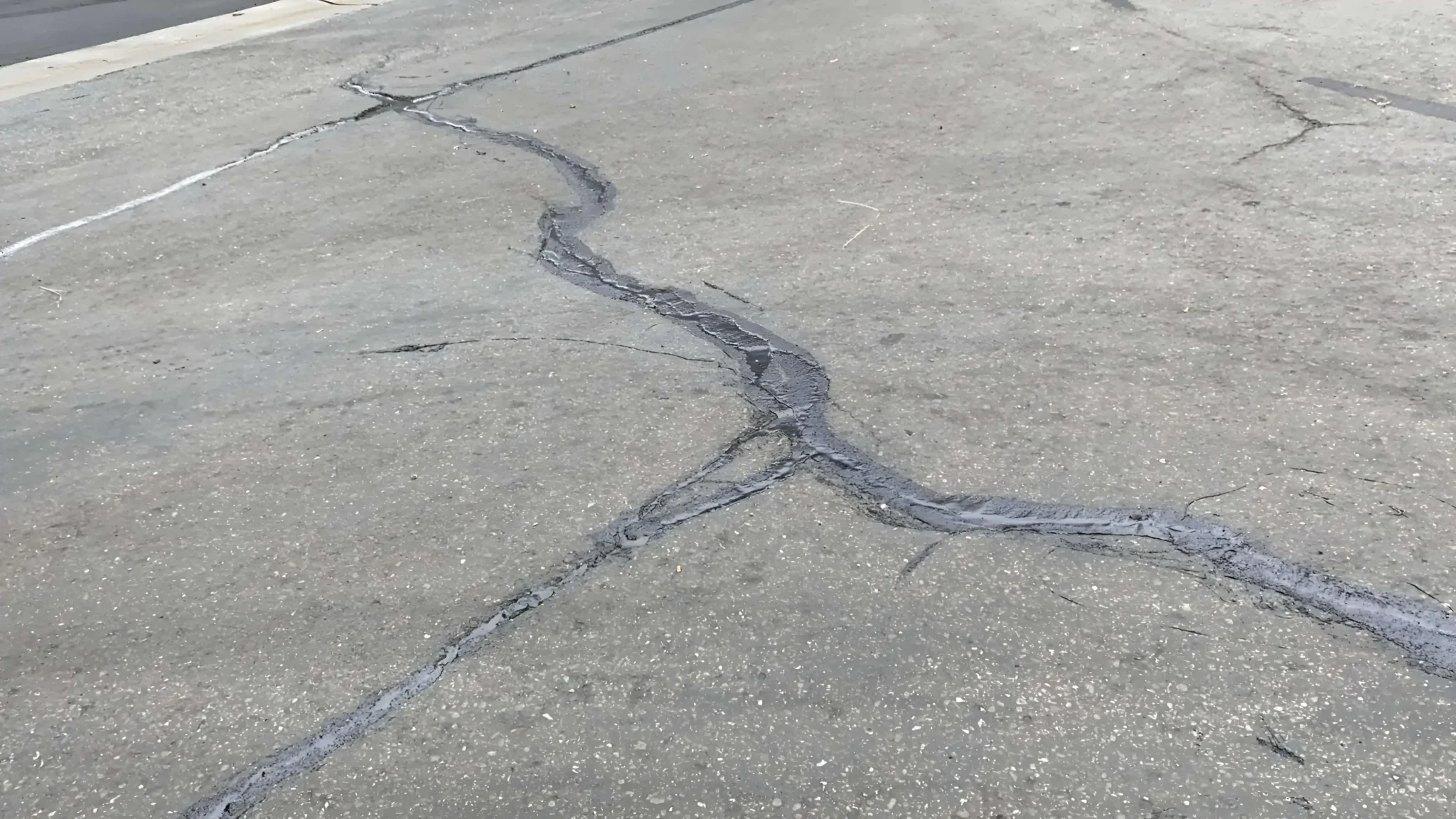
Hairline surface cracks may simply reflect normal aging.
Long straight cracks sometimes develop from expansion stress or pavement movement near joints and transitions.
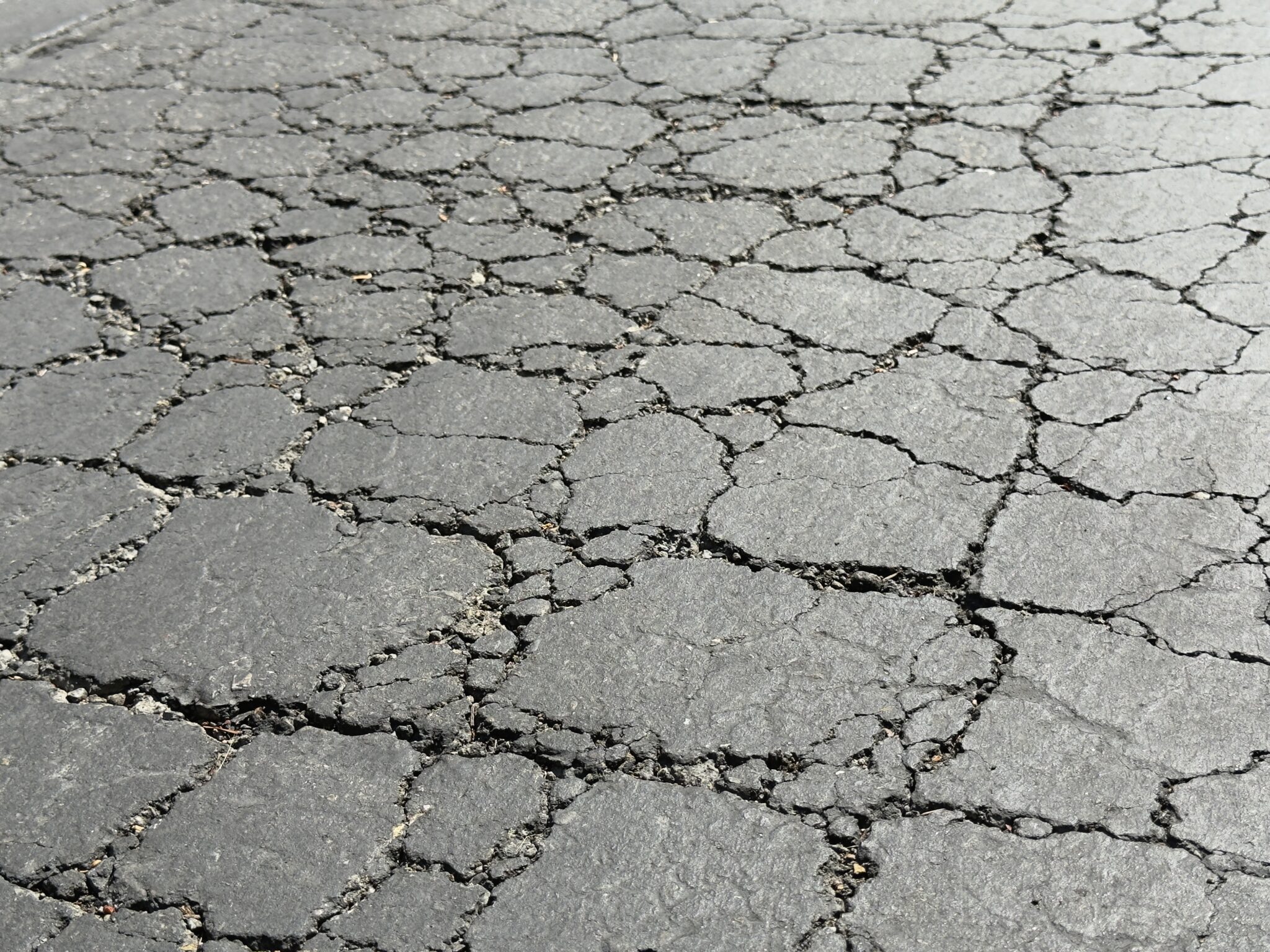
More interconnected cracking patterns may indicate structural weakness underneath the asphalt surface.
Property owners should pay closer attention when cracking appears together with:
- standing water;
- loose aggregate;
- potholes;
- edge breakdown;
- sinking pavement;
- repeated crack reappearance after repair.
These overlapping conditions can suggest deeper base instability rather than isolated cosmetic wear.
At that point, simple patching may become less effective than broader resurfacing or rehabilitation planning.
Maintenance Timing Often Determines How Long Asphalt Lasts
One of the most common property maintenance mistakes is waiting until cracking becomes visually severe before taking action.
Asphalt usually provides gradual warning signs long before major structural failure occurs.
Preventive maintenance strategies may include crack sealing, sealcoating cycles, drainage improvements, or localized repairs designed to slow long-term deterioration.
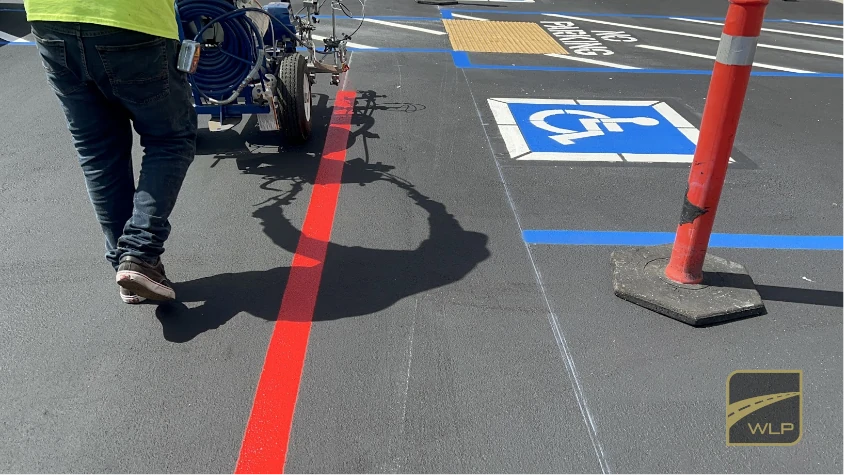
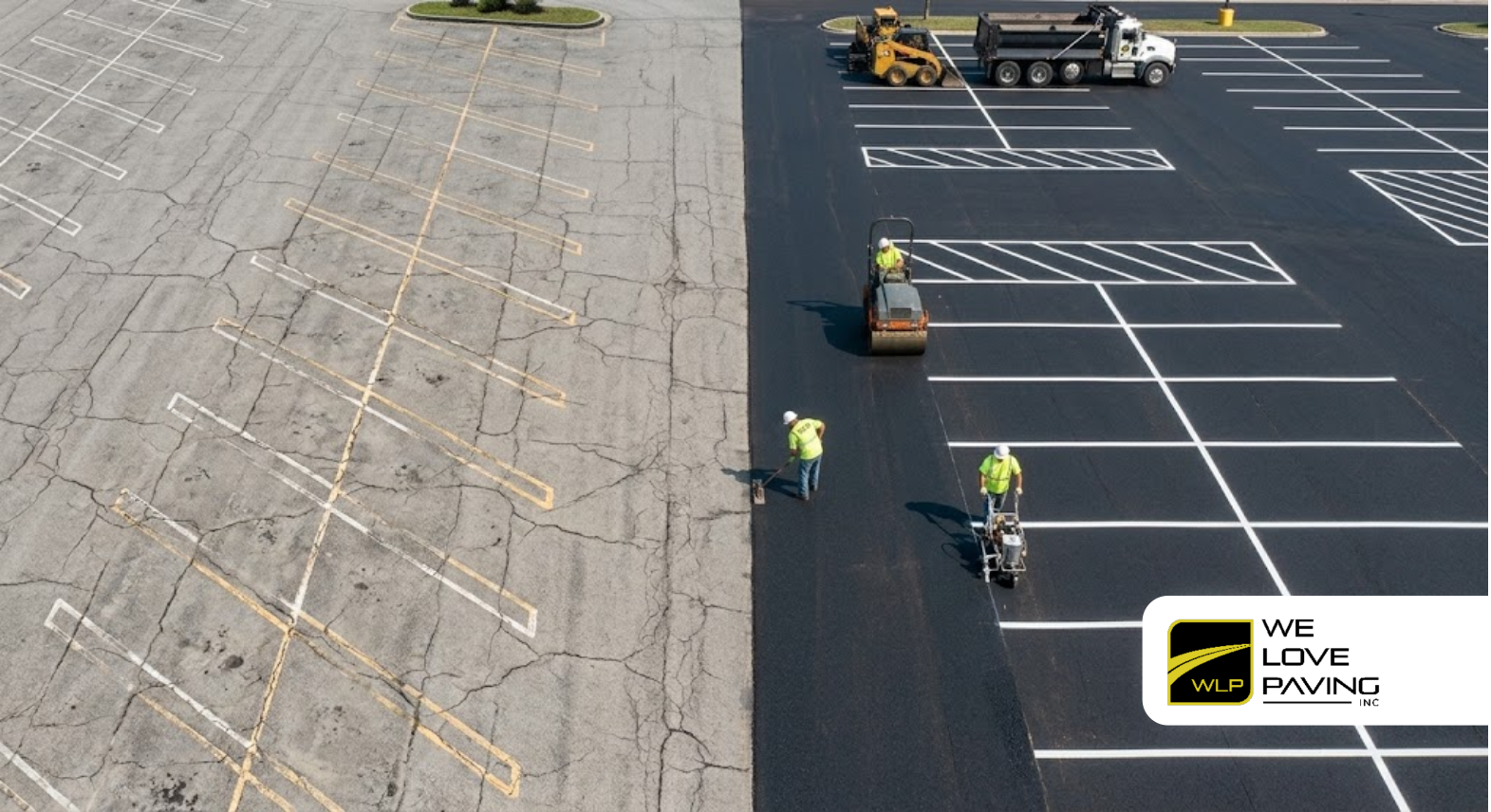
For many commercial and mixed-use properties, pavement maintenance decisions also connect to visibility, appearance, and traffic organization. As surfaces age, fading pavement markings and worn circulation areas sometimes begin affecting overall site usability alongside cracking concerns. In those situations, parking lot striping may become part of broader maintenance planning rather than purely cosmetic upgrades.
The goal is not making asphalt look brand new forever. The goal is extending functional lifespan while reducing the risk of avoidable structural deterioration.
When Cracking Starts Pointing Toward Replacement
Minor isolated cracking alone does not automatically mean an asphalt driveway needs replacement.
Replacement conversations become more realistic when pavement deterioration includes:
- widespread interconnected cracking;
- recurring potholes;
- major settlement;
- unstable edges;
- drainage failure;
- repeated repair breakdowns;
- visible base movement.
At that stage, repair costs sometimes begin approaching the value of larger rehabilitation work.
The timeline varies considerably depending on traffic conditions, installation quality, drainage behavior, and maintenance history.
Properties evaluating larger asphalt replacement decisions often compare current deterioration against long-term pavement planning goals instead of focusing only on visible cracks alone. Broader asphalt paving evaluations generally consider drainage, grading behavior, traffic flow, and overall structural condition together.
A Practical Perspective on Asphalt Longevity
Asphalt driveways are not permanent surfaces. They gradually age through weather exposure, traffic stress, oxidation, and moisture intrusion.
Some cracking is part of that normal lifecycle.
What matters most is how the pavement is maintained after those early warning signs appear.
Driveways receiving timely crack sealing, drainage attention, and preventive maintenance often remain functional far longer than owners initially expect. Meanwhile, surfaces left untreated after early deterioration can decline much faster once water begins weakening the pavement structure underneath.
Owners trying to better understand how pavement condition affects long-term property appearance and usability often approach maintenance planning through a wider operational lens, similar to the perspective discussed throughout the We Love Paving company overview.
At We Love Paving, pavement lifespan is viewed through a practical property-maintenance perspective: how water moves across the surface, how cracks evolve over time, how traffic affects wear patterns, and whether the asphalt still supports safe, reliable long-term use without unnecessary replacement decisions.