A property manager usually does not find out about pavement maintenance regulations by reading a clean statewide checklist. It happens in a less organized way.
A tenant emails photos of a pothole near the loading door. A city notice mentions faded striping or damaged parking surfaces. A customer complains that the accessible route from the parking lot is hard to use after rain. A contractor points out that water is sitting along the edge of the drive aisle again. None of those moments feels like a major regulatory event at first. Together, they tell a commercial owner that the paved areas are no longer just a maintenance line item.
The phrase pavement maintenance regulations can sound like one specific California rule. That is not the safest way to think about it. For most commercial properties, pavement-related obligations show up through several channels: local property maintenance codes, accessibility requirements, stormwater expectations, lease obligations, insurance review, and basic site safety concerns.
This article is not legal advice and does not replace a local code review, CASp inspection, civil engineer, attorney, or municipal guidance. It is a practical way to understand what California commercial owners should watch before ordinary pavement wear becomes harder to explain.

There Is Usually Not One Rule Sitting on the Desk
The weak version of this topic says, “California is tightening pavement rules.” That may sound useful, but it is too broad to help an owner make a decision.
A better reading is this: commercial pavement is now easier to question because it affects more than appearance. A parking lot can touch accessibility, drainage, customer movement, tenant operations, emergency access, public-facing property conditions, and local code enforcement. Different agencies or local rules may look at different parts of the same surface.
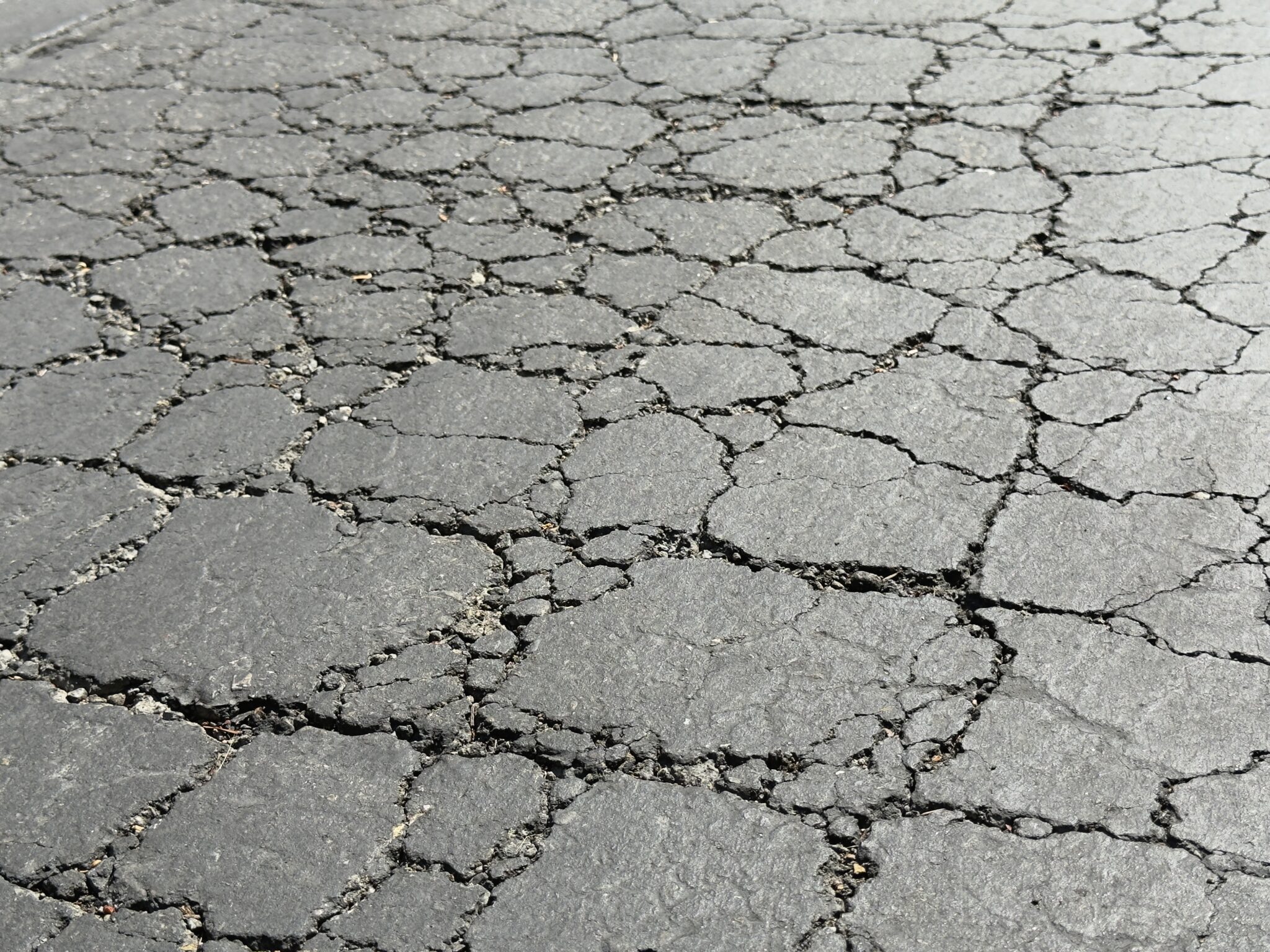
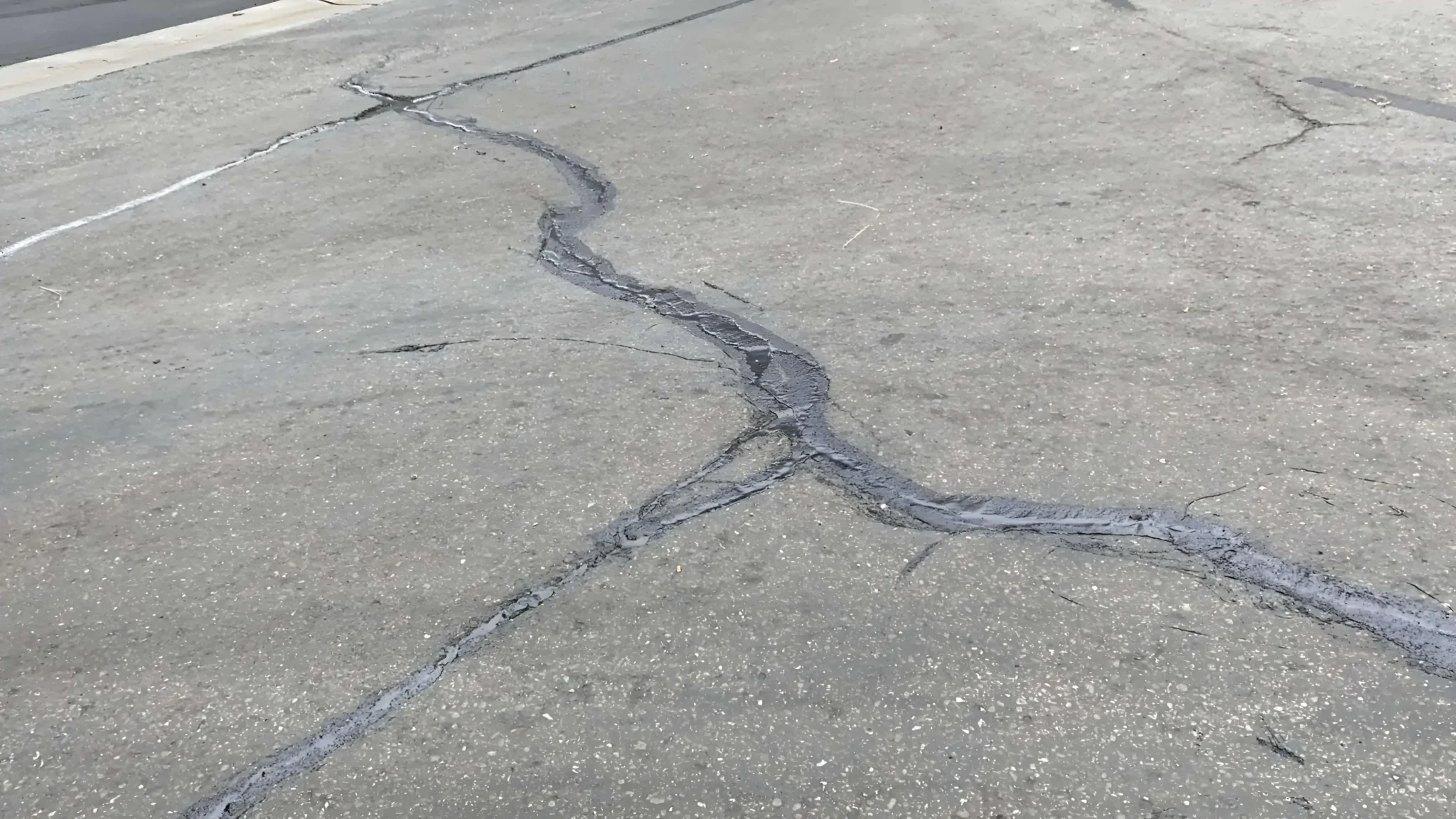
A cracked drive aisle may be a maintenance issue. If water runs through that area and carries sediment toward a drain, it may also raise stormwater concerns. If the damaged area sits on or near an accessible route, the conversation changes again. If striping has faded to the point that stalls or access aisles no longer work as intended, it may no longer be a cosmetic issue.
This is why owners get into trouble when they treat pavement as a once-every-few-years visual upgrade. California properties are exposed to sun, water, traffic loads, irrigation runoff, turning vehicles, and tenant use patterns that leave evidence on the pavement. The question is whether the owner notices and documents that evidence before someone else does.
The Parking Lot Tells on Itself
A site does not need to be falling apart to deserve attention. Small pavement signals often explain where the maintenance file is thin.
The front row near a grocery tenant may lose striping long before the rest of the lot because drivers are turning, braking, loading bags, and crossing the same stalls all day. A back service lane may show broken edges where delivery trucks clip the same corner every morning. A low strip near a catch basin may stay damp longer than the rest of the lot, carrying grit across the surface and wearing paint faster. A patched trench may reopen along the seam if the surrounding pavement is moving.
Those are not dramatic defects. They are clues.
When a city, tenant, insurer, or owner representative asks about pavement condition, the answer should not depend on memory. Photos, dates, repair scopes, and notes about recurring areas give the owner a clearer story. Without that record, every new complaint looks isolated, even when the pavement has been showing the same pattern for months.
This is where paving maintenance belongs in the property plan. Not as a generic promise to “keep the lot safe,” but as a routine way to catch visible problems, assign priorities, and avoid guessing later.
What Belongs in a Pavement File
The file does not need to be complicated. It needs to be usable when someone asks, “What did we know, when did we know it, and what did we do?”
| Keep this record | Why it matters | What makes it useful |
|---|---|---|
| Dated site photos | Shows condition before and after work | Same angles, not random close-ups only |
| Repair invoices and scopes | Explains what was fixed | Location, method, materials, and limits of work |
| Notes on recurring areas | Separates one-time damage from a pattern | Drainage spots, truck turns, heavy-use stalls |
| Striping and signage updates | Tracks visibility and access-related markings | Date, area covered, and layout changes |
| Tenant or customer complaints | Shows when an issue was reported | Original message, response, and follow-up |
| Budget notes | Connects decisions to timing | What was approved, deferred, or scheduled |
The most valuable records are usually boring. A photo of the same cracked corner taken every quarter may matter more than a polished maintenance plan nobody follows. A short note saying “water still holds here after irrigation runs” may explain why a patch failed early. A marked-up site map may help a board or ownership group understand why one area keeps returning to the budget.
This also improves budgeting. Owners looking at asphalt maintenance costs should not only ask what a repair costs today. They should ask what the file will show if that repair is deferred and the same area continues to deteriorate.
Access Issues Need More Careful Language
Accessible parking and routes are where pavement conversations can become sensitive fast. A faded symbol, worn access aisle, uneven path, broken curb ramp, ponding near a route, or damaged surface near an accessible stall may affect usability. That does not mean every visible issue is automatically a legal violation. It does mean the condition should be reviewed carefully.
California accessibility requirements can involve federal ADA concepts, California Building Code provisions, local enforcement, and site-specific facts. A paving contractor can identify pavement and marking conditions that deserve attention, but owners should be careful about treating ordinary maintenance comments as legal conclusions.
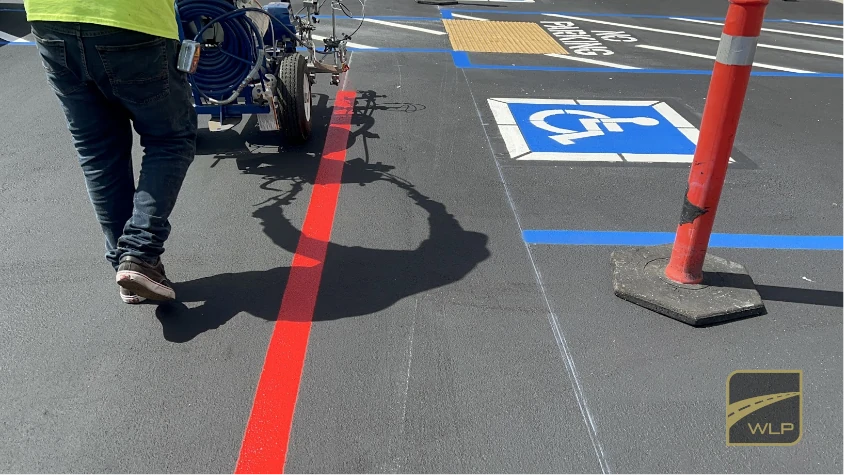
A practical review should look at the whole path, not only the blue paint. Can someone move from the accessible stall to the entrance without being pushed behind parked cars or across broken pavement? Are access aisles visible enough that drivers do not park in them? Has surface wear changed how water sits near the route? Did a recent sealcoat or repair interrupt markings that users rely on?
For properties with public access, medical users, senior housing, retail traffic, or frequent visitors, an accessible parking layout should be treated as part of the site’s operating condition. When the question becomes technical or legal, an ADA parking review may be appropriate, but no article should pretend that paint or pavement work alone guarantees compliance.
Stormwater Starts at the Low Spots
Pavement maintenance also connects to water. Not every parking lot is regulated the same way, and the exact obligations depend on the property, activity, location, and applicable permits or local rules. Still, California owners should not ignore what water is doing on paved surfaces.
A lot that drains cleanly after rain tells a different story from one with oily residue near a dumpster pad, sediment trails toward a catch basin, or standing water along a patched edge. Pavement defects can trap debris. Cracks can collect sediment. Depressions can hold water long enough to soften the surface or accelerate raveling. Poorly managed runoff can turn a maintenance issue into a broader site-management concern.
The uncomfortable part is that water leaves evidence. After a storm, look at where silt lines stop. Look at where leaves collect. Look at the darker area that dries last. Look at whether water runs through a damaged section before reaching a drain. Those details belong in the same conversation as crack sealing, patching, sweeping, drainage correction, and surface repair.
A property team does not need to turn every puddle into an emergency. It does need to know which wet areas keep coming back.
Faded Markings Can Become a Use Problem
Striping often gets pushed into the “appearance” category. That is a mistake when markings affect how people use the lot.
If stall lines disappear near the storefront, customers may park wider than planned and reduce usable capacity. If arrows are faint, drivers may use a drive aisle incorrectly. If stop bars are worn near an exit, vehicles may roll too far into crossing traffic. If fire lane or no-parking markings lose visibility, enforcement becomes harder. If accessible access aisles fade, drivers may treat them like extra space.
None of this should be exaggerated into guaranteed liability language. The more grounded point is that faded markings can make site behavior less predictable. That alone is enough reason to track restriping timing instead of waiting until the paint has nearly disappeared.
Owners should also pay attention to parking lot warning signs that repeat in the same areas: blocked access aisles, tire marks over curbs, cars avoiding broken pavement, people walking outside marked paths, or cones that never seem to leave one corner of the lot. Temporary fixes that become permanent are usually telling the owner something.
The Smarter Question Is Not “Are We Compliant?”
That question is too broad unless the right professional is answering it.
A better owner-level question is: “Can we show that we are paying attention to the paved areas that affect access, drainage, parking behavior, and ordinary site use?”
That does not require panic. It requires a maintenance rhythm that fits the property. A small professional office may need a simpler file than a retail center with constant turnover. A warehouse with truck traffic should watch different pavement areas than a medical office with patient drop-off needs. An HOA with assigned stalls will care about different markings than a shopping center with fire lanes, loading zones, and high pedestrian movement.
The point is not to turn every owner into a code expert. The point is to stop treating pavement as silent until it fails. Pavement speaks through cracks, ponding, worn paint, loose edges, patched seams, and user behavior. The owner’s job is to decide which signals need documentation, which need repair, and which need a qualified review.
We Love Paving can support that process by helping commercial owners read the site condition, organize repair priorities, and plan pavement work in a way that fits real property use. The responsible approach is measured: document what is visible, repair what is practical, review access-sensitive areas carefully, and avoid making legal assumptions from pavement appearance alone.