Most property owners think about ADA ramp requirements in one narrow way: is the ramp too steep or not?
Slope matters, but it is only one part of how a ramp functions within an accessible route. A ramp can look reasonable from a distance and still create access concerns if the landing is awkward, the surface is slick, the transition is rough, water collects at the bottom, or the route leading to the ramp is difficult to use.
For commercial properties, HOAs, retail centers, medical offices, apartment communities, and public-facing facilities, ramps should be reviewed as part of the entire access experience. The question is not only whether a ramp exists. The better question is whether someone can approach it, use it, exit it, and continue toward the entrance without avoidable barriers.
This article is not a legal ADA inspection or compliance certification. It is a practical property maintenance guide for owners and managers who want to understand why ADA ramp requirements involve more than slope alone..
Why Slope Is Only One Part of ADA Ramp Requirements
Slope gets the most attention because it is the easiest issue to notice. If a ramp feels too steep, most people can sense the problem quickly. But ADA ramp requirements are not only about how sharply the ramp rises. They also involve whether the ramp works as part of a usable route.
A property owner should look at the ramp as a full movement zone. Someone using a wheelchair, walker, cane, scooter, stroller, delivery cart, or other mobility support needs predictable conditions before, during, and after the ramp.
That means the approach matters. The landing matters. The surface matters. The transition from asphalt to concrete matters. Drainage matters. Edge conditions matter. The route from the ramp to the entrance matters.
This is where many properties fall short in practice. A ramp may look acceptable during a quick walk-through, but a visitor using mobility support may experience it differently. A rough bottom transition, worn concrete edge, puddle near the landing, or cracked approach surface can make the ramp feel less stable even when the slope is not the only concern.
For properties where ramp slope, transitions, and paved access routes need technical review, ADA inspections can help identify whether the ramp area deserves closer evaluation.
The Ramp Has to Work With the Full Accessible Route
A ramp does not function in isolation. It is one part of a sequence that starts before a visitor reaches it and continues after they leave it.
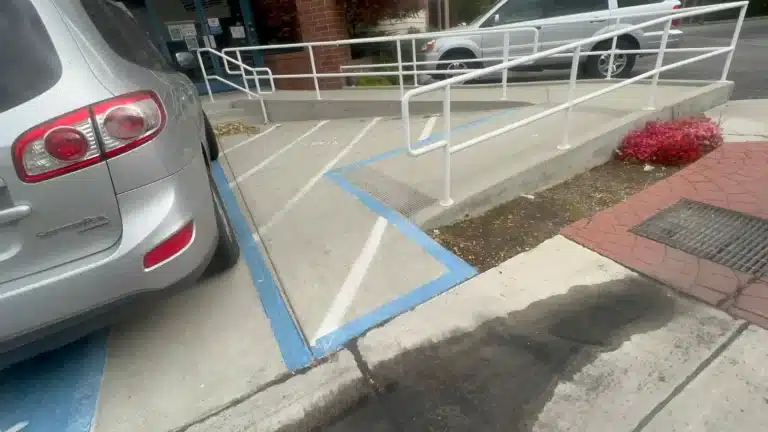
A visitor may enter the parking lot, find accessible parking, exit the vehicle, move through an access aisle, follow a path, reach the ramp, cross the landing, and continue toward the building entrance. If one part of that sequence breaks down, the ramp may not perform as intended.
That is why property owners should review the ramp together with surrounding site conditions:
- accessible parking location
- access aisles
- marked pedestrian paths
- curb ramp alignment
- landing condition
- pavement transitions
- drainage patterns
- striping and signage visibility
These conditions do not automatically prove a compliance issue. They do show where the property may need a closer review. The practical concern is that small site conditions often combine. A slightly rough transition, faded route marking, cracked approach surface, and poor drainage may create a larger access concern together than any one issue would create alone.
For broader context on how ramps connect to parking layout and access areas, this guide on ADA parking lot compliance helps explain why ramps should be reviewed as part of the larger property system.
Drainage and Transitions Commonly Affect Ramp Compliance
Ramp accessibility is heavily influenced by surrounding pavement behavior.
One common issue in commercial properties is that water drainage patterns gradually shift over time, especially near entrances, sidewalks, and parking lot transitions. As drainage changes, ramps may begin collecting standing water or developing unstable edges that affect pedestrian safety.
Transitions between ramps and adjacent pavement areas also play a major role in accessibility performance.
Small elevation inconsistencies may not seem significant visually, but they can create movement difficulties for: wheelchairs, walkers, mobility devices, and pedestrians navigating high-traffic areas.
This becomes particularly important in: retail centers, medical offices, office parks, HOAs and apartment communities where pedestrian accessibility directly affects daily property usability.
For many commercial properties, recurring surface deterioration eventually overlaps with larger commercial parking lot paving planning once accessibility conditions begin affecting broader pedestrian routes.
Where Ramp Problems Usually Start Showing Up
Ramp-related issues often develop gradually. The ramp may have been built years ago, but water, traffic, concrete movement, asphalt settlement, patch repairs, landscaping changes, and restriping cycles can change how the surrounding area works.
The most important warning signs usually appear at the edges. Look at the bottom of the ramp. Look at the top landing. Look at the joint where concrete meets asphalt. Look at the path someone follows before reaching the ramp. These transition areas often reveal problems before the ramp itself looks obviously damaged.
| Site condition | Why it matters | What property owners should review |
|---|---|---|
| Rough bottom transition | Can interrupt smooth movement onto the ramp | Check where asphalt, concrete, curb, and ramp edges meet |
| Water near the landing | Can affect traction and surface durability | Review drainage after rain or irrigation |
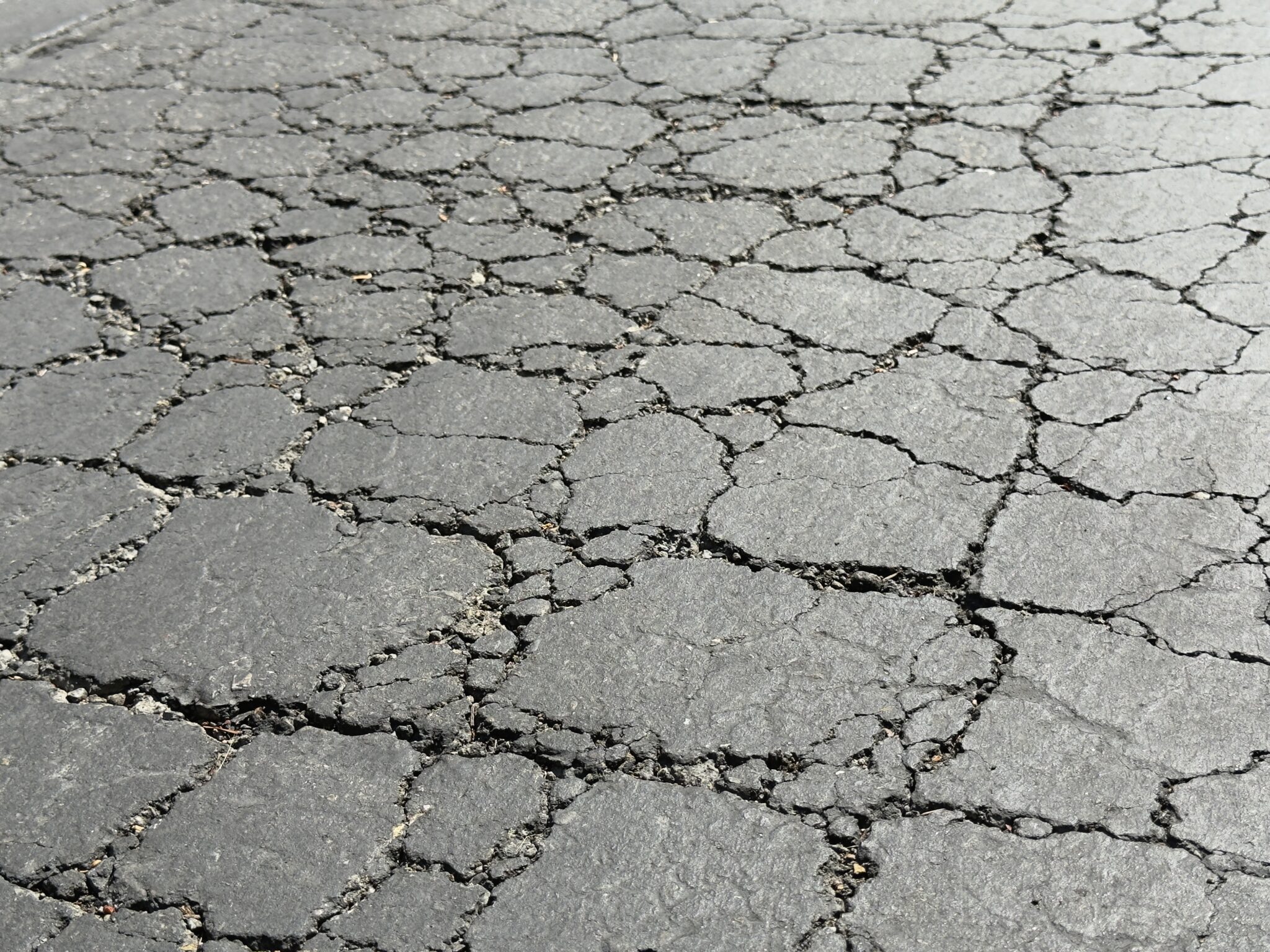
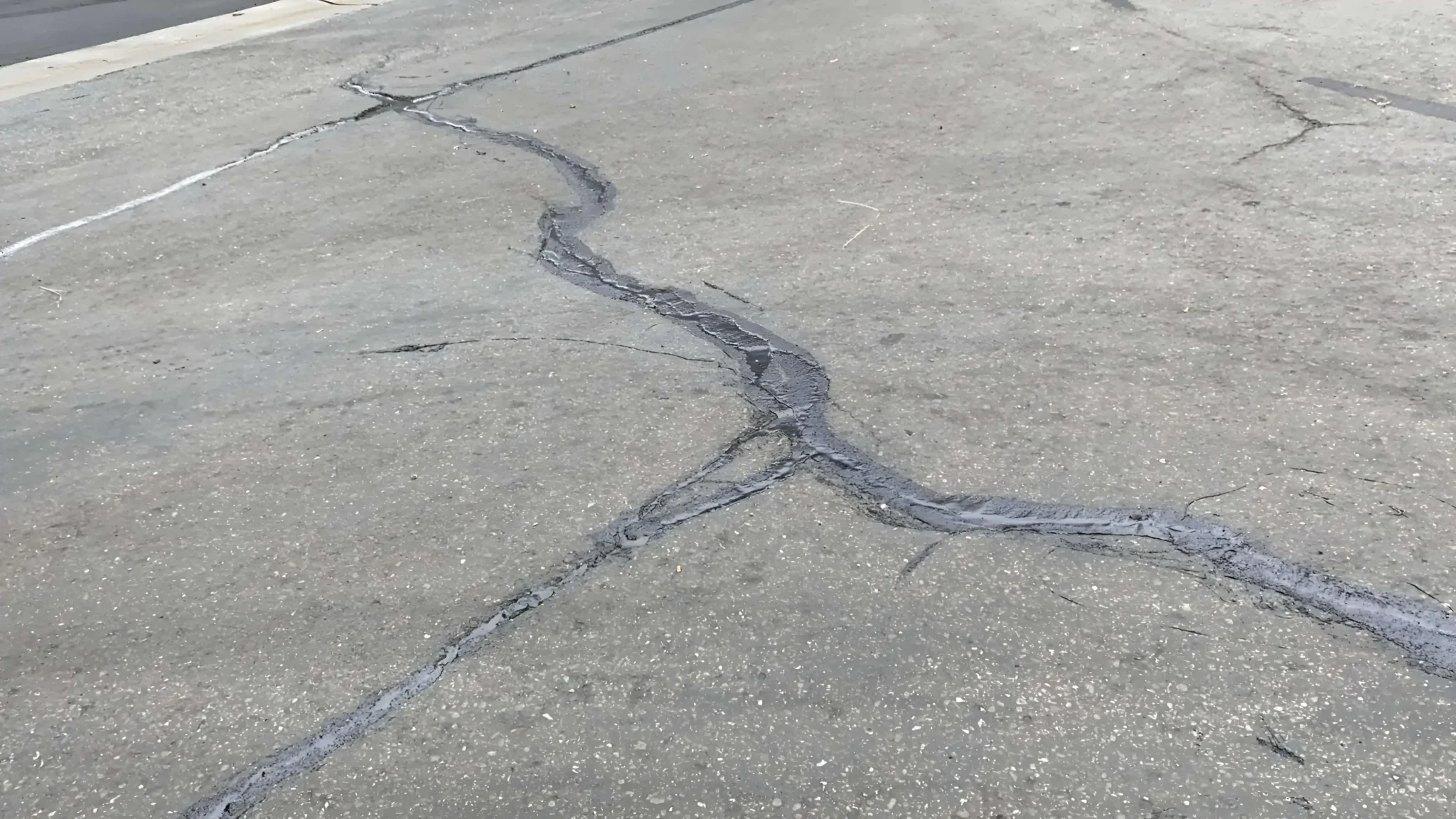
| Cracked ramp surface | May indicate aging or surface movement | Watch whether cracks widen or edges loosen |
| Uneven approach pavement | Can affect access before the ramp begins | Review the path from parking to the ramp |
| Faded route markings | Can make the accessible path harder to read | Review striping, signage, and pedestrian guidance together |
| Obstructed landing area | Can reduce usable movement space | Check signs, planters, carts, posts, or stored items |
The goal is not to treat every surface flaw as a crisis. The goal is to understand whether the ramp still works as part of a clear, stable, and usable access route.
When concrete surfaces around ramps, landings, or entrance paths are deteriorating, concrete paving may become part of the maintenance conversation. The right decision depends on actual site conditions, not on visual assumptions from a distance.
Why Property Owners Often Miss Ramp Issues
Ramp issues are often missed because people who manage a property become used to the site. They walk past the same ramp every day and stop noticing small changes. A settled edge, a worn landing, a slick surface, or recurring water near the approach may blend into the background.
Another reason is that ramp issues rarely appear as one obvious failure. They often show up as small, separate details. A crack looks like pavement wear. A puddle looks temporary. A faded path marking looks cosmetic. A transition lip looks minor. A slightly awkward landing feels normal to someone walking quickly.
But accessibility problems are often cumulative. The ramp may not be the only issue. The access aisle may be faded. The route may be unclear. The pavement may be uneven. The landing may collect water. The entry path may force someone through an awkward turn.
For property owners trying to identify these blind spots earlier, this article on ADA pavement assessment is useful because paved access concerns often involve several surface conditions working together.
Property managers should be especially careful after resurfacing, utility work, patching, tenant improvements, landscaping changes, or restriping. These projects can unintentionally affect how a ramp connects to the rest of the property.
When Ramp Maintenance Becomes Broader ADA Planning
Some ramp issues are maintenance issues. Others may point to broader ADA planning.
A dirty surface, minor wear, or ordinary staining may require routine upkeep. But recurring water, uneven transitions, deteriorated landings, unclear routes, or poor alignment with accessible parking can require a more comprehensive review.
This distinction matters because not every ramp concern should be treated the same way. A property owner does not need to assume every problem requires reconstruction. But they also should not assume that a ramp is fine just because it exists.
For properties where the ramp is part of a larger access improvement plan, ADA upgrades may be relevant. That does not mean every ramp concern requires a major project. It means the ramp should be evaluated as part of the broader accessible route, especially when slope, landings, transitions, striping, signage, and surface condition all interact.
A practical ramp review should ask:
Can someone clearly find the accessible route?
Can they approach the ramp without avoidable surface problems?
Does the ramp feel stable and predictable?
Do the top and bottom transitions work smoothly?
Does water collect where people need to move?
Does the route continue logically after the ramp?
If the answer to any of those questions is uncertain, the ramp may need more than a quick visual check.
For owners who want a more technical discussion of surface expectations, this article on ADA concrete specifications can provide additional context. Formal compliance questions, however, should still be reviewed by qualified professionals.
A Practical Way to Review ADA Ramp Requirements on Your Property
The most useful ramp review starts from the visitor’s point of view. Begin at the accessible parking area, move through the access aisle, follow the route toward the ramp, cross the landing, use the ramp, and continue to the entrance.
Do not look only at the ramp slope. Look at the full path. Watch for surface changes, standing water, uneven edges, cracks, faded markings, rough transitions, blocked landings, and areas where the route becomes confusing.
Review the ramp after rain if possible. Drainage problems often become clearer when the pavement is wet. Also review the ramp during normal business activity, because parked vehicles, carts, signs, planters, or temporary obstructions can change how the route functions in real life.
At We Love Paving, we look at ramp areas through a practical property maintenance lens: how people reach them, how water moves around them, how the surrounding asphalt or concrete supports them, and whether the route still feels clear, stable, and usable. ADA ramp requirements are not just about slope. They are about whether the ramp works as part of a larger access route that property owners can maintain with consistency and awareness.