A parking lot budget becomes unreliable when every paving decision starts with the newest complaint. One month it is a pothole near the entrance. A few months later, water starts sitting near the curb. Then striping fades faster than expected in the drive aisle. By the time the owner asks for a repair number, the pavement has already been making budget decisions for them.
Pavement life cycle cost planning changes the sequence. Instead of asking only, “What does this repair cost today?” it asks, “What will this pavement cost to own, maintain, repair, and eventually replace over its useful life?”
That shift matters for commercial property owners, facility managers, HOA boards, and asset managers because asphalt rarely fails all at once. It moves through stages. The cost of ownership depends on how early those stages are recognized and how well the work is timed.

Life Cycle Cost Is Not the Same as the Cheapest Repair
A cheap repair can still be the wrong financial decision.
If a small patch keeps the property usable until a planned resurfacing project, it may be smart. If that same patch is placed over a section where water keeps weakening the base, it may only restart the failure cycle. The invoice is smaller, but the pavement problem remains alive.
Pavement life cycle cost looks beyond the first invoice. It considers:
- installation or reconstruction cost;
- routine maintenance cost;
- preservation timing;
- localized repair needs;
- resurfacing or overlay timing;
- disruption to tenants, visitors, or operations;
- eventual replacement cost;
- the risk of repeated reactive work.
This does not mean owners should always choose the largest project. That would be lazy budgeting. A lifecycle approach is more disciplined than that. It helps determine which work should happen now, which can wait, and which should be coordinated with a larger capital plan.
A professional paving maintenance plan is useful only when it separates routine upkeep from deeper pavement failure. Otherwise, “maintenance” becomes a vague label for whatever problem appeared most recently.
The Cost Curve Usually Bends Before the Surface Looks Severe
Pavement can look manageable while its future cost is already increasing.
That is the trap. Early distress is often easy to dismiss because the lot still functions. Cars can park. Tenants can enter. Customers may not complain. But small conditions can signal where the next expense is forming.
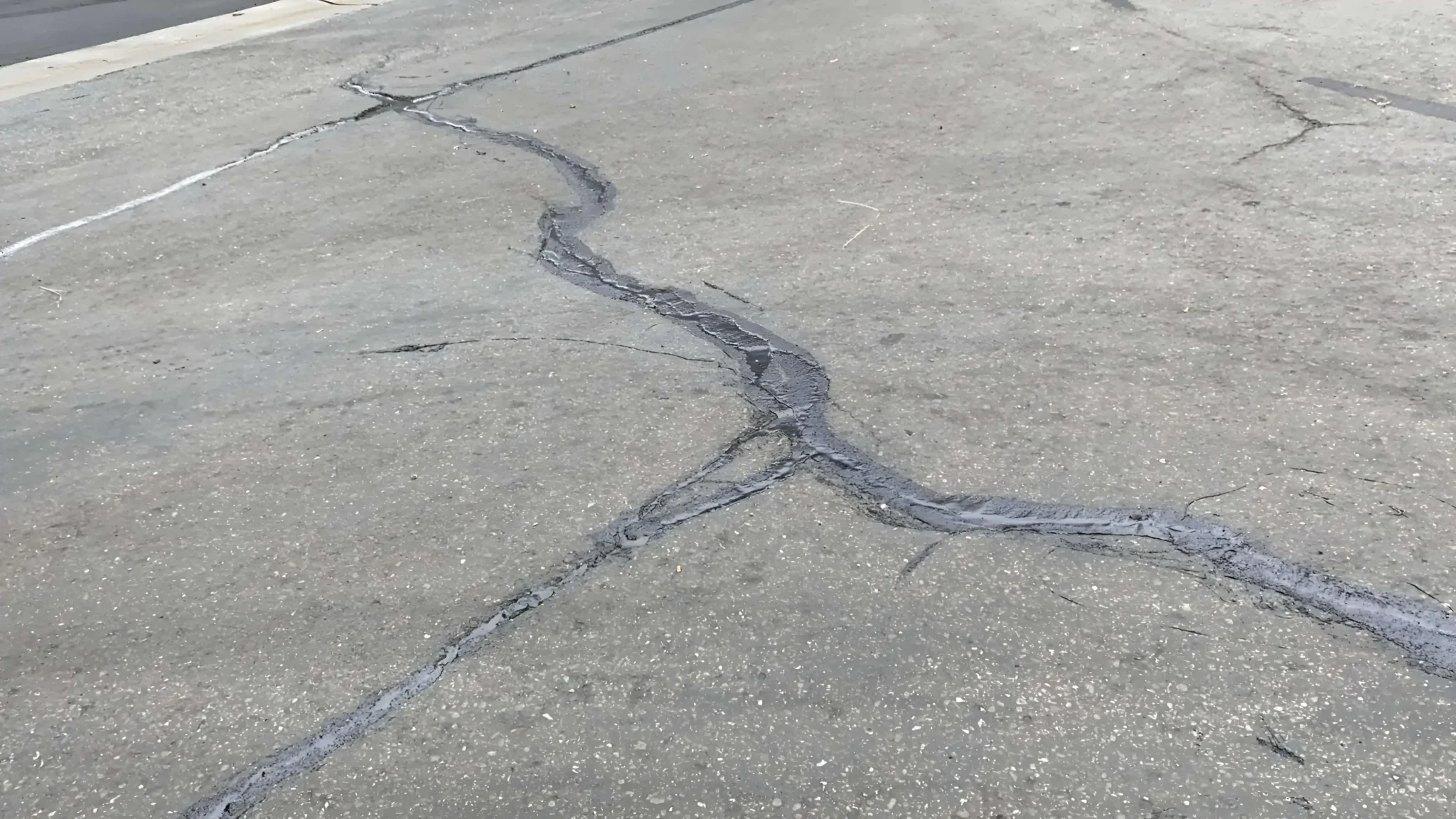
Watch for cracks widening near drainage structures. Notice raveling where vehicles make tight turns. Pay attention to water sitting along low edges after irrigation or rain. Look at old patches that are cracking around their perimeter. Check whether surface wear is concentrated near loading zones, trash enclosures, or the main entrance lane.
Those conditions do not all require immediate major work. They do deserve ranking.
A lifecycle budget should distinguish between cosmetic aging, surface preservation needs, localized repair, and structural decline. Without that distinction, owners either overspend too early or delay until the repair options become narrower.
The broader commercial asphalt lifecycle helps frame those stages, but the cost question is more specific: which stage is your property actually in, and what happens financially if you treat it as something else?
A Useful Budget Separates Pavement Areas by Consequence
Not every square foot of asphalt carries the same financial risk.
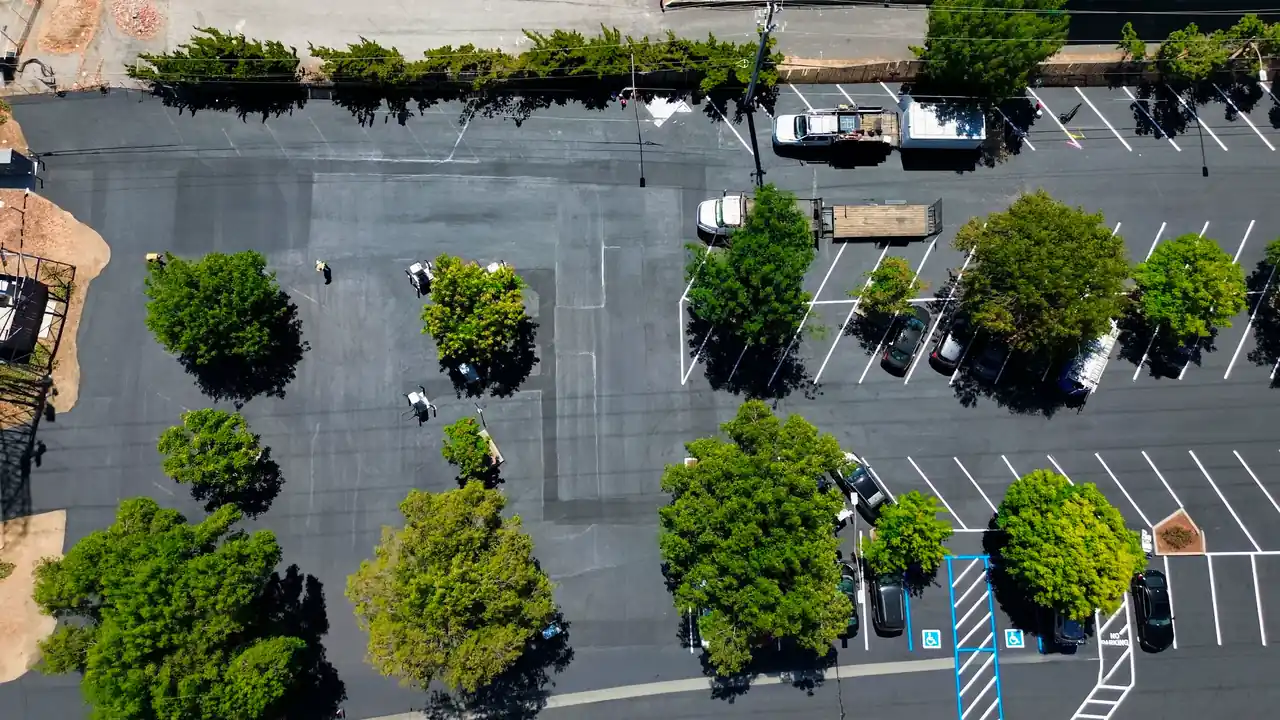
A remote parking row with minor oxidation is not equal to a medical access lane with edge failure. A low-use service corner is not equal to the main retail entrance. A crack in a quiet stall is not equal to a recurring depression where delivery vehicles turn every morning.
This is where many pavement budgets fail. They treat the lot as one surface instead of a collection of use zones.
| Pavement Area | Budget Priority Logic | Cost Risk if Ignored |
|---|---|---|
| Main entrances | Affects first access point and traffic flow | Higher disruption if emergency repair is needed |
| Loading zones | Heavy turning and weight accelerate wear | Repeated patching or deeper repair may follow |
| Drainage-adjacent areas | Water can weaken edges and base support | Small surface issues can become structural |
| Accessible routes | Usability depends on surface condition and transitions | Repairs may need tighter coordination and review |
| Remote stalls | Often lower operational urgency | Work may be phased unless deterioration is spreading |
| Future upgrade zones | May be cut, trenched, or redesigned later | Poor sequencing can waste recent paving work |
High-consequence areas deserve earlier review because their failure affects more than pavement appearance. A rough access lane at a medical clinic, for example, can affect patient movement, deliveries, emergency circulation, and site coordination. That is why emergency lane repair belongs in a different budget category than a low-use back row.
Lifecycle costing is not only about how much asphalt costs. It is about where failure creates the most expensive disruption.
Timing Can Be More Important Than the Repair Type
The same repair can be financially smart or wasteful depending on timing.
Crack filling before moisture enters and spreads through the pavement can protect a still-stable surface. Crack filling after widespread movement may only create a short-term improvement. Sealcoating can help preserve asphalt that still has enough surface integrity. It cannot reverse base failure. A localized repair can be efficient when distress is isolated. It becomes inefficient when the same area keeps failing.
An asphalt overlay may be a strong mid-life investment when the existing pavement can support a new surface layer. It becomes risky when used to cover unstable pavement, severe cracking, poor drainage, or base movement that should have been addressed first.
Pavement life cycle cost planning gives owners a timing framework:
Early stage: monitor, clean, seal, fill, and preserve where appropriate.
Middle stage: repair localized defects and consider resurfacing if the underlying pavement is still suitable.
Late stage: evaluate whether repeated maintenance is becoming less effective than reconstruction or replacement.
The wrong timing turns low-cost work into repeated work. The right timing can delay larger capital spending without pretending the pavement will last forever.
Ownership Plans Should Include Future Site Changes
A pavement budget should not be built in isolation from the rest of the property.
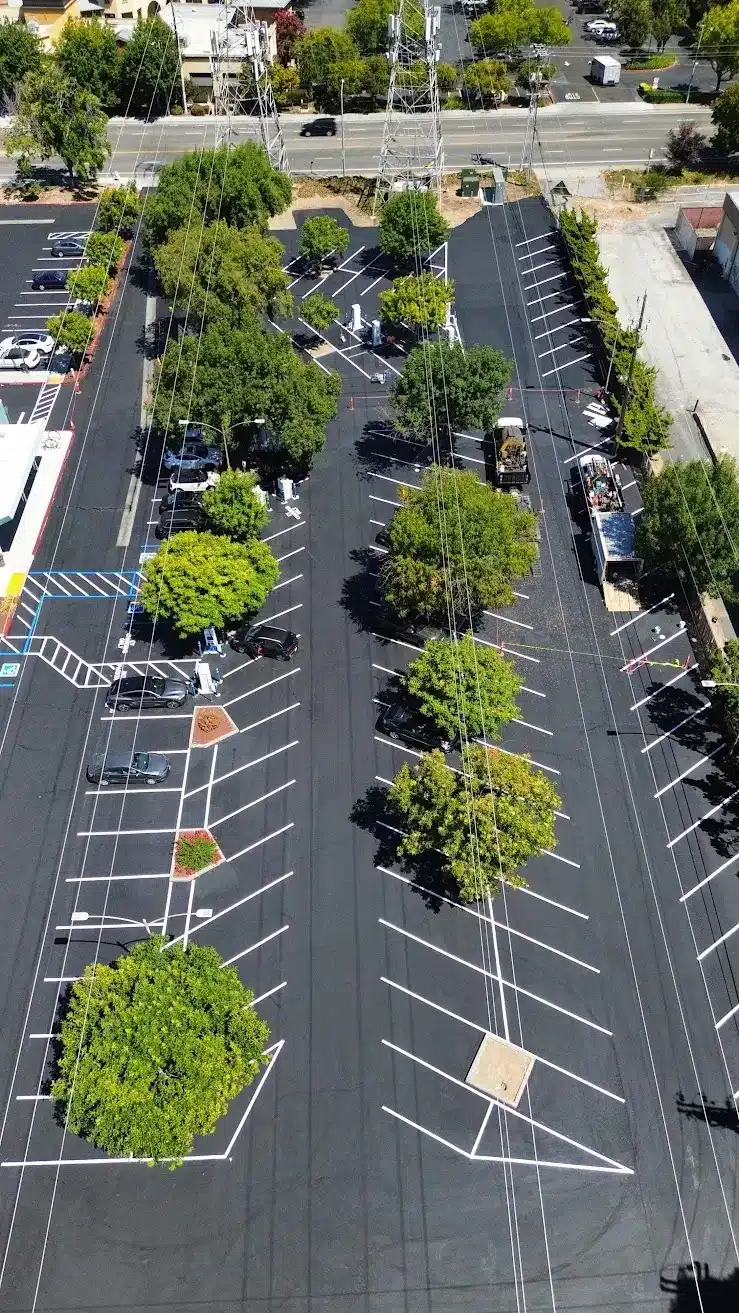
Owners often plan paving, lighting, landscaping, signage, drainage, tenant improvements, utility work, and parking upgrades separately. That creates waste. A lot may be resurfaced, then cut months later for utility work. Fresh striping may be changed after a new traffic layout. A newly repaired section may be disturbed because an improvement project was not considered during pavement planning.
This matters as more properties plan electrical, access, or layout upgrades. For example, EV charging construction can involve parking layout decisions, trenching, patching, traffic flow, and future stall use. If that work is likely within the next budget cycle, it should influence pavement sequencing.
The same logic applies to drainage corrections, accessible parking changes, tenant buildouts, dumpster enclosure improvements, or loading-area redesign. Lifecycle costing should ask: will another project disturb this pavement soon?
Spending money in the wrong order is one of the quietest ways to inflate the true cost of asphalt ownership.
Material Decisions Belong in the Cost Model
Pavement life cycle cost is not only a maintenance question. It can also influence material decisions.
Asphalt and concrete behave differently under traffic, heat, loading, repair cycles, installation timing, and long-term use. In many commercial parking fields, asphalt remains practical because it is flexible, efficient to install, and well-suited to large paved areas. In specific high-stress zones, concrete may be considered because repeated loading, turning, or edge conditions require a different performance profile.
A lifecycle budget should not reduce the decision to installation price alone. It should compare how the surface will be used, how repairs will be handled, what disruption future work may cause, and how long the owner expects to hold or operate the property.
A deeper discussion of lifecycle considerations can help owners think beyond the initial paving quote when a property includes mixed-use pavement areas, loading zones, pedestrian transitions, or long-term capital planning.
The cheapest material on day one is not automatically the lowest-cost material over the life of the property.
A Practical Pavement Life Cycle Budgeting Sequence
Property owners do not need a complicated financial model to start making better pavement decisions. They need a consistent sequence.
First, divide the property into zones: entrances, drive aisles, parking fields, loading areas, accessible routes, drainage-sensitive edges, service areas, and low-use sections.
Second, document conditions by zone. Photos are useful if they are taken from the same angle over time. A crack that looks minor in one photo may show clear widening when compared six months later.
Third, rank each zone by consequence. Ask what happens if that area fails during peak use, rainy season, tenant turnover, or a capital improvement project.
Fourth, match the treatment to the stage. Preservation, patching, overlay, and replacement are not interchangeable.
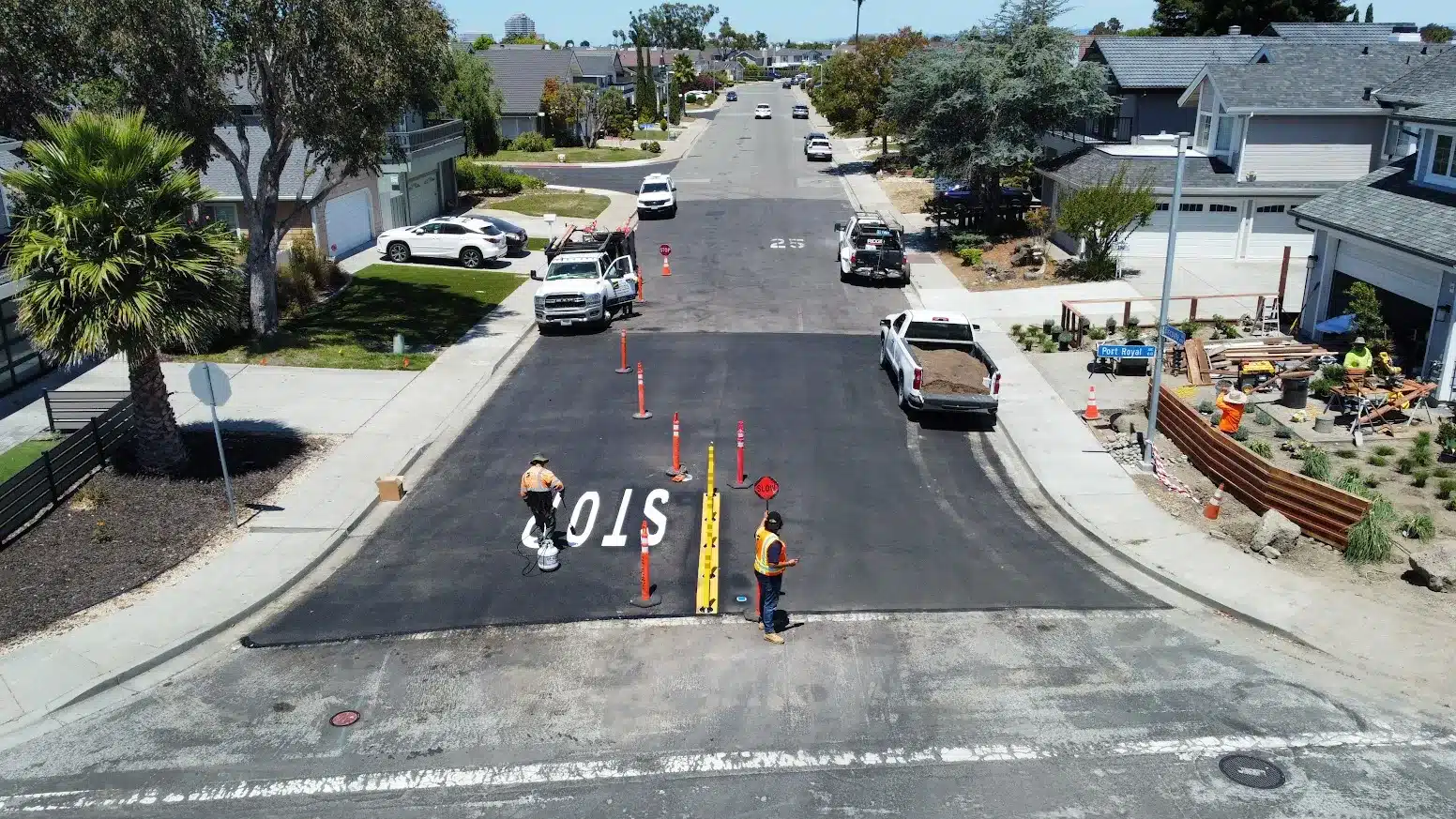
Fifth, coordinate paving work with other property improvements so recently improved asphalt is not cut, patched, or redesigned unnecessarily.
This approach does not eliminate pavement cost. It makes the cost less chaotic.
Budgeting With We Love Paving
Pavement life cycle cost planning gives property owners a more honest way to manage asphalt. It replaces surprise-driven spending with staged decisions based on condition, use, timing, and consequence.
We Love Paving helps commercial property teams look at pavement as a long-term asset, not just a surface that receives repairs when complaints appear. A useful plan identifies where the pavement is stable, where maintenance still makes financial sense, where resurfacing may protect value, and where delayed decisions could create larger future costs.
The smartest budget is not the one that spends the least this year. It is the one that avoids paying for the same pavement failure again and again.