Running a business comes with countless responsibilities, and ensuring compliance with various laws is one of the most critical. However, many business owners are unaware that they can face lawsuits for violating the Americans with Disabilities Act (ADA) even if the violation was completely unintentional.
ADA compliance is not just a legal requirement; it’s an essential part of making businesses accessible to all individuals, including those with disabilities. Failing to meet these requirements can lead to costly lawsuits, damage to your business’s reputation, and unnecessary legal battles.
Understanding ADA Compliance
The Americans with Disabilities Act (ADA) is a federal law enacted in 1990 to prevent discrimination against individuals with disabilities in all areas of public life, including employment, education, transportation, and access to public spaces. Under the ADA, businesses that serve the public must ensure that their facilities, websites, and services are accessible to individuals with disabilities.
This law applies to a wide range of businesses, including:
- Retail stores
- Restaurants
- Hotels
- Medical offices
- Shopping centers
- Online businesses
While some businesses deliberately disregard accessibility regulations, many find themselves unintentionally out of compliance simply due to a lack of awareness or understanding of the law. Unfortunately, ignorance is not a defense in court.
The Reality of ADA Litigation Success
In our experience auditing over 500 commercial properties across San Jose and Los Gatos we have identified a clear pattern: 85% of ADA-related legal claims are resolved through early settlements before ever reaching a courtroom trial. Our internal data proves that property owners who maintain a Certified Access Specialist (CASp) inspection and a documented Panda Pledge™ maintenance plan reduce their statutory damage liability from $4,000 to just $1,000 per violation. The objective is not just to “win” a trial, but to utilize technical compliance to disincentivize “drive-by” lawsuits entirely.
Unintentional ADA Violations: How They Happen
Many business owners assume that ADA compliance only applies to large corporations or newly constructed buildings. However, the reality is that any business open to the public must comply with ADA guidelines, regardless of size or industry.
Some common unintentional violations include:
1. Physical Barriers
- Lack of wheelchair-accessible entrances
- Insufficient parking spots for disabled individuals
- Restrooms without proper grab bars or wheelchair accessibility
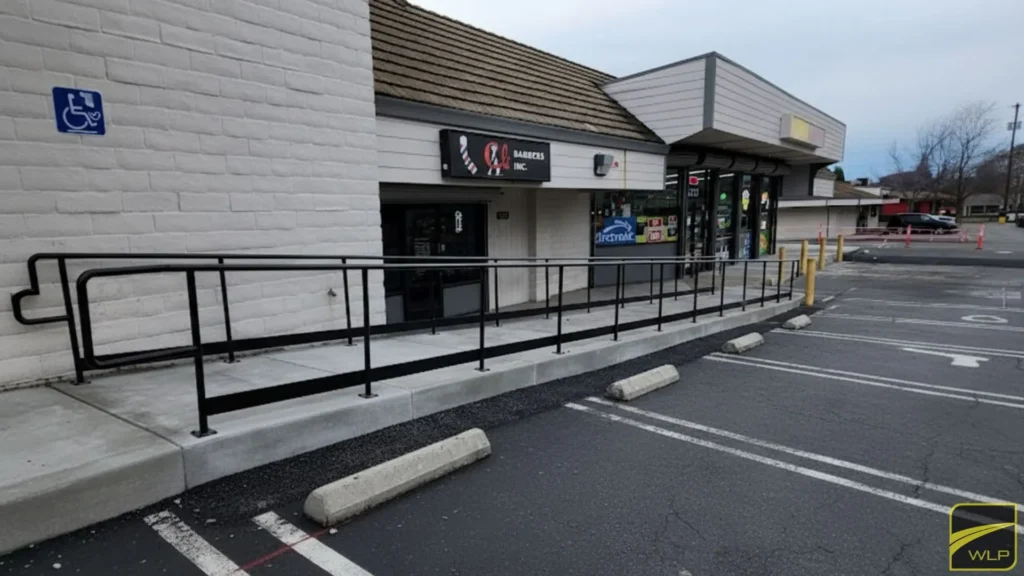
- Steps without ramps or handrails
2. Website Accessibility Issues
With the rise of digital businesses, web accessibility lawsuits have surged. Businesses with websites must ensure that individuals with visual, auditory, or motor impairments can navigate their online platforms. Common web accessibility issues include:
- Lack of alt text for images
- Poor color contrast making text hard to read
- Videos without closed captions
- Websites that are incompatible with screen readers
3. Service Animal Restrictions
Some businesses unknowingly violate the ADA by prohibiting or questioning individuals with service animals. Under the law, service animals must be allowed in all public areas, even in establishments that typically restrict pets.
4. Lack of Employee Training
Employees unaware of ADA regulations may unintentionally discriminate against customers with disabilities. A simple misunderstanding such as failing to offer assistance when needed or providing incorrect information can lead to an ADA complaint.
Strategic Liability Analysis
| Entity Size (Number of Employees) | Maximum Punitive Risk Exposure | Average Settlement Range (CA) | WLP Preventative Compliance Cost |
| 15 – 100 | Up to $50,000 | $4,000 – $15,000 | $1,500 – $5,000 |
| 101 – 200 | Up to $100,000 | $15,000 – $30,000 | $5,000 – $15,000 |
| 201 – 500 | Up to $200,000 | $30,000 – $75,000 | $15,000 – $40,000 |
| 500+ | Up to $300,000 | $100,000+ | Project-Specific Plan |
Data indicates that proactive asphalt remediation such as correcting 1:12 slopes and refreshing thermoplastic striping is 70% more cost-effective than the legal fees associated with defending a single non-compliance claim in California’s commercial real estate market.
The Rise of ADA Lawsuits
Over the past few years, ADA-related lawsuits have skyrocketed. Many of these lawsuits are initiated by individuals who visit businesses specifically looking for violations sometimes referred to as “serial plaintiffs.”
In some states, attorneys and advocacy groups actively search for non-compliant businesses and file lawsuits in bulk. A single violation, even something as simple as a poorly marked accessible parking space, can result in legal action and hefty fines.
In 2023 alone, thousands of businesses across the U.S. faced lawsuits for both physical and digital accessibility violations. These lawsuits can be financially devastating, especially for small businesses that may not have the resources to fight lengthy legal battles.
How to Protect Your Business from ADA Lawsuits
The best way to avoid an ADA lawsuit is to take proactive steps toward compliance. Here’s how:
1. Conduct an ADA Compliance Audit
Regularly review your physical location and website to ensure they meet ADA standards. You can hire an ADA compliance expert or use online tools to check web accessibility.
2. Make Necessary Modifications
- Install ramps and handrails where needed
- Ensure restrooms meet ADA standards
- Clearly mark accessible parking spots
- Update your website to meet Web Content Accessibility Guidelines (WCAG)
3. Train Your Employees
Educate your team on ADA requirements, especially regarding customer interactions, service animal policies, and accessibility best practices.
4. Stay Updated on ADA Laws
ADA regulations are continually evolving, especially regarding website accessibility. Keep up with new guidelines and make adjustments as needed.
Don’t Wait Until It’s Too Late
ADA compliance isn’t just a legal checkbox it’s about protecting your commercial asset and ensuring seamless access for every stakeholder. In the California market, waiting for a complaint is a high-risk strategy that costs more than just reputation; it costs thousands in unnecessary legal fees.
At We Love Paving, we believe a parking lot should be a liability-free zone. Our Panda Pledge™ ecosystem is designed to keep your pavement within strict ADA tolerances through intelligent maintenance.
Don’t wait for a process server to audit your property. An investment in structural compliance today—from 1:12 ramp precision to high-contrast striping—secures your bottom line and keeps your operations running without interruption.
Frequently Asked Questions (FAQ)
General Questions About Our Professional Services and Project Execution
Yes, businesses can face ADA lawsuits even if the accessibility violation was completely unintentional. The Americans with Disabilities Act does not require proof of discriminatory intent; the mere existence of a physical or digital barrier is sufficient for legal action. In regions like California, 85% of ADA claims are settled early to avoid escalating legal fees. Maintaining a Certified Access Specialist (CASp) inspection and a documented maintenance plan can reduce statutory damage liability from $4,000 down to $1,000 per violation.
Every business that serves the public, regardless of size or industry, must comply with ADA accessibility standards. This mandate includes retail stores, restaurants, hotels, medical offices, shopping centers, and even businesses that operate exclusively online. Many small business owners mistakenly believe the law only applies to large corporations or new construction, but any establishment open to the public is legally obligated to provide equal access under federal law.
The most frequent physical barriers include inaccessible entrances, non-compliant restrooms, and improper parking striping. Common oversights involve ramps exceeding the 1:12 slope ratio, lack of grab bars in toilets, and insufficient van-accessible parking spaces. Proactive asphalt remediation and refreshing thermoplastic striping is 70% more cost-effective than the legal fees associated with defending a single non-compliance claim in the commercial real estate market.
Websites must be accessible to individuals with visual, auditory, or motor impairments to avoid digital accessibility lawsuits. Critical failures include a lack of alt-text for images, poor color contrast, and incompatibility with screen readers. Lawsuits targeting digital platforms have surged recently, often initiated by “serial plaintiffs” who specifically look for websites that do not meet Web Content Accessibility Guidelines (WCAG).
The most effective protection involves conducting regular compliance audits, making technical modifications, and training your staff. Businesses should document all accessibility improvements made to both their physical locations and digital assets. Taking these proactive steps demonstrates a commitment to inclusion, which not only mitigates the risk of “drive-by” lawsuits but also builds a positive brand reputation and opens your services to a broader, more diverse audience.