Quick Answer: How Long to Wait?
For a safe estimate, you should wait between 48 to 72 hours before walking on freshly paved asphalt. While the surface might feel solid within minutes, the internal structure requires this window to stabilize thermally. This timeframe can extend from 2 to 7 days depending on critical factors like direct solar radiation, ambient humidity, and the specific thickness of the applied layer. According to industry data, temperatures exceeding 100°F (38°C) can drastically slow down the hardening process (Asphalt Industrial).
Drying vs. Curing: Two Critical Stages
It is vital to distinguish between drying and curing, as they represent distinct chemical and physical processes. Drying occurs when moisture and solvents evaporate, allowing the surface to feel rigid to the touch within hours. Conversely, curing is a long-term process where the asphalt binder oxidizes and hardens completely, which can take anywhere from 6 to 12 months While drying allows you to walk on the surface, only full curing ensures the maximum structural strength of the pavement. Ignoring this distinction is often the primary cause of premature cracking in residential projects.
Determining Factors for Foot Traffic
Patience is your best tool following a successful paving project. If the asphalt emits a strong tar odor or maintains a deep, glossy black sheen, the oils likely haven’t oxidized enough. Walking too soon,especially with hard-soled shoes or heels,can leave permanent indentations that compromise the floor’s aesthetics and leveling.
Monitoring local weather conditions is vital, as unexpected rain or extreme heat alters the initial curing cycle. A shaded environment with moderate temperatures between 70°F and 80°F typically promotes a more predictable and safe drying period. Remember that asphalt acts as a flexible, viscous fluid until it cools and settles completely.
Walking on a freshly paved surface may seem like a simple act, but the timing of when it’s safe to do so is crucial. The process of paving involves multiple factors that affect the surface’s strength and durability, and knowing when it’s appropriate to walk on it can prevent damage and ensure optimal results. In this comprehensive guide, we’ll explore the various considerations involved in determining the right time to walk on newly paved surfaces, including material types, additives, weather conditions, and consultation with contractors.
Understanding Material Types
The type of material used for paving plays a significant role in determining the duration of the curing process. Asphalt and concrete are the two most common materials used for paving, each with its own unique characteristics and curing requirements.
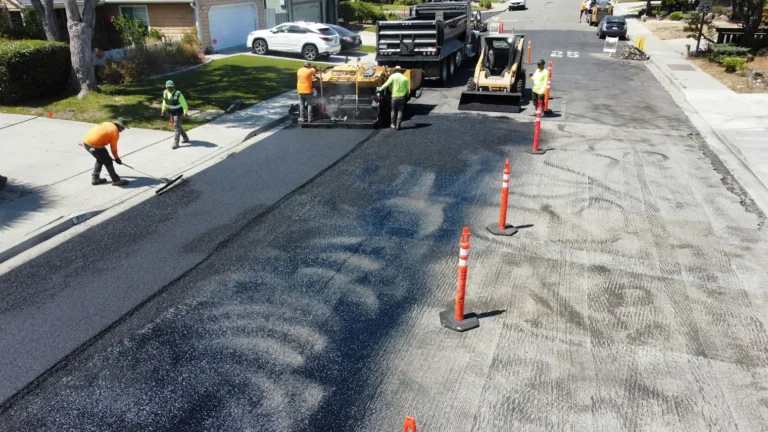
Asphalt paving involves laying a mixture of aggregate stone and asphalt binder. Asphalt surfaces typically cure faster than concrete, with light foot traffic being permissible within 24 to 48 hours under favorable conditions. However, heavy vehicle traffic should be avoided for at least 3 to 5 days to allow for proper curing.
Concrete paving, on the other hand, requires more time to cure compared to asphalt. The curing process for concrete can take several days to reach sufficient strength for pedestrian traffic. Factors such as temperature, humidity, and thickness of the concrete layer influence the curing time, with thicker slabs requiring longer curing periods.
The Role of Additives
Contractors may incorporate additives or accelerators during the paving process to expedite the curing time of newly paved surfaces. These additives can help enhance the properties of the pavement mixture and shorten the waiting period before foot traffic is permitted.
Common additives used in paving include calcium chloride, hydrated lime, and fly ash. These additives can improve the workability, strength, and durability of the pavement mixture while reducing the curing time. However, the use of additives must be carefully considered, as improper dosage or application can affect the quality of the pavement.
Impact of Weather Conditions
Weather conditions play a significant role in the curing process of newly paved surfaces. Temperature, humidity, and precipitation can all affect the rate at which the pavement sets and gains strength. Ideally, paving should be conducted under favorable weather conditions to ensure optimal curing and long-term durability.
High temperatures can accelerate the curing process but may also lead to rapid evaporation of moisture, resulting in surface cracking or shrinkage. Conversely, low temperatures can slow down curing and may require additional measures such as insulation or heating to maintain optimal conditions.
Humidity levels also influence the curing process, with higher humidity promoting better hydration of cementitious materials in concrete. However, excessive humidity can prolong curing times and may necessitate adjustments to the paving schedule.
Precipitation poses a challenge to paving projects, as water can interfere with the curing process and compromise the quality of the pavement. Paving should be postponed during rainy or wet conditions, and adequate drainage measures should be in place to prevent water accumulation on the newly paved surface.
Technical Variables and Binder Oxidation
The specific mix design and layer thickness dictate the immediate structural integrity against foot traffic. Insufficient thickness can hinder heat dissipation, keeping the binder in a plastic state that marks easily under weight. According to industry standards, asphalt reaches its ideal stability once internal temperatures drop below 100°F (38°C).
In high-altitude regions, lower air density and increased UV exposure accelerate binder oxidation, prematurely reducing flexibility. Air quality and atmospheric pressure directly impact the evaporation rate of volatile oils within the mix. This accelerated aging phenomenon requires stricter monitoring of hardening times to prevent surface cracks caused by a loss of elasticity. For deeper technical insights.
Consultation with Contractors
While general guidelines exist for when it’s safe to walk on newly paved surfaces, consulting with the paving contractor is essential for obtaining specific instructions tailored to your project. Contractors possess valuable insights into local weather conditions, paving materials, and project specifications, allowing them to offer the most accurate guidance.
Contractors can assess various factors such as pavement type, thickness, additives, and prevailing weather conditions to determine the optimal timing for pedestrian traffic. They can also recommend appropriate safety precautions to minimize the risk of damage to the newly paved surface.
Safety Precautions
Walking on newly paved surfaces requires caution and adherence to safety precautions to prevent damage and ensure personal safety. Some essential safety tips to consider include:
- Wear Appropriate Footwear: Use sturdy, closed-toe shoes with non-abrasive soles when walking on newly paved surfaces to avoid leaving marks or causing damage.
- Avoid Sudden Movements: Refrain from making sudden movements or dragging heavy objects across the pavement, as this can lead to surface scuffing or indentation.
- Observe Warning Signs: Pay attention to any warning signs or barricades placed by the contractor to indicate areas where pedestrian traffic is prohibited.
- Follow Contractor’s Instructions: Adhere to any specific instructions provided by the paving contractor regarding when it’s safe to walk on the newly paved surface and any additional safety precautions to be taken.
- Report Issues: If you notice any signs of damage or deterioration on the newly paved surface, report it to the contractor immediately to prevent further damage and ensure timely repairs.
When It’s Safe to Walk on New Pavement Without Affecting Its Performance
At We Love Paving, curing time is not just a technical step , it’s what protects the long-term performance of your pavement. Walking too soon on newly installed asphalt or concrete can compromise strength, surface finish, and overall durability from day one. That’s why we consider critical factors such as material type, weather conditions, and installation methods before advising any surface use.
Frequently Asked Questions (FAQ)
General Questions About Our Professional Services and Project Execution
Wait 48–72 hours before walking on freshly paved asphalt in most cases. The surface may feel firm quickly, but the internal layer still needs time to cool and stabilize. Depending on layer thickness, humidity, shade, and direct sun, that window can stretch to 2–7 days.
Footwear matters: avoid heels or hard soles early on
As a practical checkpoint, asphalt is typically more stable once internal temps drop below ~100°F (38°C).
Safer window: 48–72 hrs
If it’s very hot/sunny: closer to 3–7 days
Yes,extreme heat and direct sun can slow “set-up” and make asphalt stay impressionable longer, even if it looks finished. When temperatures climb above 100°F (38°C), heat can keep the binder softer for longer and increase the risk of footprints or dents.
High humidity can also affect cooling behavior
If you can, limit foot traffic during peak heat and aim for moderate conditions. A shaded area around 70–80°F tends to produce more predictable early performance.
Full sun + dark asphalt = more heat retention
Thicker lifts hold heat longer
Drying is the short phase where the surface feels firm within hours, but curing is the long phase where the binder fully oxidizes and hardens over time. You can often walk on asphalt after the initial drying window, but the pavement won’t reach maximum strength until curing progresses.
Curing: long-term hardening that can take 6–12 months
That’s why early care matters: ignoring curing behavior is a common reason for premature scuffing, indentation, and early cracking.
Drying: hours to a couple days (surface feels rigid)
Early use: light foot traffic after the waiting window
If the asphalt still has a strong tar smell or a deep glossy black sheen, it’s often not ready for foot traffic. Those signs usually mean the oils and binder haven’t settled enough, and the surface can mark easily.
Quick checks we use:
Touch test (carefully): warm, tacky feel = not ready
Also watch the weather: unexpected rain or intense heat can disrupt the early cycle. Walking too soon,especially in heels,can leave permanent indentations that affect leveling and appearance.
Odor: strong tar scent = wait longer
Look: shiny, oily appearance = still soft
For vehicles and heavier loads, plan on 3–5 days minimum, and longer if it’s hot, humid, or the asphalt layer is thick. Foot traffic is lighter, but cars concentrate weight and can twist the surface during turns.
A simple guideline:
Heavy loads: follow project-specific guidance
Avoid sharp turns, kickstands, jacks, and parked tires in one spot early on. Asphalt behaves like a flexible material until it cools fully, so patience in the first week helps prevent ruts, scuffs, and depressions.
Walking: 48–72 hours (often longer in heat)
Cars/light vehicles: 3–5 days